
Search Results
Keyword:U.S.
DXA Screening Among U.S. Medicare Population Declines 35% Over Nearly Two Decades
A new study shows that between 2005 and 2023, the rate of dual-energy X-ray absorptiometry (DXA) examinations among U.S. Medicare beneficiaries declined significantly, by 35%. DXA is commonly used for bone density testing and osteoporosis-related screening, and the findings suggest that disparities in screening access across different populations are widening. Researchers analyzed claims data from more than 5 million Medicare beneficiaries. The results showed that DXA utilization fell from 7,255 exams per 100,000 beneficiaries in 2005 to 4,690 per 100,000 beneficiaries in 2023. The study was published in Osteoporosis International. The decline was not uniform across populations...
2026-08-08
Eagle Nuclear Energy Advances 47-Hole Pre-Feasibility Drilling at Aurora Uranium Project
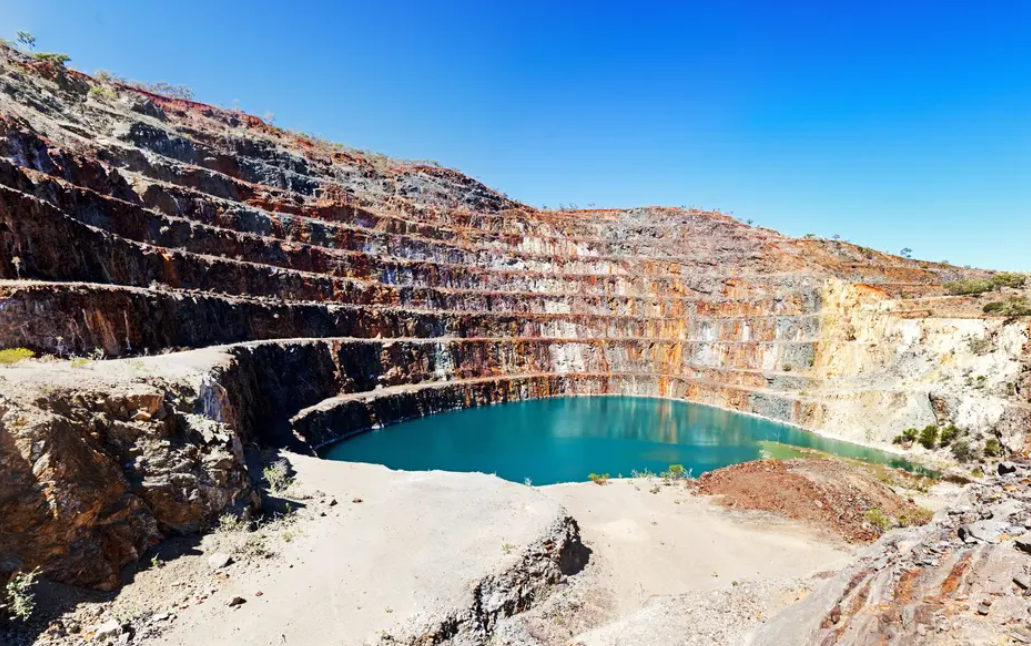
Against the backdrop of rebuilding a domestic U.S. uranium supply chain, newly listed Eagle Nuclear Energy Corp. has entered the industry spotlight with what it claims to be the largest conventional measured+indicated uranium resource in the country. Its flagship Aurora uranium project, located on the Oregon-Nevada border, contains 32.75 million pounds of indicated resources and 4.98 million pounds of inferred resources under S-K 1300 standards. The company has submitted permit applications for a pre-feasibility drilling program comprising 47 holes totaling approximately 27,000 feet, with work slated to begin upon federal and state approvals and pre-feasibility study completion targeted for the second half of 2027. On the technical front, the company recently added Yukuskokon Professional Services and expanded its collaboration with BBA USA and SLR I...
2026-08-08
Thorium Atomics Initiates Pre-Application Regulatory Engagement with U.S. Regulators for Tesseract TGR Reactor
On August 7, Thorium Atomics announced that it has initiated pre-application regulatory engagement with the U.S. Nuclear Regulatory Commission (NRC) for its Tesseract TGR advanced reactor project. Prior to this, the company submitted a letter of intent to the NRC outlining the technical and licensing discussions it plans to conduct with regulators in the future. Thorium Atomics submitted the letter of intent on June 23, 2026. The NRC subsequently responded by letter on July 24, 2026, confirming the assignment of project number 99902174 for the Tesseract TGR project and designating a project manager from the Office of Advanced Reactors to coordinate pre-application activities. This number will be used for the administrative management and tracking of future correspondence, meetings, submissions...
2026-08-08

French innovative nuclear company Newcleo submits regulatory engagement plan to NRC for U.S. MOX fuel plant
On August 7, 2026, France-based innovative nuclear company Newcleo submitted a Regulatory Engagement Plan (REP) to the U.S. Nuclear Regulatory Commission (NRC), paving the way for its proposed mixed oxide (MOX) fuel fabrication facility in the United States. The REP defines the framework for the company's pre-application phase with the NRC, key regulatory and technical topics, technical document submittals, and an indicative schedule. Previously, Newcleo sent a letter to the NRC on February 23 expressing its intent, and initiated pre-application interactions in March, engaging with the NRC on the design and safety approach for the LFR-AS-200 lead-cooled fast reactor and the associated MOX plant; last month, it had already submitted the REP for the LFR-AS-200 (200 MWe commercial version). Newcleo stated that this submission is a step toward advanced...
2026-08-09
U.S. NRC to Debut Modernized Hearing Process in Advanced Reactor Licensing Review for the First Time
The U.S. Nuclear Regulatory Commission (NRC) will hold a public hearing on August 13 in Oak Ridge, Tennessee, to consider the Tennessee Valley Authority's (TVA) application to build a small modular reactor at the Clinch River site. This will mark the first time the NRC applies its modernized mandatory hearing framework in an advanced reactor licensing review. According to the NRC, the new hearing process is designed to give the public earlier insight into the agency's review of the project's safety and environmental impacts, while improving the transparency, predictability, and efficiency of licensing reviews. As part of its licensing modernization efforts, the NRC currently aims to complete construction permit-related decisions within 18 months. TVA plans to...
2026-08-07
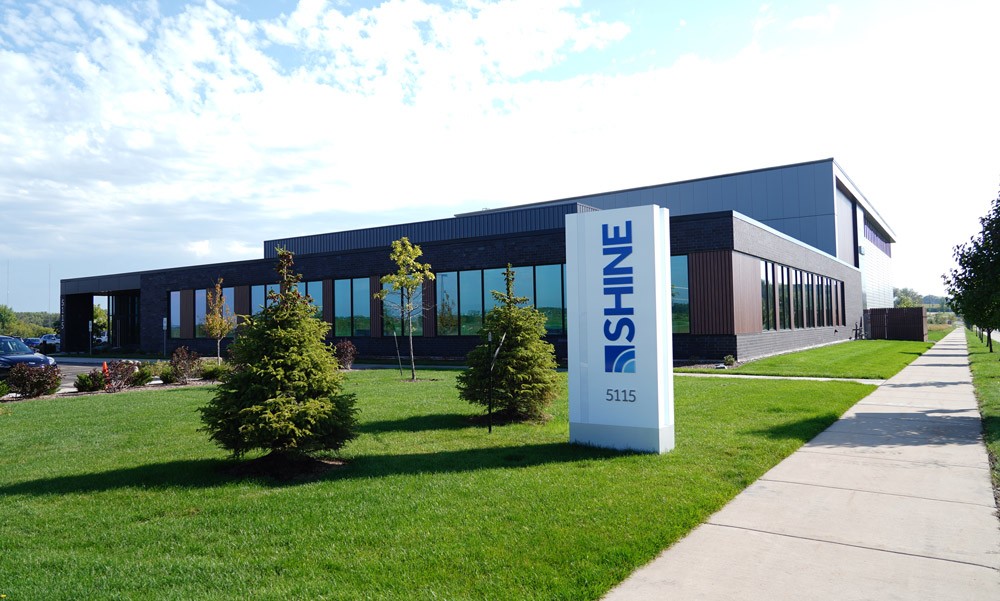
SHINE Selected for Two U.S. Department of Energy AI Nuclear Fuel Recycling Projects
SHINE Technologies, a U.S. fusion energy company, has recently been selected for projects under the U.S. Department of Energy's Genesis Mission, participating in two artificial intelligence applications for the nuclear energy sector. Among these, SHINE will lead a nuclear fuel cycle facility optimization project and join the Prometheus project, a collaborative effort between national laboratories and industry. The project led by SHINE, named AI-Guided Fuel Cycle Facility Optimization, is a Phase 1 project with Argonne National Laboratory as the technical partner. The project plans to develop an AI-assisted workflow to help engineers...
2026-08-07
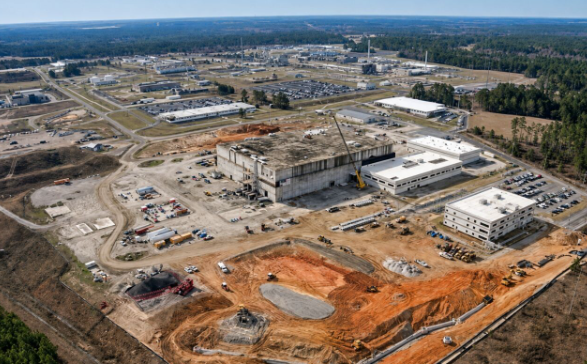
Newcleo Initiates U.S. Regulatory Pre-Application Engagement for MOX Fuel Facility, Accelerating Advanced Reactor Fuel Supply Chain Development
Advanced reactor and nuclear fuel company Newcleo has initiated regulatory pre-application engagement with the U.S. Nuclear Regulatory Commission (NRC) for a mixed oxide (MOX) fuel fabrication facility, with plans to advance construction at the Savannah River Site in South Carolina. This move indicates that the company is not only advancing the licensing of its advanced reactor itself but also seeking to establish supporting fuel supply capabilities in parallel, aiming to mitigate fuel bottlenecks in future commercial deployment. The submitted regulatory engagement plan represents a key step prior to formal license application, with the core objective of communicating with regulators in advance on facility design, safety standards, review scope, and key technical issues. Newcleo previously submitted its regulatory engagement plan for the LFR-AS-200 lead-cooled fast reactor to the NRC in July...
2026-08-07
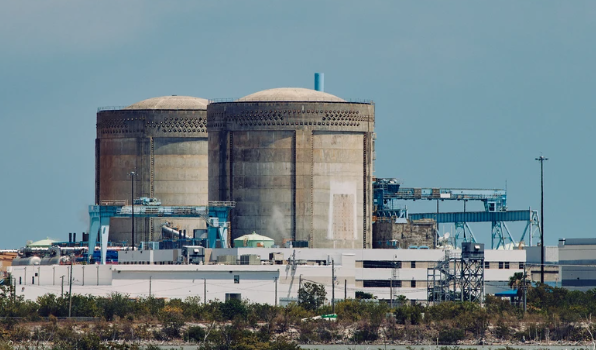
U.S. Environmental Groups Sue, Claiming Turkey Point Nuclear Plant License Renewal Requires Additional Environmental Review
The U.S. Nuclear Regulatory Commission (NRC) faces a legal challenge over its renewal of operating licenses for Units 3 and 4 at the Turkey Point nuclear power plant near Miami, Florida. Florida environmental group Miami Waterkeeper Inc. has petitioned the U.S. Court of Appeals for the District of Columbia Circuit, arguing that the agency failed to follow proper procedures during the license renewal process and overlooked significant environmental concerns. At the heart of the lawsuit is Miami Waterkeeper's assertion that the NRC should not have proceeded with the license renewal after denying the group's hearing request. The organization had participated in the related administrative proceedings and raised objections concerning the plant's environmental impact review, but the NRC concluded those proceedings in March of this year...
2026-08-07

Three U.S. Nuclear Energy Companies Explore Manufacturing Next-Generation Reactor Fuel from Recycled Nuclear Materials
U.S. nuclear energy companies Curio, NuScale Power, and Framatome have signed a memorandum of understanding to evaluate the feasibility of converting recycled nuclear materials into next-generation reactor fuel and related products. The tri-party collaboration is not focused on immediate commercial production, but rather on research into technical feasibility, fuel development, manufacturing capabilities, supply chain integration, and future commercial deployment, seeking to connect spent fuel recycling, fuel fabrication, and advanced reactor applications into a more complete industrial chain. Under this collaboration, Curio will provide its NuCycle nuclear fuel recycling technology, aiming to recover reusable strategic nuclear materials from spent fuel, with claims of reducing residual waste volume by up to 97%.
2026-08-07

X-Energy and Centrus Sign HALEU Supply Agreement, Accelerating U.S. Advanced Nuclear Fuel Supply Chain
X-Energy and Centrus Energy have signed a low-enriched uranium and high-assay low-enriched uranium supply agreement, marking a more concrete commercialization phase in fuel assurance for U.S. advanced nuclear reactors. Under the agreement, Centrus will provide uranium enrichment services at its American Centrifuge Plant in Pike County, Ohio, with the HALEU to be supplied to X-Energy's fuel subsidiary TRISO-X for the production of TRISO-coated particle fuel at its Oak Ridge, Tennessee fuel fabrication facility, serving the Xe-100 high-temperature gas-cooled small modular reactor. The significance of this agreement lies not only in the supply itself but also in its phased advance payment arrangement. X-Energy will support Centrus through advance payments...
2026-08-07

U.S. Laboratories Plan "Materials Discovery Cloud" to Use AI to Predict Impact of Defects in Microelectronic Devices
Researchers at the U.S. Department of Energy's Argonne National Laboratory, Lawrence Berkeley National Laboratory, Oak Ridge National Laboratory, and Northwestern University are planning to develop a Materials Discovery Cloud platform that leverages a physics-based artificial intelligence framework to predict how tiny defects affect the performance and lifespan of microelectronic devices. Visualization of the Materials Discovery Cloud, a physics-based AI framework that integrates experimental data, simulations, and high-performance computing to predict how tiny defects affect the performance and lifespan of microelectronic devices. (Image provided by ChatGPT.) Microelectronic devices are widely used in smartphones, laptops, secure communications, and artificial intelligence hardware. As device dimensions continue to shrink and operating speeds increase, tiny defects within materials and at interfaces have a more pronounced impact on device stability. These defects can cause overheating, leakage current, switching instability, and other issues, or in certain conditions, improve electrical or thermal performance. Identifying critical defects and understanding their evolution under real-world operating conditions has become a key challenge in the design of next-generation microelectronic materials.
2026-08-06
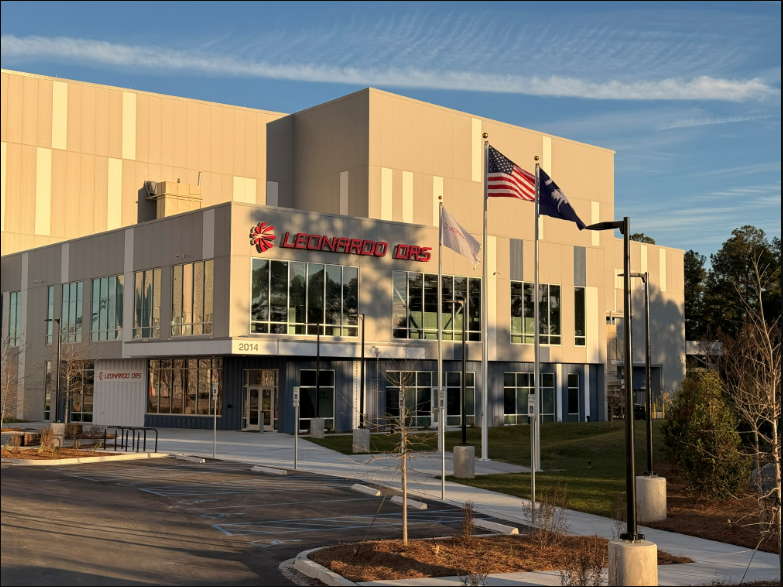
Leonardo DRS to Build New Facility in Connecticut, U.S. to Support Growth in Naval Nuclear Propulsion-Related Business
Leonardo DRS announced on August 4 that it has signed an agreement to build a new facility in Brookfield, Connecticut, U.S., to expand and consolidate its naval electric power systems operations. The project aims to increase production capacity, support key U.S. Navy-related programs, and provide space and infrastructure for the company's future growth in the nuclear energy sector. According to the company's disclosure, the new facility is located at 120 Park Ridge Road in Brookfield, covering approximately 141,087 square feet. Once completed, the facility will consolidate operations currently spread across three locations in Danbury and Bethel, Connecticut. The facility is expected to be operational in early 2027, with partial occupancy potentially available by late 2026 if final design and tenant fit-out work proceed smoothly.
2026-08-06
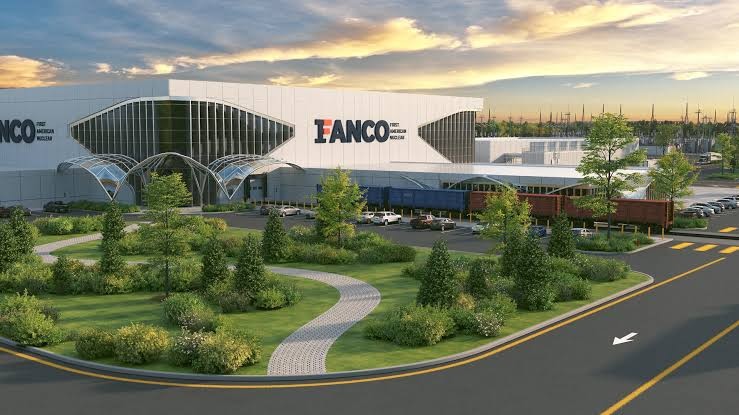
Two Advanced Materials Research Projects by 1st American Nuclear Co. Supported by U.S. Department of Energy Nuclear Science User Facilities Program
1st American Nuclear Co. (FANCO) announced on August 3 that two research proposals submitted by its scientists have been selected for support under the Nuclear Science User Facilities (NSUF) program of the U.S. Department of Energy Office of Nuclear Energy. Both selected projects come from the NSUF Fiscal Year 2026 Rapid Turnaround Experiment (RTE) review cycle, with research focused on next-generation reactor materials and fuel-related issues. The NSUF Rapid Turnaround Experiment program is open to nuclear energy researchers and primarily provides irradiation testing, post-irradiation examination capabilities, and related technical support...
2026-08-06
IsoEnergy and DISA to Form DISA Uranium, Advancing U.S. Uranium Recovery and Processing Platform
IsoEnergy Ltd. and DISA Technologies, Inc. have entered into a definitive agreement to jointly establish DISA Uranium™ Corporation, building a technology-driven U.S. uranium production, processing, and remediation platform. The platform will combine conventional uranium mining assets, uranium recovery operations, and DISA's proprietary High-Pressure Slurry Ablation processing technology (HPSA™) to serve U.S. domestic nuclear fuel supply needs. Under the agreement, IsoEnergy will transfer its portfolio of licensed and previously producing uranium mine projects located in Utah, U.S., to DISA Uranium, including the Tony M Mine, Daneros Mine, Rim Mine, Sage Plain Project, and Flatir...
2026-08-05

U.S. Uranium Corp.'s Lo Herma Project Uranium Resources Surge to 9.96 Million Pounds
U.S. Uranium Corp. announced a significant increase in uranium resources at its Lo Herma project in Wyoming, reaching 9.96 million pounds of U3O8. This growth is primarily attributed to a 72% increase in indicated resources, reflecting the company's growing confidence in project development. This update lays the groundwork for the feasibility study planned for 2026 and further solidifies its position in the nuclear fuel supply sector. The uranium resource estimate for the Lo Herma project shows indicated resources of 4.7 million pounds of U3O8, accounting for a significant portion of total resources. Through the integrated analysis of data from 120 drill holes during 2025-2026, the company has not only increased total resources but also added resources available for feasibility studies within potential mineralized zones...
2026-08-05