Registration
REGISTER FOR THE CONFERENCE
Registration
REGISTER FOR THE CONFERENCE
 Apply to Exhibit
APPLICATION FOR EXHIBITION
Apply to Exhibit
APPLICATION FOR EXHIBITION
 Sponsorship
SPONSORSHIP APPLICATION
Sponsorship
SPONSORSHIP APPLICATION

U.S. NRC Approves Four SMR-300 Reactors at Oyster Creek Site in New Jersey
A retired nuclear power plant in New Jersey is getting a new lease on life with the construction of small modular reactors. The U.S. Nuclear Regulatory Commission (NRC) has approved the construction of four advanced small modular reactors (SMRs) at the site of the Oyster Creek nuclear power plant in New Jersey. The plant is currently in decommissioning, with more than half of the dismantling work completed. The Oyster Creek Generating Station, which began construction in December 1969 and operated for nearly 49 years until its closure in September 2018, was once the longest-operating commercial nuclear power plant in the United States. It produced over 192 terawatt-hours of carbon-free electricity in total. Supported by New Jersey's pro-nuclear legislation and stable local backing, Holtec plans to build...
2026-08-05

Ethiopia Advances Nuclear Power Regulatory Framework Development
2026-08-05

U.S. and Paraguay Sign Civil Nuclear Energy Cooperation Agreement
2026-08-05

NRC Preliminary Assessment Finds No Significant Environmental Impacts from Duane Arnold Nuclear Plant Restart
2026-08-05

PowerChina Jiangsu Equipment Company's First Nuclear Power "Three Wastes" Project Officially Launched
2026-08-05

Arkansas Advances New Nuclear Power Plant Project, Hyundai Motor Supports SMR Construction
2026-08-05
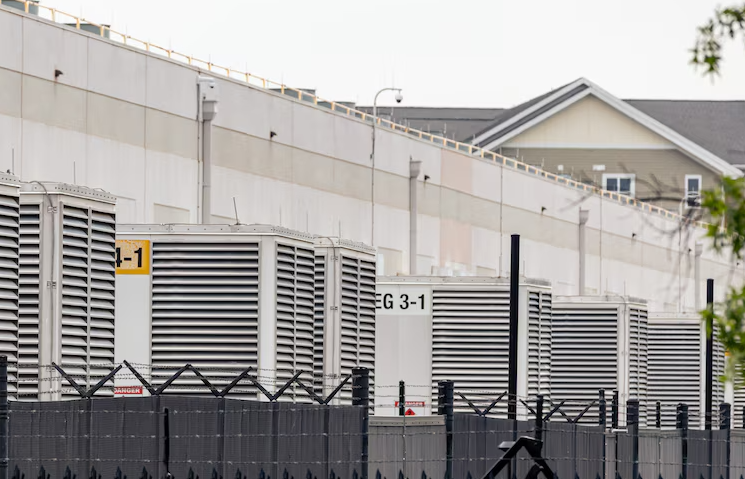
Amazon Withdraws Data Center Plans Near Calvert Cliffs Nuclear Power Plant
2026-08-05
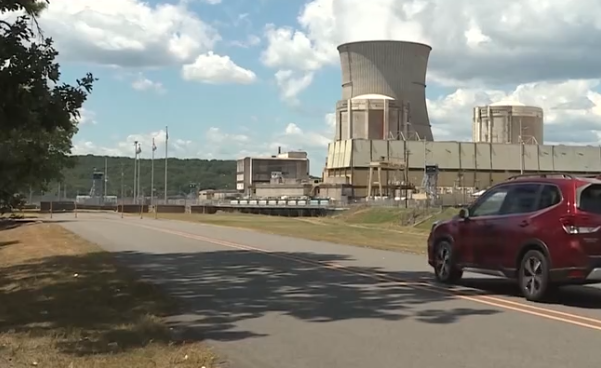
Oklahoma Strives to Build the Nation's First Nuclear Energy Innovation Hub
2026-08-05

Rostov NPP Completes Preparations for Summer Peak Load
2026-08-05
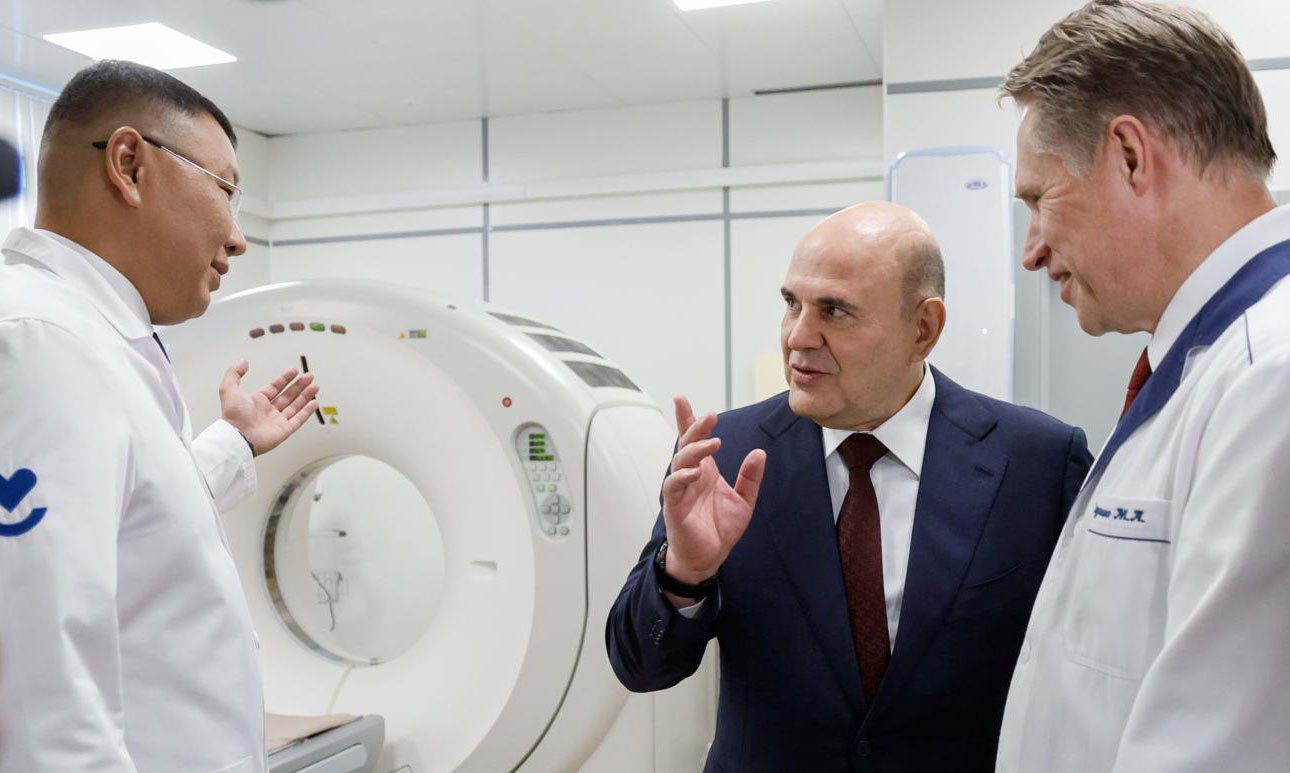
On August 1, Russian Prime Minister Mikhail Mishustin stated that Russia should complete the development of a domestically produced MRI scanner by 2027. Mishustin learned about the relevant progress during his visit to the Consultative Diagnostic Center in the Republic of Tyva. While inspecting the MRI equipment installed at the center, he asked Russian Health Minister Mikhail Murashko about the development of domestic devices. Murashko stated that the research and development work is being carried out by Rosatom, and noted that the device is expected to be completed next year. Mishustin then expressed hope that Russia would have its own domestically developed MRI scanner next year. If the device is completed as planned, it will be used in the field of medical imaging diagnostics.
2026-08-05
Intermountain Health, headquartered in Salt Lake City, recently opened a new outpatient clinic in southwest Las Vegas. Named Badura Clinic, the facility spans approximately 90,000 square feet and is located in the Spring Valley area, marking the health system's first new construction project in Nevada. The three-story Badura Clinic officially opened following a ribbon-cutting ceremony and community open house on July 30. The clinic consolidates primary care and select specialty services previously dispersed across multiple locations in the Las Vegas Valley, offering more centralized medical care for children, adults, and senior patients. According to the introduction, the clinic's services include adult and...
2026-08-05
Kazatomprom, Kazakhstan's largest uranium producer, reported on August 3 that the country's uranium output increased by 9% year-on-year in the first half of 2026. According to the report, on a 100% basis, uranium oxide (U3O8) production from entities in which the company holds stakes totaled 13,291 tonnes in the first half of this year, up from 12,242 tonnes in the same period of 2025. The 100% basis covers the full production of all entities in which Kazatomprom holds stakes, with a portion of that output potentially attributable to joint venture partners or other third-party shareholders. On an attributable basis, Kazatomprom's uranium production in the first half of 2026 stood at 7,054 tonnes, up 10% year-on-year. This basis only counts the portion of production attributable to Kazatomprom...
2026-08-05
ASP Isotopes Inc. recently released a letter to shareholders outlining operational progress across its business segments ahead of the company's second-quarter 2026 financial results announcement. The company stated that its PET lab segment achieved organic revenue growth of more than 50% in the first half of 2026 compared to the same period in 2025. Based on current expectations, the segment's full-year 2026 revenue is projected to be approximately $14 million, up from $6 million in 2025. PET-related operations are typically closely associated with radiopharmaceutical preparation, molecular imaging, and nuclear medicine diagnostic applications. On the isotope front, ASP Isotopes stated that its silicon-28 and ytterbium-176 enrichment facilities have entered the final stage before commercial production, with first deliveries expected in the second half of 2026...
2026-08-05
The U.S. Department of Agriculture will invest $25 million to build a new sterile fly release facility in Arizona, strengthening efforts to control New World screwworm and reduce the risk of it invading American livestock herds. Agriculture Secretary Brooke Rollins announced the plan during a visit to the Douglas Port of Entry in Arizona. According to the department, releasing sterile flies is a key method for suppressing and ultimately eradicating New World screwworm populations. The proposed Arizona facility will enhance USDA's sterile fly release capacity and complement existing facilities and operations in Texas, Mexico, and Panama, further strengthening emergency response capabilities along the U.S. southwest border. The U.S...
2026-08-04
Using Z boson probes at the Large Hadron Collider (LHC), scientists have revealed new details about how the hottest matter in the universe—the quark-gluon plasma (QGP)—absorbs energy, challenging existing theoretical models. This research provides important clues for understanding the state of the early universe shortly after the Big Bang. To gain deeper insights into the QGP, physicists cleverly employ Z bosons as messengers. Since Z bosons do not interact with the QGP, they can traverse the plasma almost unaffected, precisely recording information about the initial state. By analyzing the momentum differences between μons produced from Z boson decays and their recoiling jets, scientists were able to determine the energy lost by quarks as they traverse the QGP...
2026-08-04
Water-based nanofluidic ionic devices offer unique advantages in frontier fields such as brain-computer interfaces and biocompatible computing. Recently, the research team from the State Key Laboratory of Heavy Ion Science and Technology at the Institute of Modern Physics, Chinese Academy of Sciences, in collaboration with Lanzhou University, Hebei University of Geosciences, and other partners, successfully achieved stable ionic memristive effects in single-ion-track nanochannels. Through precise regulation, they realized programmable transitions between memristive and synaptic functions, providing a new technological pathway for the development of next-generation low-power neuromorphic computing hardware. The related results were published in the journal *Small* on July 22. Relying on the Heavy Ion Research Facility in Lanzhou (HIRFL), the researchers...
2026-08-04