
Search Results
Keyword:1

Energoatom and the E.O. Paton Electric Welding Institute of the National Academy of Sciences of Ukraine Sign Scientific and Technical Cooperation Agreement
On August 13, Pavlo Kovtoniuk, head of Ukraine's national nuclear energy company Energoatom, and Ihor Kryvtsun, director of the E.O. Paton Electric Welding Institute of the National Academy of Sciences of Ukraine, signed a scientific and technical cooperation agreement. Under the agreement, the two parties will integrate scientific research and engineering technical resources to provide technical support for the safe operation of nuclear power units and other nuclear energy facilities, and will cooperate in areas such as extending the service life of reactor installations and the feasibility study and implementation of new nuclear power unit projects...
2026-08-15
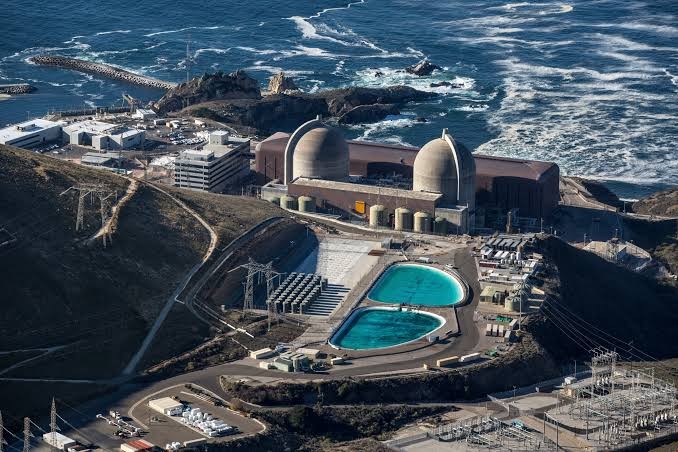
U.S. Department of Energy Awards $271 Million to Support Extended Operation of Diablo Canyon Nuclear Power Plant
The U.S. Department of Energy (DOE) recently awarded $271 million to Pacific Gas and Electric Company (PG&E) to support the continued operation of the Diablo Canyon Nuclear Power Plant. The funding will be used to ensure the plant maintains safe and reliable power generation during the license extension period and to support workforce stability. In April of this year, the U.S. Nuclear Regulatory Commission (NRC) approved a 20-year extension of the operating licenses for both units at Diablo Canyon. Under the previous schedule, the plant's two units were originally slated to cease commercial operation in 2025. Assistant Secretary for Nuclear Energy Ted Garrish stated that keeping Diablo Canyon operational is of great significance in meeting California's growing demand for affordable, reliable, and safe electricity. The Civil Nuclear Credit Program is helping protect this critical baseload power source and prevent premature retirement of reliable generation facilities from the grid.
2026-08-15
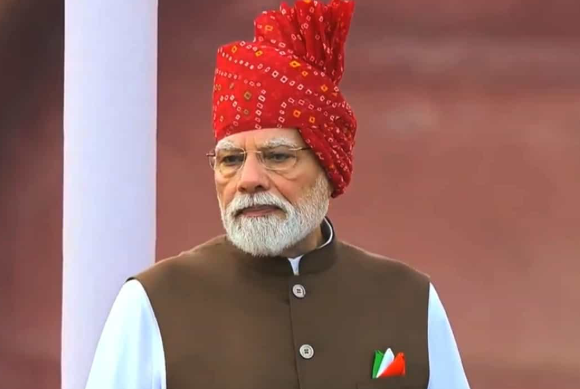
Red Fort Address: Modi Reaffirms "Developed India" Vision for 2047, Sets 100 GW Nuclear Power Target
On August 15, India celebrated its 80th Independence Day, with Prime Minister Narendra Modi addressing the nation from the ramparts of the Red Fort in Delhi. The core message centered on the national vision of building a developed India by 2047. He called on citizens to move beyond small-target thinking and embrace greater developmental ambitions, emphasizing that unwavering resolve could chart a path forward for the nation amid complex circumstances. This statement continues India's recent political narrative of using the 100th anniversary of independence as a long-term development milestone. In his address, Modi highlighted India's economic and industrial transformations over the past 12 years. He noted that India, once regarded as one of the fragile five economies, has now become one of the fastest-growing major economies globally...
2026-08-15
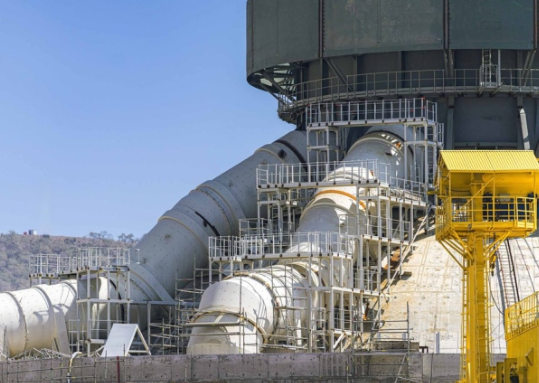
Akkuyu Nuclear Power Plant: Türkiye's Gateway to the Nuclear Supply Chain and a Platform for Long-Term Technology Acquisition
On August 15, Professor Şer Ergun, Head of the Nuclear Engineering Department at Hacettepe University, commented on the commissioning progress of the Akkuyu Nuclear Power Plant in Mersin Province, emphasizing the project's strategic and technical significance for Türkiye. She noted that the VVER-1200 technology used at Akkuyu is operational in multiple countries worldwide, and Türkiye is seizing this opportunity to operate modern reactor technology while accumulating nuclear knowledge and experience and strengthening international cooperation through collaboration with other VVER-1200 user countries. She also stressed that Turkish engineers should actively participate in similar projects. Ergun stated that Akkuyu's value should not be assessed solely from the perspective of power generation, but also from its contribution to the nuclear technology ecosystem. The project provides...
2026-08-16
Morocco Conducts 18 Expert Missions with IAEA in 2025, Civil Nuclear Cooperation Expands to African Level
Morocco's cooperation with the International Atomic Energy Agency is shifting from mere technical assistance to more active participation in regional capacity building. In 2025, Moroccan experts completed 18 international expert missions under the IAEA Technical Cooperation framework, with the agency's assistance to Morocco reaching €1.17 million in the same year. This indicates that Morocco has established a certain foundation in nuclear science, nuclear technology applications, and regulatory capabilities, and is beginning to play a more significant role in Africa's nuclear technology cooperation network. The National Center for Energy, Nuclear Science and Nuclear Technology in Rabat was granted the status of IAEA Collaborating Centre in September 2024, with a cooperation cycle covering 2025 to...
2026-08-15
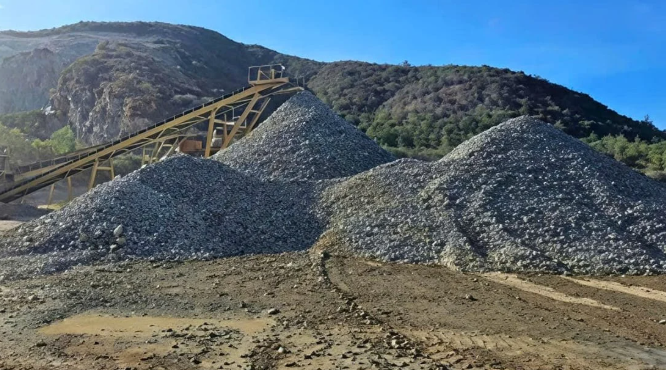
Khanh Hoa Province Approves Mineral Extraction Zone for Ninh Thuan 1/2 Nuclear Power Resettlement and Land Clearance
Recently, the People's Committee of Khanh Hoa Province issued Decision No. 2744/QD-UBND, approving the delineation of a Category IV mineral resource area in Phuoc Dinh Commune to support resettlement and land clearance works related to the construction of Ninh Thuan 1 and Ninh Thuan 2 nuclear power plants. This area falls under the category of mineral zones developed without auctioning mining rights, subject to the relevant provisions of the Law on Geology and Minerals, reflecting the local government's arrangement to provide resource assurance for supporting works of major energy projects. The approved area, designated as Zone No. 6-KĐGnhomIV, is located in Phuoc Dinh Commune with a total area of 65.04 hectares. Its boundaries are determined according to the VN-2000 coordinate system, using a central meridian of 108 degrees 15 minutes east longitude and a 3-degree projection zone, delineated through specific boundary points...
2026-08-15

Survey of Japanese 18-year-olds: Nearly 60% support restarting or replacing nuclear reactors that meet safety standards
A survey of young people around age 18 in Japan shows that nearly 60% of respondents support restarting nuclear power plants that meet safety standards or replacing existing reactors with new units; meanwhile, over 70% of respondents have expectations or some expectations for advanced innovative reactors. The 18-year-old awareness survey conducted by the Nippon Foundation asked respondents to choose which of two statements was closer to their own view: one being that nuclear power plants meeting safety standards should be restarted or replaced with new units; the other being that nuclear power should not be relied upon due to accident risks and radioactive waste issues. The results showed that 28.5% of respondents said their view was "close" to the first statement, and 29.8...
2026-08-16
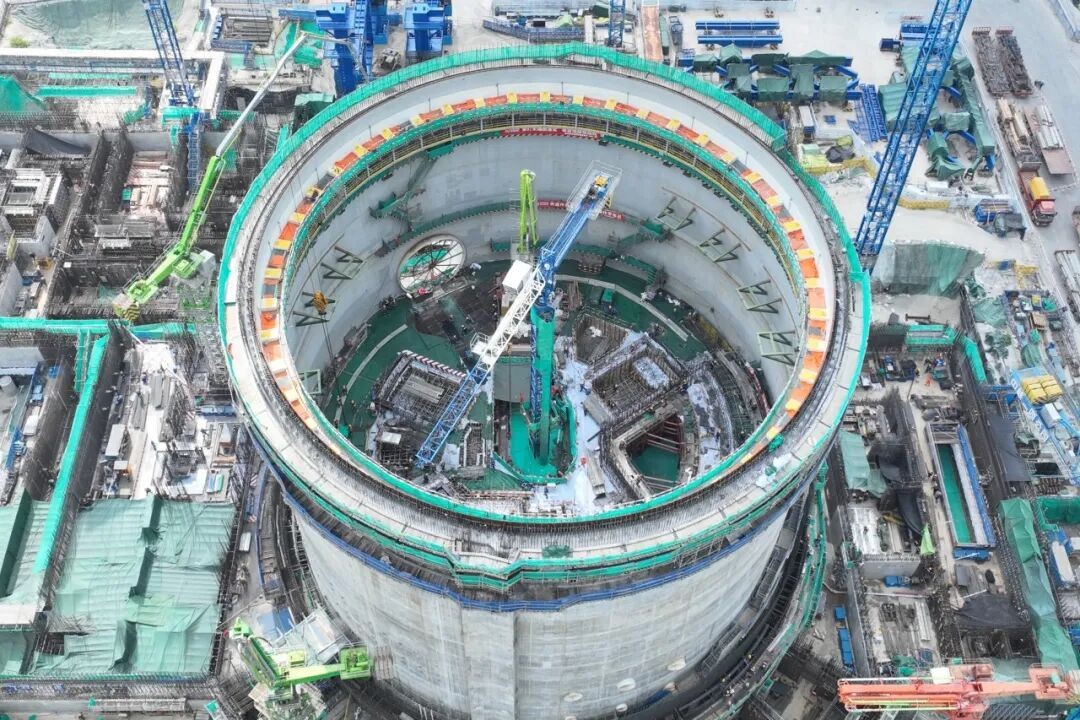
Concrete Placement of the 16.5m Slab in the Reactor Building of Unit 4 at Zhangzhou Nuclear Power Plant Successfully Completed
At 21:58 on August 13, the concrete placement of the 16.5m slab in the internal structure of the reactor building of Unit 4 at Zhangzhou Nuclear Power Plant was successfully completed, with safety and quality under control throughout the process, laying a solid foundation for subsequent key path milestones such as crane availability and inner dome lifting. As the core load-bearing structure within the reactor building, the 16.5m slab of the internal structure serves as the critical support platform for the introduction, positioning, and installation of subsequent large-scale core equipment. The engineering structure features key challenges including large construction volume, staggered elevation differences, modular structural rebar installation, and high-precision installation of owner-supplied items, imposing extremely high requirements on overall construction organization, safety, and quality control. The total concrete volume placed this time was 2,297 cubic meters, with a continuous placement duration of 30.5 hours.
2026-08-15
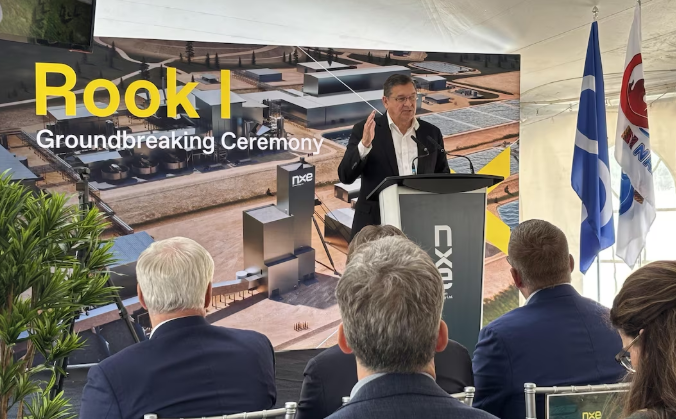
Canada's Rook 1 Uranium Mine Breaks Ground, Could Contribute One-Fifth of Global Uranium Production
The Rook 1 uranium mine project in northern Saskatchewan, Canada, has officially commenced construction. The project, advanced by NexGen Energy, is located south of the Athabasca Basin, approximately 130 kilometers north of La Loche. Saskatchewan Premier Scott Moe, former Canadian Prime Minister Stephen Harper, Secretary of State for Rural Development Buckley Belanger, and local Indigenous representatives attended the groundbreaking ceremony. The total project investment is approximately CAD 2.2 billion, with an expected construction period of four years. External infrastructure work has already begun, shaft sinking is planned for 2027, and the on-site runway will be expanded to 1,780 meters. Rook 1 is regarded as one of the world's largest uranium mine projects. NexGen estimates...
2026-08-14
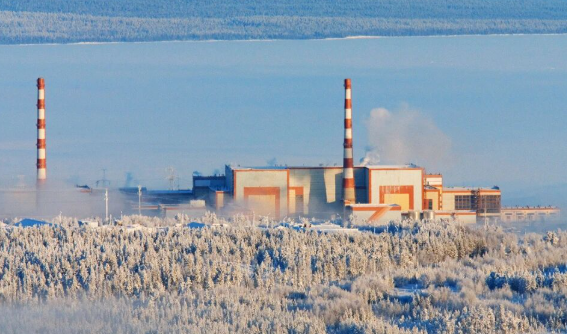
Long-term radiation environment at Kola NPP remains under control: gamma dose rates within natural background levels, 15 permanent observation stations operating since 1972
Long-term monitoring results from the external radiation monitoring group at Russia's Kola Nuclear Power Plant show that gamma radiation dose rates around the plant site have consistently remained within natural background radiation levels, with radionuclide concentrations matching background values, indicating a sound radiation environment with no differences from surrounding areas. The station's radiation safety department collects surface water samples from the discharge canal monthly, with monitoring coverage encompassing all elements including the atmosphere, snow cover, bottom sediments, food products, algae, berries, mushrooms, and caged fish. The monitoring architecture consists of two tiers: 15 permanent environmental observation stations have been in continuous operation since before the commissioning of the first reactor unit in 1972; 13 ASKRO automated radiation environment monitoring system stations provide real-time ground-level gamma dose rate data, which is transmitted directly to the Rosenergoatom crisis center and integrated into the national unified radiation monitoring network. Approximately 200,000 cubic meters of air are drawn weekly through air filtration units to capture radionuclides, with volumetric activity of radioactive iodine also measured. A mobile radiological laboratory performs on-site spectrometric analysis. Annually, about 1,200 environmental samples are collected from around the plant site and delivered to the Polyarnye Zori laboratory, where well water samples analyzed by Canberra spectrometers yield "zero nuclide" results, with samples retained for one year for potential re-analysis. Biological samples are processed using the ashing method, and instrument sensitivity is sometimes insufficient to even detect any signal from the plant's impact.
2026-08-14
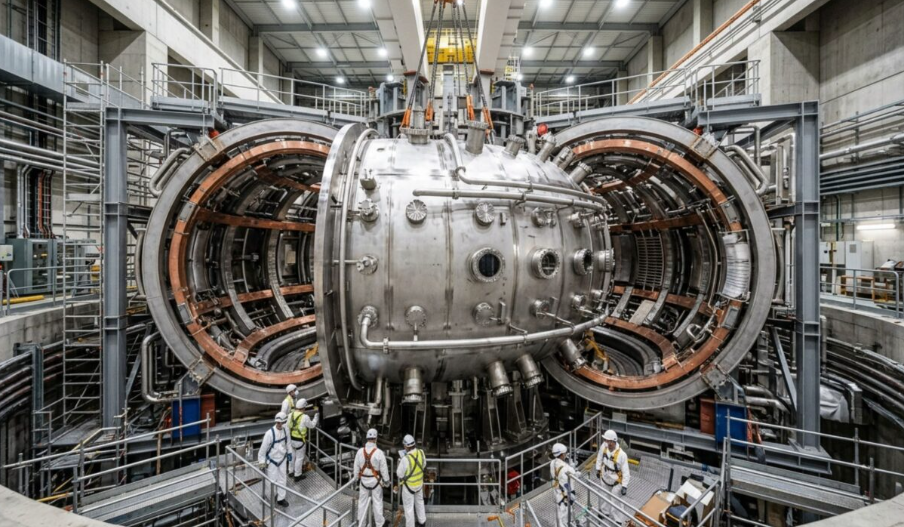
ITER Tokamak Advances Assembly in France, Fusion Experiment Targets 150 Million Degree Celsius Plasma
The ITER tokamak being assembled in southern France is one of the most closely watched large-scale experimental devices in global nuclear fusion research. The machine weighs approximately 23,000 tonnes in total and adopts a donut-shaped toroidal structure, using strong magnetic fields to confine high-temperature plasma, with the goal of replicating on Earth the conditions for fusion reactions that occur inside stars. Its plasma volume is approximately 830 cubic meters, far exceeding previous tokamak devices, and it is therefore expected to validate the key physics and engineering technologies required for future commercial fusion reactors. ITER adopts the toroidal tokamak structure because charged particles can move along toroidal paths under strong magnetic fields, thereby minimizing direct contact with the device's inner walls...
2026-08-14
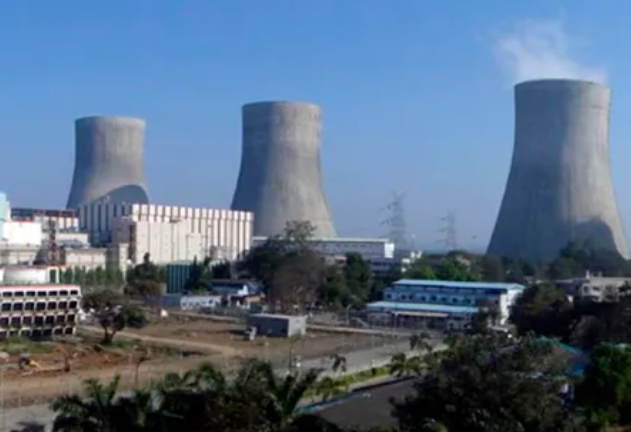
Indian Government Approves INR 133.55 Billion Equity Funding for 6 Nuclear Power Projects Under Construction
To advance nuclear power construction and meet growing electricity demand, the Indian central government has approved equity funding of INR 133.55 billion (approximately RMB 13.355 billion) for six nuclear power projects under construction, with all funds fully disbursed. This information was disclosed by Dr. Jitendra Singh, Minister of State for Atomic Energy, in a written reply to the Rajya Sabha. Singh noted that multiple technical, supply chain, and global situation factors have caused project delays: significant design modifications required under new safety standards following the Fukushima nuclear accident in Japan; delays in supply of critical equipment; and the impact of the COVID-19 pandemic on construction progress. In addition, disrupted equipment supplies from Russia, financial difficulties faced by contractors after the pandemic, complex geological conditions, and a shortage of skilled workers have also slowed project momentum. The Russia-Ukraine conflict and ongoing geopolitical tensions in West Asia have further affected supply chains.
2026-08-14
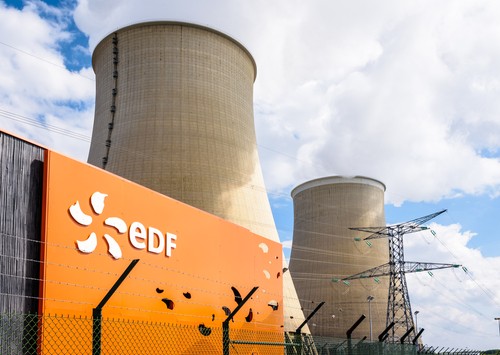
French heatwave to cut nuclear output by about 15% on Friday
Data from Electricite de France (EDF) shows that due to the fifth heatwave of the European summer, French nuclear power output is expected to fall by about 15% this Friday. At that time, nine reactors are expected to be affected, with total nuclear output reductions reaching 9.4 gigawatts during peak hours, of which six reactors will be completely shut down. This summer, many parts of Europe have experienced sustained high temperatures, with some regions seeing temperatures rise to abnormal levels, triggering issues such as water shortages and wildfires. French meteorological authorities predict that this heatwave will peak on Thursday, with temperatures across most of the country ranging between 35 and 40 degrees Celsius. From Friday, cold air from the west will first affect the Atlantic coast and the English Channel region...
2026-08-14

X-energy says U.S. Department of Energy plans to add up to $1 billion in funding for Texas advanced nuclear reactor project
X-energy CEO Clay Sell said during an earnings call on August 13 that the U.S. Department of Energy (DOE) has informed the company it will add up to $1 billion in public funding for the advanced nuclear energy project it is advancing with Dow Inc. in Texas. Sell stated that total available public funding for the Dow project in Seadrift, Texas, will reach up to $2.15 billion since 2021. The additional funding will carry the same 50-50 cost-sharing requirement as the initial award. The project is supported by the DOE's Advanced Reactor Demonstration Program (ARDP)...
2026-08-14
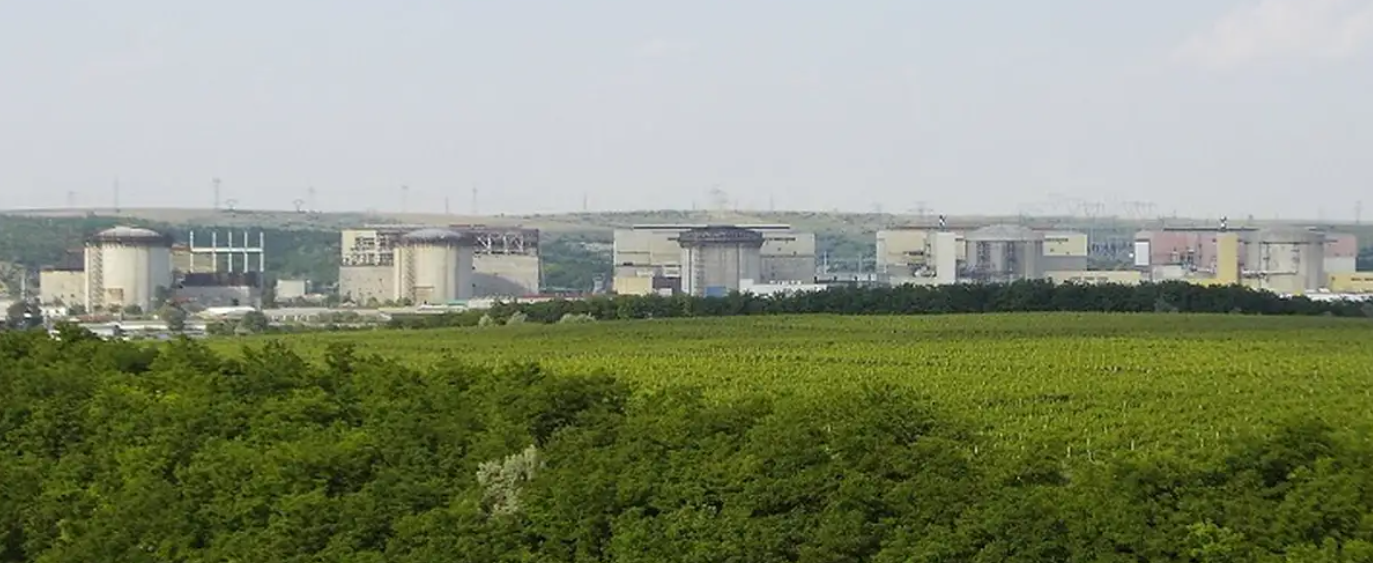
Unit 2 of Romania's Cernavodă Nuclear Power Plant shut down for at least 10 days due to falling Danube River water levels
Romeo Urjan, head of Romania's Cernavodă Nuclear Power Plant, said that due to the continuous decline of Danube River water levels, Unit 2 of the plant has been shut down since August 13 for at least 10 days. Romania's Ministry of Energy stated on August 12 that Unit 2 of the Cernavodă Nuclear Power Plant required a temporary shutdown. As planned, the shutdown operation began on the morning of August 13 and was completed before noon that day. Urjan stated that Danube River water levels are expected to continue declining over the next 10 days, so the plant currently has no plans to restart Unit 2. He emphasized that this shutdown is unrelated to nuclear safety issues or emergencies, with the main reason being...
2026-08-14