
Search Results
Keyword:3
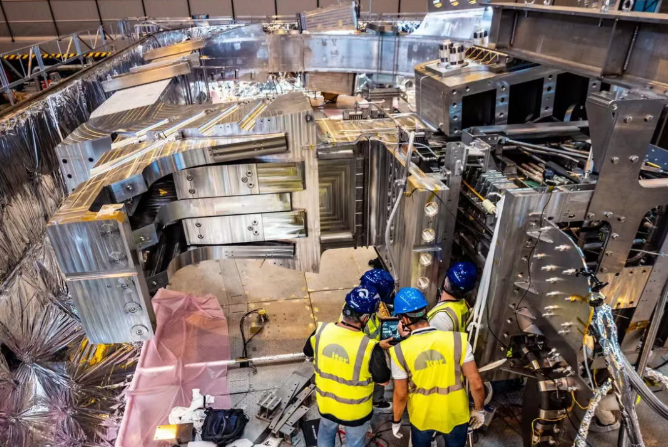
ITER magnet energized to 34,000 amperes: why must a 330-tonne coil be verified starting from half rated current?
On October 30, at the International Thermonuclear Experimental Reactor (ITER) construction site in southern France, a 330-tonne D-shaped coil was transferred from the cryogenic test facility to a transport frame. ITER Organization announced on November 2 that this No. 17 toroidal field coil had been energized to 34,000 amperes at approximately 4 kelvin, reaching half of its rated operating current. The focus of the test was to compare the deformation measured under electromagnetic loads with structural models. For a magnet that will eventually be installed together with the vacuum vessel into a confined space, millimetre-scale shape changes, local heating at electrical joints and identification of quench signals all warrant separate verification before final assembly.
2026-11-09

US Blue Laser Fusion Completes $34 Million Financing
Recently, Blue Laser Fusion (BLF) completed a private placement totaling $34 million, with approximately $25 million closed in the first tranche. The financing is combined with a business combination and reverse merger arrangement, providing funding support for the company's subsequent engineering R&D, manufacturing capability development, and technology deployment. Laidlaw & Company served as the sole placement agent for the transaction. This capital operation involves the co-acquisition of Unite Acquisition 2 Corp., with the combined entity operating under the name Blue Laser Fusion and becoming a publicly reporting company. Through this arrangement, the company is adjusting its corporate structure and capital structure, integrating its existing laser...
2026-11-07
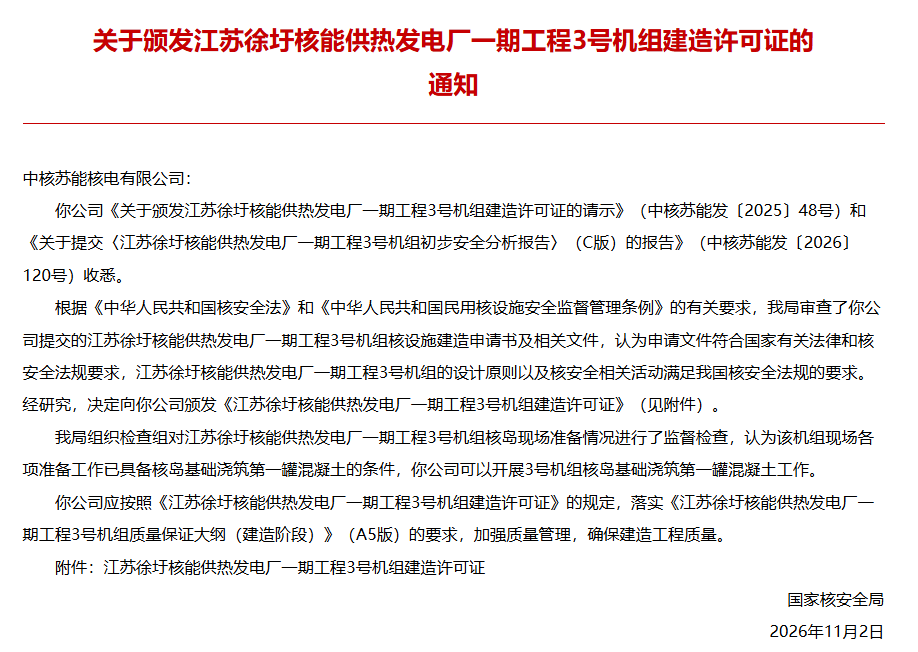
China Xuwu Unit 3 Plans First Concrete Pour for Nuclear Island
Recently, Unit 3 of the Phase I project of the Jiangsu Xuwu Nuclear Heating and Power Plant has finalized the plan for the first concrete pour of the nuclear island, marking an important preparatory milestone for the project construction. The unit is constructed and operated by CNNC Suneng Nuclear Power Co., Ltd., which is controlled and invested by China National Nuclear Power Co., Ltd. The project intends to advance the main construction of the nuclear island through this engineering milestone, while the actual implementation status remains subject to confirmation by subsequent engineering information. Regulatory licensing has provided the prerequisite for the relevant construction. The National Nuclear Safety Administration completed the review of the application documents, issued a construction license to Unit 3, and through on-site readiness supervision and inspection, confirmed that the conditions for the first concrete pour of the nuclear island foundation are met, allowing the relevant work to proceed. The license...
2026-11-06

CNNC 23 and CNNC Uranium Hold Talks to Deepen Industrial Chain Synergy
Recently, Xing Yongguo, General Manager and Deputy Party Secretary of China Nuclear Uranium Co., Ltd., and his delegation visited China Nuclear Industry 23 Construction Co., Ltd. and held a working exchange with Qu Qiang, General Manager and Deputy Party Secretary of CNNC 23. The two sides focused their discussions on the construction of relevant projects and subsequent deep synergy. It is understood that CNNC Uranium, as the national team for natural uranium resource development in China, bears the core strategic mission of serving as the cornerstone of nuclear strength and the granary of nuclear power. The two sides have natural complementary advantages in fields such as natural uranium mine engineering construction and nuclear facility decommissioning and remediation. By further broadening the dimensions of cooperation and leveraging sophisticated nuclear engineering construction capabilities, they will powerfully advance the high-quality implementation of relevant major infrastructure...
2026-11-06

Two Types of I&C Equipment for China's Zhangzhou Nuclear Power Unit 3 Pass Acceptance Synchronously
Recently, the "Longlin" safety-class and "Longqi" non-safety-class digital control system (DCS) equipment for Zhangzhou Nuclear Power Unit 3 completed factory acceptance synchronously. China Nuclear Power Engineering Co., Ltd., as the purchaser, organized and advanced the acceptance work for the two types of equipment, verifying the compliance of equipment technical specifications with design and engineering application requirements, laying the foundation for subsequent supply and on-site installation and commissioning. DCS performs monitoring, control and protection functions for relevant systems and equipment in nuclear power plants, and is an important component of the unit's instrumentation and control system. Safety-class and non-safety-class systems respectively undertake tasks of different safety levels, with different emphases in technical requirements, quality assurance and verification procedures. This synchronous org...
2026-11-05
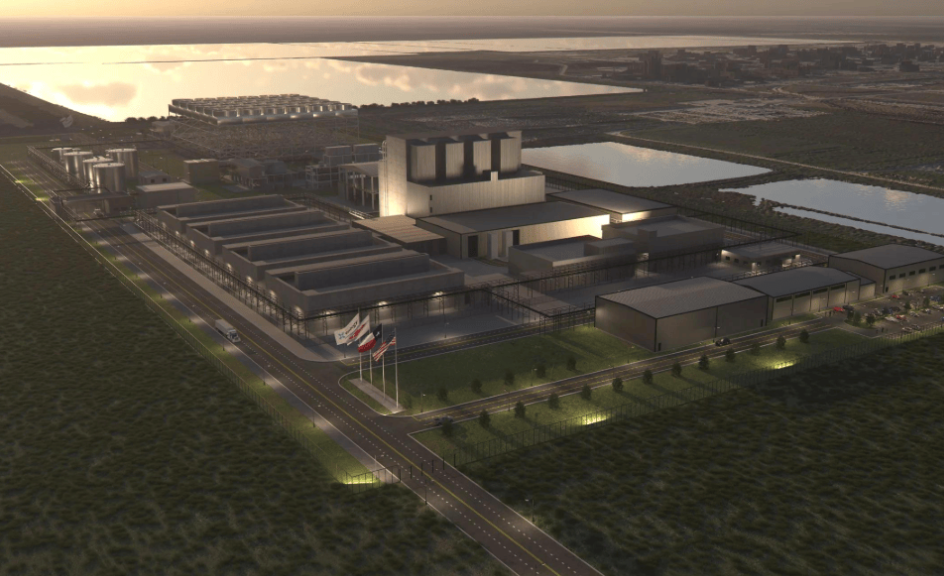
America's First "Large Reactor in a Chemical Plant" Clears the Hurdle: X-energy Xe-100 Ushers in the Conclusion of Safety Review and a Key Springboard to Commercialization
In the global race to industrialize advanced nuclear energy technologies, the high-temperature gas-cooled reactor is reaching a milestone. In late October 2026, the U.S. Nuclear Regulatory Commission (NRC) formally issued the Final Safety Evaluation Report (FSER) for the construction permit application of the Long Mott Generating Station, proposed to be built at Dow Chemical's Seadrift site along the Texas Gulf Coast. This means that the Xe-100 high-temperature gas-cooled reactor, developed by X-energy with an installed capacity of 320 megawatts electric, has successfully passed the most central safety examination at the U.S. nuclear regulatory level, clearing...
2026-11-03

Xeonova Pulsed Field-Reversed Configuration Fusion Validation Device X-3 Begins Installation
Recently, Xeonova, a fusion startup established under the authority of the University of Science and Technology of China, has officially entered the on-site construction and equipment installation phase for its self-developed X-series pulsed compression Field-Reversed Configuration (FRC) high-parameter validation device XEONOVA-3 (X-3). It is noted that the Field-Reversed Configuration (FRC) possesses unique advantages such as high beta, compact structure, and low cost, and is becoming an important development direction in the international controlled nuclear fusion field. Professor Sun Xuan, founder of Xeonova, pointed out that the X-3 device adopts the overall technical route of "high-flux FRC formation + staged wall compression + magnetic compression implosion," aiming to validate the formation, compression, and high-repetition-rate pulsed operation capabilities of high-parameter FRCs...
2026-11-03

Exploring the Frontier of Advanced Fusion Physics: Physical Mechanisms and Engineering Challenges of D–³He Secondary Neutron Suppression under the Synergy of Hot Tails and Spin Polarization
In the process of controlled nuclear fusion advancing from theoretical exploration to commercial validation, the choice of fuel pathway has always been the core variable determining the engineering feasibility and economics of a reactor. For a long time, the deuterium–helium-3 (D–³He) reaction has been regarded as an ideal "low-neutron" ultimate fusion scheme because its primary products are only charged particles (helium-4 and high-energy protons), it does not directly produce neutrons, and it possesses the potential for direct energy conversion. However, under the traditional thermal equilibrium plasma framework, D–³He is not a truly neutron-free fuel. In October 2026, the U.S. Princeton Plasma Physics Laboratory (PP...
2026-10-31

Sandia National Laboratories Awarded $3.38 Million to Develop Next-Generation Nuclear Reactor Fuel
Recently, according to U.S. media reports, the U.S. Department of Energy (DOE) announced a $3.38 million grant to Sandia National Laboratories to develop advanced analytical tools to advance the production and deployment of next-generation nuclear reactor fuel. It is reported that Brandon Williams, Administrator of the National Nuclear Security Administration (NNSA), and Deborah Frincke, Deputy Director of Sandia National Laboratories, announced at a press conference that the project is named Transuranic Reactor Fuel Pathway Sociotechnical Analysis, Techno-Economics, and Coordination (TRU-PATH). The core of the project lies in establishing a new analytical plat...
2026-10-31
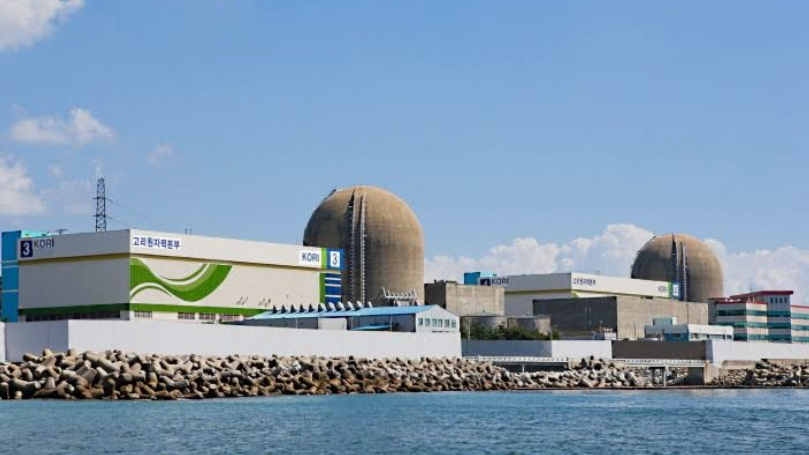
South Korea Officially Approved for 10-Year Life Extension of Kori Nuclear Power Plant Units 3 and 4
Recently, Korea Hydro & Nuclear Power (KHNP) officially received approval from the Nuclear Safety and Security Commission (NSSC) to extend the operating life of Units 3 and 4 of the Kori Nuclear Power Plant near Busan by 10 years. It is reported that both units are Westinghouse pressurized water reactors with a single-unit power output of 1025 MW, and their original 40-year design lifetimes expired in September 2024 and August 2025, respectively, during which both had been in shutdown status. Under this license, Kori Unit 3 may operate until September 2034, and Unit 4 until August 2035...
2026-10-28
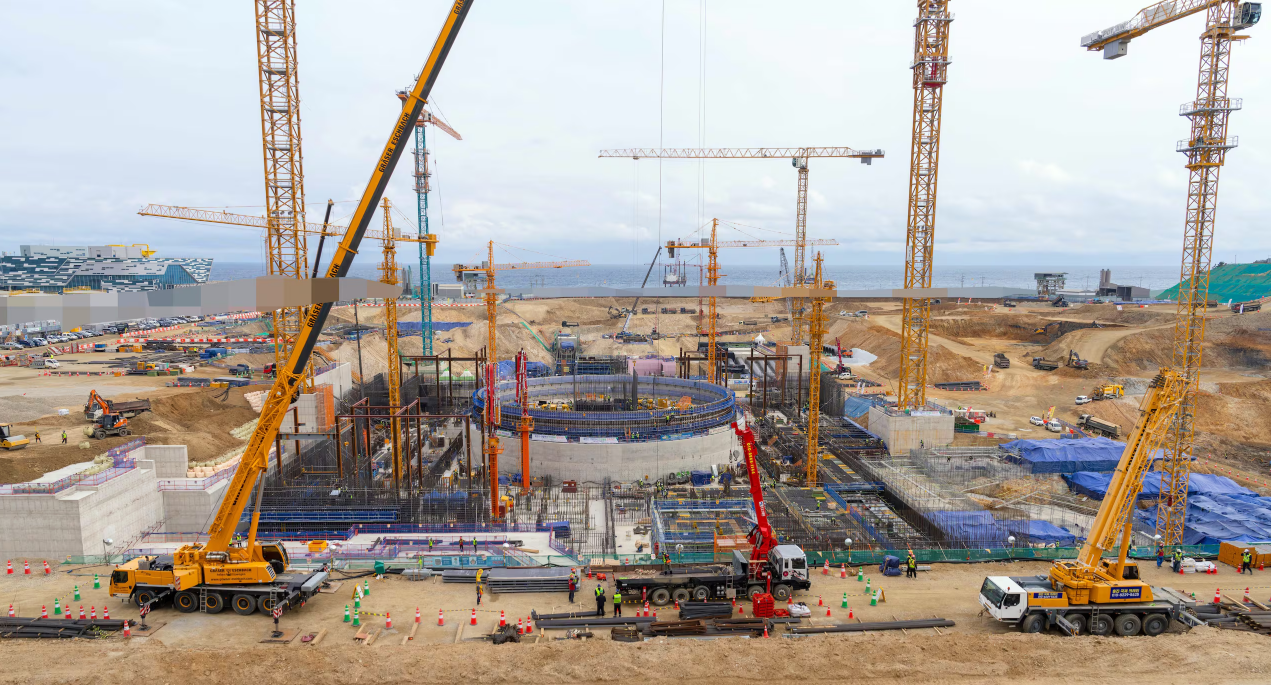
South Korea Expects Tripling of Demand for Nuclear Design Personnel by 2034
Recently, the Industry-Academic Cooperation Foundation of Seoul National University and KEPCO E&C jointly released a report titled "Human Resource Enhancement Plan to Boost Nuclear Power Plant Export Competitiveness," warning that with the revival of nuclear power at home and abroad, South Korea will simultaneously construct 15 nuclear power plants domestically and overseas by 2034, at which point demand for design personnel will surge to 4,171, facing a severe talent gap of up to 2,771. It is reported that the root cause of South Korea's nuclear design talent crisis lies in the brain drain and shrinkage of academic foundations caused by the previous nuclear phase-out policy. Data from the Ministry of Science and ICT of South Korea show that the number of domestic nuclear design personnel has plummeted from 2,486 in 2016 to 20...
2026-10-28

Ontario Power Generation Subsidiary Joins UK SMR Project to Partner with SGE in Operating and Maintaining 14 BWRX-300 Reactors
SGE SMR UK, the UK project entity under SGE (formerly Synthos Green Energy), a European small modular reactor (SMR) development and investment organization, and Origin Nuclear, a wholly-owned subsidiary of Canada's Ontario Power Generation (OPG), formally signed a letter of intent on October 22 to establish a joint venture operating company that will be responsible for the operation and technical support of 14 planned BWRX-300 small modular reactor units in the UK. According to SGE's earlier 2026...
2026-10-23

The Philippines Advances Nuclear Power Planning, Aims for 1.2 GW by 2032
Recently, at the World Nuclear Supply Chain Conference held in Manila, the Philippine Department of Energy (DOE) announced that it is fully committed to establishing the policy, regulatory, and commercial foundations for the country's first nuclear power project. The Philippine energy roadmap sets a target of achieving 1.2 gigawatts (GW) of nuclear power installed capacity by 2032, with plans to further expand nuclear power scale to 4.8 GW by 2050. It is understood that with domestic electricity demand growing at an average annual rate of 3.6% and primary energy dependence on imports reaching as high as 51.5%, the Philippine government has positioned nuclear energy as a strategic choice for ensuring national energy security and promoting low-carbon transition. Energy Secretary Sharon Garin (...
2026-10-21
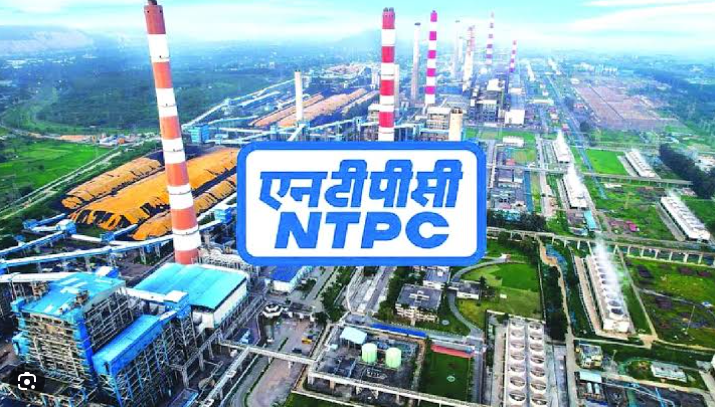
NTPC Plans to Expand Nuclear Power Project Site Studies, Sprinting Toward 30 GW Target
Recently, senior officials of NTPC Limited (NTPC) revealed that, as part of its ambitious goal of achieving 30 gigawatts (GW) of nuclear power installed capacity by 2047, the company plans to conduct feasibility studies for proposed nuclear power projects in more states including Uttar Pradesh. As India's largest energy producer, NTPC currently has a total installed capacity exceeding 91,000 megawatts (MW), meeting one quarter of the nation's electricity demand. Previously, the company has completed feasibility studies at Basai in Madhya Pradesh, Banka in Bihar, and Nabarangpur in Odisha.
2026-10-19

Construction of the Pallas research reactor in the Netherlands advances steadily, with commercial operation planned before 2032
Recently, the second-phase construction of the Pallas research reactor project in Petten, the Netherlands, has made significant progress, with construction of the underground walls and the Aircraft Protection Shell (APS) advancing steadily. As a key new-build project to replace the aging High Flux Reactor (HFR) currently in service, Pallas is scheduled to complete civil construction around 2030 and achieve full commercial operation before 2032. In terms of engineering and construction details, with the smooth completion of the floor slab on underground level -3, the construction team has fully launched segmented pouring operations for the walls on each underground level and the APS protective shell. On level -3, the APS protective wall is being concreted in 12 successive segments...
2026-10-16