
Search Results
Keyword:AI

Israel's Quantum X Labs Claims Efficient Geometric Encoding for Complex Nuclear Environments
Quantum X Labs Inc. of Israel announced on September 3 that it has achieved a key milestone in its nuclear quantum business: the company has developed a new method to more efficiently encode complex spatial geometries into quantum transport frameworks. The company stated that the new method can be used to simulate the trajectories of particles moving through complex material boundaries and heterogeneous structures, providing a new technical pathway for representing more complex physical systems within quantum computing frameworks. Such capabilities are closely related to simulation needs in practical nuclear-related scenarios such as nuclear power plants, medical devices, and space exploration. In photon and particle transport simulations, real-world systems often contain complex boundaries,...
2026-09-04
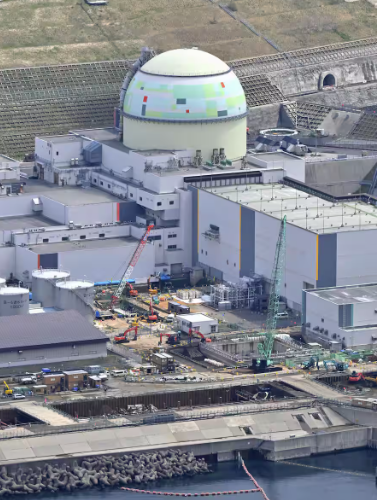
Japan's Tomari Nuclear Power Plant Unit 3 Restart Review Still Requires Additional Fire Safety Documentation
On September 3, a review meeting was held for the restart plan of Unit 3 at Japan's Tomari Nuclear Power Plant. The Nuclear Regulation Authority (NRA) pointed out that the explanations submitted by Hokkaido Electric Power regarding fire safety measures still contain issues requiring further confirmation, and requested the company to provide more detailed assessment materials. The equipment design and construction plan required for the restart of Tomari Unit 3 has been under review since last year. One of the current review priorities is whether relevant workers have adequate and feasible evacuation measures in the event of a fire on site. At the meeting that day, representatives of Hokkaido Electric Power explained the revised fire safety...
2026-09-04
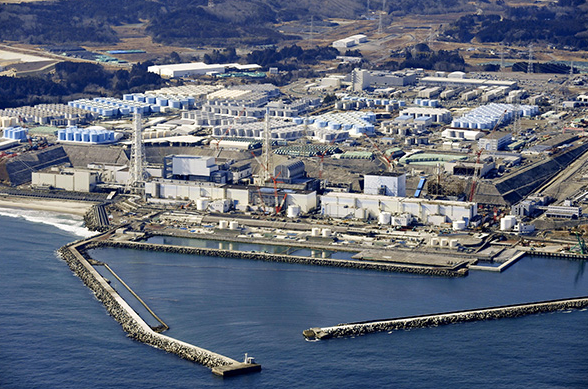
Fire alarms triggered nine times in four weeks at Japan's Fukushima Daiichi Nuclear Power Station
At 21:44 on September 3, a fire alarm was triggered in the water treatment control room building of Japan's Fukushima Daiichi Nuclear Power Station. Tokyo Electric Power Company (TEPCO) stated that no open flames or smoke were found at the scene. After firefighters arrived and conducted inspections, it was confirmed shortly after 22:30 that evening that this was not a fire. TEPCO said it would subsequently inspect the relevant detectors. Including this incident, the Fukushima Daiichi Nuclear Power Station has triggered a total of nine fire alarms in the past four weeks. Previously, on August 8, a fire alarm was triggered in the maintenance building for Units 5 and 6; on August 12, an alarm sounded in the emergency diesel generator room for the high-pressure core spray system of Unit 6; on August 13, an alarm sounded in the main office building; on August 15, an alarm sounded in the southwest stairwell area of the turbine building for Unit 5...
2026-09-04
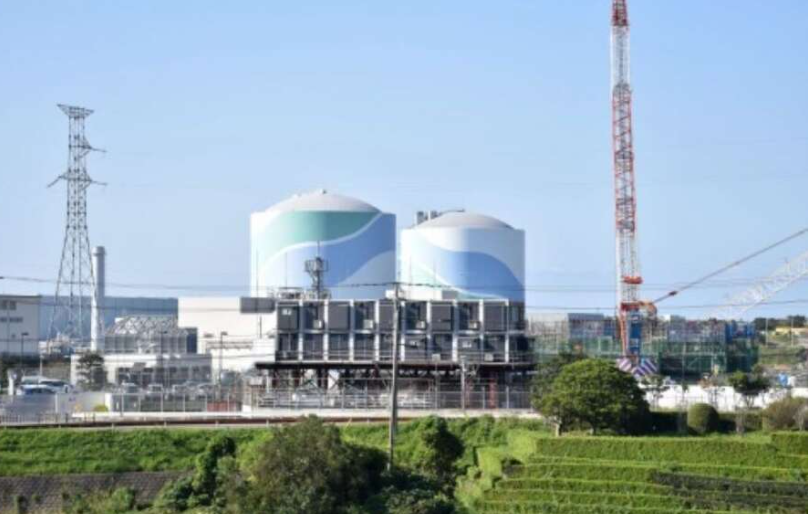
New Fuel Delivery Completed at Japan's Sendai Nuclear Power Plant
Kyushu Electric Power Co. announced on September 2 that new fuel required for Units 1 and 2 of Japan's Sendai Nuclear Power Plant has been delivered. The transport operation began on August 30, 2026, and concluded on September 2. According to information released by Kyushu Electric Power, the new fuel delivered this time was manufactured by Nuclear Fuel Industries, Ltd. Specifically, Unit 1 of the Sendai Nuclear Power Plant received 24 new fuel assemblies transported in 12 shipping containers, while Unit 2 received 28 new fuel assemblies transported in 14 shipping containers. The new fuel transport was carried out using a combination of land and sea routes. Kyushu Electric Power stated...
2026-09-03

Uzbekistan Plans to Raise Localization Rate of Nuclear Power Project to Over 30%
Uzbekistan plans to improve the localization level of the integrated nuclear power plant project in the Jizzakh region, aiming to increase the share of domestically produced goods and equipment from the preliminary estimate of 21% to at least 30%. The project has a total investment of approximately $9.5 billion and is regarded by Uzbekistan as one of the important future sources of baseload electricity. President Shavkat Mirziyoyev stated during an inspection of the project construction site and the planned satellite city for nuclear industry personnel that the current localization rate still needs to be raised, and called for expanding the participation of domestic enterprises in equipment supply, engineering construction, and supporting infrastructure. Based on the total project investment, if the localization rate reaches 30%, the value of domestically supplied goods and equipment will be approximately $2.85 billion. If the localization rate reaches 30%, the value of domestically supplied goods and equipment will be approximately $2.85 billion.
2026-09-03

Study Says Neutrino Laser Physically Impossible Due to Mechanism Constraints
On September 2, physicists at the Massachusetts Institute of Technology published two papers in Physical Review Letters analyzing a previously proposed neutrino laser concept. The research concludes that, due to atomic recoil effects and the fermionic nature of neutrinos, the scheme of using radioactive atomic clouds to produce laser-like neutrino beams is physically impractical. Neutrinos are elementary particles with extremely small mass and very weak interactions with ordinary matter. Earlier research had envisioned cooling radioactive atomic clouds to nanokelvin temperatures to form a Bose-Einstein condensate. According to this concept, atoms in a quantum coherent state might decay synchronously, producing neutrino beams with strong directionality through a quantum amplification effect similar to superradiance...
2026-09-03

U.S. PACMAN AI Framework Achieves Millisecond-Level Control of Fusion Plasma
The PACMAN AI framework, developed by researchers at the U.S. Department of Energy's Princeton Plasma Physics Laboratory (PPPL) and Princeton University, has completed five experimental validations in real fusion experimental systems. The framework can complete data processing, state prediction, and control command output in approximately 20 milliseconds, addressing rapidly developing instabilities in fusion plasma. This is an artist's rendition of the PACMAN AI framework for fusion systems. (Illustration credit: Kyle Palmer / PPPL Communications Department) PACMAN stands for Prediction and Control via Machine Learning. Related design and preliminary experimental results have been published in...
2026-09-03
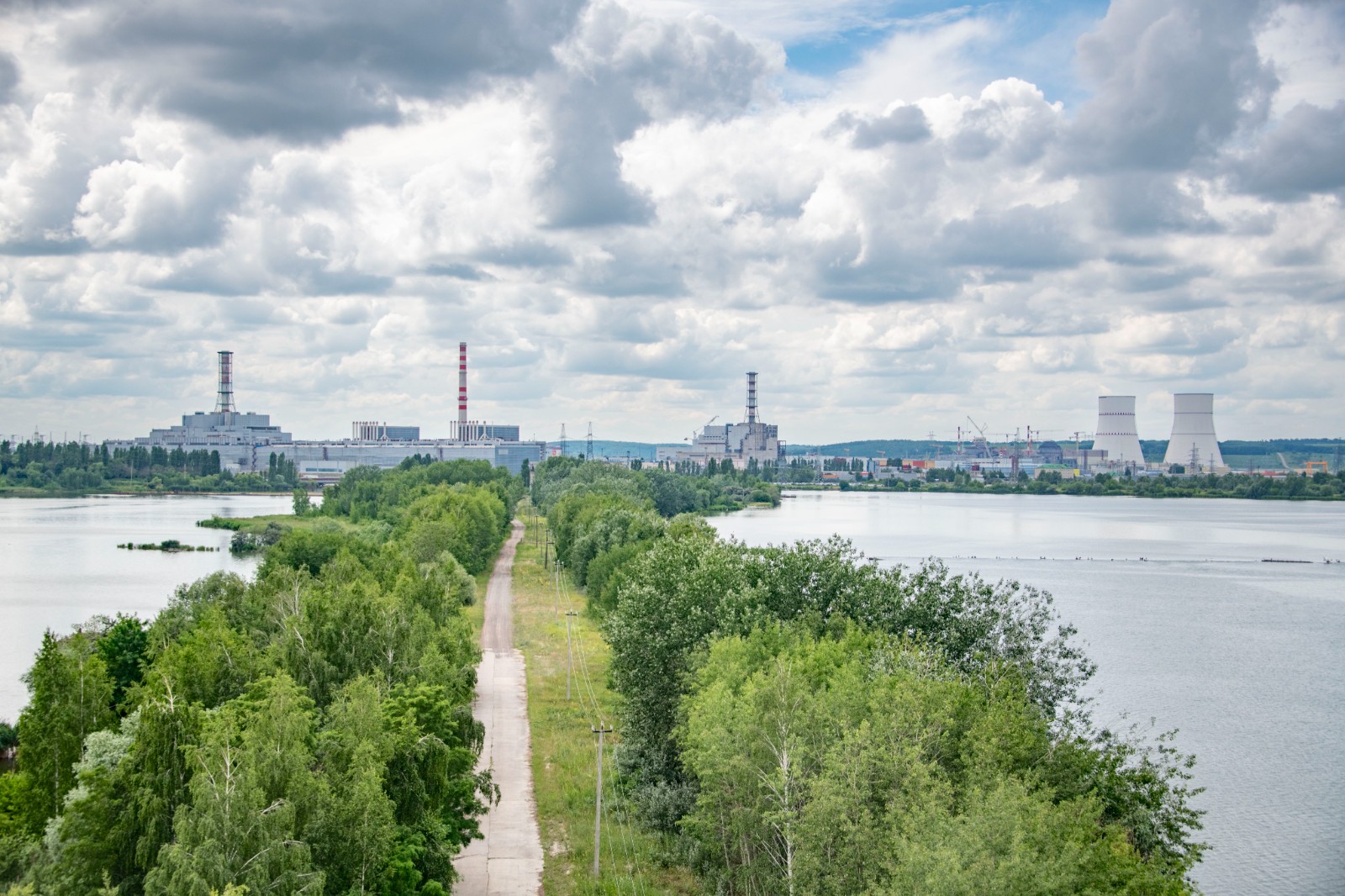
2026 maintenance work completed at Russia's Kursk NPP
All 2026 maintenance work at Russia's Kursk NPP has been completed. In the final phase, the plant compressed the maintenance duration by 23.5 days, which is expected to increase electricity generation by approximately 500 million kWh. On August 27, 2026, Unit 4 of Kursk NPP returned to rated power operation after completing scheduled preventive maintenance with modernization upgrades ahead of schedule. The maintenance was completed 20 days ahead of the original plan while ensuring safety and quality. The main maintenance work this cycle was concentrated in the reactor building and turbine hall, including maintenance of multiple forced circulation loop equipment, the reactor emergency cooling system, the blowdown and cooling system, as well as Units 7 and 8...
2026-09-03

Russia plans to launch main construction of Primorsky Krai NPP in 2027
Alexey Likhachev, Director General of Rosatom, said recently during the Eastern Economic Forum that the first concrete pour for the Primorsky Krai nuclear power plant is planned for 2027, with the first batch of electricity to be connected to the grid in 2032. Likhachev stated that relevant work is progressing toward these target timelines. Following conventional practice in nuclear power project construction, the first concrete pour is generally regarded as a key milestone marking the transition of a nuclear project into its main construction phase. During the same forum, Dmitry Demeshin, Governor of Khabarovsk Krai, proposed that consideration be given to building nuclear power plants in parallel in both Khabarovsk Krai and Primorsky Krai...
2026-09-03
Japan considers expanding reuse of decontaminated soil from Fukushima
Japan's Environment Minister Ishihara stated after a Cabinet meeting on September 1 that the government is considering and coordinating efforts to continue the decontaminated soil reuse project from Fukushima Prefecture at government offices and other locations in other regions, in order to raise public awareness of the relevant systems and safety management approaches. Following the Fukushima Daiichi Nuclear Power Station accident, large volumes of soil removed during decontamination operations in Fukushima Prefecture are currently stored at an interim storage facility within the prefecture. Under Japanese law, this soil must be finally disposed of outside the prefecture by March 2045. To reduce the volume of final disposal, the Japanese government is promoting the reuse of decontaminated soil with lower radiation levels. Late last month, construction work was carried out at national government joint office buildings in Sendai City and Saitama City, with soil for flower beds and other areas delivered to the sites. This marked the first time decontaminated soil was reused at such government facilities outside the Tokyo region.
2026-09-03
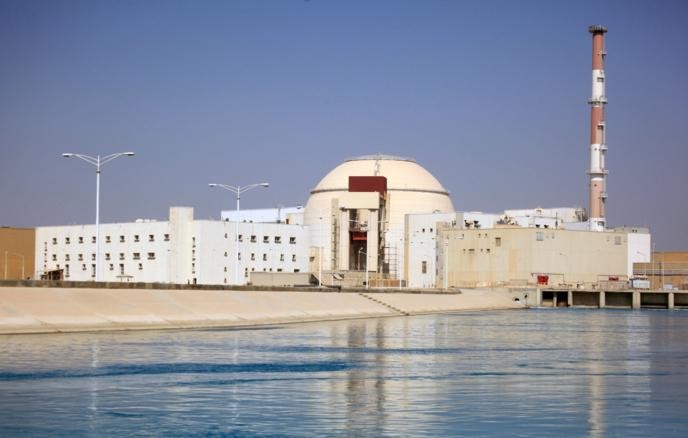
Russian personnel to participate in routine maintenance of Unit 1 at Iran's Bushehr Nuclear Power Plant
Rosatom Director General Alexey Likhachev stated during the Eastern Economic Forum that Russian personnel plan to participate in the routine preventive maintenance work at Unit 1 of Iran's Bushehr Nuclear Power Plant, which is scheduled to begin in mid-September. Likhachev said another group of workers has already arrived at the Unit 1 site of the Bushehr Nuclear Power Plant. Nuclear fuel for replacing some fuel assemblies has also been delivered to Iran. In addition to participating in the construction of Units 2 and 3 at the Bushehr Nuclear Power Plant, Russian personnel will also provide services for the operating unit. According to him, 45 Rosatom employees are currently working at the Bushehr Nuclear Power Plant, with another...
2026-09-03
Uzbekistan Proposes Joint Venture to Manage Nuclear Power Plant Construction Project
The press service of Uzbek President Shavkat Mirziyoyev announced that Uzbekistan has proposed establishing a joint venture to manage the construction of a domestic nuclear power plant with the participation of Russia's State Atomic Energy Corporation (Rosatom). On September 2, Mirziyoyev was briefed on the progress of the comprehensive nuclear power plant in the Jizzakh region and the construction of a supporting modern satellite city. According to the relevant arrangements, to improve project management, strengthen technical control, and conduct independent reviews of technical solutions, Uzbekistan plans to establish a joint venture in cooperation with leading foreign engineering companies. The statement also noted that the project will promote the alignment of relevant standards with Uzbekistan's national system, with plans to introduce approximately 100...
2026-09-03

Qinshan Nuclear Power Completes Overhaul Validation of Grille Cleaning Robotic Arm
The grille cleaning robotic arm, an integrated system of UAV-based intelligent inspection and robotic arm automatic cleaning independently developed by the Mechanical Team of the Fourth Maintenance Division at Qinshan Nuclear Power, recently completed on-site validation during the Unit 2 312 overhaul at Qinshan Phase II. Designed for seawater system intake grille cleaning scenarios, this equipment transforms the original manual operation requiring entry into deep wells into an unmanned operation conducted under ground-based remote monitoring. The intake grille serves as a critical barrier for the cooling water system of a nuclear power plant, and its unobstructed condition is directly related to the stable operation of the unit. In traditional cleaning methods, workers were required to enter narrow shafts more than twenty meters underground to perform inspection and cleaning in confined spaces, which involved high labor intensity, low efficiency, and safety risks such as falls from height...
2026-09-03

Guangdong Taipingling Nuclear Power Unit 3 Completes Lifting of Reactor Cavity Pool Wall Module
According to CGNPC Huizhou Nuclear Power Co., Ltd., the reactor cavity pool wall module of Unit 3 at the CGN Guangdong Taipingling Nuclear Power Project was recently successfully lifted, creating conditions for the advancement of subsequent engineering construction. The reactor cavity pool wall is a key stainless steel cladding structure within the reactor building and serves as an important safety cooling barrier for the reactor. Following the completion of this lifting, phased progress has been achieved in the construction of key structures related to the reactor building of Unit 3, laying the foundation for the safe operation of the unit after it is put into service...
2026-09-03
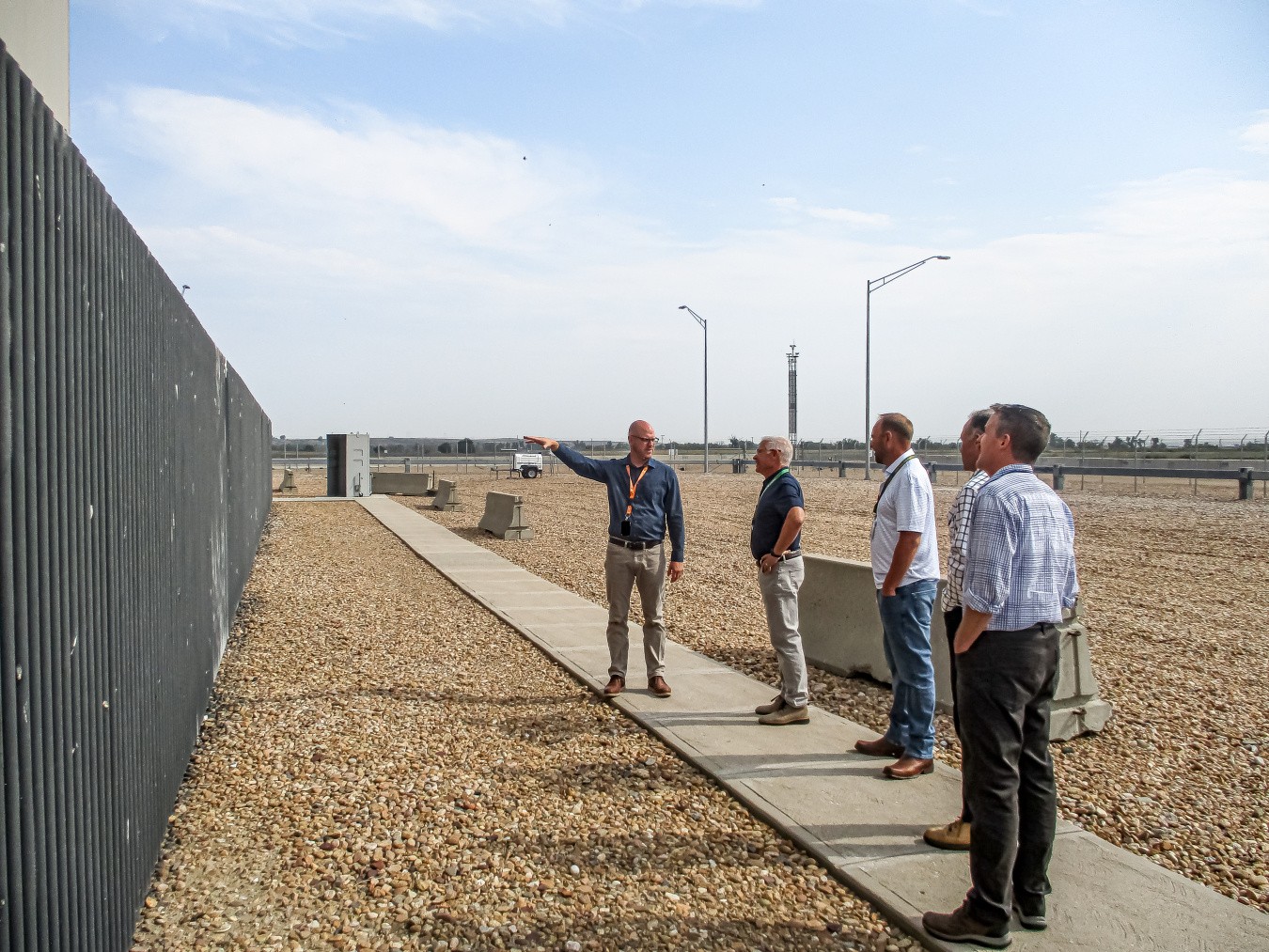
DOE Officials Visit Fort St. Vrain Spent Fuel Storage Facility in Colorado
Tim Walsh, Assistant Secretary of the U.S. Department of Energy's Office of Environmental Management (EM), recently visited the Fort St. Vrain spent nuclear fuel storage facility near Platteville in northern Colorado. The facility is managed by the DOE's Idaho Cleanup Project (ICP) and its contractor, Idaho Environmental Coalition (IEC). During the visit, Walsh inspected the storage facility and multiple supporting buildings to learn about the operational mission and historical background of the Fort St. Vrain facility. The facility currently stores spent nuclear fuel from the former Fort St. Vrain power station, which operated using gas-cooled reactor technology and was shut down in 1979...
2026-09-02