
Search Results
Keyword:Artificial Intelligence
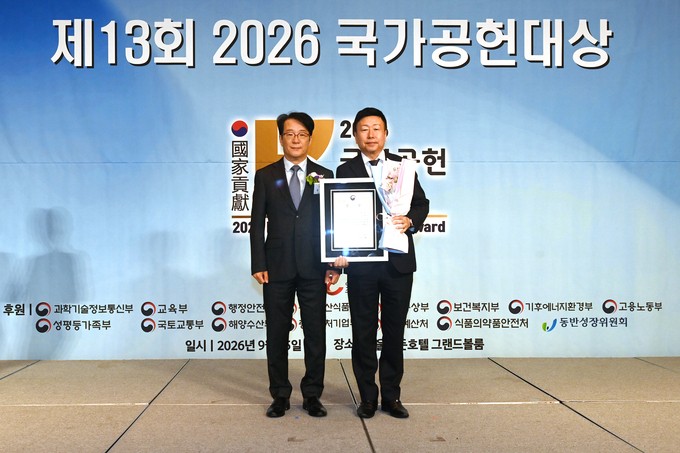
South Korea Deeply Integrates 50 Years of Nuclear Power Design Experience with Artificial Intelligence
KEPCO E&C has deeply integrated its 50 years of accumulated technology and data in the nuclear power design field with artificial intelligence (AI), and its digital transformation strategy is being comprehensively accelerated. At the 2026 National Contribution Awards ceremony, KEPCO E&C received the Minister of Trade, Industry and Energy Award in the AI innovation category. This award aims to recognize the company's outstanding achievements in organically combining nuclear power design experience with technical materials and successfully applying them to business innovation and safety management technology R&D in the power generation and energy sectors. Among the most notable achievements is NEXA, an autonomous generative AI platform developed specifically for power plant design. The platform ensures...
2026-09-20

U.S. University Establishes Fusion Energy Seed Fund to Support Four Interdisciplinary Research Projects
The Institute for Fusion Studies at The University of Texas at Austin recently launched a fusion energy seed fund to support four interdisciplinary research projects. These projects will bring together teams from plasma physics, engineering, and computational science to address challenges in control, materials, particle confinement, and edge plasma simulation faced by fusion devices such as tokamaks. The fund is supported by the Institute for Fusion Studies (IFS), the Oden Institute for Computational Engineering ...
2026-09-01

Chonnam National University Hospital in Hwasun, South Korea, Adopts Deepnoid's Chest X-ray AI Interpretation Solution "M4CXR"
Deepnoid announced on August 31 that it has signed a supply contract with Chonnam National University Hospital in Hwasun, South Korea, to provide the hospital with its AI-based chest X-ray preliminary opinion generation solution, M4CXR. This contract is part of the "AI Medical System Support Project for Regional Responsible Medical Institutions" promoted by the Ministry of Health and Welfare of South Korea. Chonnam National University Hospital in Hwasun plans to improve the work efficiency of medical staff in interpreting chest X-ray images and further enhance the quality of medical services through the introduction of M4CXR. A representative from the Hwasun branch of Chonnam National University Hospital stated that introducing a generative AI-based image interpretation support system is of great significance for improving the quality of public medical services...
2026-08-31
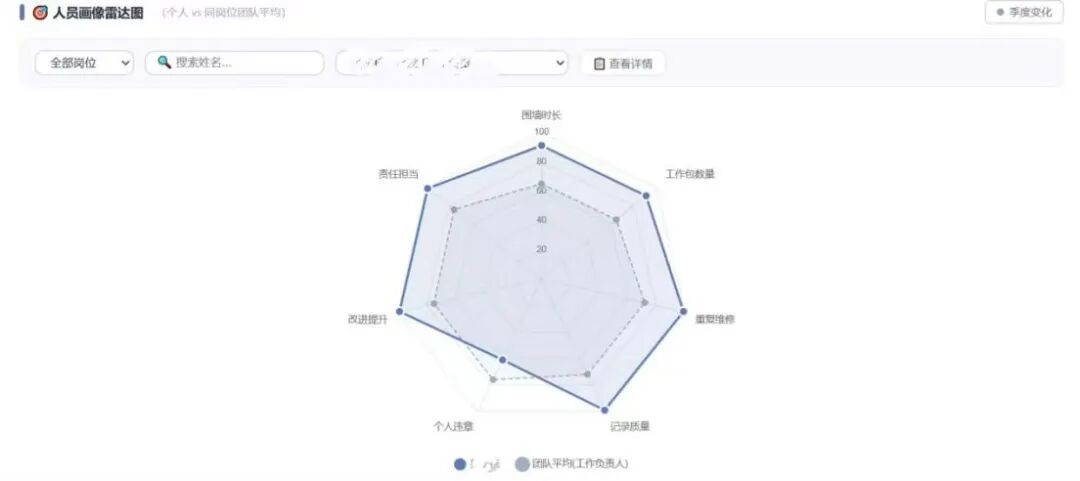
Tianwan Nuclear Power Advances AI-Empowered Intelligent Upgrade of Maintenance Operations
In recent years, the maintenance domain of Tianwan Nuclear Power has relied on platforms such as Hezhi·Longling to address pain points in efficiency, quality, and management across the entire maintenance business chain, promoting the integration of artificial intelligence with nuclear power maintenance scenarios. To date, applications including personnel profiling, work order generation, compliance inspection, and auxiliary generation of electric actuator maintenance plans have achieved phased results, while projects such as the intelligent lifting command platform and marine tunnel cleaning robot are also under development. In personnel management, Tianwan Nuclear Power has established a seven-dimensional personnel capability scoring model, setting differentiated evaluation indicators for different maintenance positions to form position-based, data-driven personnel capability profiles. The system can integrate historical data, support multi-period data retention and trend comparison, and display personnel capability distribution through radar charts, bar charts, and trend graphs. After batch data import, the backend automatically completes normalization calculation, multi-dimensional scoring, and ranking, generating materials that include overall overview, position comparison, special analysis of responsibility performance, and improvement suggestions, providing a basis for training resource allocation, position matching, and differentiated management. To address the issues of time-consuming maintenance work order preparation and reliance on manual experience, the relevant team has developed an intelligent work order preparation assistant based on the Longhuitong intelligent agent platform, forming an application solution of "1 intelligent agent, 1 Skill capability, and 7 categories of professional knowledge bases." The system integrates the historical work order library, maintenance procedure library, equipment ledger library, risk and safety measure library, spare parts and tools library, personnel qualification library, and management procedure library. It can dynamically generate work package catalogs based on historical operation data and procedural requirements, automatically fill in work order business content, and output downloadable Excel work package drafts that can interface with the EPM system. In terms of maintenance quality control, Tianwan Nuclear Power has developed an AI intelligent agent for maintenance compliance inspection. Based on large language models and RAG retrieval-augmented generation technology, this agent can batch receive maintenance procedures, preventive maintenance program lists, and maintenance completion reports, automatically parse document content, and conduct semantic comparison. The system can check item by item the coverage of maintenance procedure implementation steps by the program, while also identifying issues in completion reports such as missing items, omissions, data anomalies, missing signatures, and logical contradictions. The structured inspection reports it outputs can be traced back to specific procedure steps or report entries, and provide rectification suggestions. Intelligent assistance is also being introduced into maintenance of key equipment. Given the large number of electric actuators in nuclear power plants, their complex models, and high maintenance requirements, Tianwan Nuclear Power has developed an auxiliary generation system for electric actuator maintenance plans. After engineering personnel input equipment information and fault descriptions, the system can call upon the electric actuator maintenance knowledge base, historical plans, and equipment data to automatically generate a draft maintenance plan, covering cause analysis, maintenance steps, technical key points, spare parts and tool preparation, and safety precautions. Verified by maintenance engineers, the relevant plans have basically met the conditions for on-site application and can save preparation time for emergency repairs. In addition to applications already deployed, Tianwan Nuclear Power is also advancing the construction of an intelligent lifting command platform. Given the high professionalism and numerous control links involved in crane lifting operations at nuclear power plants, the platform is planned to support both web and API interface usage, and to manage processes such as development, training, and online monitoring through AI models. According to the design, the platform can assist in lifting planning after inputting lifting object parameters and site conditions, recommending equipment and lifting point positions, and alerting to risks such as overload and collision. It can also generate lifting plans based on cargo information, provide handling steps, required materials, and contact person information for emergency situations, and be used for training question bank generation, operation record analysis, and rectification report output. Tianwan Nuclear Power stated that it will continue to expand AI application scenarios in the maintenance domain based on actual production needs, promote the digitalization and intelligent upgrade of maintenance operations, and strengthen network security management while advancing intelligent applications, providing support for the safe and stable operation of the units.
2026-08-28
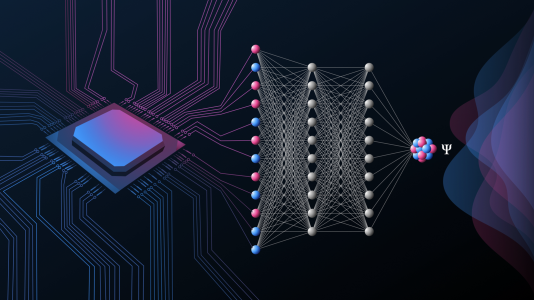
U.S. STREAMLINE Project Advances Nuclear Quantum Many-Body Research with Artificial Intelligence
On August 25, 2026, a new project named STREAMLINE is combining artificial intelligence, machine learning, and supercomputing to address the nuclear quantum many-body problem in nuclear physics research, aiming to more accurately simulate the interactions between protons and neutrons within atomic nuclei and provide theoretical support for frontier topics such as neutron stars and fundamental interactions. The difficulty of the nuclear quantum many-body problem lies in the fact that as the number of particles increases, the possible interactions among them grow rapidly, and traditional computational methods quickly hit the ceiling of computing power. Even with high-performance supercomputers, only quantum systems of relatively limited scale can typically be handled. The STREAMLINE project hopes to...
2026-08-26
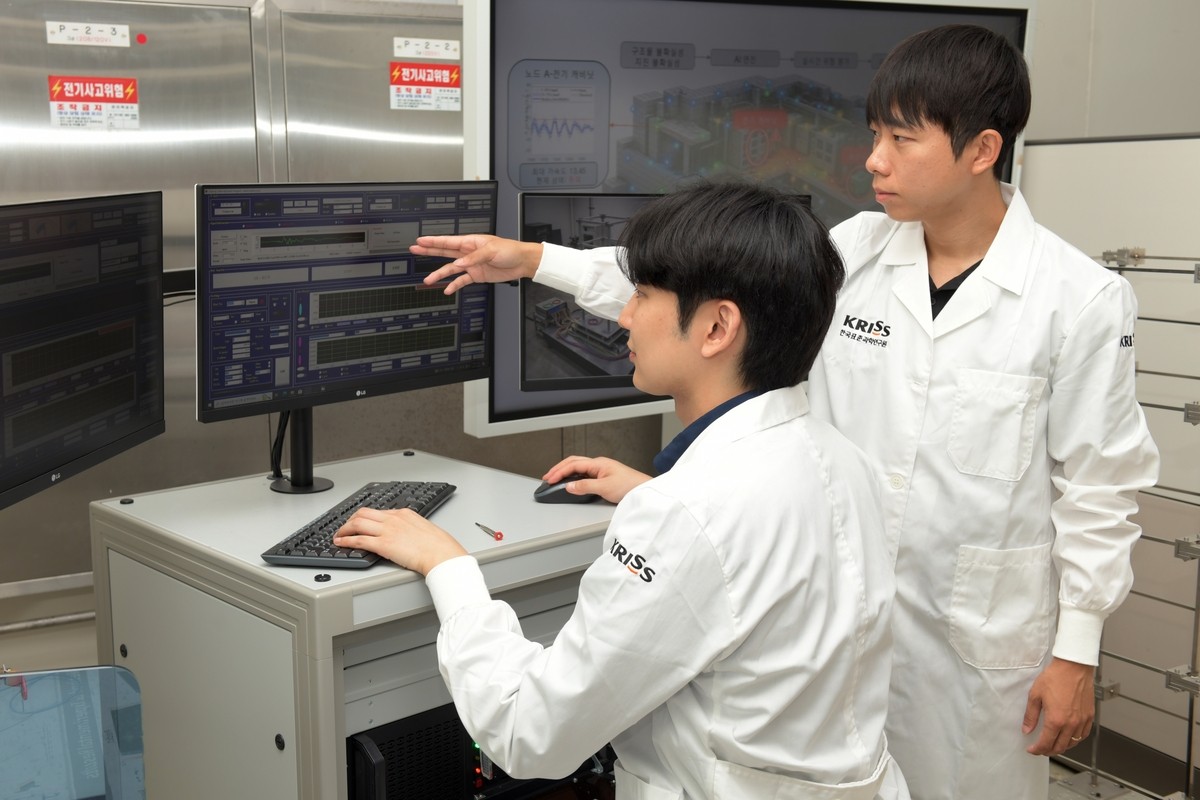
South Korea Develops AI Model for Prioritizing Post-Earthquake Inspections at Nuclear Facilities
A joint research team from the Korea Research Institute of Standards and Science (KRISS) and Ulsan National Institute of Science and Technology (UNIST) has developed a deep learning model that can assist nuclear facilities in rapidly identifying priority inspection areas after an earthquake. The model uses seismic wave signals collected from a single seismometer to predict in real time the vibration responses at multiple locations within a nuclear power plant and quantitatively ranks potential risks. The research was jointly conducted by the team of Jae-Beom Lee, senior researcher at KRISS, and Young-Ju Lee, professor at UNIST. The researchers stated that this technology can, without installing sensors at every critical location...
2026-08-26
Two US Companies Partner to Bring AI to Nuclear Power Plant Simulation Training
Nuclearn, a US artificial intelligence solutions company, and GSE Solutions, a supplier of high-fidelity simulation and operator training systems for nuclear power plants, announced a strategic partnership on August 20. The two companies will combine Nuclearn's AI capabilities with GSE Solutions' nuclear power plant simulator technology for applications such as plant simulation, operator training, and engineering analysis. According to information released by the two companies, the collaboration will proceed along two tracks. GSE Solutions plans to integrate Nuclearn's AI features into its simulator products, providing training instructors with tools such as natural language scenario development, automatic performance summaries after training scenarios, adaptive quiz and assessment generation, and plant-specific physics explanations during training...
2026-08-21

Mellifluous Fusion and Advaiya Solutions Partner to Deliver AI and Business Technology Solutions for the Fusion Energy Industry
On August 19, Mellifluous Fusion, a fusion energy marketing company, signed a cooperation agreement with Advaiya Solutions, a business technology company, to provide solutions related to business applications, artificial intelligence development, and deployment for the rapidly growing fusion energy industry. Under the agreement, the collaboration will focus on enhancing operational efficiency, organizational coordination, and responsiveness in the fusion energy supply chain through integrated systems and AI tools. As fusion energy companies, suppliers, and supporting service systems expand rapidly, digital business systems and AI applications are seen as key to supporting the industry's large-scale development...
2026-08-20
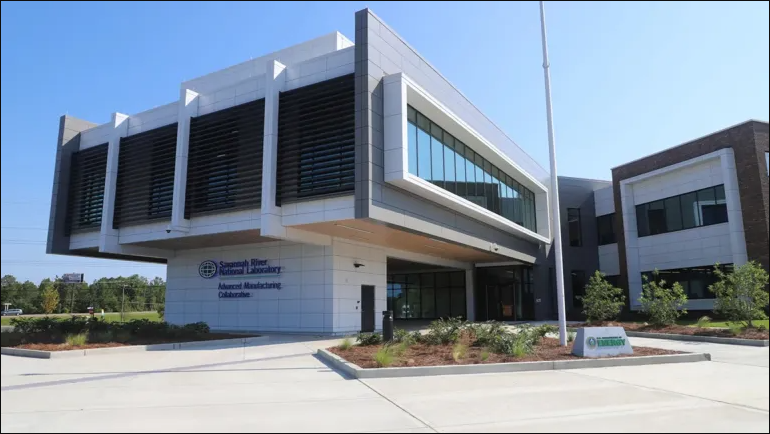
U.S. Laboratory Advances Nuclear Waste Cleanup Technology R&D with Artificial Intelligence
Researchers in South Carolina, U.S., are leveraging artificial intelligence to develop new tools for tackling complex tasks such as nuclear material disposal, waste management, and environmental cleanup. The relevant projects are being conducted at the Advanced Manufacturing Collaborative (AMC) in Aiken, a facility affiliated with the Savannah River National Laboratory (SRNL), spanning approximately 63,000 square feet, with the project launched on August 7, 2025. The Advanced Manufacturing Collaborative brings together researchers, engineers, students, industry partners, and university teams, with a focus on advancing R&D in artificial intelligence, robotics, additive manufacturing, and advanced materials. Johnny Green, Director of the Savannah River National Laboratory, stated that...
2026-08-19
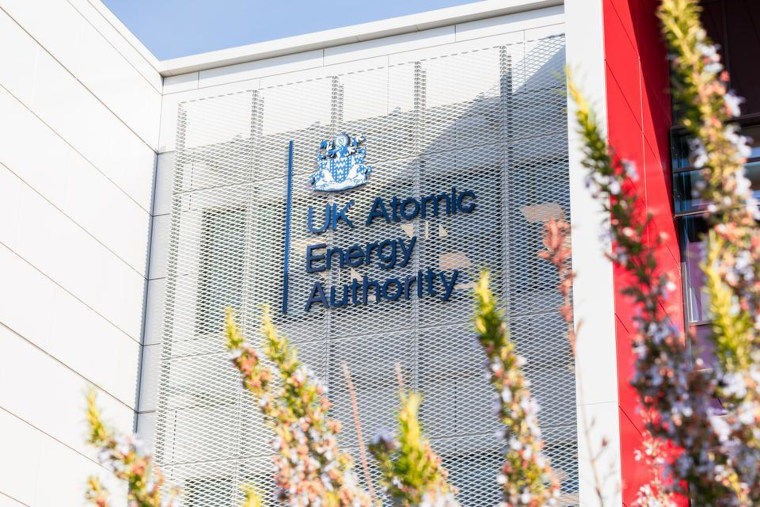
UK Atomic Energy Authority spins out Singular Machines
The UK Atomic Energy Authority (UKAEA) has recently spun out Singular Machines, a UK engineering automation company. The company is commercializing artificial intelligence technologies originating from fusion engineering R&D scenarios and has secured strategic investment and new industry contracts. According to information released by UKAEA on August 17, Singular Machines has completed a round of strategic investment. The round was led by the UK Innovation & Science Seed Fund and Oxford Science Enterprises, with participation from global engineering firm Arup and Japan's Miraiso...
2026-08-18

South Korea's Nuclear Energy Paper Output Ranks High but Quality Impact Remains Low
According to the report "Academic Competitiveness Analysis in Five Core and Emerging Technology Fields of the United States" released by the National Research Foundation of Korea on the 12th, from 2016 to 2025, South Korea's paper output in fields such as semiconductors, artificial intelligence, nuclear energy, biotechnology, and quantum information has maintained a certain level of competitiveness overall. Among these, the number of papers in the semiconductor field ranked 4th globally, artificial intelligence and nuclear energy both ranked 7th, biotechnology ranked 8th, and quantum information ranked 14th. The quantitative and qualitative status of South Korea in the five major fields. Excerpted from the National Research Foundation of Korea report. The report is based on analysis of data from SciVal, the research performance analysis platform of Elsevier. In terms of the share of South Korean papers in the global total...
2026-08-12

India Announces INR 26.75 Trillion in Investments This Fiscal Year, with INR 6.5 Trillion Planned for Nuclear Power
According to a report released by the Economic Research Department of India's Bank of Baroda, total announced investments in India reached INR 26.75 trillion between April 1 and August 5 of the 2026-2027 fiscal year. Amid persistent uncertainties in the global economic landscape, Information Technology-enabled Services (ITeS) emerged as the dominant investment destination, accounting for 56% of total proposed investments. The report stated that the ITeS sector announced investments of INR 14.98 trillion, with nearly 99% concentrated in data centers and artificial intelligence, involving 13 companies. This indicates that digital infrastructure and AI-related industries remain a strategic focus for Indian enterprises and capital allocation. By sector, investment announcements remain highly...
2026-08-10

DUNE Integrates Artificial Intelligence into Neutrino Experiment to Enhance Particle Detection and Data Processing Capabilities
The team at the U.S. Fermi National Accelerator Laboratory is advancing the Deep Underground Neutrino Experiment (DUNE) by integrating artificial intelligence and machine learning tools into experiment design, detector operations, and data analysis workflows, aiming to improve neutrino interaction identification, event classification, and detector management capabilities. Located at the Long-Baseline Neutrino Facility, DUNE has begun installing structural components for its large neutrino detector modules. The experiment consists of a near detector and a far detector: the near detector is situated at Fermilab, while the far detector is located approximately one mile underground at the Sanford Underground Research Facility in South Dakota. Both detectors will employ liquid argon time projection chamber technology to record neutrino...
2026-08-07

SHINE Selected for Two U.S. Department of Energy AI Nuclear Fuel Recycling Projects
SHINE Technologies, a U.S. fusion energy company, has recently been selected for projects under the U.S. Department of Energy's Genesis Mission, participating in two artificial intelligence applications for the nuclear energy sector. Among these, SHINE will lead a nuclear fuel cycle facility optimization project and join the Prometheus project, a collaborative effort between national laboratories and industry. The project led by SHINE, named AI-Guided Fuel Cycle Facility Optimization, is a Phase 1 project with Argonne National Laboratory as the technical partner. The project plans to develop an AI-assisted workflow to help engineers...
2026-08-07
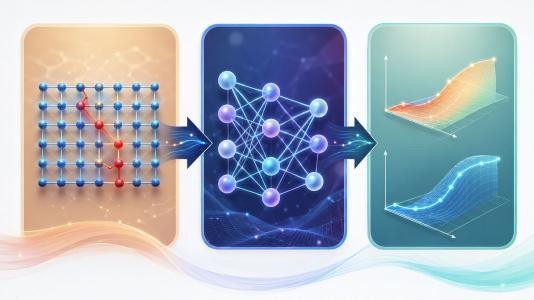
U.S. Laboratories Plan "Materials Discovery Cloud" to Use AI to Predict Impact of Defects in Microelectronic Devices
Researchers at the U.S. Department of Energy's Argonne National Laboratory, Lawrence Berkeley National Laboratory, Oak Ridge National Laboratory, and Northwestern University are planning to develop a Materials Discovery Cloud platform that leverages a physics-based artificial intelligence framework to predict how tiny defects affect the performance and lifespan of microelectronic devices. Visualization of the Materials Discovery Cloud, a physics-based AI framework that integrates experimental data, simulations, and high-performance computing to predict how tiny defects affect the performance and lifespan of microelectronic devices. (Image provided by ChatGPT.) Microelectronic devices are widely used in smartphones, laptops, secure communications, and artificial intelligence hardware. As device dimensions continue to shrink and operating speeds increase, tiny defects within materials and at interfaces have a more pronounced impact on device stability. These defects can cause overheating, leakage current, switching instability, and other issues, or in certain conditions, improve electrical or thermal performance. Identifying critical defects and understanding their evolution under real-world operating conditions has become a key challenge in the design of next-generation microelectronic materials.
2026-08-06