
Search Results
Keyword:B
U.S. Develops Hybrid Process Combining Electroforming and 3D Printing for Critical Component Manufacturing in Advanced Nuclear Reactors
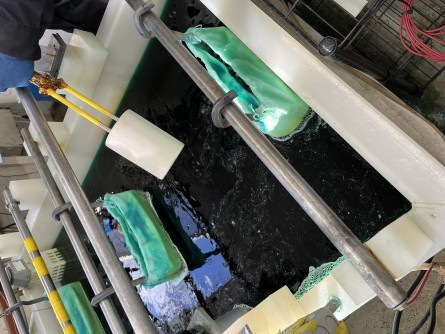
On August 24, local time, the U.S. Department of Energy's Oak Ridge National Laboratory (ORNL) announced that its scientists are collaborating with AJ Tuck Company (AJ Tuck) to develop a hybrid manufacturing process that combines 3D printing and electroforming to produce complex, leak-tight hot isostatic pressing canisters for powder metallurgy hot isostatic pressing processes. The process targets the manufacturing of critical metal components for advanced nuclear reactors and other energy and defense applications, with the goal of shortening production workflows and reducing reliance on traditional large-scale forging and casting supply chains. A hot isostatic pressing canister is a type of sealed container used to compact metal powders into high-performance metal components under high temperature and high pressure. Traditional hot...
2026-08-26

Electron Beam Processing Can Reduce Poultry Pathogens, Study Shows Turkey Meat Quality Remains Well Preserved
A study on electron beam treatment of poultry meat products shows that electron beam irradiation has the potential to reduce the risk of foodborne pathogens in poultry while preserving meat quality as much as possible. The paper, titled "Effects of Electron Beam (eBeam) Treatment on the Texture and Sensory Attributes of Chicken and Turkey Meat Batters," was published in the journal Poultry Science. Electron beam is a non-thermal processing technology that uses high-energy electrons to cause irreversible damage to pathogen DNA or RNA, making it difficult for bacteria to replicate. Like X-rays and gamma rays, electron beam has been approved by the U.S. Food and Drug Administration for cold pasteurization that does not rely on heating. The research team used the electron beam irradiation facility at Texas A&M University...
2026-08-26
Japan's Helical Fusion Publishes Research Results on High-Temperature Superconducting Magnets
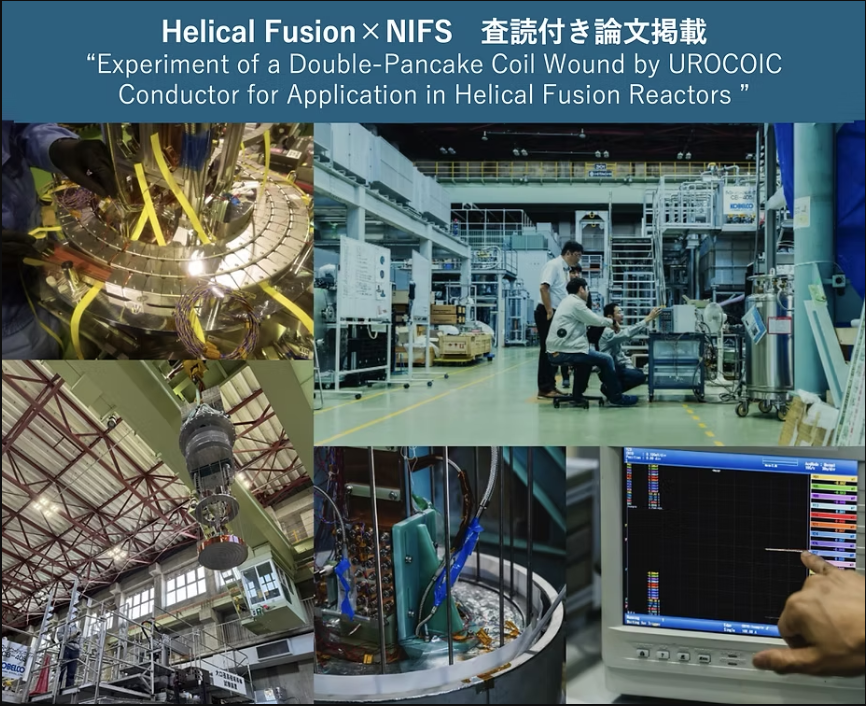
Helical Fusion recently announced that its joint research on high-temperature superconducting magnets with the National Institute for Fusion Science (NIFS) has passed peer review and been published in the Journal of Physics: Conference Series. The results, previously disclosed in a preliminary report, primarily validate the performance of high-temperature superconducting conductors for fusion reactor applications under strong magnetic fields and high currents. This study tested the UROCOIC high-temperature superconducting conductor independently developed by Helical Fusion. The research team fabricated the conductor into a double-pancake coil sample and used existing test equipment to simulate, as closely as possible, the magnetic field and current environment expected in future fusion reactors.
2026-08-26
Fujifilm Launches New X-ray Bone Densitometer for Early Osteoporosis Screening
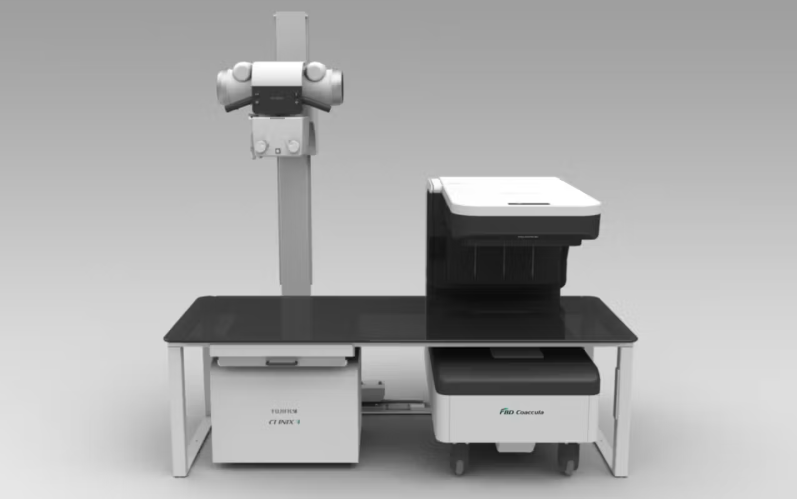
Fujifilm Corporation announced on August 26 that it has begun selling a new X-ray bone densitometry device designed to measure bone density in areas such as the lumbar spine and femur, supporting early detection of osteoporosis and fracture risk assessment. According to the company, the X-ray bone densitometer measures bone density using X-rays and is an important diagnostic tool for osteoporosis. The newly launched model is Fujifilm's first new device of this kind since 2018 and will be sold through its subsidiary Fujifilm Medical, with a price of approximately 20 million yen, varying depending on system configuration. The new device incorporates artificial intelligence technology, enhancing automated analysis functions. In the analysis of scanned images...
2026-08-26

Phase II of China Spallation Neutron Source in Dongguan expected to be completed by 2029
On August 26, a media delegation from the Guangdong-Hong Kong-Macao Greater Bay Area visited the China Spallation Neutron Source (CSNS) in Dongguan to learn about the operation of this major scientific facility and the progress of its Phase II project. The CSNS is China's first and the world's fourth pulsed spallation neutron source, often referred to as a "super microscope" for exploring the microscopic world. Since its opening in 2018, the facility has been operating in areas including basic research, research addressing major national needs, industrial innovation, and the integration of Hong Kong and Macao in science and technology innovation, and has become one of the key scientific research platforms in the Greater Bay Area. Tong Xin, Deputy Director of the Spallation Neutron Source Science Center, stated that the Phase II project of the CSNS is currently under construction, with a construction period from January 2024 to October 2029...
2026-08-26
Ontario Allocates Funding for Community Consultation on Lambton Nuclear Power Proposal
The Government of Ontario will invest CAD 500,000 to conduct further consultation with the Corunna community in Lambton County, southwestern Ontario, regarding a new power generation project. The project is proposed for the site of the decommissioned Lambton coal-fired power station, where future energy options will be compared and discussed between nuclear and natural gas. Under the arrangement, these funds will support local municipalities, Indigenous communities, and affected residents in participating in the consultation. Ontario Energy Minister Stephen Lecce stated that the province favors the development of clean energy and high-output power generation...
2026-08-26

Jamaica Launches Graduate Training Program in Radiation Protection and Safety, Poised to Become a Regional Center of Excellence in the Caribbean
Jamaica's newly established graduate training program in radiation protection and safety is being viewed as an important platform for enhancing nuclear technology safety capabilities in the Caribbean region. Chris Ardouin, an International Atomic Energy Agency expert and Senior Scientist and Technical Manager of Public Health and Forensic Science at the National Radiation Science Centre of New Zealand, stated that the program demonstrates Jamaica's potential to become a regional center of excellence for radiation protection and safety training. The six-month program, implemented as the first graduate education course in radiation protection and safety under the framework of the University of the West Indies' short-term academic resources, is currently training 12 professionals from seven CARICOM member states, with a focus on enhancing regional...
2026-08-26
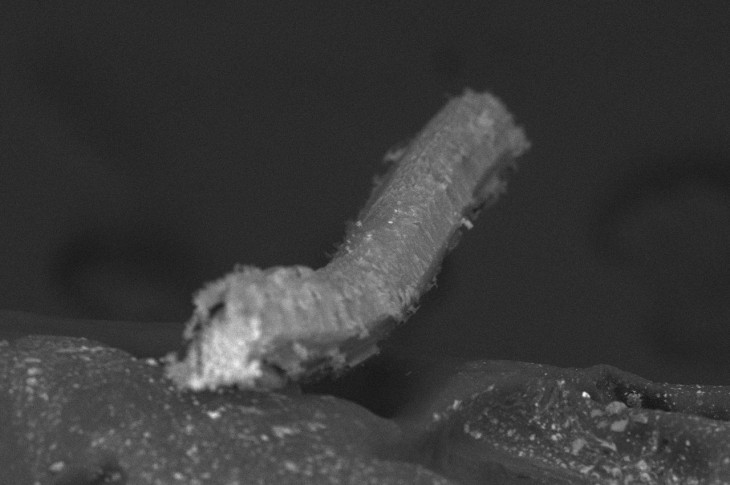
Russian Research Team Proposes New Method for Studying Morphology of Flexible Crystals
Experts from the Siberian Circular Photon Source Collaboration Center and the Institute of Solid State Chemistry and Mechanochemistry of the Siberian Branch of the Russian Academy of Sciences have proposed a comprehensive method for studying the morphology of flexible organic crystals. The method combines computational algorithms, laboratory microscopy techniques, and experimental diffraction studies, and can be used to more reliably determine crystal geometry and facet arrangement. The results have been published in the Journal of Applied Crystallography. Flexible crystals are a relatively rare class of organic crystals that can bend under very small mechanical stress while maintaining lattice integrity. Researchers indicate that among compounds with determined crystal structures, the proportion exhibiting such properties is less than...
2026-08-26

U.S. Submits Civil Nuclear Agreement with Saudi Arabia to Congress for Review
U.S. government officials said on August 25 that President Donald Trump has submitted a proposed civil nuclear energy agreement with Saudi Arabia to Congress for review. The agreement, reached in July this year, includes provisions allowing U.S. companies to export civil nuclear technology to Saudi Arabia. Under the relevant procedures, Congress will have 90 session days to review the agreement. Two congressional sources said the agreement has been submitted to congressional leadership and is expected to be referred to relevant committees for consideration. If Congress raises no objections within the specified period, the agreement will enter into effect; if Congress rejects the agreement, Trump may still exercise his veto power, and Congress would need a two-thirds majority to override the presidential veto...
2026-08-26

U.S. Fusion Roadmap Targets Early Power Plant Deployment by Mid-2030s
The U.S. Department of Energy (DOE) recently released the "Fusion Science and Technology Roadmap," proposing to accelerate the deployment of early fusion power plants by the mid-2030s. The roadmap represents a key federal-level arrangement to advance fusion technology from experimental research toward engineering and commercialization, coordinated by the Office of Fusion established in November 2025. Unlike existing nuclear power plants that release energy through fission reactions, fusion devices attempt to fuse light atomic nuclei together, with an energy source principle identical to that of the Sun. Fusion power is regarded as a potential low-carbon energy direction, but the industry remains in the experimental and demonstration stage, with private developers yet to achieve commercial-scale net energy gain, i.e...
2026-08-26
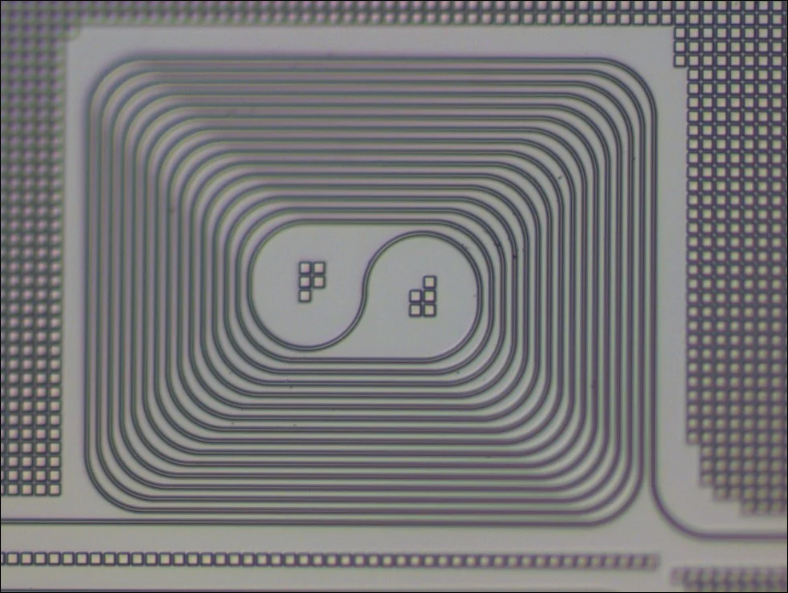
Singapore team develops deuterated silicon nitride waveguides for wafer-scale broadband light generation
A research team from the Singapore University of Technology and Design and the Institute of Microelectronics at the Agency for Science, Technology and Research (A*STAR) in Singapore has recently developed a low-loss deuterated silicon nitride waveguide capable of on-chip broadband light generation. By replacing hydrogen with its heavier isotope deuterium, the team fabricated silicon nitride waveguides at low temperatures, demonstrating potential for integration with CMOS-compatible semiconductor processes and wafer-scale mass production. The related paper, "Octave-spanning supercontinuum generation in wafer-scale low-loss deuterated silicon nitride waveguides," was published in *Optics Letters*. The study shows that this chip-scale waveguide can broaden infrared laser pulses to cover a spectral range from visible red light to deep infrared. Traditionally, silicon nitride thin films are grown from silane gas, and residual silicon-hydrogen bonds in the material absorb light in the telecommunications band, requiring high-temperature annealing that is incompatible with integrated electronic circuits.
2026-08-26

Canada Approves Power Uprate for Bruce A and B Nuclear Power Plants
The Canadian Nuclear Safety Commission (CNSC) announced on August 24 that it has decided to amend the licensing basis for the Bruce A and B nuclear power plants, approving an increase in the intermediate power operating levels of the two plants. The Bruce A and B nuclear power plants are located in Kincardine, Ontario, Canada, on the eastern shore of Lake Huron, and are operated by Bruce Power. Under the revised licensing basis, Bruce Power may increase the maximum operating power of the Bruce A plant to 95.5% of full power and the Bruce B plant to 96% of full power. Previously, the Bruce A plant was authorized to operate at a maximum power of...
2026-08-26

Egypt and Rosatom Consult on Expanding Nuclear Energy Cooperation
Egypt's Minister of Electricity and Renewable Energy, Mahmoud Mostafa Esmat, stated that Egypt will hold regular consultations with Russia's Rosatom on cooperation in nuclear energy and related fields, with meetings potentially taking place in either Egypt or Russia. Esmat said he would maintain regular meetings with Rosatom Director General Alexey Likhachev to exchange updates on the construction and commissioning progress of the El Dabaa nuclear power plant project and discuss directions for expanding cooperation. Currently, both sides are studying the addition of new units at the El Dabaa nuclear power plant, the construction of seawater desalination facilities, and the expansion of other areas of cooperation...
2026-08-26

Japan's Mihama Nuclear Power Plant Unit 3 Receives Preliminary Approval for Operation Plan Beyond 50 Years
On August 25, Japan's Nuclear Regulation Authority (NRA) gave preliminary approval to Kansai Electric Power Co. (KEPCO) for the long-term facility management plan for Unit 3 of the Mihama Nuclear Power Plant. Located in Mihama Town, Fukui Prefecture, the unit will mark its 50th anniversary of commercial operation on December 1. In May of this year, the metal top cover of the high-pressure turbine at Mihama Unit 3 suffered damage, resulting in steam leakage. At the NRA meeting held that day, KEPCO explained that the cause of the incident was believed to be thinning of the inner wall of the top cover due to steam flow. The company stated that this phenomenon falls under previously anticipated aging and degradation management for turbine equipment, and that the existing plan already includes corresponding management measures. Visual inspection and other examination methods were also deemed applicable, thus no revision to the long-term facility management plan was required.
2026-08-26

US Pacific Fusion Breaks Ground on $1 Billion Fusion Facility in New Mexico
On August 25, local time, Pacific Fusion launched construction of a research and manufacturing campus in Albuquerque, New Mexico, USA. The project involves an investment of approximately $1 billion and will be used to build the company's fusion demonstration system, with goals including achieving net facility gain and producing high-yield fusion energy pulses. The campus is located in the Mesa del Sol area of Albuquerque. According to Pacific Fusion's plan, the demonstration system aims to achieve net energy gain at the facility level by 2030, meaning the fusion device outputs more energy than the total energy initially stored in the equipment. The company stated that if this goal is achieved, it will mark a significant technological milestone in the commercialization of fusion energy...
2026-08-26