
Search Results
Keyword:B
France's n-Floating Floating Nuclear Power Project Receives Nearly One Million Euros in Funding
newcleo announced on August 26 that a consortium led by the company has been selected for a call for projects managed by Bpifrance, the French public investment bank, supporting the decarbonization of France's maritime sector. The consortium will advance research on a floating nuclear power solution called n-Floating, with the project receiving nearly one million euros in funding and an expected duration of approximately 18 months. The n-Floating project aims to validate the relevance and technical feasibility of a new floating nuclear power solution. Under the proposed concept, a non-self-propelled floating unit would carry multiple LFR-AS-200 reactors, each with an electrical output of 200 megawatts. LFR-AS-200 is one of the lead-cooled fast reactor technology lines developed by newcleo.
2026-08-27
TEPCO replaces faulty motor of robotic arm at Fukushima Daiichi Unit 2
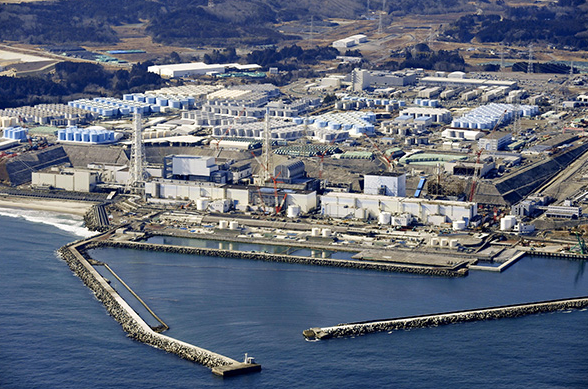
Tokyo Electric Power Company (TEPCO) began replacing the faulty motor of the robotic arm used for fuel debris retrieval trials at Unit 2 of the Fukushima Daiichi Nuclear Power Station on August 26. The robotic arm, approximately 22 meters long, is planned for use in the third fuel debris retrieval trial. During a previous operational inspection inside the reactor building of Unit 2, TEPCO found that the motor driving the robotic arm had malfunctioned, preventing the brake from releasing and the arm from extending. As the robotic arm is already installed on site, workers will enter the "front chamber" in front of the containment vessel to perform the replacement manually. The company stated that radiation levels in the work area will be strictly controlled to prevent workers from receiving excessive exposure. After this replacement, TEPCO will...
2026-08-27
Chubu Electric Power Suspected of Falsifying Decommissioning Progress at Hamaoka Nuclear Power Plant
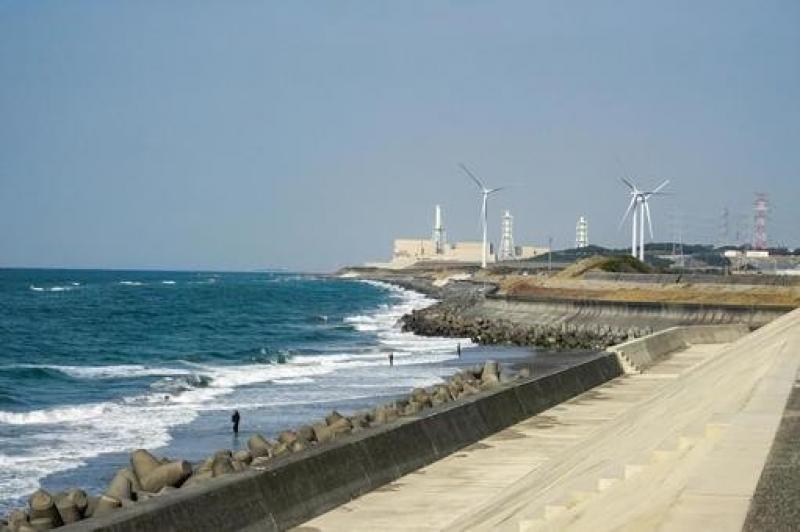
According to disclosures, Japan's Chubu Electric Power Company (CEPCO) is suspected of submitting improper reports to the Japan Spent Fuel Reprocessing and Decommissioning Promotion Organization (NuRO), which manages decommissioning funds, during the cost declaration process for the decommissioning of Units 1 and 2 at the Hamaoka Nuclear Power Plant, overstating project progress and settling related costs accordingly. The Hamaoka Nuclear Power Plant is located in Omaezaki City, Shizuoka Prefecture, Japan. Chubu Electric Power decided to shut down Units 1 and 2 of the plant in 2008, with related decommissioning work commencing in 2009. Sources say that when declaring decommissioning project costs, the company is suspected of reporting project progress as faster than actual conditions and using inaccurate data in documents submitted to the fund management organization...
2026-08-27
Belarus Advances Preparations for Radioactive Waste Disposal Facility
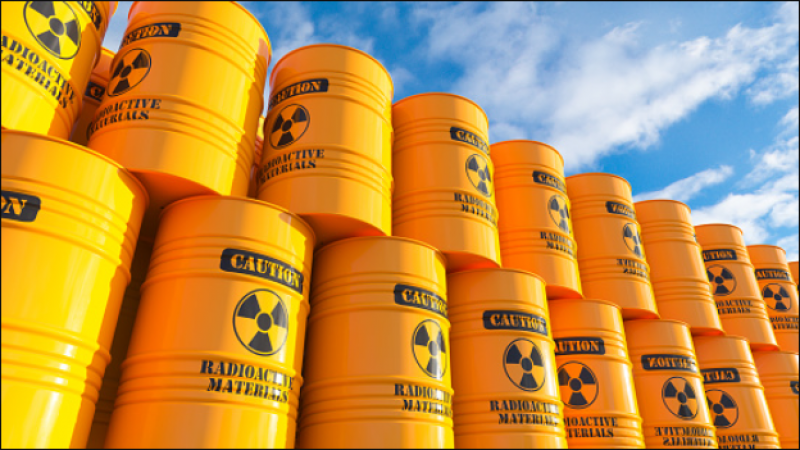
Belarus is advancing preliminary work on the construction of a centralized radioactive waste disposal facility. Mikhail Kisel, Director of the Belarusian Radioactive Waste Management Organization, recently stated at a public discussion on the environmental impact assessment report held in Mstsislaw that, according to the country's radioactive waste management strategy through 2050, existing storage facilities will need to be decommissioned in the future, and the new radioactive waste disposal facility is planned to be completed by 2030. Kisel noted that the sources of radioactive waste are not limited to the nuclear energy sector, but also include healthcare, industrial, and scientific research activities. Currently, centralized long-term storage of such waste is handled by the specialized enterprise Ekores. Belarusian radioactive waste...
2026-08-27

U.S. Army Plans to Deploy Over 20 Micro Nuclear Reactors at Military Bases
The U.S. Army has signed contracts with five companies to develop, build, and operate micro nuclear power plants at military bases, with a total contract value of up to $2.2 billion. According to relevant information, the U.S. Department of Defense requires the companies to construct, own, and operate more than 20 micro nuclear reactors at military installations by 2028. The plan is intended to enhance energy security for critical defense facilities and reduce dependence on the external power grid. The deployment is incorporated into the framework of the Janus Project, which the U.S. Army launched in 2025. The project aims to establish a power supply network composed of compact micro nuclear reactors at military bases, providing continuous and stable electricity to vital defense facilities....
2026-08-27

Training Launch for First Batch of Operators for Units 1 and 2 of Xudabao Nuclear Power Plant on Full-Scope Simulator
Recently, the first batch of operator training on the full-scope simulator for Units 1 and 2 of Xudabao Nuclear Power Plant was officially launched. The training program lasts 6 months, with 48 candidate Reactor Operators (ROs) and 24 candidate Senior Reactor Operators (SROs) participating. Centering on the five fundamental operator skills, the training conducts systematic hands-on exercises on the simulator platform, building a reserve of operations personnel for subsequent project construction and safe unit operation. The simulator for Units 1 and 2 can highly replicate the real working environment of the main control room and covers various operating conditions, making it an important platform for operations personnel to enhance their practical capabilities. The training is structured around five fundamental skills—close monitoring, precise control, conservative decision-making, teamwork, and knowledge mastery—integrating job conduct standards and team...
2026-08-27

US Advances Preparations for High-Burnup Spent Fuel Shipment to Idaho for Research
The U.S. Department of Energy (DOE) recently stated that the Idaho Cleanup Project (ICP) is participating in preparations for transporting a high-burnup spent nuclear fuel research cask. The cask is planned to be shipped from Dominion Energy's North Anna Nuclear Power Station in Virginia to the Idaho National Laboratory (INL) for subsequent spent fuel-related research. INL was selected as the receiving site primarily because it possesses the specialized facilities, equipment, and personnel expertise required for handling spent nuclear fuel. The DOE noted that these capabilities are typically not part of routine commercial nuclear power plant configurations. High-burnup fuel refers to nuclear fuel that remains in the reactor for a longer period to increase energy output...
2026-08-26

New Analytical Laboratory Completed at Oak Ridge to Support U-233 Cleanup and Medical Isotope Supply
The U.S. Department of Energy Oak Ridge Environmental Management Office (OREM) and its contractor Isotek Systems completed installation of a new analytical laboratory at Oak Ridge National Laboratory (ORNL) on August 25, 2026. The laboratory will support ORNL's highest-priority environmental cleanup project and accelerate delivery of critical medical isotope materials for cancer treatment research. Isotek Systems is responsible for removing the U.S. uranium-233 inventory stored at Oak Ridge National Laboratory. Uranium-233 was primarily developed in the 1950s and 1960s, initially intended for use as nuclear reactor fuel, but was later proven unsuitable as a commercial fuel source...
2026-08-26

U.S. STREAMLINE Project Advances Nuclear Quantum Many-Body Research with Artificial Intelligence
On August 25, 2026, a new project named STREAMLINE is combining artificial intelligence, machine learning, and supercomputing to address the nuclear quantum many-body problem in nuclear physics research, aiming to more accurately simulate the interactions between protons and neutrons within atomic nuclei and provide theoretical support for frontier topics such as neutron stars and fundamental interactions. The difficulty of the nuclear quantum many-body problem lies in the fact that as the number of particles increases, the possible interactions among them grow rapidly, and traditional computational methods quickly hit the ceiling of computing power. Even with high-performance supercomputers, only quantum systems of relatively limited scale can typically be handled. The STREAMLINE project hopes to...
2026-08-26
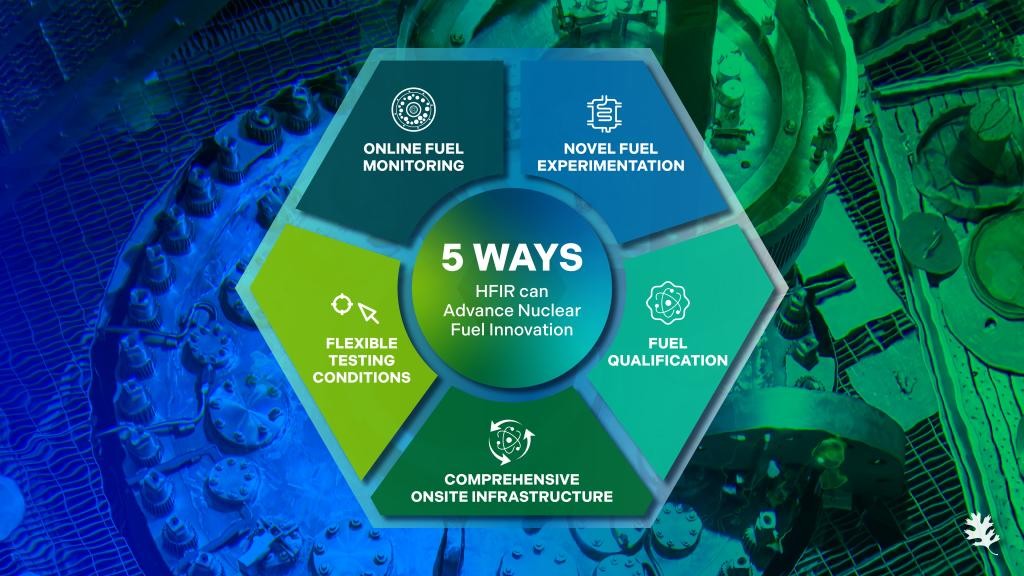
U.S. HFIR Research Reactor Boosts Validation of New Nuclear Fuels
The High Flux Isotope Reactor (HFIR) at the U.S. Department of Energy's (DOE) Oak Ridge National Laboratory (ORNL) is becoming a key facility in the U.S. research, development, and qualification system for new nuclear fuels. A research paper published on August 25 noted that amid growing demand for new commercial nuclear power and advanced reactor construction in the United States, research reactor resources available for new fuel testing are becoming strained, and HFIR is expected to help alleviate the shortage of related testing capabilities. Image credit: Gunes Ozcan/Oak Ridge National Laboratory, U.S. Department of Energy. HFIR is one of the world's highest-flux steady-state research reactors and has long been used for nuclear fuel and materials irradiation testing. The paper recognizes...
2026-08-26

UK's InHealth Deploys Europe's First Mobile Biograph Trinion PET/CT System
InHealth, a UK independent diagnostic service provider, has recently completed the first patient scan using Europe's first mobile Biograph Trinion PET/CT system. The system, supplied by Siemens Healthineers, is now in clinical use at Wrexham Maelor Hospital in northeast Wales to support cancer-related molecular imaging examinations. PET/CT is an important imaging technology in oncology diagnosis and treatment, applicable to the diagnosis, staging, treatment planning, and therapy response monitoring of various cancer types. Deploying the Biograph Trinion PET/CT system on a mobile platform means that advanced molecular imaging services can be delivered into clinical settings with greater flexibility, helping to improve patient access to...
2026-08-26
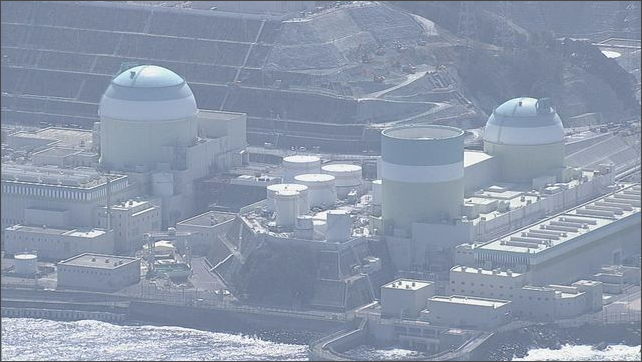
Bitumen Solidification Facility at Unit 2 of Japan's Ikata Nuclear Power Plant Returns to Normal
Shikoku Electric Power Co. reported on August 25, 2026, that the bitumen solidification facility at Unit 2 of Japan's Ikata Nuclear Power Plant, currently in a decommissioned state, had returned to normal operation at 10:45 a.m. that day. The gasket at the joint of the mixer top cover, where the earlier abnormality had been detected, had been replaced, and trial operation results showed no abnormalities. The incident occurred on April 28. On that day, when operators started the bitumen solidification facility in the controlled area of the reactor auxiliary building, they observed a steam-like phenomenon near the mixer thermometer, which subsequently disappeared on its own. Maintenance personnel later inspected and confirmed at 3:05 p.m. that the steam-like gas originated from inside the mixer and had escaped through the joint of the mixer top cover; at 5:06 p.m., the bitumen solidification facility was shut down.
2026-08-26

Four Units of Egypt's Dabaa Nuclear Power Plant Under Simultaneous Construction
Alexey Likhachev, President of Rosatom, and Mahmoud Esmat, Egypt's Minister of Electricity and Renewable Energy, recently discussed the construction progress of the Dabaa Nuclear Power Plant. As Egypt's first nuclear power plant, the Dabaa project is planned to feature four VVER-1200 reactor units, which are expected to provide electricity for approximately 20 million people once completed. Likhachev stated that the project has entered a critical construction phase, with all four units progressing simultaneously. Among them, Unit 1 serves as the pilot unit for the project and is scheduled to be connected to the grid in 2028. To achieve this goal, the project team still needs to complete several tasks, including the delivery of nuclear fuel in 2027.
2026-08-26

Tescan Launches MIRA XR Ultra-High-Resolution Scanning Electron Microscope for Materials Characterization and Failure Analysis Applications
Tescan recently launched the MIRA XR ultra-high-resolution scanning electron microscope system, targeting materials characterization needs in fields such as battery technology, metallurgy, and advanced materials science. Positioned between the Tescan MIRA and Tescan CLARA, the system aims to deliver higher resolution, enhanced surface sensitivity, and a more streamlined workflow, serving applications including R&D laboratories, industrial quality control, and failure analysis. According to reports, the MIRA XR employs BrightBeam™ technology and a single high-efficiency axial detector to improve surface signal acquisition under field-free imaging conditions, making it suitable for beam-sensitive materials and magnetic samples while reducing the need for sample preparation steps such as surface coating. The system also features an aperture-free column design that minimizes manual aperture selection and adjustment steps, allowing operators to focus more on sample observation and data analysis.
2026-08-26
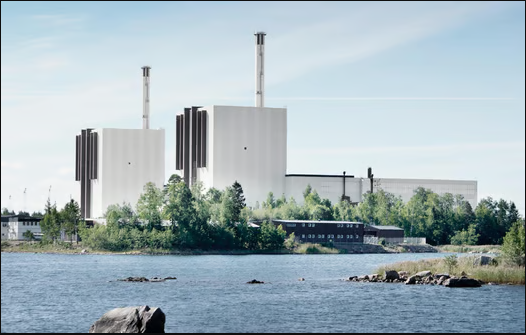
Why Swedish Nuclear Power Plants Are Less Affected by European Heatwaves
This summer, persistent high temperatures across much of Europe forced some nuclear power plants to reduce output or even temporarily shut down due to rising cooling water temperatures and falling river levels. In comparison, Sweden's Vattenfall-operated nuclear plants at Forsmark and Ringhals were less affected, mainly because both facilities are located in coastal areas and use seawater for cooling. Many nuclear plants in continental Europe rely on river water as their cooling source. During heatwaves, river levels and water temperatures can change rapidly, easily impacting cooling efficiency. Anna Collin, Communications Officer at Ringhals, stated that Swedish nuclear plants use seawater cooling, which differs in operating conditions from many...
2026-08-26