
Search Results
Keyword:B
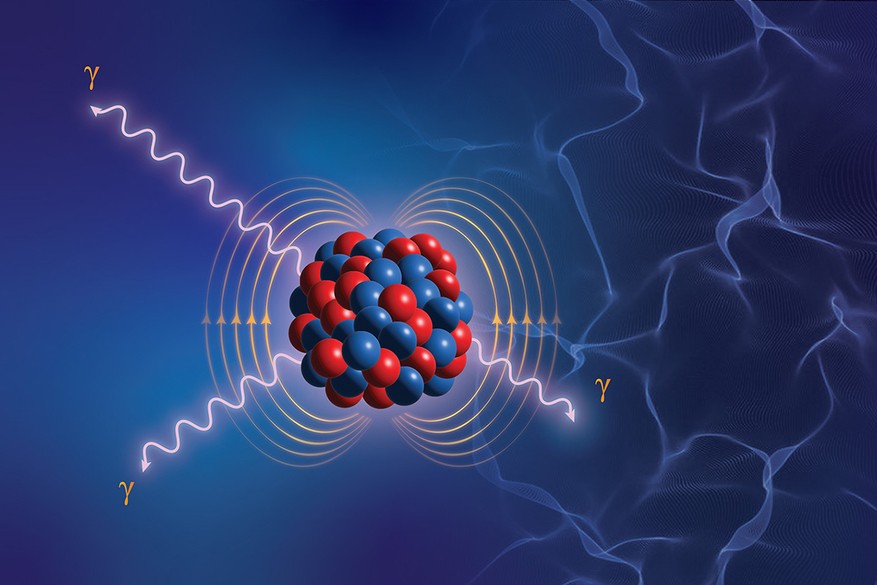
US FRIB Research Reveals Low-Energy Gamma-Ray Enhancement Originates from Nuclear Magnetic Transitions
An international research team led by the US Facility for Rare Isotope Beams (FRIB), with participation from Lawrence Livermore National Laboratory (LLNL) and other institutions, recently published findings in Nature that explain a long-standing question in nuclear physics: why some atomic nuclei emit anomalously high numbers of low-energy gamma rays. Image: FRIB Gamma rays are a type of electromagnetic radiation. Excited atomic nuclei release gamma rays during radioactive decay, gradually returning to lower, more stable energy levels. Over the past few decades, scientists have discovered that certain nuclei exhibit a low-energy enhancement phenomenon, where the number of low-energy gamma rays emitted exceeds expectations. However, this phenomenon is not universal, and its occurrence is theoretically difficult to predict.
2026-08-18
Japan's Nuclear Power Revival Enters Supply Chain Rebuilding Phase, with Spent Fuel and Engineering Capacity as Key Constraints
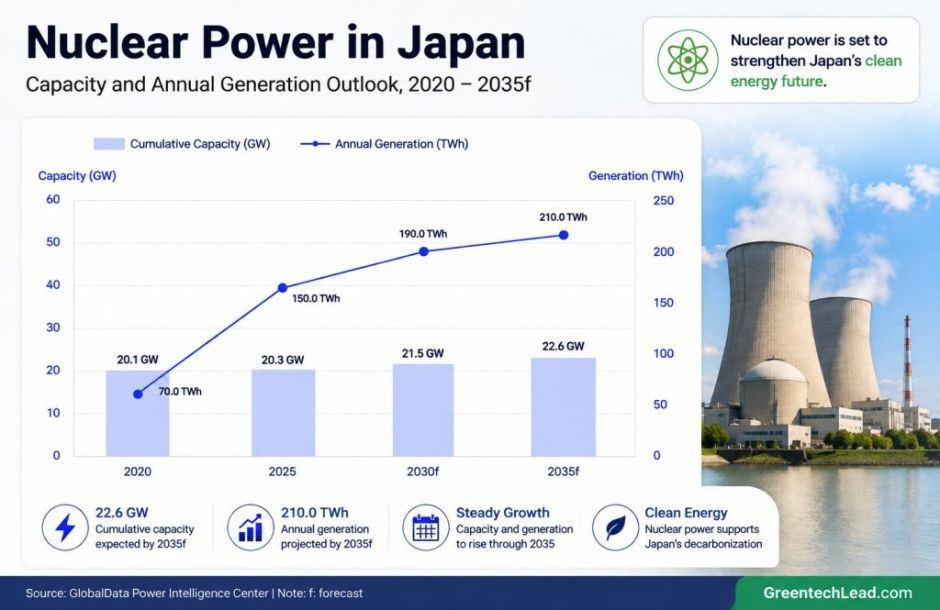
As Japan advances energy security, reduces dependence on fossil fuel imports, and expands low-carbon electricity supply, the focus of the country's nuclear power market is shifting from mere reactor restarts to a comprehensive supply chain rebuild covering manufacturing, operations and maintenance, life extension, fuel cycle, and waste management. GlobalData estimates Japan's nuclear power generation at 101.0 TWh in 2025 and projects it to increase to 123.3 TWh by 2035. Japan's policy target is to maintain nuclear power at approximately 20% to 22% of the electricity generation mix. Based on total annual electricity demand of approximately 1,050 TWh, a 20% nuclear share corresponds to about 210 TWh, while a 22% share corresponds to about 231 TWh. Compared with the 2025 nuclear generation figure of 101.0 TWh, the estimated gap is approximately 109 TWh to 130 TWh.
2026-08-18

Myanmar Leader's Visit to Russia to Attend Bilateral Business Forum, Small Nuclear Power Plant Cooperation Draws Attention
According to Myanmar state media, Myanmar's leader Min Aung Hlaing departed for Russia on August 17 for an official visit. This is his first official visit to Russia since assuming the presidency in April this year, and the fifth country he has visited since taking office. Nuclear energy cooperation is one of the key areas in Myanmar-Russia economic, trade, and energy cooperation in recent years. In 2025, during formal talks between Min Aung Hlaing and Russian President Vladimir Putin in Moscow, the two countries signed an agreement to build a small nuclear power plant in Myanmar. Relevant reports did not disclose the project's installed capacity, site selection, technical route, or construction timeline. Russia...
2026-08-18

First American Nuclear Company's Regulatory Engagement Plan for Proposed HALEU Fuel Facility Accepted for Docketing by NRC
First American Nuclear Co. (FANCO) announced on August 17 that its regulatory engagement plan for the proposed Class II high-assay low-enriched uranium (HALEU) conversion and fuel fabrication facility has been accepted for docketing by the U.S. Nuclear Regulatory Commission (NRC). The facility will serve the company's EAGL-1 small modular reactor project currently under development. According to the company's disclosure, the NRC ADAMS accession number for the letter of intent is ML26222A181, and the NRC ADAMS accession number for the regulatory engagement plan is ML26222A177. This submission advances the pre-application regulatory engagement between FANCO and the NRC regarding the proposed ceramic fuel fabrication facility. The facility is planned to support the EAGL-1 lead-bismuth...
2026-08-18

Libya Plans to Restore Tajoura Research Reactor for Medical Isotope Production
The Libyan Atomic Energy Establishment recently proposed a plan to restore and restart the Tajoura nuclear research reactor for the production of medical radioisotopes. The establishment stated that this initiative aims to support the diagnosis and treatment of diseases and tumors, while reducing dependence on imports of relevant isotopes. Radioisotopes are essential materials in nuclear medicine, serving as tracers in medical imaging to help track organ function and detect certain diseases and tumors; some isotopes are also used in radiotherapy targeting specific tissues. According to the Libyan Atomic Energy Establishment, the Tajoura reactor has a rated thermal power of 10 megawatts and holds potential for producing various medical isotopes, including...
2026-08-18
Removal of Highly Radioactive Spent Fuel Begins at Unit 2 of Fukushima Daiichi Nuclear Power Station
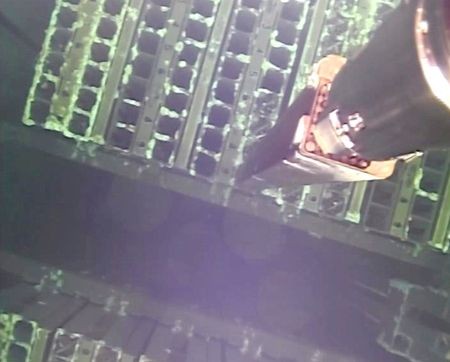
Tokyo Electric Power Company Holdings (TEPCO) said on August 17 that it has begun removing spent fuel assemblies with high radiation levels from the spent fuel pool of Unit 2 at the Fukushima Daiichi Nuclear Power Station in northeastern Japan, the site of a severe nuclear accident. Last month, TEPCO removed 28 unused nuclear fuel assemblies from the Unit 2 spent fuel pool. Compared with spent fuel, these unused fuel assemblies pose relatively lower risks. The company plans to complete the removal of spent fuel from Unit 2 by the end of fiscal year 2028. To date, the Unit 2 spent fuel pool contains a total of 587 spent fuel assemblies, of which TEPCO has completed the removal of...
2026-08-18
Radioactive liquid waste leak suspected at QST's underground facility in Chiba due to record rainfall
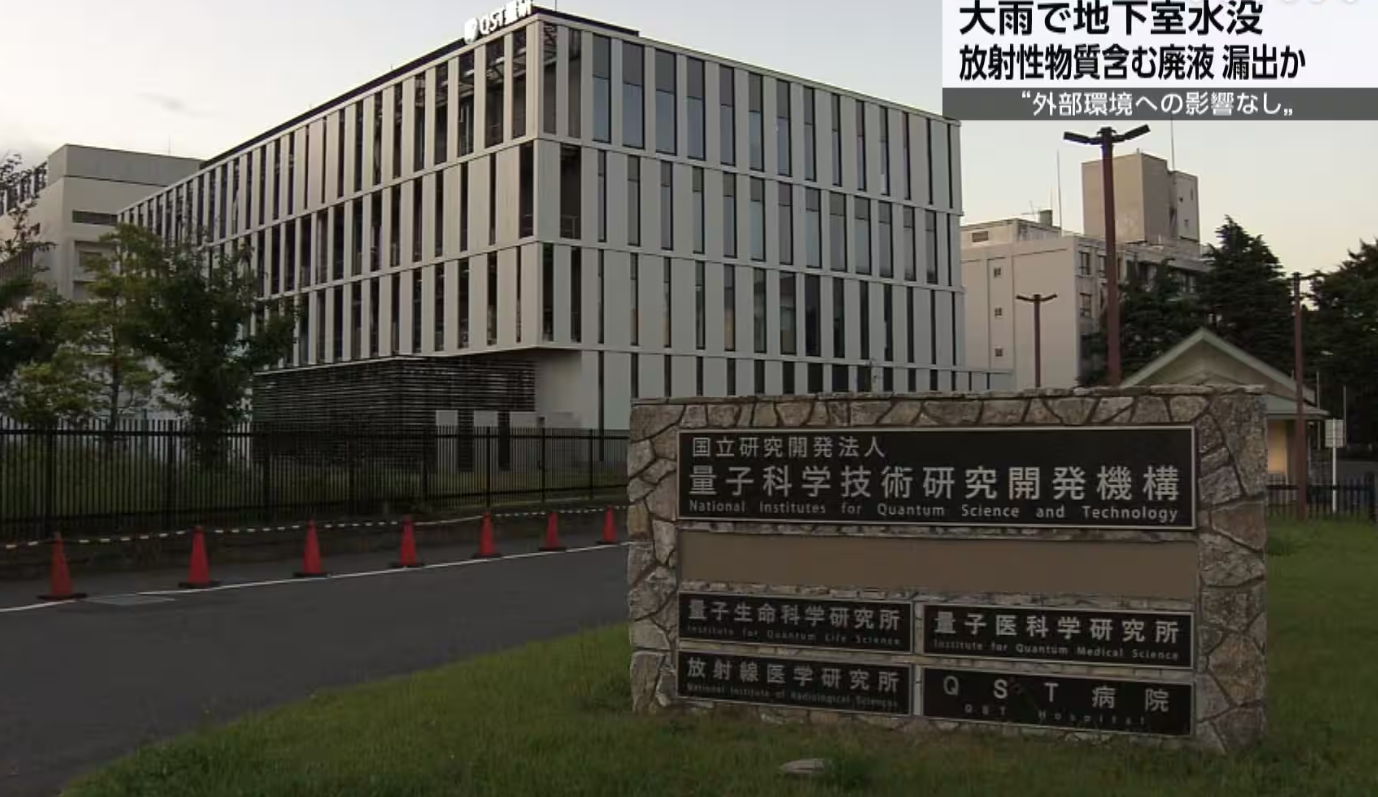
According to Japanese media reports, due to record-breaking rainfall in Chiba Prefecture, an underground facility of the National Institutes for Quantum Science and Technology (QST) in Chiba City was flooded, and radioactive liquid waste in underground storage tanks at the facility may have mixed with rainwater and leaked outdoors. QST stated that as of the 13th, an estimated 2,000 to 3,000 liters of liquid waste had accumulated in the relevant underground storage tanks. After investigating water bodies around the tanks, the institute confirmed that detected radioactive material concentrations were below standard values, and no environmental impact has been indicated so far. QST reported the incident to national and local governments the following day and plans to submit preventive measures to the Nuclear Regulation Authority of Japan.
2026-08-18

Nuclear-powered icebreaker "Leningrad" completes installation of two RITM-200 reactors
United Shipbuilding Corporation (USC) announced that Baltic Shipyard has completed the installation of two RITM-200 nuclear reactors on the Project 22220 nuclear-powered icebreaker "Leningrad". The "Leningrad" is the sixth vessel in the Project 22220 nuclear-powered icebreaker series. The vessel is being built by Baltic Shipyard under an order from Rosatom, and its keel-laying ceremony was held on January 26, 2024. Project 22220 nuclear-powered icebreakers are primarily designed to ensure year-round navigation in the western Arctic waters of Russia. Equipped with nuclear propulsion systems, these vessels can perform icebreaking escort and fairway maintenance missions under complex ice conditions.
2026-08-18

Concrete pouring completed for turbine deck of conventional island of Unit 2 at CGN Lufeng Nuclear Power Plant
At 12:30 on August 11, 2026, concrete pouring officially commenced for the turbine deck of the conventional island of Unit 2 at CGN Lufeng Nuclear Power Plant, and was successfully completed at 16:00 on August 13, after 51.5 hours, with a total of 2,685m³ of concrete poured. The turbine deck structure of the conventional island of Unit 2 measures 68.7m in length and 16m in width, with a top elevation of +8.43m, consisting of two longitudinal beams and six transverse beams. Owner-supplied items include 296 anchor bolts, 56 lifting columns, 28 anchor plates, and 18 oil pipe sleeves, among which 8 sets of large embedded parts weigh over 10t each. The turbine deck construction features complex structures, a large number of owner-supplied embedded parts, and high precision requirements. During the turbine deck construction, the project team fully drew on the experience feedback from the conventional island turbine deck of Unit 1...
2026-08-18

Icebreaker of Knowledge International Expedition Returned from North Pole
On August 13, the 7th international scientific and educational expedition of Rosatom, Icebreaker of Knowledge, returned to Murmansk. Over the course of ten days, 68 talented schoolchildren and college students from all federal districts of Russia and 22 countries around the world traveled aboard the nuclear icebreaker 50 Let Pobedy along the route Murmansk – North Pole – Franz Josef La...
2026-08-18
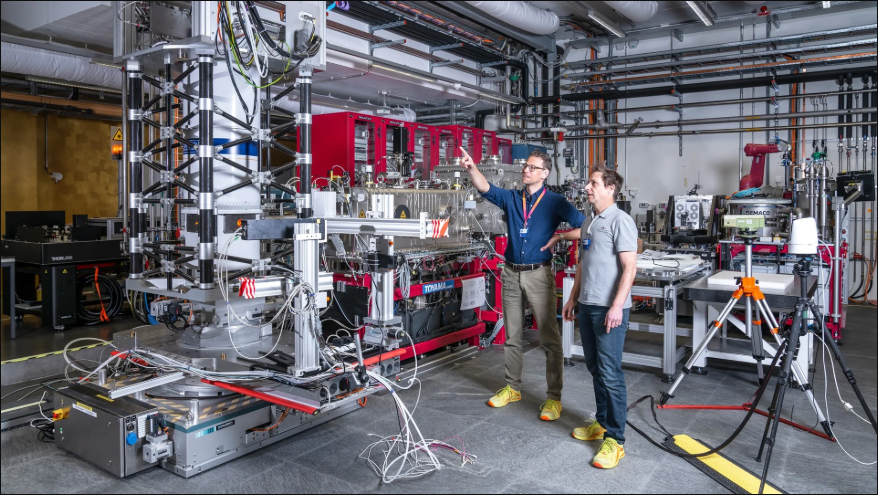
SwissFEL Achieves Ultralow-Temperature X-ray Observation of Quantum States
Researchers at the Paul Scherrer Institute (PSI) in Switzerland recently reported that the Cristallina experimental station of the Swiss Free-Electron Laser (SwissFEL) can now observe quantum states that only emerge at extremely low temperatures using X-ray scattering at temperatures close to absolute zero. Simon Gerber (left) and Bill Pedrini (right) at the Cristallina experimental station of SwissFEL. With the help of a custom-built cryostat connected to the beamline (far left), quantum states can now be studied at extremely low temperatures. Paul Scherrer Institute PSI/Markus FischerAccording to the team, they recently achieved a low temperature of 35 millikelvin in experiments...
2026-08-17

Neutron and X-ray tomography reveal hydrogen-rich regions in Martian meteorite "Black Beauty"
An international team of researchers from Denmark, Sweden, and Switzerland recently conducted a three-dimensional non-destructive analysis of a slice of the Martian meteorite NWA 7034 "Black Beauty" using neutron tomography and X-ray tomography, discovering macroscopic hydrogen-rich regions within it. The study suggests that these hydrogen-rich features provide evidence of early water-rock interactions on Mars. The findings have been published in Geophysical Research Letters. Black Beauty is a brecciated meteorite from Mars that was ejected into space by an impact event and eventually landed in the Sahara Desert in Morocco. Weighing approximately 320 grams, the meteorite contains material up to 4.48 billion years old, making it one of the oldest known Martian crustal fragments...
2026-08-17

Fermilab Muon g-2 Experiment Sets New Direct Detection Limit on Muon Electric Dipole Moment
On August 12, 2026, the Muon g-2 Collaboration announced that a new analysis based on 25% of the data from the Muon g-2 experiment at the U.S. Department of Energy's Fermi National Accelerator Laboratory has produced the most sensitive direct measurement of the muon's electric dipole moment to date. The results show that if a muon electric dipole moment exists, its magnitude is below the current detection threshold of the experiment. The muon electric dipole moment values measured by Fermilab across different data-taking periods were compared with previous results from Brookhaven National Laboratory. The combined Fermilab value is consistent with zero (no observation). Although the experiment uses positive muons, results are typically reported for negative muons, which reverses the sign of the measured value...
2026-08-17

Argonne National Laboratory Unveils DONUT Tool to Accelerate Real-Time Analysis of X-ray Nanodiffraction Data
Researchers at the U.S. Department of Energy's Argonne National Laboratory have developed a new machine learning tool called DONUT to accelerate X-ray data analysis in experiments at the Advanced Photon Source (APS). The tool can process complex images generated by scanning X-ray nanodiffraction microscopy (SXDM) in real time during experiments, helping researchers more quickly determine internal structural changes in materials. DONUT stands for "Nanobeam Optical Diffraction based on Unsupervised Training," a physics-aware neural network. Its key feature is combining artificial intelligence methods with physical models of focused X-ray beam interactions with materials, allowing it to learn directly from experimental data without relying on pre-labeled training...
2026-08-17

FDG PET/CT Enables More Precise Identification of Multiorgan Involvement in Brazilian Paracoccidioidomycosis
A study conducted by researchers at the Brazilian CEPID CancerThera center shows that molecular imaging with fluorodeoxyglucose (FDG) PET/CT can detect systemic lesions of paracoccidioidomycosis (PCM) more sensitively than conventional staging methods, helping to reassess the extent and severity of the disease. The findings were published in Clinical Infectious Diseases. Paracoccidioidomycosis is a systemic fungal disease caused by inhalation of fungal spores of the Paracoccidioides genus, with significant clinical and epidemiological importance in Brazil. Often referred to as "coffee planter's disease," it primarily affects the lungs but can also spread to multiple organs via lymphatic and hematogenous routes. Conventional staging typically relies on...
2026-08-17