
Search Results
Keyword:CERN
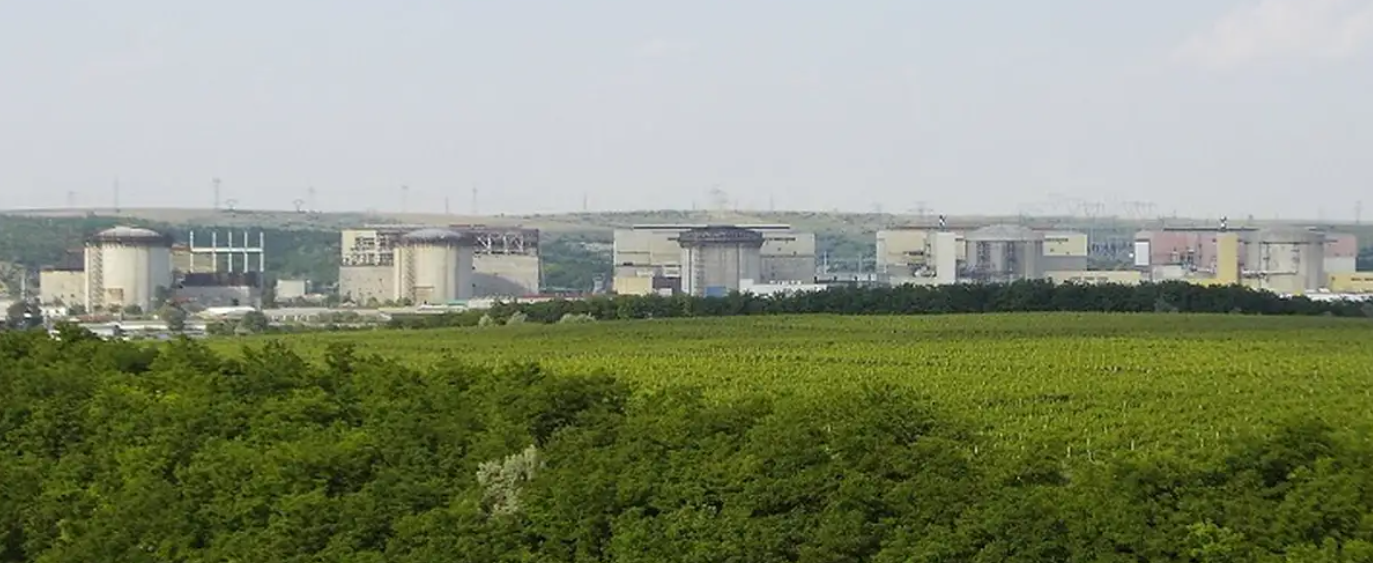
Romania's Cernavoda Nuclear Power Plant to Remain Offline Until at Least September 18 Due to Low Danube River Levels
On September 8, Romania's Cernavoda Nuclear Power Plant was expected to remain offline until at least September 18 due to low water levels in the Danube River. Emil Macovei, Technical Director of Nuclearelectrica, the operator of the Cernavoda plant, stated that over the next 10 days, the Danube's water volume would still be insufficient to support the restart of either of the plant's two units. Romania's Antena 3 television channel quoted him as saying that current hydrological conditions do not yet meet the requirements for unit operation. Cristian Busoi, Secretary of State at Romania's Ministry of Energy, said that predictions regarding the plant's restart timeline were "rather optimistic," and the ministry is currently unable to provide a definitive date for resuming operations. He confirmed that...
2026-09-09
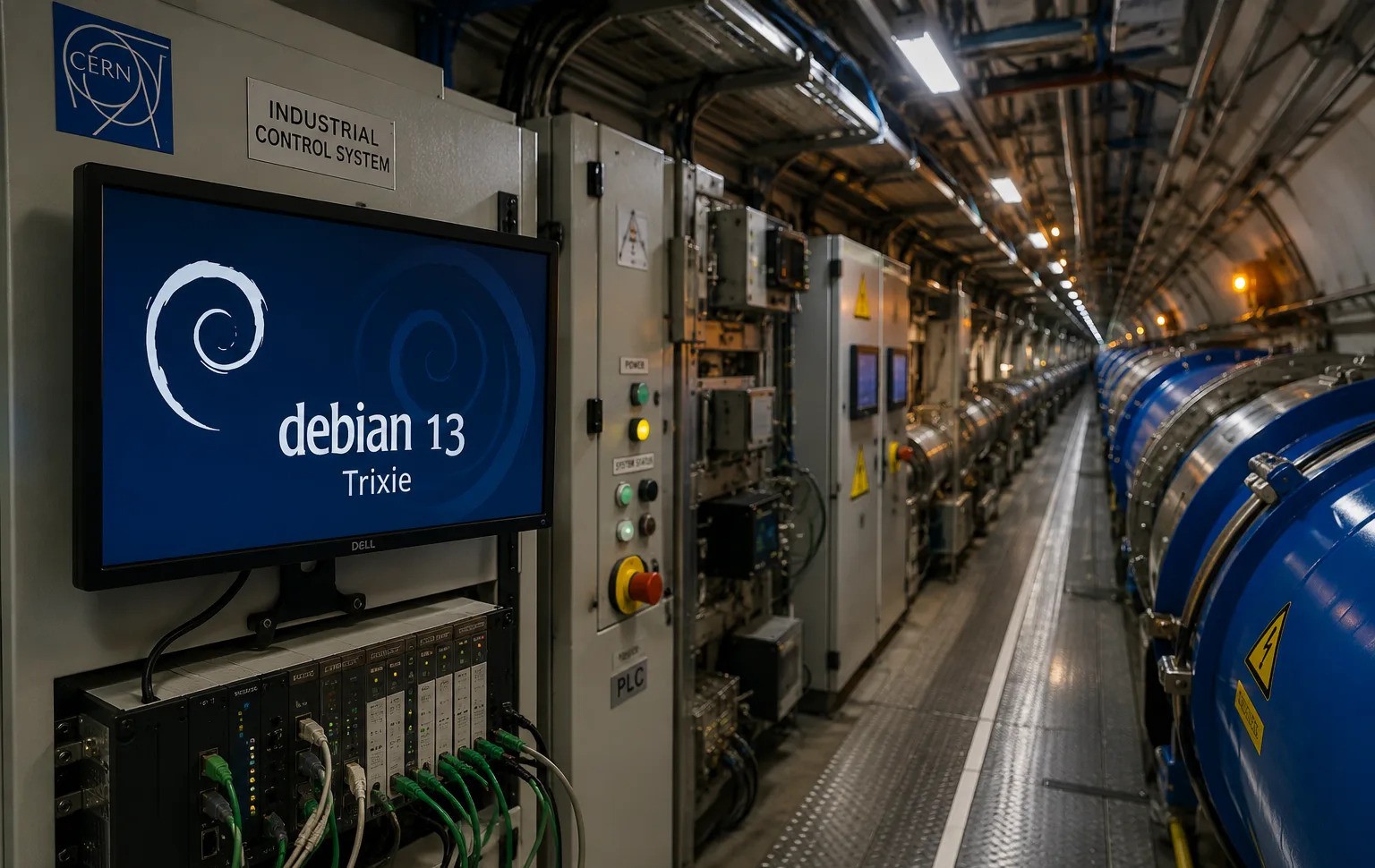
CERN Accelerator Control Systems to Migrate to Debian 13
Representatives from the European Organization for Nuclear Research (CERN) stated at the MiniDebConf conference that they plan to migrate over 2,200 industrial and embedded computers used to control their accelerator complex from RHEL to Debian 13 by the end of 2026. The systems involved include control computers for the Large Hadron Collider as well as several independent experimental facilities. CERN also clarified that this migration applies only to accelerator control-related equipment and will not affect data centers or experimental systems. Those data centers and experimental systems will continue to use RHEL/AlmaLinux. According to reports, CERN engineers had previously considered migrating the relevant systems to CentOS Stream, but...
2026-09-08

CERN removes first giant beam absorbers from LHC, making room for High-Luminosity Large Hadron Collider upgrade
CERN recently completed a complex transport operation, moving the first two giant components from the Large Hadron Collider (LHC) tunnel to the surface, making room for the operation and upgrade of the future High-Luminosity Large Hadron Collider (HiLumi LHC). The equipment removed this time consists of two beam absorbers, also known as TAN absorbers. Each absorber is about 5 meters long and weighs about 30 tons, made of iron, copper, and marble, primarily used to protect accelerator magnets from damage caused by neutral particles generated along the beam direction during collisions. A relevant official stated that this type of equipment is among the heaviest and largest devices that need to be removed from the LHC during this shutdown period...
2026-09-03
Romania's Cernavodă Nuclear Power Plant unlikely to restart before September 10
Romania's Cernavodă Nuclear Power Plant is expected to be unable to resume operations before September 10. Cristian Bușoi, State Secretary of the Romanian Ministry of Energy, stated that although the Danube River flow is recovering, water levels around the plant have not yet reached the conditions required for a safe and stable restart. In a recent interview, Bușoi said that to avoid creating unrealistic expectations, it can currently be confirmed that the Cernavodă Nuclear Power Plant does not yet meet the conditions for restart before September 10. He explained that the plant's operation depends on a stable water source to ensure the reactor...
2026-09-03
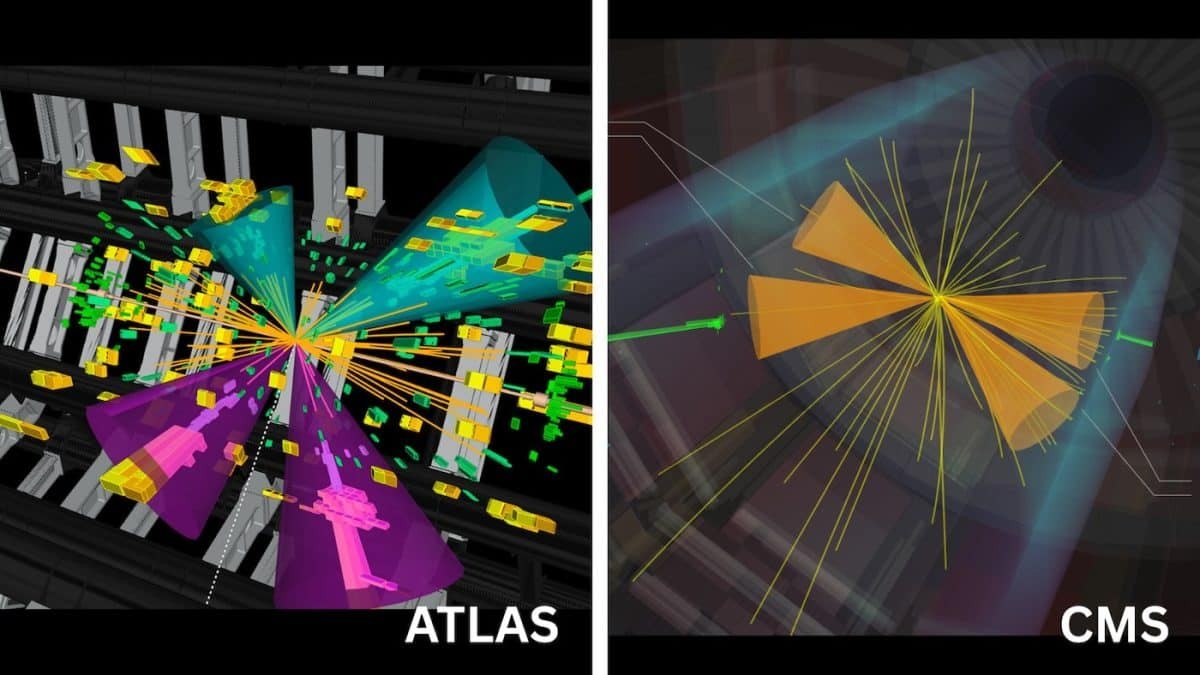
CERN Finds Statistical Hints of Higgs Boson Pair Production
Physics teams at CERN have recently found statistical hints of Higgs boson pair production in data analysis from the Large Hadron Collider. Researchers analyzed millions of collision results over eight years at the collider, with the findings presented at the ICHEP conference and published as two preprints. The figure shows schematic diagrams of events involving the production of two Higgs bosons as observed by ATLAS (left) and CMS (right) CERN The Higgs boson was discovered in 2012, and since then physicists have continuously measured its interactions with other elementary particles to test the Standard Model's explanation of the origin of mass. However, the self-interaction of the Higgs boson has not yet been directly observed.
2026-09-02

Kazakhstan Plans to Expand Researcher Participation in CERN High-Energy Physics Projects
Sayasat Nurbek, Acting Minister of Science and Higher Education of Kazakhstan, recently held talks with Mark Thomson, Director-General of the European Organization for Nuclear Research (CERN), during which the two sides exchanged views on deepening scientific and technological cooperation between Kazakhstan and CERN, with a focus on expanding cooperation in the field of high-energy physics and promoting researcher participation in CERN projects. According to the Ministry of Science and Higher Education of Kazakhstan, the Kazakh government and CERN signed an international cooperation agreement in 2018, laying the foundation for a long-term scientific research partnership between the two sides. At present, the two sides have drafted a supplementary protocol to the agreement, which plans to further specify the participation of Kazakh researchers in CERN...
2026-09-01

CERN Accelerator Complex Enters Full LS3 Shutdown for Upgrades, Paving the Way for the High-Luminosity LHC Era
On the morning of August 31 local time, the injector complex and the Antimatter Factory at the European Organization for Nuclear Research (CERN) ceased operation after completing their final beam deliveries, officially entering the third Long Shutdown (LS3) phase. Earlier, the Large Hadron Collider (LHC) had been closed in June, marking the flagship accelerator as the first to kick off LS3 upgrade work at the center. Bettina Mikulec (left), head of the Operations Group at CERN, handed a symbolic baton—a miniature superconducting magnet from the LHC—to Jean-Philippe Tock (right), head of the LS3 Coordination Group, with CERN Director-General Mark Thomson (second from left) and Oliver Brüning (third from left), head of Accelerators and Technology, in attendance.
2026-09-01
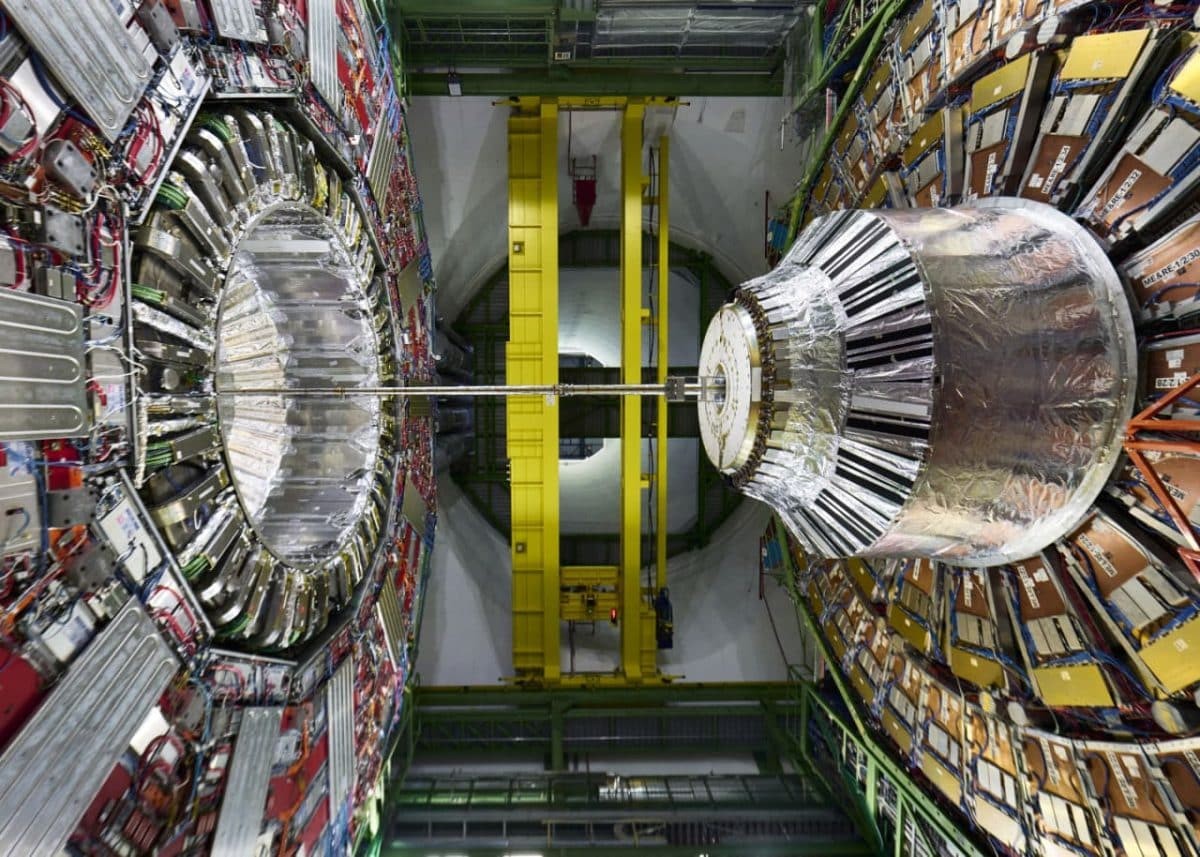
CERN Large Hadron Collider Data Challenge Models of Oxygen and Neon Nucleus Structure
Physicists at the European Organization for Nuclear Research (CERN), analyzing a new batch of collision data from the CMS detector at the Large Hadron Collider, have found that oxygen and neon nuclei do not behave entirely as predicted by existing models in high-energy collisions. This result indicates that the scientific community's understanding of the shapes and internal structures of certain light nuclei still requires further refinement. In high-energy nuclear collisions, a quark-gluon plasma is briefly formed in the collision region. This state of matter decays rapidly, but the collective flow characteristics of its particles can be used to infer the collision geometry and indirectly provide information about nuclear structure. Researchers believe that symmetric collisions of light ions help better control the initial collision conditions, making them suitable for studying collective responses in small systems.
2026-08-24
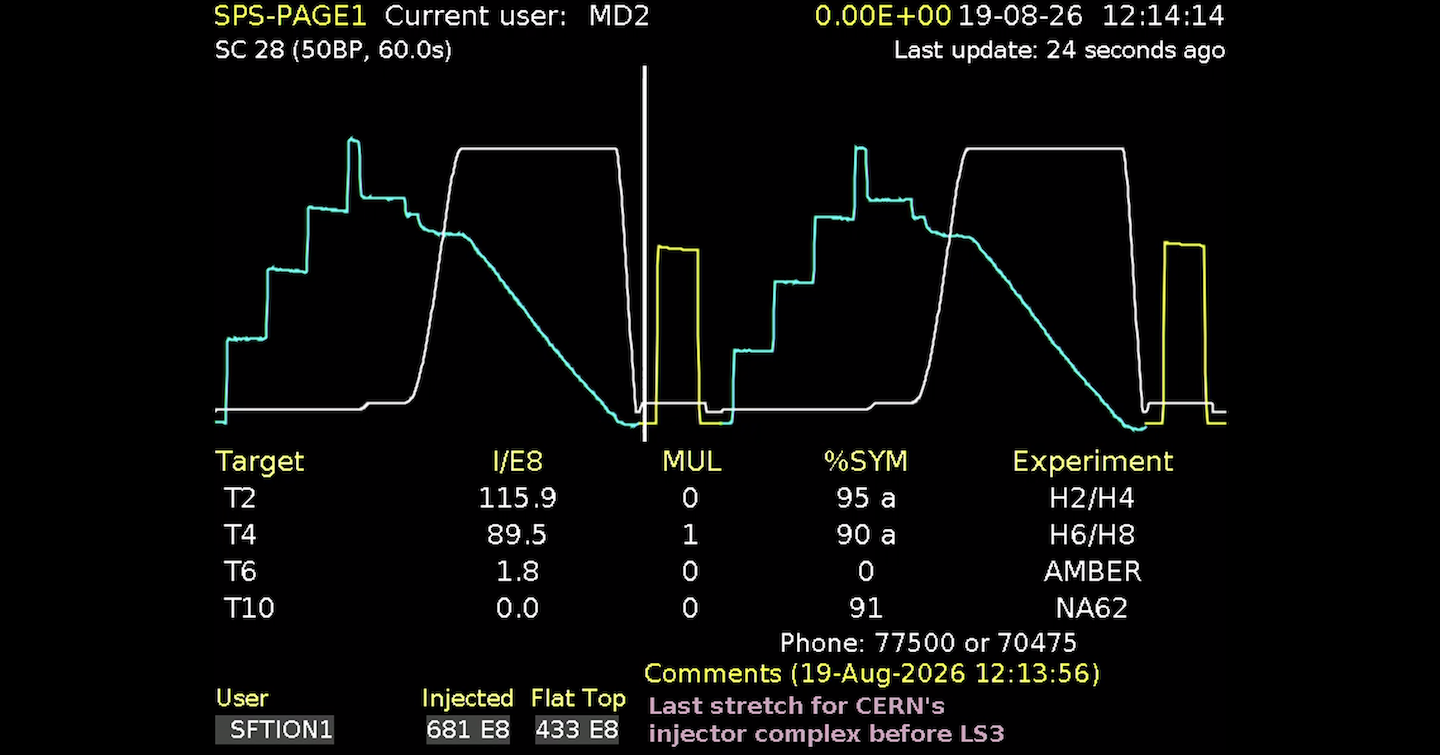
CERN Injector Complex Enters Final Beam Run Phase Before LS3
The CERN accelerator complex is entering its final operational phase before the third Long Shutdown (LS3). With the Large Hadron Collider (LHC) having already entered LS3, the injector complex and associated facilities will continue high-intensity beam operations until 6:00 a.m. on Monday, August 31, after which the operations team will hand over control to the LS3 coordination team, marking the formal transition of the entire accelerator complex into the shutdown maintenance phase. August 19, 2026, page one of the SPS. The third run of the injector complex is drawing to a close. (Image: CERN) During the final week-plus of operations, CERN will continue delivering proton and ion beams to physics experiments.
2026-08-21
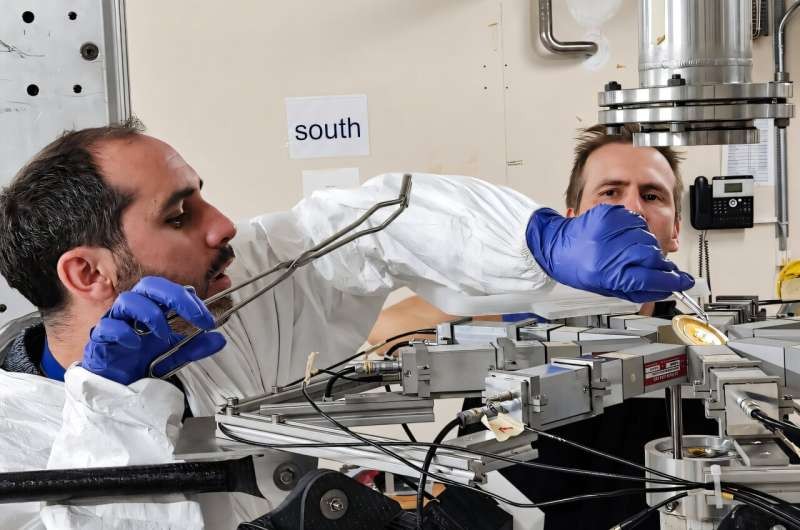
CERN measures niobium-94 neutron capture for the first time, shedding new light on the mystery of molybdenum abundance in ancient stardust
The n_TOF collaboration at CERN recently reported that researchers have for the first time measured the probability of neutron capture by niobium-94. The results, published in Physical Review Letters, provide new experimental evidence for explaining the anomalous abundance of molybdenum-94 in presolar grains. The EAR2 facility in the n_TOF experiment at CERN produces intense neutron beams, opening new possibilities for nuclear research. Credit: CERN Niobium-94 is a niobium isotope containing 41 protons and 53 neutrons, occupying a critical juncture in the nuclear reaction chain that produces heavy elements in dying stars. Researchers are interested in it because niobium-94 is very close to molybdenum-94, differing by just one fewer proton and one more neutron. Under the high-temperature, high-pressure conditions inside stars, niobium-94 may either transform into molybdenum-94 through beta decay or form niobium-95 through neutron capture. The competition between these two reaction pathways directly affects scientists' understanding of the origin of molybdenum-94.
2026-08-20
Cernavoda Nuclear Power Plant Fully Shut Down Due to Falling Danube River Water Levels
Due to the continuous decline of the Danube River water level, the two units of Romania's only nuclear power plant, the Cernavoda Nuclear Power Plant, have been successively shut down. To alleviate the pressure on electricity supply, Unit 4 of the Rovinari coal-fired cogeneration plant has been put into operation, adding approximately 330 megawatts of generating capacity to Romania's power system. Romania's nuclear power company (Nuclearelectrica) previously reported that due to the sharp decline in the Danube River water level, which affected the assurance of cooling water for the reactor, Unit 2 of the Cernavoda Nuclear Power Plant was shut down in a controlled manner on the morning of August 13. The company stated that the shutdown process was carried out in accordance with procedures. At the end of July this year, Unit 1 of the Cernavoda Nuclear Power Plant had already been shut down for the same reason...
2026-08-19
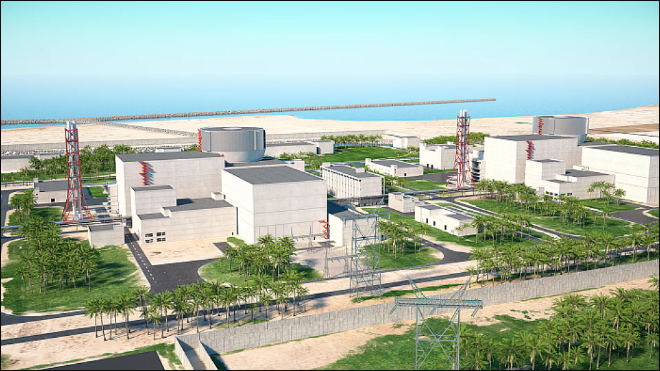
Egypt Clarifies Safety Concerns over Dabaa Nuclear Power Plant: Project Implemented in Accordance with International Nuclear Safety Standards
The Egyptian Cabinet Media Center recently issued a statement responding to questions regarding the application of safety standards during the implementation of the Dabaa Nuclear Power Plant project. The statement said that the circulating content failed to accurately and balancedly reflect the actual situation of the project, and directly extrapolated certain engineering observations into issues of project safety and implementation efficiency, lacking the necessary technical and regulatory context. The Egyptian Nuclear Power Plants Authority stated that the construction of the Dabaa Nuclear Power Plant is proceeding in accordance with international nuclear safety standards, with all civil, engineering, and installation works executed in compliance with international quality requirements and subject to continuous inspections by the Authority's monitoring and supervision teams. Relevant works may only proceed to the implementation phase after completing regulatory procedures and obtaining the necessary approvals from the Egyptian Nuclear and Radiological Regulatory Authority...
2026-08-18
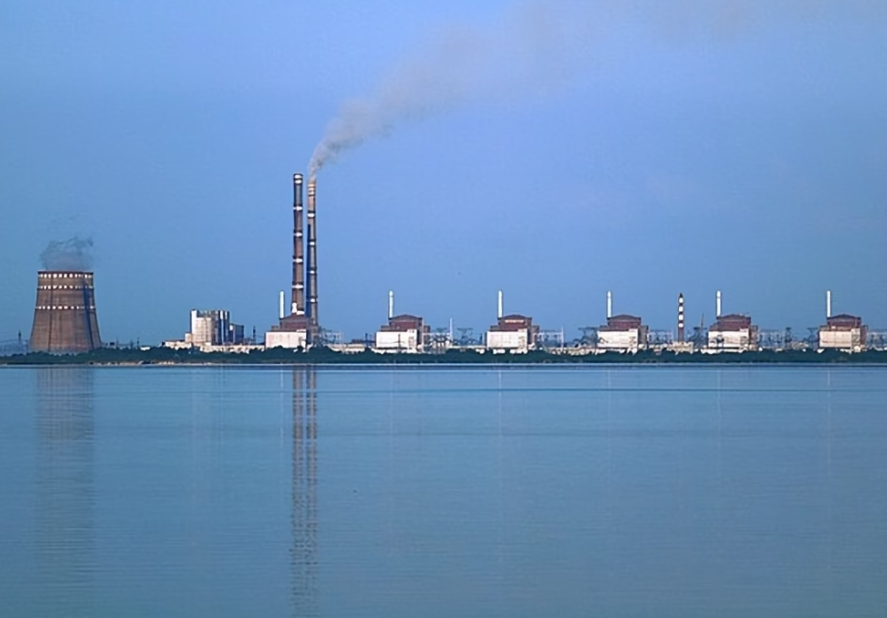
Repeated Power Outages at Zaporizhzhia Nuclear Power Plant Raise Concerns over Equipment Aging and Safety Risks
August 13 news, the issue of repeated interruptions to the external power supply at the Zaporizhzhia Nuclear Power Plant continues to draw attention. Relevant data shows that since February 2022, the plant has experienced 26 power outages, 14 of which occurred in the first 8 months of 2026. The Zaporizhzhia Nuclear Power Plant is the largest nuclear power plant in Europe. Once the external power supply is interrupted, the plant must switch to backup power to maintain the operation of essential safety systems. Frequent switching of power supply modes not only increases operational pressure but also poses additional risks to nuclear safety and radiation safety. Relevant parties have stated that signs of equipment aging at the Zaporizhzhia Nuclear Power Plant are intensifying, with the condition of diesel generator sets being particularly concerning. The backup diesel generator sets are generally...
2026-08-15
Unit 2 of Romania's Cernavodă Nuclear Power Plant shut down for at least 10 days due to falling Danube River water levels
Romeo Urjan, head of Romania's Cernavodă Nuclear Power Plant, said that due to the continuous decline of Danube River water levels, Unit 2 of the plant has been shut down since August 13 for at least 10 days. Romania's Ministry of Energy stated on August 12 that Unit 2 of the Cernavodă Nuclear Power Plant required a temporary shutdown. As planned, the shutdown operation began on the morning of August 13 and was completed before noon that day. Urjan stated that Danube River water levels are expected to continue declining over the next 10 days, so the plant currently has no plans to restart Unit 2. He emphasized that this shutdown is unrelated to nuclear safety issues or emergencies, with the main reason being...
2026-08-14

EIC and CERN Strengthen Cooperation to Advance International Scientific Exchange for the Electron-Ion Collider
August 12, 2026 - The collaboration between the Electron-Ion Collider (EIC) project and the European Organization for Nuclear Research (CERN) is deepening further. On May 28, CERN hosted a workshop themed around the EIC to introduce the project's scientific goals, construction progress, and future research opportunities to its international scientific community. Luisella Lari (right), Deputy Director for Strategic Partnerships of the Electron-Ion Collider (EIC) project, poses with Matthew Chalmers, organizer of the CERN lecture series, after delivering a talk titled "The Road to the Electron-Ion Collider" at CERN. Luisella Lari, senior scientist on the EIC project, delivered a talk titled "The Road to the Electron-Ion Collider" at the workshop.
2026-08-13