
Search Results
Keyword:CT

South Korea's Deepnoid Signs M4CXR Supply Contract with Pusan National University Hospital
On August 3, Deepnoid announced the signing of a supply contract for M4CXR with Pusan National University Hospital. M4CXR is a generative AI-based preliminary report generation solution for chest X-rays that generates preliminary reports during chest X-ray examinations to assist medical staff in image interpretation. This is the first supply agreement signed after M4CXR received approval from the Ministry of Food and Drug Safety of South Korea for market release as a digital medical device. According to the introduction, the system is expected to improve the efficiency of chest X-ray reading and provide clinical support for the early detection of lung diseases and suspected cancerous lesions. This collaboration is also part of the AI clinical system support project for regional responsible medical institutions under the Ministry of Health and Welfare of South Korea...
2026-08-03
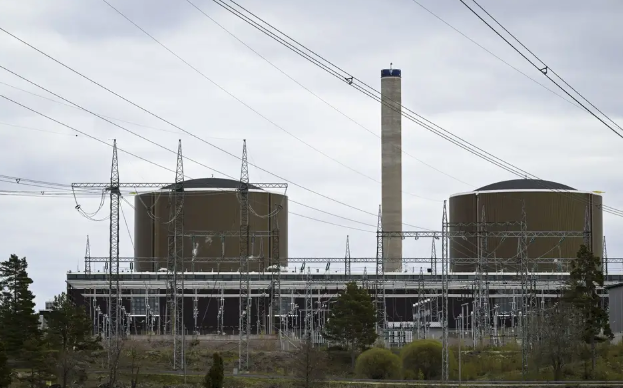
Annual maintenance outage begins at Finland's Loviisa nuclear power plant, spanning August 2 to October 18
The annual maintenance of Finland's Loviisa nuclear power plant began on August 2. Energy company Fortum stated that this annual maintenance will be carried out from August 2 to October 18. During the maintenance period, several modernization projects related to extending the plant's service life will also be launched. The maintenance will first be carried out on Unit 2, followed by Unit 1. Fortum stated that while one unit is under maintenance, the other unit will continue normal power generation. The maintenance of Unit 2 is a large-scale annual inspection conducted once every eight years, which includes removing fuel from the reactor for inspection and pressure testing of the reactor vessel, as well as replacing...
2026-08-03
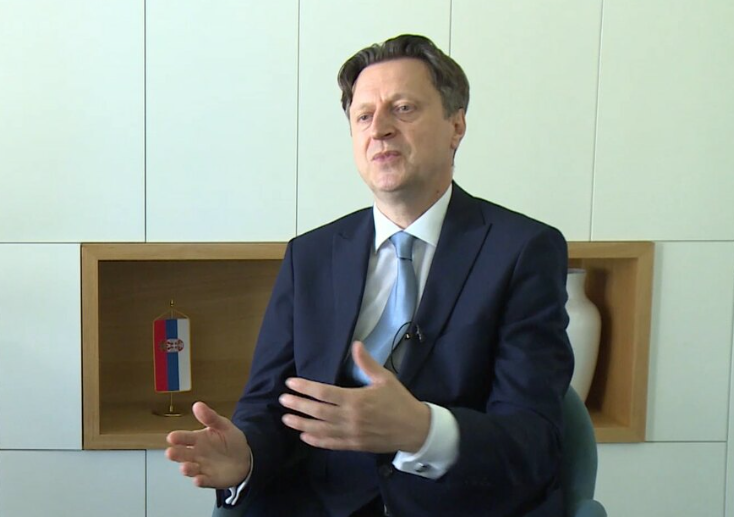
Serbia Launches Nuclear Program: Experts to Train in France for 17 Months, First Nuclear Power Plant Expected by 2040
The nuclear cooperation agreement signed between Serbia and France officially launched the first phase of the country's nuclear energy program on July 29. Under the agreement, Serbian experts will travel to France over the next 17 months for training, seminars, and professional visits to acquire the new knowledge and experience needed to advance the nuclear program. Radoš Popadić, Assistant Minister at Serbia's Ministry of Mining and Energy, stated that nuclear energy could become a realistic and viable solution within Serbia's energy mix. The primary task of the first phase is to assess existing capabilities and identify what additional resources are needed as the process moves forward. According to the plan, Serbia needs to strategically...
2026-08-03
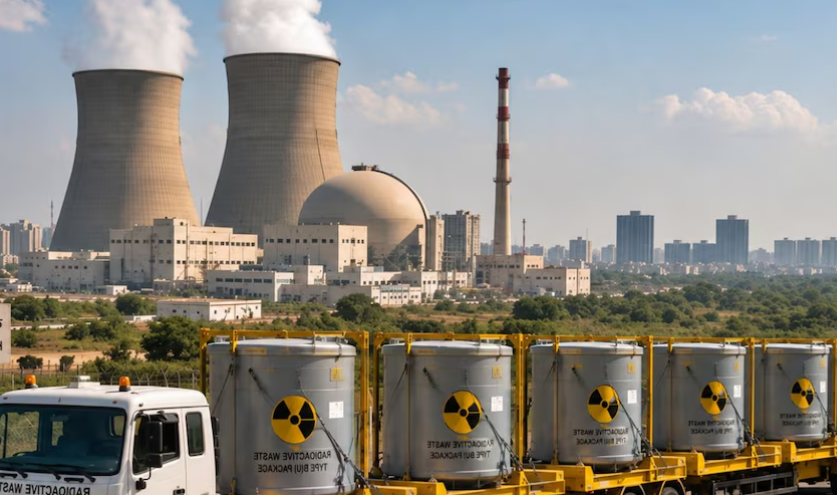
Behind India's Nuclear Power Expansion: Where Does Radioactive Waste Go? Government Details Management Process in Parliament for First Time
India is rapidly advancing its nuclear power expansion, but the safe disposal of radioactive waste is the least-publicized challenge. The government has for the first time detailed in Parliament how it handles hazardous waste. In a written reply, the Department of Atomic Energy disclosed that all nuclear power plants in India generate an average of 0.15 cubic meters (approximately 150 liters) of solid radioactive waste per megawatt (MW) of capacity annually, including waste from operational and decommissioning phases, equivalent to about 1.5 household bathtubs in volume; radioactive waste quantities and disposal records are regularly reported to the Atomic Energy Regulatory Board (AERB). The operation and maintenance of nuclear power plants generate various types of radioactive waste, including spent filter cartridges, protective clothing, tools, equipment, and other items that come into contact with radioactive materials. Waste is categorized into gaseous...
2026-08-03
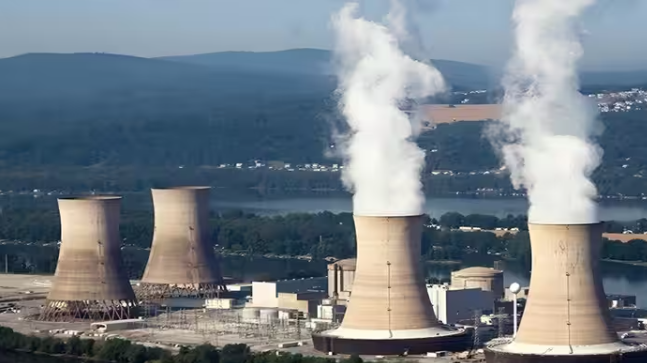
India's First Draft Rules for SHANTI Nuclear Energy Act Prepared, in Consultation with Ministries and Industry
The Indian government is formulating implementation rules for the SHANTI Act (Sustainable Harmonious Advancement of Nuclear Technology in India Act), aimed at fundamentally transforming the country's nuclear energy sector. The Act is expected to open up the previously tightly controlled nuclear industry to private companies. Relevant departments have already sought comments on these draft rules, but final publication may still take several months, as issues involving multiple agencies require careful consideration. The SHANTI Act is crucial for India's goal of achieving 100 gigawatts of nuclear power capacity by 2047. It will bring about significant structural changes to India's nuclear energy policy, integrating regulation, implementation processes, civil liability, and dispute resolution mechanisms...
2026-08-03

Rosatom Expects Revenue of $43.2 Billion in 2026
Rosatom expects its revenue to reach $43.2 billion in 2026, driven primarily by new products, international operations, and expansion in nuclear energy, technology, and logistics. The company plans to continue scaling up in the coming years, targeting consolidated revenue of approximately $50.8 billion by 2028, with businesses related to new technologies expected to grow by about 50%. To support this growth target, Rosatom will maintain an investment program exceeding $11.4 billion, focusing on projects that yield the best financial returns. Rosatom is actively implementing cost control and efficiency improvement measures, aiming to increase productivity by 12% annually and achieve a 10% wage increase...
2026-08-03
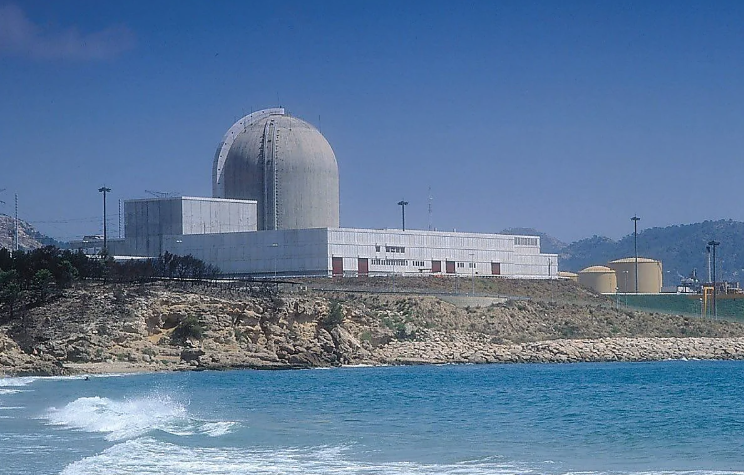
Spain's two major nuclear power holders, Iberdrola and Endesa, paid approximately €360 million in taxes and fees for nuclear power in the first half of the year
Spain's two major nuclear power holders disclosed to the CNMV: Iberdrola's expenditure on the "production tax on spent fuel and radioactive waste derived from power generation" in the first half of 2026 was €52 million (compared to €56 million in the same period last year), plus €117 million in Enresa radioactive waste management fees (levied based on each unit's monthly gross nuclear generation) (compared to €118 million in the same period last year), totaling €169 million. Endesa paid €56 million in nuclear tax items during the same period (up €3 million year-on-year), and €135 million in radioactive waste treatment fees (up €7 million year-on-year). Due to its controlling stake in Catalan nuclear units, it also paid €76 million in the Catalan environmental tax, totaling €267 million; the two companies' combined nuclear-related taxes and fees for the first half of the year amounted to approximately €336 million (text...
2026-08-03
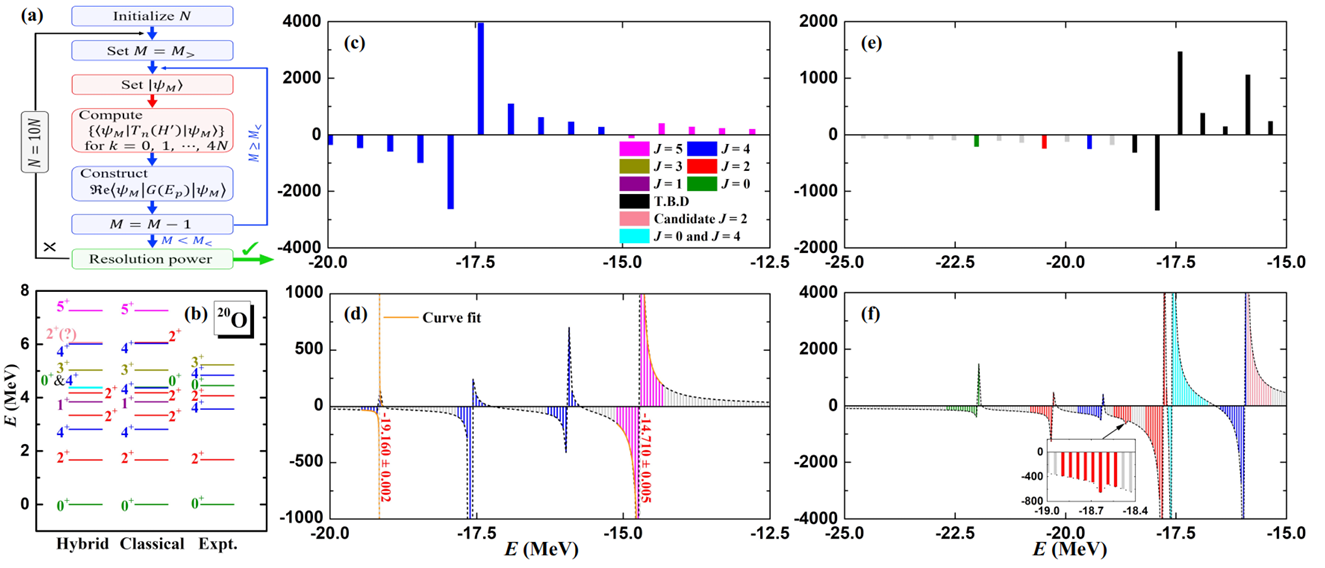
New Progress in First-Principles Quantum Computing for Nuclear Structure
Recently, the research team at the Institute of Modern Physics, Chinese Academy of Sciences, has made new progress in quantum computing studies of first-principles nuclear structure for multi-fermion systems. The team developed a universal quantum-classical hybrid computing framework capable of calculating Green's functions and spectral functions of nuclear many-body systems. The relevant results were published as a Letter in Physical Review C. First-principles Hamiltonian many-body calculations are a core approach for revealing the laws of strongly correlated quantum systems, widely applied in fields such as quantum chemistry and nuclear physics. However, the Hilbert space of such problems grows exponentially with particle number, posing insurmountable computational resource challenges on classical computers...
2026-08-03

Philippine DOE launches nuclear power plant site screening with IAEA support
The Philippine Department of Energy (DOE) recently stated that it has begun preparing nuclear power plant site screening work in accordance with internationally recognized safety standards. Collaborating with experts from the International Atomic Energy Agency (IAEA), the DOE is wrapping up an intensive workshop on site and external event design this week to strengthen the country's nuclear power plant site screening process. Energy Secretary Sharon Garin stated that selecting the right site is one of the most critical decisions in developing a nuclear power program, and that close collaboration with the IAEA ensures every step is guided by the highest international standards of science, rigorous technical assessment, and resilient public safety protection. The workshop brought together technical experts from the DOE and partner agencies alongside specialists from the IAEA's External Events Safety Section to share recognized methodologies for assessing potential sites against earthquakes, floods, volcanic activity, extreme weather, and other natural and human-induced risks.
2026-08-03
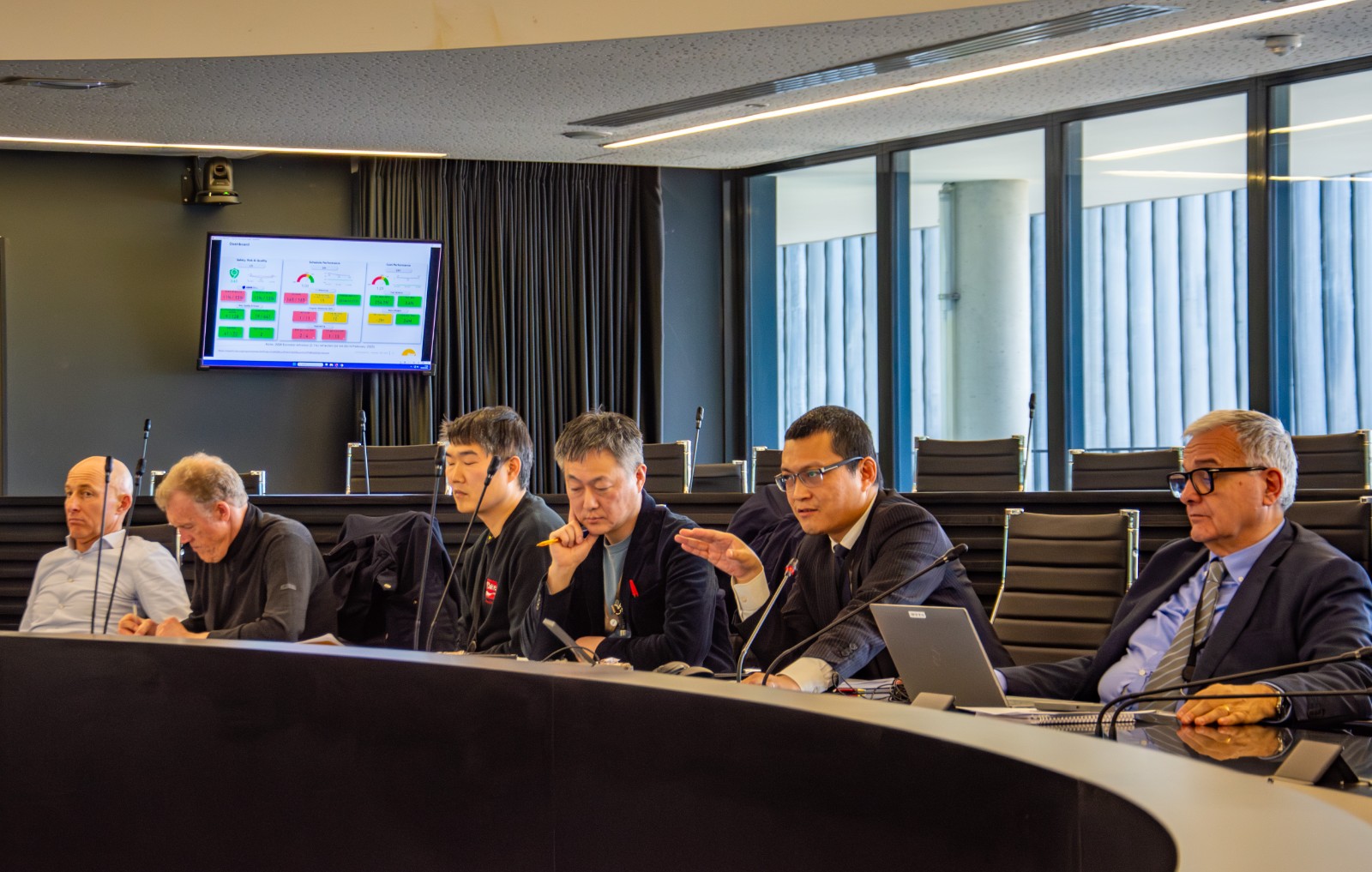
Progress and Cost Performance Management of the ITER Project Enhancement
The ITER Organization reported on July 29 that, regarding the construction progress and cost control of the International Thermonuclear Experimental Reactor (ITER), the project team has established a more detailed monthly tracking mechanism, and regularly reports key performance indicators, updated estimates at completion, and milestone trend analyses to the ITER Council. The ITER project is large in scale with complex interfaces; management efforts involve not only overall schedule and budget but also continuous assessment of thousands of activities including design, manufacturing, component installation, commissioning, and operational readiness. For tasks on the critical path, even delays of a few weeks can have cascading effects on multiple construction work packages. To identify...
2026-08-03
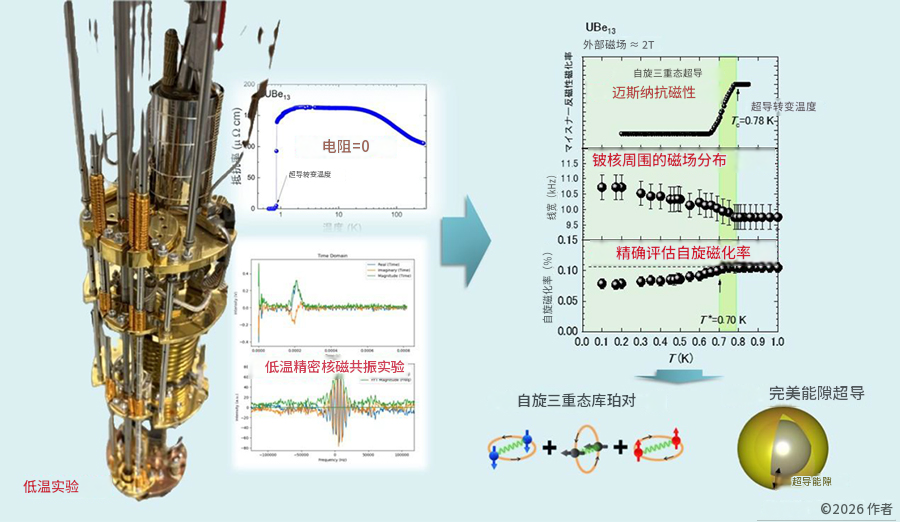
Japanese research team experimentally confirms full-gap spin-triplet superconductivity in UBe13
On July 30, 2026, Kobe University and the Japan Atomic Energy Agency announced that a research team led by Professor Hideki Higashibata of the Graduate School of Science at Kobe University, along with Shoko Minami, who was a master's student at the time of the research, in collaboration with Yoshinori Haga, Research Director at the Japan Atomic Energy Agency, and researchers from Osaka University, experimentally confirmed for the first time the existence of a spin-triplet superconducting state with full-gap characteristics in the intermetallic compound UBe13. The findings were published in the Journal of the Physical Society of Japan on June 26 and were selected as an Editor's Choice paper. Since its discovery in 1983, UBe13 has been regarded as an important candidate material for spin-triplet superconductivity. Unlike conventional spin-singlet superconductivity...
2026-08-03
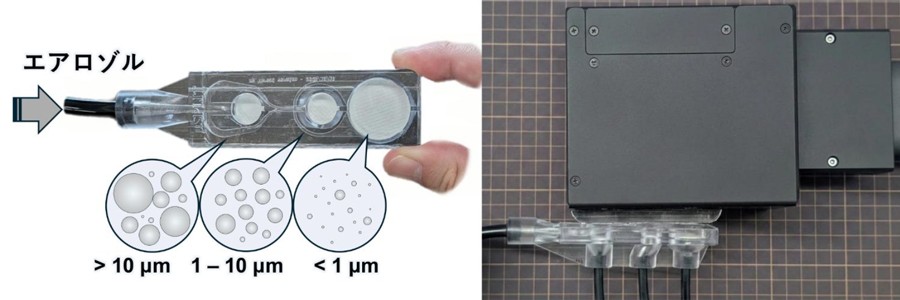
JAEA Develops 3D-Printed Disposable Aerosol Particle Size Classification Device
On July 30, 2026, the Japan Atomic Energy Agency announced the development of a palm-sized, 3D-printed disposable device named µSPLIT (micro splitter) that can separate airborne particles by particle size on-site and collect them onto filters for subsequent or direct measurement. The disposable classification and measurement device µSPLIT (left) separates aerosols by particle size through controlled intake flow rate, with particles collected on filters. (Right) The main unit can be directly connected to a radiation detector via a thin film. According to reports, µSPLIT measures approximately 12 cm × 3 cm × 3 cm and is integrally molded from transparent resin using stereolithography 3D printing technology...
2026-08-03
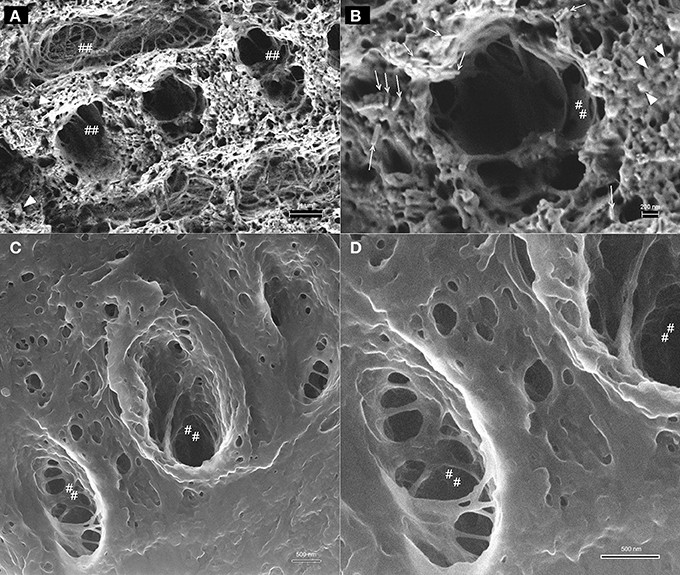
Russian research team reveals submicroscopic pore structure of chernozem using ion beam scanning electron microscopy
Researchers at the Moscow Institute of Physics and Technology and their collaborators have recently used focused ion beam scanning electron microscopy (FIB-SEM) to perform detailed characterization of the microstructure of chernozem soil samples. The study shows that this technique can identify pores smaller than 1 micron, pore morphology, and specific organic components in soil, providing a new observational tool for understanding the mechanisms of chernozem fertility formation and maintenance. The research was supported by a grant from the Russian Science Foundation and published in the 17th series "Soil Science" of the Moscow University Bulletin. Soil science research typically requires extending from the field scale to the microscopic scale. Computed tomography (CT) has been widely used to...
2026-08-03
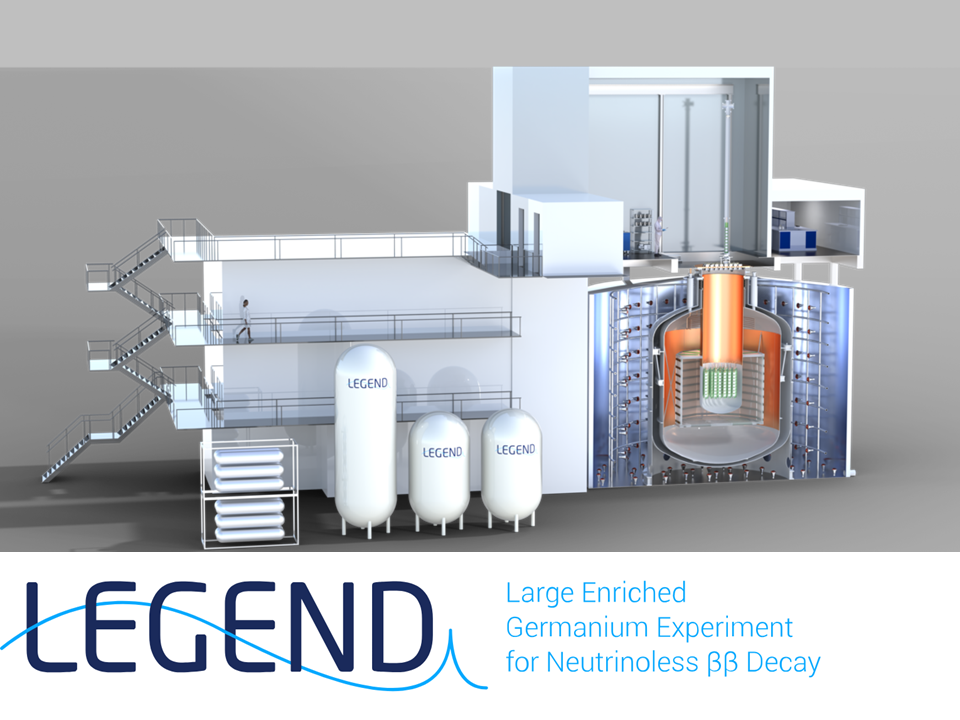
German Science and Humanities Council Supports German Participation in the LEGEND-1000 Neutrinoless Double Beta Decay Experiment
On July 27, 2026, the German Science and Humanities Council expressed its support for German participation in the LEGEND-1000 experiment. The project had previously passed scientific evaluation and was deemed significant for a broad research community in the fields of particle physics and nuclear physics. LEGEND-1000 is the next phase of the large-scale enriched germanium neutrinoless double β decay experiment, planned to be constructed by an international collaborative team at the underground laboratory of the Gran Sasso National Laboratory in Italy. German participating institutions include the Max Planck Institute for Nuclear Physics in Heidelberg and the Technical University of Munich, with project leaders being Professor Susanne Mertens and Professor Stefan Schönert, respectively. According to the project...
2026-08-03
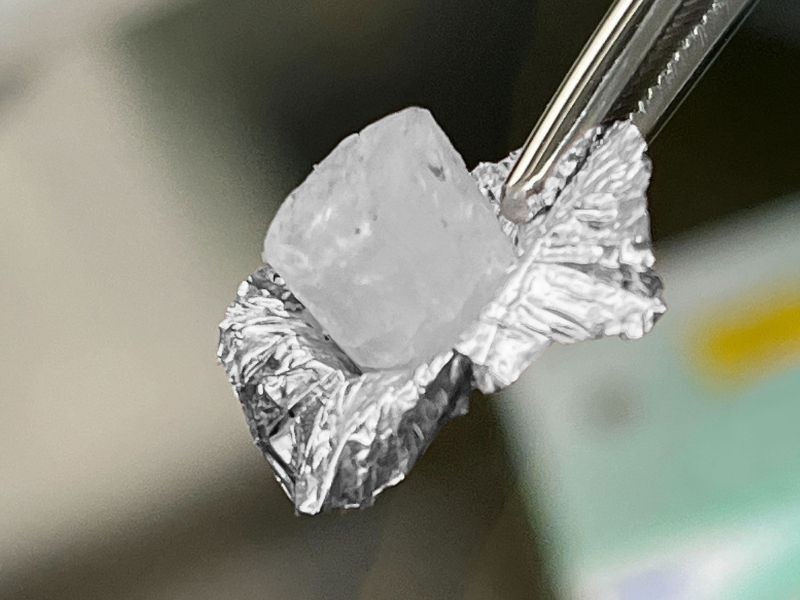
Kairos Power Advances Flibe Molten Salt Applications to Support KP-FHR High-Temperature Reactor Development
Kairos Power announced on July 29 that its Fluoride Salt-Cooled High-Temperature Reactor (KP-FHR) will be among the early adopters of a fluoride salt coolant. This coolant, commonly referred to as Flibe, is composed of lithium fluoride (LiF) and beryllium fluoride (BeF₂). In the 1960s, Oak Ridge National Laboratory used this material as a coolant in the Molten Salt Reactor Experiment. According to Kairos Power, Flibe has a high specific heat capacity, enabling it to effectively absorb and transfer heat generated in the reactor core. Compared with some sodium-cooled or helium-cooled reactor systems, fluoride salt offers certain advantages in heat transport...
2026-08-03