
Search Results
Keyword:ESS

First Emergency Diesel Generator Successfully Introduced at Unit 6 of Lufeng Nuclear Power Plant
On September 4, 2026, the first emergency diesel generator for Unit 6 of Lufeng Nuclear Power Plant was successfully introduced into the diesel generator building. The emergency diesel generator is a critical required power source during the cold test phase of a nuclear power unit. The successful introduction of this equipment ensured the availability of emergency power during the cold test period, providing a solid power guarantee for the smooth execution of subsequent cold test work for Unit 6. The Installation Management Section of Lufeng Nuclear Power shifted from passive waiting to proactive action, planning the diesel generator introduction route in advance. The greatest challenge of this introduction task was the deep pit backfill adjacent to the main area of the siphon well on the west side of the diesel generator building, with a backfill depth exceeding 20 meters, a wide coverage area, and a graded aggregate demand of up to approximately 80,000 cubic meters. During construction...
2026-09-08
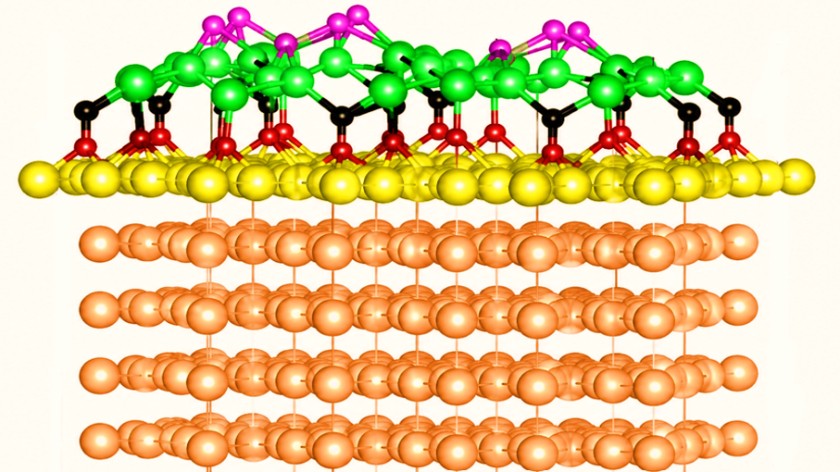
BESSY II reveals early-stage copper oxidation: providing evidence for catalyst development and corrosion research on nuclear waste final disposal containers
Germany's BESSY II synchrotron facility has recently provided new experimental insights into the early-stage oxidation process of copper surfaces. The study shows that before the formation of pure copper oxides, copper and oxygen atoms first form complex surface superstructures, such as "29"CuₓO. The chemical state of such structures has long been debated, and the findings are of reference value for catalyst research as well as for corrosion protection studies of copper containers used for radioactive waste final disposal. Before the formation of pure copper oxide, complex superstructures composed of copper and oxygen atoms emerge—such as "29"CuxO. HZB In everyday environments, copper surfaces gradually lose their red metallic luster and form a greenish oxide layer. This layer structure can slow further corrosion over an extended period. Regarding the initial stages of this process, the core question researchers focus on is: to what extent are copper atoms actually oxidized once oxygen enters the copper surface. Since conventional spectroscopic methods struggle to clearly distinguish between pure copper and partially oxidized surfaces, such oxidation states have previously been difficult to determine directly.
2026-09-07
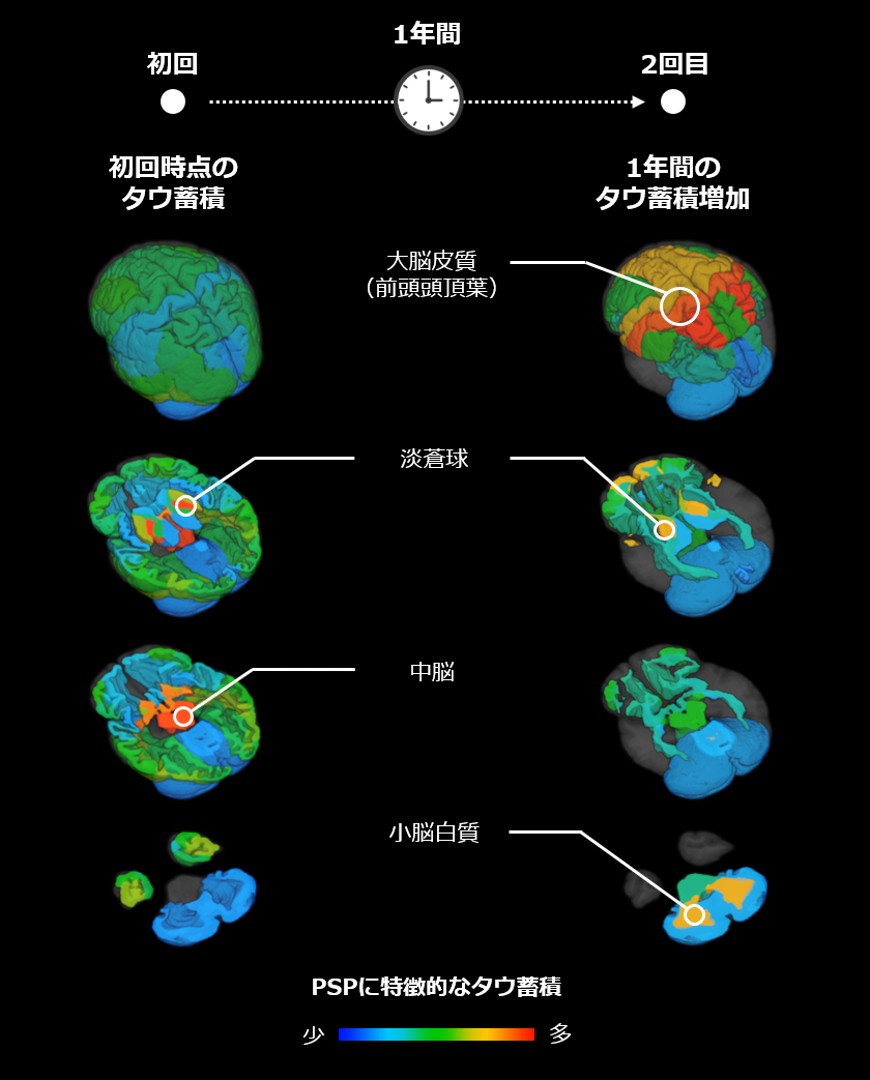
Japanese Research Uses Tau PET to Reveal Association with Symptom Progression in Progressive Supranuclear Palsy
A research team at the National Institutes for Quantum Science and Technology (QST) in Japan recently announced findings from a study on progressive supranuclear palsy (PSP). Using their self-developed tau PET imaging technology, the researchers conducted follow-up scans on the same group of PSP patients at approximately one-year intervals, confirming for the first time in living brains that the faster tau protein accumulates in the globus pallidus region deep within the brain, the faster patient symptoms progress. The findings were published on September 5, 2026, in the international neurology journal *Movement Disorders*. Characteristic tau protein accumulation regions in PSP Progressive supranuclear palsy is a progressive neurodegenerative disease occurring in middle-aged and older adults, with common manifestations including increased risk of falls, difficulty with movement, eye movement disorders, postural instability, and cognitive dysfunction. There is currently no therapy that can cure or halt disease progression; therefore, establishing biomarkers that can objectively reflect disease changes and treatment efficacy has been a critical issue in drug development. Previous autopsy studies have shown that abnormal tau protein accumulation in the brains of PSP patients is an important pathological feature, particularly concentrated in deep brain regions such as the globus pallidus and midbrain. However, autopsy samples cannot be used for long-term dynamic observation, and how tau protein accumulation changes over time and how it corresponds to symptom progression had previously remained unclear. In recent years, positron emission tomography (PET) has made it possible to observe tau protein in living brains, but existing studies have mainly shown that tau protein increases over time without sufficiently demonstrating a direct association between these changes and symptom worsening. In this study, the research team used the PET radiopharmaceutical 18F-PM-PBB3 developed by QST, namely florzolotau (18F), to perform two PET examinations on 26 PSP patients and 10 healthy controls, conducted at baseline and approximately one year later. The researchers combined 57 brain regions identified by MRI and performed multivariate analysis of PET signal changes to identify PSP-related tau protein accumulation regions and their spread over time. The results showed that at baseline, tau protein in PSP patients was primarily accumulated in subcortical regions such as the globus pallidus and midbrain, consistent with previous reports. Follow-up imaging at one year showed further increases in tau protein accumulation in the globus pallidus, along with marked increases in tau accumulation in the frontoparietal lobes and cerebellar white matter, suggesting that during the course of PSP, tau protein may spread from deep brain regions to the cerebral cortex and cerebellar-related areas. The research team further focused on Richardson's syndrome, the most typical and common subtype of PSP. This subtype typically progresses rapidly, and the 18 patients with this subtype included in this study showed significant increases in PSP rating scale scores within one year. The analysis found that changes in tau protein accumulation in the globus pallidus showed the strongest correlation with the degree of symptom progression; that is, the faster tau protein accumulated in this region, the more pronounced the worsening of patient symptoms. Analyses of individual patients likewise showed that globus pallidus tau protein accumulation can reflect the course of PSP from mild to severe stages. The researchers believe that serial tau PET imaging has the potential to serve as a novel imaging biomarker for assessing PSP disease progression, and also provides a basis for tau-targeted therapeutic strategies: if future therapies can inhibit tau protein accumulation, it may be possible to slow symptom progression. Next steps still require longer-term follow-up in a larger number of patients to validate the relationship between changes in tau protein accumulation and overall symptom progression and treatment response. The imaging assessment method established in this study may not only be used for disease monitoring and clinical trial efficacy evaluation in PSP, but may also be extended to research on other tau protein-related neurodegenerative diseases and dementias, providing new technical support for the diagnosis and therapeutic development of related diseases.
2026-09-07

IAEA Meeting Focuses on Data Needs for Ion Beam Analysis, JINR Presents Progress in Nuclear Track Emulsion Research
From August 24 to 28, 2026, the International Atomic Energy Agency held a Technical Meeting on Data Requirements for Ion Beam Analysis in Vienna, Austria, attended by scientists and experts from multiple nuclear physics research institutions. Andrey Zaitsev, Senior Researcher at the High Energy Physics Laboratory of the Joint Institute for Nuclear Research, delivered a report at the meeting, presenting the current performance of nuclear track emulsions and research progress related to the BECQUEREL project. The meeting focused on assessing whether existing nuclear data can meet current and future application needs of ion beam analysis, and discussed new experimental methods, as well as the application of artificial intelligence and machine learning in experiments and data processing. Topics included elastic backscattering cross sections, nuclear re...
2026-09-05

8th Russia-China Energy Business Forum Held; Putin Says Nuclear Power Projects in China Using Russian Designs Nearing Completion
On September 4, Russian President Vladimir Putin stated in his address to the participants, organizers, and guests of the 8th Russia-China Energy Business Forum that energy has always been one of the most important and dynamic areas of Russia-China economic cooperation. Putin noted that the comprehensive partnership and strategic coordination between the Russian Federation and the People's Republic of China continue to develop steadily. Russia currently holds a firm position as a major supplier of oil and natural gas to China, and is also an important exporter of coal and liquefied natural gas to China. In the nuclear power sector, Putin mentioned that multiple nuclear power plants designed by Russia are under construction in China, with related projects nearing successful completion...
2026-09-05

Progress on Contract Work for Vietnam's Ninh Thuan 1 Nuclear Power Plant
Alexey Likhachev, President of Rosatom, stated on September 3 during the Eastern Economic Forum that contract work for the construction and operation of Vietnam's first nuclear power plant, Ninh Thuan 1, is progressing. Likhachev said that relevant contract documents are being expedited, with the goal of reaching legally binding agreements on the project timeline and configuration options. He noted that the VVER-1200 Generation III+ reactor has been selected as the technical solution for the Ninh Thuan 1 Nuclear Power Plant. Meanwhile, both sides are also conducting preliminary research work on a research reactor. Vietnam's National Assembly decided in December 2024 to restart the Ninh Thuan 1 Nuclear Power Plant project. The project was previously suspended in 2016. According to an intergovernmental agreement signed during the Vietnamese Prime Minister's visit to Russia in March this year, the Ninh Thuan 1 Nuclear Power Plant will be built using advanced Russian technology and financed through a special loan provided by the Russian Federation.
2026-09-04

BWXT Selected for Conceptual Design of First Module of U.S. NNSA Lithium Processing Facility
BWX Technologies, Inc. (BWXT) has announced that it has been awarded a contract by the U.S. Department of Energy's National Nuclear Security Administration (DOE/NNSA) to perform conceptual design work for the first module of a new lithium processing facility planned for the Y-12 National Security Complex. According to available information, lithium post-processing operations are currently still being conducted in some aging facilities. To continue supporting missions such as direct reuse of lithium materials, purification, component production, and recycling, NNSA plans to modernize related facilities to meet its national security mission requirements. Heatherly Dukes, President of BWXT Technical Services Group, stated that this project represents a significant investment in the modernization of U.S. nuclear security infrastructure, aimed at...
2026-09-04

IAEA Completes Review of Finland's Nuclear and Radiological Emergency Preparedness
An International Atomic Energy Agency (IAEA) expert team recently concluded a review of Finland's nuclear and radiological emergency preparedness and response framework. The Emergency Preparedness Review (EPREV) was conducted at the request of the Finnish government, hosted by the Finnish Radiation and Nuclear Safety Authority (STUK), with the mission taking place from August 24 to September 2. The review team focused on assessing Finland's arrangements and capabilities for responding to nuclear and radiological emergencies, benchmarking them against IAEA safety standards. Finland currently operates five nuclear power reactor units at two sites: the Loviisa Nuclear Power Plant and the Olkiluoto Nuclear Power Plant. The Loviisa plant is located approximately 90 kilometers northeast of Helsinki, while the Olkiluoto plant is situated approximately 270 kilometers northwest of Helsinki. The Olkiluoto site also hosts the Onkalo spent nuclear fuel geological repository, the world's first geological disposal facility for final disposal of spent fuel.
2026-09-03

Commissioning of the CRAFT Cryogenic System 6 kW@4.5 K Helium Refrigerator Successfully Completed
Recently, significant progress has been made in the construction of the helium refrigeration system on the CRAFT magnet platform. The on-site commissioning and performance testing of the main body of the CRAFT cryogenic system 6 kW@4.5 K helium refrigerator have been successfully completed, with all indicators meeting the design acceptance requirements. The commissioning work focused on systematic verification of the cold box refrigeration performance, liquefaction capacity, control system, safety interlocks, and the operating status of key cryogenic equipment. During the acceptance tests, the helium refrigerator completed 12 hours of continuous stable operation under design conditions, achieving a refrigeration capacity of 6 kW@4.5 K + 50 K@GHe. In addition to design conditions, the project team also conducted performance tests under helium liquefaction conditions, with relevant temperature, pressure,...
2026-09-03

U.S. Think Tank Recommends European Nuclear Power Adjust Cooling Configurations to Address High Temperatures and Drought
The U.S. Boston-based think tank Clean Air Task Force (CATF) recently stated that extreme heat and drought are placing new pressure on Europe's energy infrastructure, with nuclear power plant operations also affected. The organization believes the nuclear industry needs to place greater emphasis on climate resilience in energy planning and assess the impact of different cooling configurations on long-term plant operations. CATF noted that for nuclear power plants, temperature changes, water resource availability, environmental conditions, and related regulatory requirements over the coming decades could all affect unit operations. The selection of cooling schemes for nuclear power plants should be determined based on site-specific conditions, including local water resource availability, environmental regulations, geographical conditions...
2026-09-03
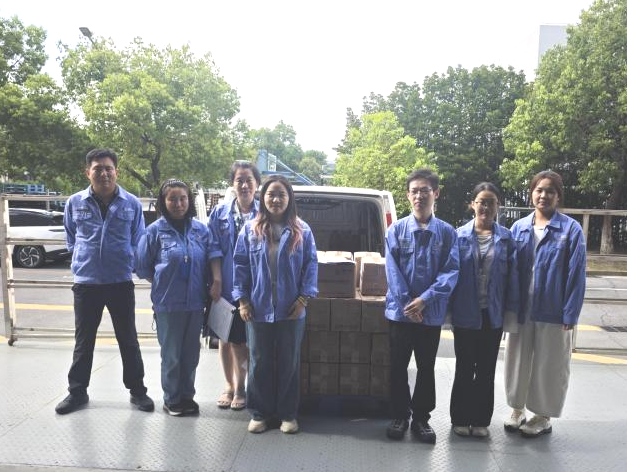
SNPAS Successfully Completes Batch Shipment of 45 Nuclear-Grade Paperless Recorders
On August 27, SNPAS successfully completed factory acceptance and shipment of 45 nuclear-grade paperless recorders. This batch delivery marks that the product has completed full-process technical iteration, with all production links across the entire chain moving toward standardization. Domestic nuclear-grade display and control equipment now possesses sustained and stable batch supply capability, with continuously growing market recognition. The nuclear-grade paperless recorder is a core product of the high-reliability display and control platform based on FPGA (Field Programmable Gate Array) architecture. The entire product operation process involves no CPU or operating system, fundamentally resolving the industry pain points of traditional display and control equipment, namely difficult operating system verification and vulnerability to virus attacks. It inherently features virus resistance, no system freezes, instant startup, and fast response...
2026-09-03
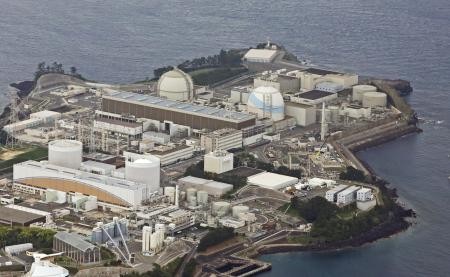
Japan Approves Adjusted Tsunami Height Assessment for Genkai Nuclear Power Plant
At its regular meeting held on September 2, Japan's Nuclear Regulation Authority (NRA) formally approved Kyushu Electric Power Co.'s assessment of the maximum potential tsunami height at the Genkai Nuclear Power Plant site in Saga Prefecture. Under this adjustment, the maximum tsunami height on the northwest side of the Genkai plant site has been raised to 14 meters; previously, the maximum tsunami height on the north side of the site was 6 meters. The NRA determined that the ground surface on the northwest side of the Genkai plant site is covered by bedrock with an elevation of 16 meters, and therefore no additional disaster prevention measures are required even under the new tsunami height assessment. In July, the NRA had already approved the review report draft submitted by Kyushu Electric Power...
2026-09-02

Carbon Nanotubes Can "Remember" Their Initial Structure, Isotope Labeling Reveals Dynamic Growth Process
A study released on September 1 shows that carbon nanotubes can maintain their initial atomic structure in dynamically changing growth environments. The research team used digital isotope labeling technology to encode the elongation process of individual carbon nanotubes as sequences of different carbon isotope compositions, and read their growth history through Raman spectroscopy, thereby tracking the structural stability of nanotubes under conditions of temperature variation and catalyst evolution. The properties of carbon nanotubes are highly dependent on their atomic arrangement. The same material may exhibit metallic or semiconducting characteristics due to structural differences, so structural uniformity has always been a key issue for the large-scale application of carbon nanotubes. In floating catalyst chemical vapor deposition and other industrial production routes, catalyst particles experience constantly changing temperatures and gas compositions within the reactor and may undergo irreversible enlargement. Previously, direct evidence was lacking on whether individual carbon nanotubes could maintain their initial structure under such complex conditions.
2026-09-02
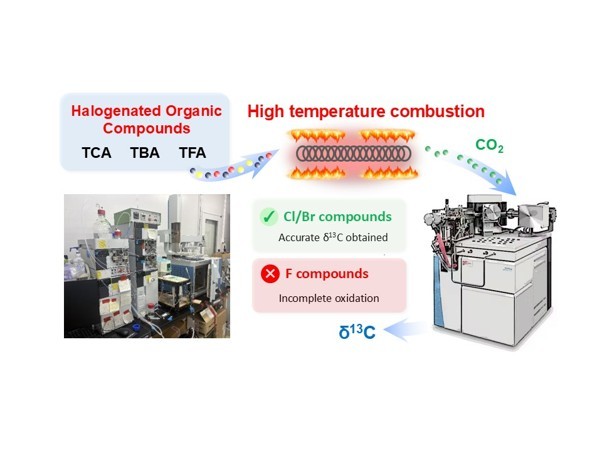
Japanese Team Develops High-Temperature, High-Pressure Isotope Ratio Analysis Method for Tracing Halogenated Pollutants
Researchers from Shibaura Institute of Technology (SIT) and the National Institute of Advanced Industrial Science and Technology (AIST) in Japan have collaboratively developed a customized high-temperature, high-pressure combustion interface for liquid chromatography-isotope ratio mass spectrometry (LC-IRMS), enabling carbon stable isotope ratio (δ¹³C) analysis of various halogenated organic compounds. The research findings were published online on August 2, 2026, and will appear in Volume 1421 of Analytica Chimica Acta, scheduled for release on November 1, 2026. Source of the new high-temperature, high-pressure LC-IRMS system: Professor Hiroto Kawashima, SIT, Japan. Halogenated organic compounds are widely present in disinfection byproducts, pesticides, refrigerants, and industrial chemicals, some of which exhibit persistence, bioaccumulation, and toxicity. Traditional environmental monitoring primarily relies on concentration measurements, which makes it difficult to directly provide information on pollutant sources and environmental transformation processes. δ¹³C analysis can offer clues for studying chemical sources, production processes, and environmental fate, but organic pollutants containing strong carbon—chlorine or carbon—fluorine bonds are difficult to fully oxidize under conventional LC-IRMS combustion conditions, limiting the application of this technique.
2026-09-02

Iran Still Denies IAEA Inspectors Access to Some Nuclear Facilities
A recent report shows that Iran has still not allowed International Atomic Energy Agency (IAEA) inspectors to access some of its nuclear facilities, including sites in Isfahan, Natanz, and Fordow that were previously damaged in airstrikes. The report states that the IAEA had previously detected over 440 kilograms of highly enriched uranium and nearly 8,600 kilograms of low-enriched uranium at these locations. Due to the current lack of sufficient information on the status and whereabouts of the relevant nuclear materials, IAEA Director General Rafael Grossi has expressed concerns over nuclear non-proliferation risks and called on Tehran to allow inspectors to access the facilities for verification as soon as possible. The report also mentions that inspectors...
2026-09-02