
Search Results
Keyword:Korea
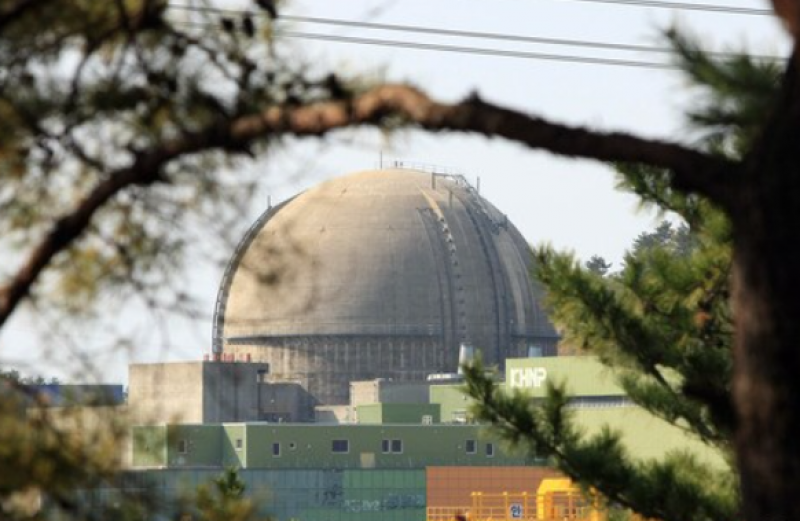
Magnitude 3.1 Earthquake in South Korea Does Not Affect Safety of Nuclear Facilities
On August 23, the Nuclear Safety and Security Commission (NSSC) of South Korea reported that at 6:43 a.m. that day, a magnitude 3.1 earthquake occurred approximately 21 kilometers northwest of Haenam County, South Jeolla Province, South Korea. It was confirmed that all nuclear reactors and related nuclear facilities in South Korea were operating stably, with no abnormalities detected. The nuclear facility closest to the epicenter was the Hanbit Nuclear Power Plant, approximately 83.2 kilometers away. The peak ground acceleration recorded at this plant during the earthquake was 0.0032g, far below its seismic design basis of 0.2g, and it is expected that the safety of the facility will not be affected. The Hanbit Regional Office of the NSSC has conducted emergency safety inspections at the Hanbit Nuclear Power Plant site...
2026-08-24
Busan, South Korea Reports No Abnormal Radiation Detected in Seawater and Seafood Three Years After Fukushima Discharge
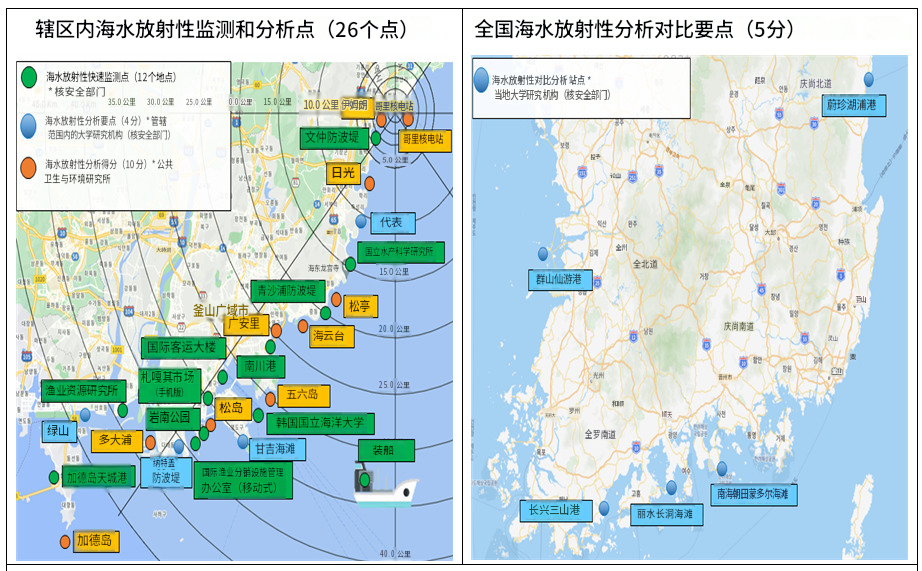
Busan Metropolitan City stated on August 24 that since the discharge of contaminated water from the Fukushima nuclear power plant began in 2023, the city has continuously conducted radiation monitoring and analysis of coastal seawater and seafood. The results show that the safety conditions of Busan's waters and seafood remain stable with no abnormal changes detected. According to Busan Metropolitan City, seawater radioactivity testing is currently conducted at 26 coastal points. Among them, samples from 14 coastal locations including Haeundae, Gwangalli, Dadaepo, Songdo, and Songjeong are analyzed by the Busan Metropolitan City Institute of Health and Environment and local university research institutions. Test results show that the concentrations of relevant radionuclides are far below the World Health Organization drinking water standards, with cesium-134,...
2026-08-24
Naju City, Korea Proposes Construction of National Fusion Energy Center
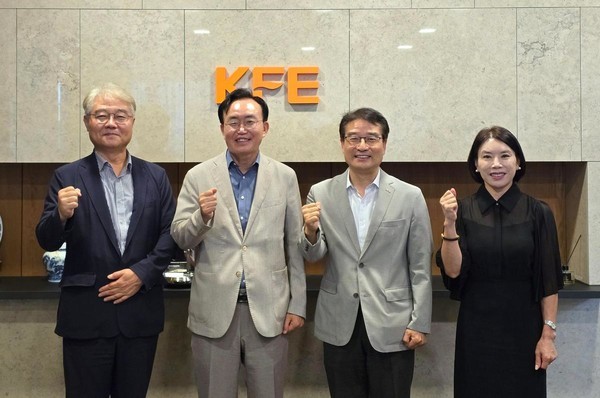
Naju City, Korea recently proposed the concept of building a national-level fusion energy center, planning to use the locally planned artificial sun research facility as a foundation to connect the entire process of fusion energy from basic research, demonstration and validation, to power generation and industrialization. On August 21, Naju City Mayor Yoon Byung-tae visited the Korea Institute of Fusion Energy (KFE) and met with its President Oh Young-kuk. Yoon proposed that Naju City would strive to host the fusion demonstration reactor (DEMO) linked to the artificial sun research facility, while promoting the construction of a government-led comprehensive fusion energy research base and industrial cluster, and applying for the designation of a specialized fusion energy...
2026-08-22
South Korea's Asan Medical Center Develops AI-Based Radiopharmaceutical Therapy Platform with U.S. Institutions
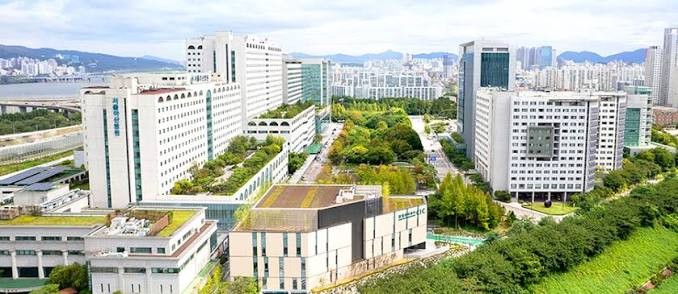
The research team at Asan Medical Center in Seoul announced on the 21st that it has recently been selected for the "2026 Korea-U.S. Innovative Outcomes R&D New Support Project" organized by the Ministry of Health and Welfare, and will collaborate with U.S. research institutions to develop an artificial intelligence-based radiopharmaceutical therapy platform aimed at exploring new treatment strategies for solid tumors that respond poorly to conventional therapies. The team is composed of professors including Myung Seung-jae from the Department of Gastroenterology, Oh Seung-jun from the Department of Nuclear Medicine, Ryu Chang-hoon from the Department of Oncology, Jung Byung-kwan from the Department of Pathology, and Son Byung-ho from the Department of Breast Surgery at Asan Medical Center. The project will combine Asan Medical Center's large-scale clinical and pathological data, Emory University's AI-based digital pathology analysis technology, and Case Western Reserve University and University Hospitals Cleveland Medical Center's pathological and clinical research capabilities.
2026-08-22
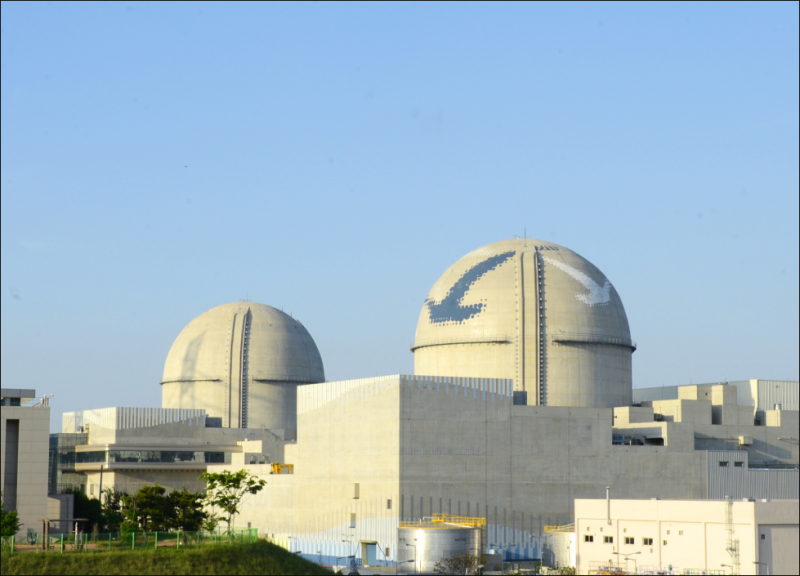
South Korea Approves Restart of Shin-Kori Unit 1
The Nuclear Safety and Security Commission (NSSC) of South Korea announced on August 21 that it has approved the restart of Shin-Kori Unit 1, located in Ulju County, Ulsan. The unit has been under routine inspection since July 2. On the same day, the commission approved the unit to reach criticality. Criticality refers to the state in which a sustained nuclear fission chain reaction can be maintained within the reactor core, with a balanced neutron population. Once criticality is achieved, the reactor can gradually resume operation under safely controlled conditions. The NSSC stated that this routine inspection involved 98 inspection items required before the reactor could reach criticality, of which 86 have been completed, confirming that the unit meets the conditions for safely achieving criticality.
2026-08-22
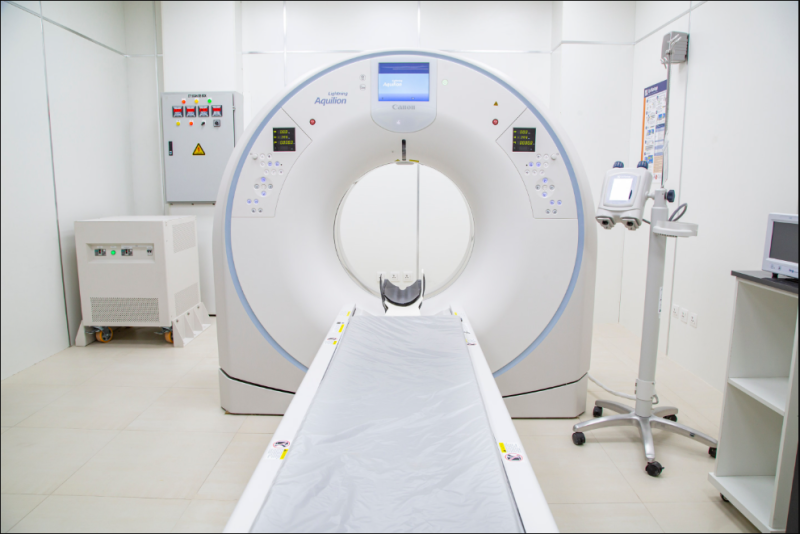
South Korea's National Assembly Passes Amendments on Radiation Disaster Response, Strengthening the Treatment System for Radiation Victims
The South Korean National Assembly held a plenary session on the 20th and passed two livelihood bills proposed by Rep. Yoon Jun-byeong, a member of the Parliamentary Agriculture, Food, Rural Affairs and Fisheries Committee. The bills concern the establishment of a radiation disaster response system and adjustments to the support system for surviving family members of national meritorious persons. Under the amendments passed, the Korea Atomic Energy Research Institute will be granted the qualification to operate as a specialized hospital for treating radiation victims. This arrangement aims to further improve the national medical safety net, enabling industrial radiation workers and victims of accidental radiation incidents to receive faster and more systematic treatment and rehabilitation support. Meanwhile, another amendment was also passed. This amendment, in accordance with the Constitutional Court's ruling of nonconformity, abolishes the provision that prioritized age as the sole criterion in the payment of survivor benefits to families of national meritorious persons of the same rank. After the relevant institutional adjustment, greater emphasis will be placed on safeguarding the rights of low-income households to reduce blind spots in welfare support.
2026-08-21
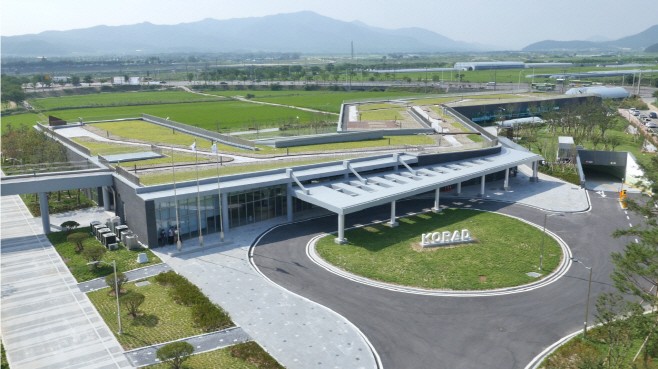
Korea Atomic Energy Environment Corporation Earns Top Grade A in All Categories of Radioactivity Analysis Capability Evaluation for Nine Consecutive Years
The Korea Atomic Energy Environment Corporation announced on August 21 that it received an A-grade rating in all evaluation categories for the ninth consecutive year in the 2026 Radioactivity Analysis Capability Evaluation conducted by the Korea Institute of Nuclear Safety. In this evaluation, the corporation achieved A-grade results across all analysis items covering 7 samples and 12 radionuclides, demonstrating high detection precision and quality control capabilities. The Radioactivity Analysis Capability Evaluation has been conducted annually since 1997, primarily to verify the testing capabilities of domestic radioactivity analysis institutions in Korea, as well as the reliability and quality management level of related analytical data. This year, a total of 58 institutions participated in the evaluation, including regional radiation monitoring...
2026-08-21
South Korea Amends Nuclear Safety Act to Clarify Safety Responsibilities of Nuclear Facility Operators
The National Assembly of South Korea passed a partial amendment to the Nuclear Safety Act at its 438th special session on August 20, marking the first time that nuclear-related business operators' primary responsibility for nuclear facility safety has been explicitly established at the legal level. This move signifies that South Korea's nuclear safety management system will further transition from a licensing and regulation-centered approach to a responsibility system aligned with the safety principles of the International Atomic Energy Agency (IAEA). The amendment was proposed by South Korean lawmaker Oh Se-hee. Prior to the revision, South Korea's Nuclear Safety Act primarily established safety standards and regulatory procedures around reactor construction and operating licenses, nuclear material use, and radioactive waste management facility operations, but lacked...
2026-08-21
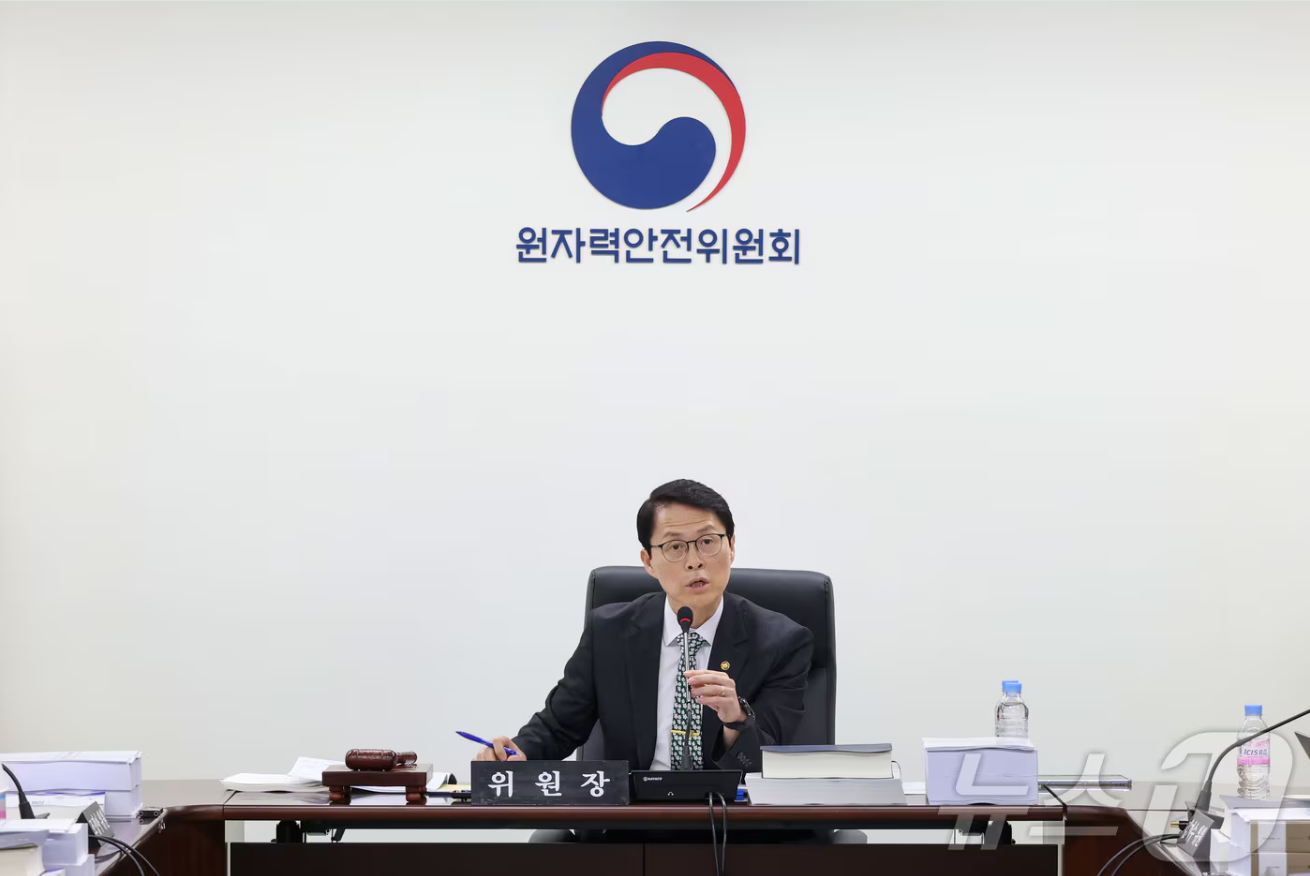
South Korea Approves License Amendment for Gyeongju Low- and Intermediate-Level Radioactive Waste Disposal Facility
The Nuclear Safety and Security Commission (NSSC) of South Korea announced on August 21 that it held its 12th meeting of 2026 in written form on August 20, reviewing and approving the license amendment for the construction and operation of the near-surface disposal facility for low- and intermediate-level radioactive waste operated by the Korea Radioactive Waste Agency (KORAD). The near-surface disposal facility is located in Munmu-daewang-myeon, Gyeongju-si, Gyeongsangbuk-do, and is the second-phase project of the Gyeongju low- and intermediate-level radioactive waste disposal facility. Near-surface disposal refers to the disposal of low- and intermediate-level radioactive waste in near-surface facilities, rather than in deep underground caverns. The facility completed its pre-operational inspection in March this year. This license amendment is primarily intended to update the safety analysis report...
2026-08-21
South Korea's DaeChang Solution Secures Special Steel Contract for French Nuclear Power Turbines
South Korean steel casting manufacturer DaeChang Solution Co. announced on August 21 that it has signed a special steel supply contract with Arabelle Solutions France, with the products to be used in steam turbines for small modular reactors (SMRs) and large nuclear power plants. According to the announcement, the contract value is EUR 50.7649 million, equivalent to approximately KRW 82.631 billion based on the initial market exchange rate of KRW 1,627.72 per euro on the contract signing date. This amount represents 138% of DaeChang Solution's 2025 consolidated sales of KRW 59.877 billion. Of the contract value, 70% is a fixed amount, i.e., EUR 37.2055 million...
2026-08-21
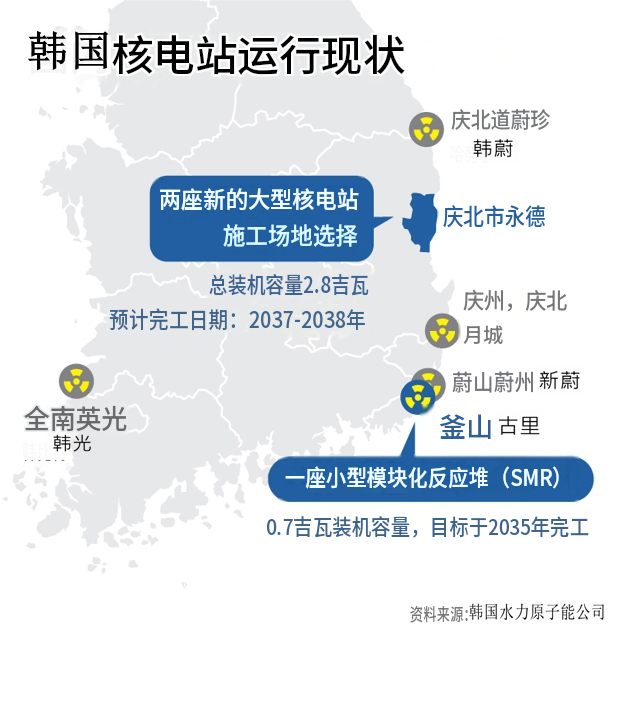
South Korea Raises 2040 Electricity Demand Forecast, Increment Equivalent to 19 Large Nuclear Power Units
A forum on the formulation of South Korea's 12th Basic Plan for Electricity Supply and Demand was held in Seoul on August 20. The new round of electricity demand forecasts submitted at the meeting showed that by 2040, South Korea's annual maximum electricity demand is expected to reach 158.4 GW to 165.0 GW, an upward revision of 26.6 GW to 26.8 GW compared to the forecast proposed in April this year. Based on the 1.4 GW single-unit capacity of the AP1400 large nuclear power unit under construction in South Korea, the increment in electricity demand from this upward revision is equivalent to the electricity provided by approximately 19 large nuclear power units operating at full power. The previous April forecast for the 2040 annual maximum electricity demand was 131.8 GW to 138.2 GW. The new forecast reflects semiconductor industry clusters...
2026-08-21
Korea Advances Construction of Temporary Spent Fuel Dry Storage Facility at Hanbit Nuclear Power Plant
Korea Hydro & Nuclear Power (KHNP) is advancing the construction of a temporary spent fuel storage facility at the Hanbit nuclear power plant site. The company recently launched an information session process for local residents, planning to collect opinions through briefings and discussion meetings. According to the schedule, three briefing sessions will be held on the 25th and 26th of this month in Yeonggwang County, South Jeolla Province. The first session is set for 2:00 PM on the 25th at the Hongnong Community Center, with the other two held at 10:00 AM and 3:00 PM on the 26th at the Gunam-myeon Multipurpose Center and Starlight Hotel, respectively. Following the briefings, a discussion meeting will be held on the 1st of next month at 2:00 PM at the Starlight Hotel, with Korea Electric Power Corporation (...
2026-08-21
Korean Research Team Reveals Mechanism Behind Neutron Irradiation-Induced Reliability Degradation in Ferroelectric AI Semiconductors
Jeonbuk National University announced on the 20th that a research team led by Professor Bae Hak-yeol from the Department of Electronic Engineering at its College of Engineering, in collaboration with Professor Kim Tae-wan's team at Seoul National University and Q-Beam Solution, a startup affiliated with the Korea Atomic Energy Research Institute, conducted a joint study analyzing the causes of performance degradation in next-generation ferroelectric memory and neuromorphic semiconductor devices under neutron irradiation. The findings have been published in the latest issue of ACS Applied Electronic Materials. Ferroelectric semiconductors, which can maintain their polarization state even after power is disconnected, are considered a key candidate for next-generation non-volatile memory and neuromorphic computing devices. Neuromorphic computing aims to simultaneously implement both memory and computation within a single device...
2026-08-20
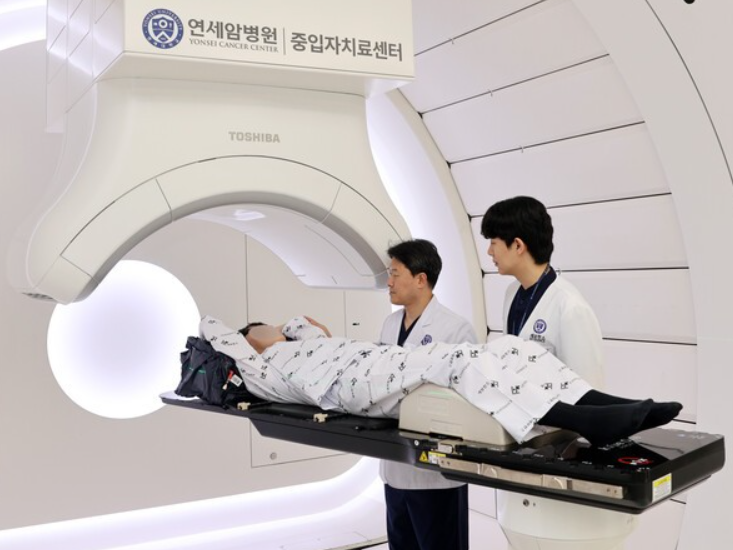
Yonsei Cancer Hospital in South Korea Expands Heavy Ion Radiotherapy Indications, Three Systems Operating Simultaneously
Yonsei Cancer Hospital in South Korea recently announced that it has further expanded the indications for heavy ion radiotherapy to include head and neck cancer, sarcoma, and recurrent rectal cancer. Since becoming the first hospital in South Korea to perform heavy ion radiotherapy for prostate cancer in 2023, the hospital has gradually expanded its treatment scope to cover pancreatic cancer, liver cancer, lung cancer, and other cancer types. Medical staff, including Proton Therapy Center Director Kim Woong-sub (left), are preparing for proton therapy. (Photo provided by Yonsei University Medical Center) Meanwhile, the hospital's second rotating heavy ion radiotherapy system has been fully commissioned. This brings the hospital to a configuration of one fixed-beam system and two rotating systems operating simultaneously. The hospital...
2026-08-20
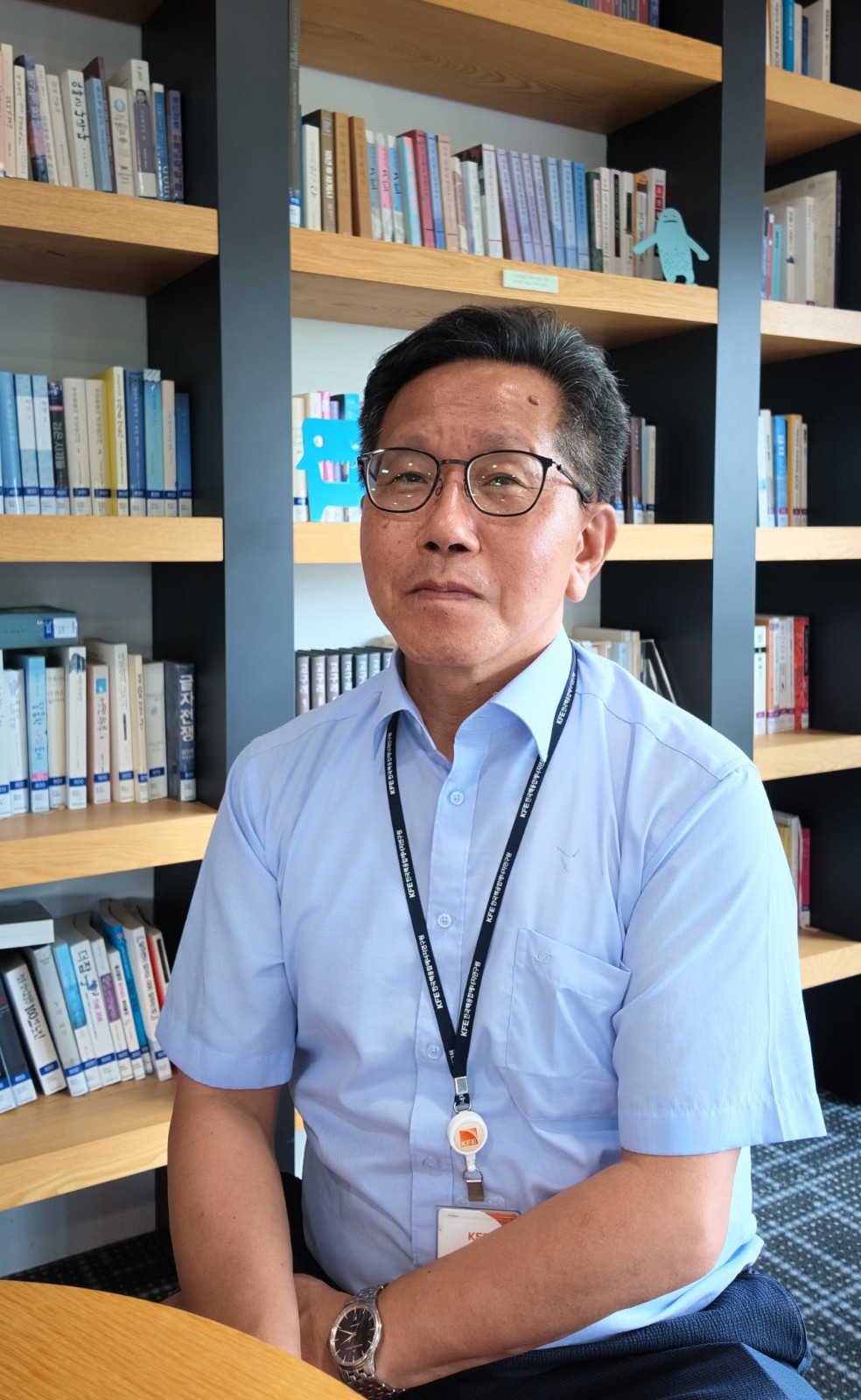
South Korea plans to build an innovative self-developed fusion reactor by 2035
Yang Hyeong-ryeol, head of the fusion sector of the K-Moonshot project at the Korea Institute of Fusion Energy (KFE), recently stated that South Korea plans to complete the construction of an independently developed innovative fusion reactor by 2035 and strives to complete power generation demonstration by 2039. He said that nuclear fusion is an extremely challenging technical endeavor, but once a breakthrough is achieved, it will have broad driving effects on the energy, industrial, and technological systems. Yang Hyeong-ryeol, project director of South Korea's Moonshot program, said nuclear fusion is often called an artificial sun because it generates energy by simulating the energy production process inside the sun. Against the backdrop of rapid expansion of AI applications, rising electricity demand, and increasing global pressure for carbon reduction, the commercialization of fusion energy is attracting growing attention from more countries and enterprises. The South Korean government has listed nuclear fusion, along with small modular reactors and renewable energy, as key future technology directions, and hopes to advance the commercialization of fusion energy through public-private partnerships.
2026-08-20