
Search Results
Keyword:NI
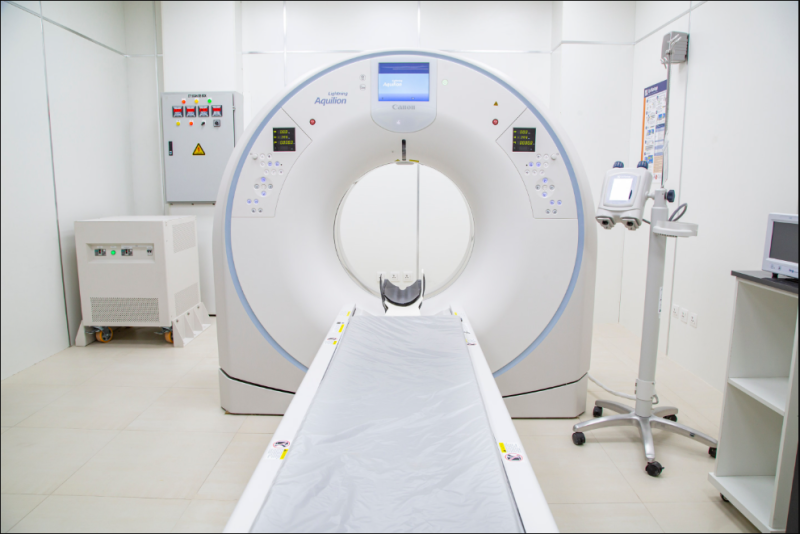
South Korea's National Assembly Passes Amendments on Radiation Disaster Response, Strengthening the Treatment System for Radiation Victims
The South Korean National Assembly held a plenary session on the 20th and passed two livelihood bills proposed by Rep. Yoon Jun-byeong, a member of the Parliamentary Agriculture, Food, Rural Affairs and Fisheries Committee. The bills concern the establishment of a radiation disaster response system and adjustments to the support system for surviving family members of national meritorious persons. Under the amendments passed, the Korea Atomic Energy Research Institute will be granted the qualification to operate as a specialized hospital for treating radiation victims. This arrangement aims to further improve the national medical safety net, enabling industrial radiation workers and victims of accidental radiation incidents to receive faster and more systematic treatment and rehabilitation support. Meanwhile, another amendment was also passed. This amendment, in accordance with the Constitutional Court's ruling of nonconformity, abolishes the provision that prioritized age as the sole criterion in the payment of survivor benefits to families of national meritorious persons of the same rank. After the relevant institutional adjustment, greater emphasis will be placed on safeguarding the rights of low-income households to reduce blind spots in welfare support.
2026-08-21
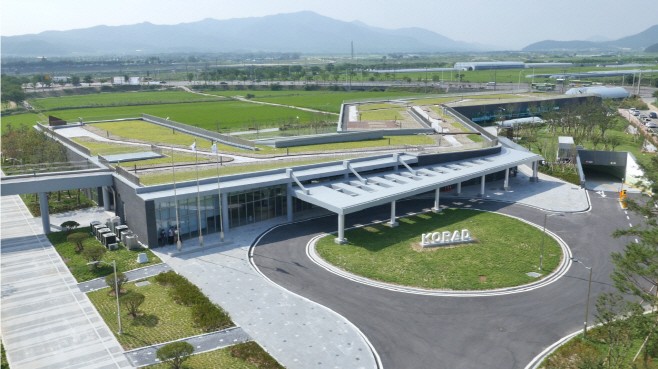
Korea Atomic Energy Environment Corporation Earns Top Grade A in All Categories of Radioactivity Analysis Capability Evaluation for Nine Consecutive Years
The Korea Atomic Energy Environment Corporation announced on August 21 that it received an A-grade rating in all evaluation categories for the ninth consecutive year in the 2026 Radioactivity Analysis Capability Evaluation conducted by the Korea Institute of Nuclear Safety. In this evaluation, the corporation achieved A-grade results across all analysis items covering 7 samples and 12 radionuclides, demonstrating high detection precision and quality control capabilities. The Radioactivity Analysis Capability Evaluation has been conducted annually since 1997, primarily to verify the testing capabilities of domestic radioactivity analysis institutions in Korea, as well as the reliability and quality management level of related analytical data. This year, a total of 58 institutions participated in the evaluation, including regional radiation monitoring...
2026-08-21
U.S. Department of Energy Selects Fermilab to Lead AI Project to Enhance Superconducting Radio-Frequency Cavity Control in Particle Accelerators
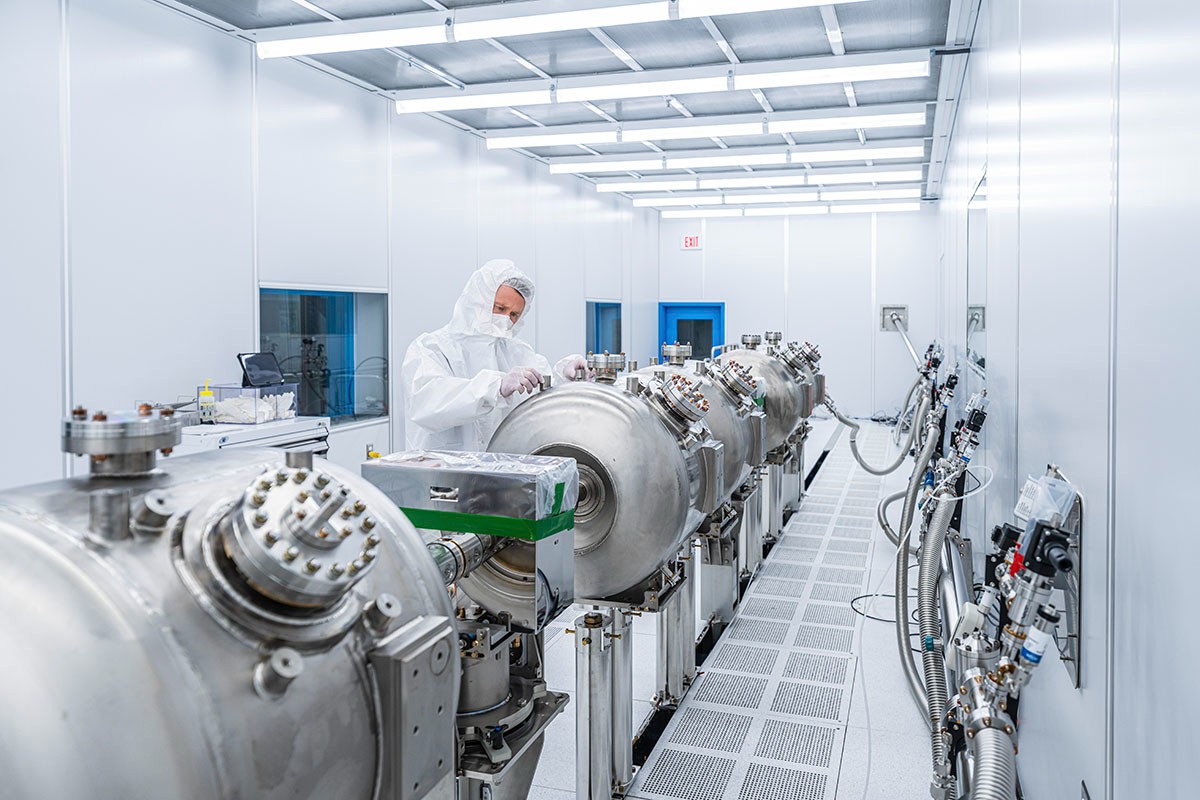
The U.S. Department of Energy's Genesis Program recently selected an artificial intelligence project led by Fermi National Accelerator Laboratory, supporting its collaboration with national laboratories, universities, and industry to use AI and machine learning technologies to improve resonance control in particle accelerators. The project aims to enhance accelerator operational performance and beam stability while reducing energy consumption and operating costs. Superconducting radio-frequency cavities are being assembled and tested, ready for installation on the Proton Improvement Plan-II at the Fermilab Accelerator Complex. By finely tuning the resonant frequency of the cavities, scientists can optimize acc...
2026-08-21
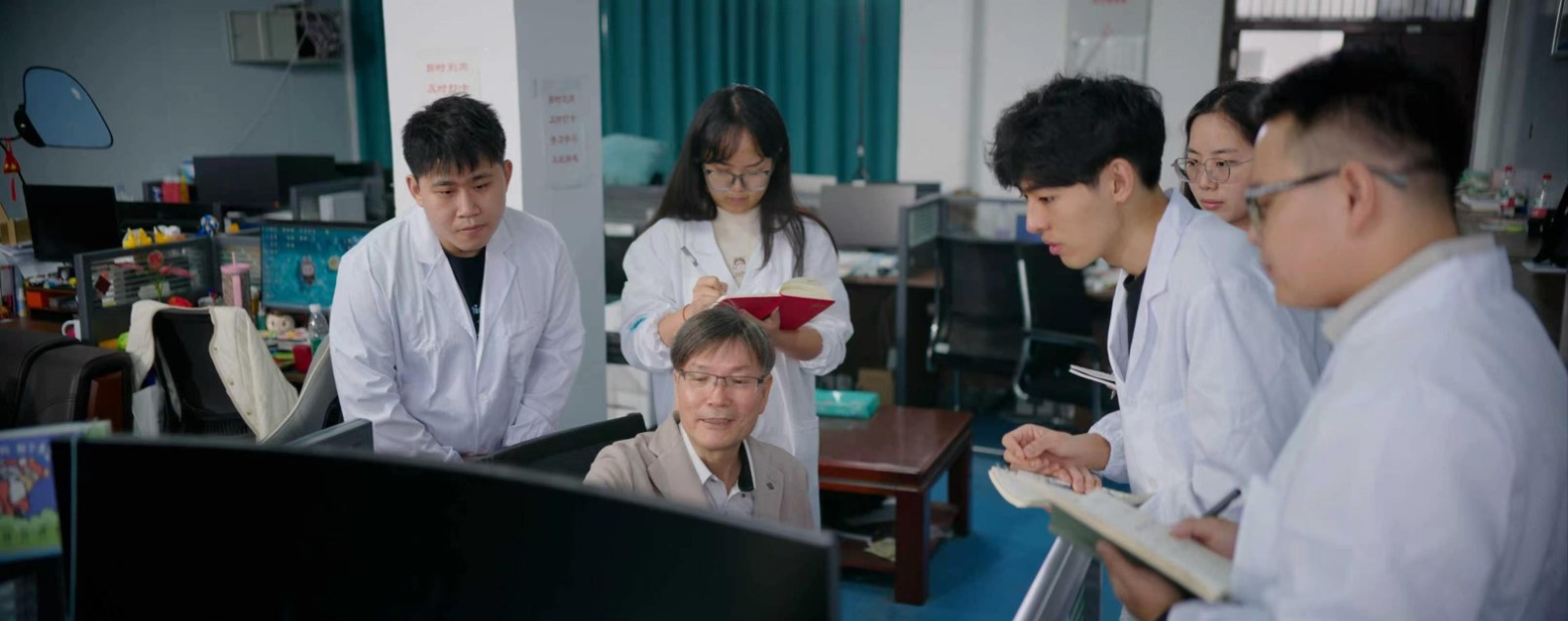
University of South China team extracts high-purity medical alpha nuclide Lead-212 from rare earth slag
On August 20, it was learned from the University of South China that the team led by Professor Wei Yuezhou successfully separated and obtained high-purity alpha nuclide Lead-212 and its precursor nuclide Thorium-228 directly from rare earth slag, achieving the extraction of 158 microcuries of Lead-212/Bismuth-212 from kilogram-level rare earth slag in a single batch. The achievement recently passed the scientific and technological achievement appraisal meeting for the "Technology Development for Extracting Medical Alpha Nuclide Lead-212 and Thorium-228 from Radium Slag from Monazite Processing" organized by the China Isotope and Radiation Association. Experts unanimously agreed that the overall technology has reached internationally advanced level, with single-pass recovery rate reaching internationally leading level, which is expected to promote China's independent supply of medical alpha nuclides and ensure the security of the nuclear medical industry chain, with broad application prospects...
2026-08-21
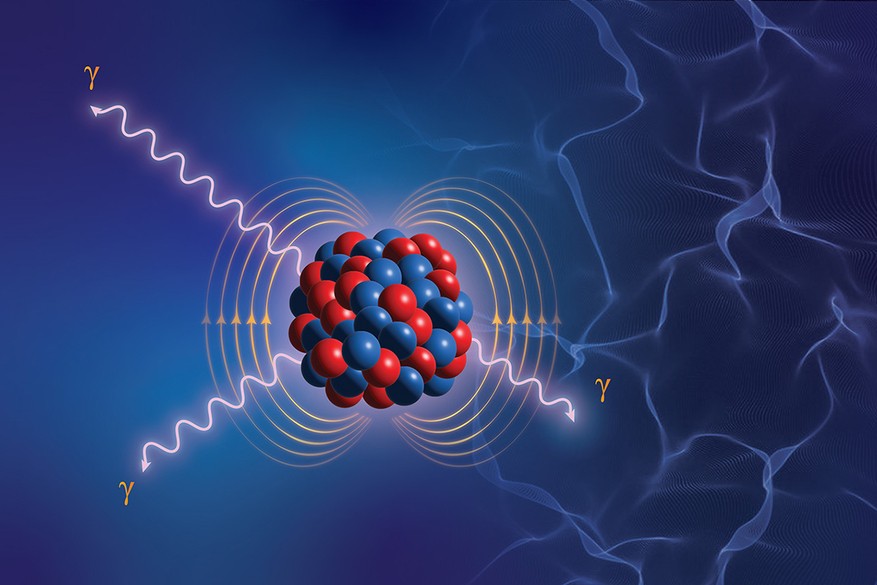
US FRIB Experiment Reveals Magnetic Origin of Anomalous Low-Energy Gamma-Ray Enhancement
According to an August 21 announcement from Lawrence Livermore National Laboratory, a new study led by the U.S. Facility for Rare Isotope Beams (FRIB) with participation from researchers at Lawrence Livermore National Laboratory and other institutions has provided a new experimental explanation for the long-standing low-energy enhancement phenomenon in nuclear physics. The findings were published in the journal Nature. An experiment at the Facility for Rare Isotope Beams (FRIB) has yielded new results, answering a fundamental question about nuclear structure. (Image: FRIB) Gamma rays are a form of electromagnetic radiation. When an excited nucleus loses energy during radioactive decay and transitions to a lower, more stable energy level, it emits gamma rays. Over the past few decades, scientists have discovered that certain nuclei emit anomalously large numbers of low-energy gamma rays, but this phenomenon does not occur in all nuclei, and its occurrence conditions have been difficult to predict reliably in theory.
2026-08-21
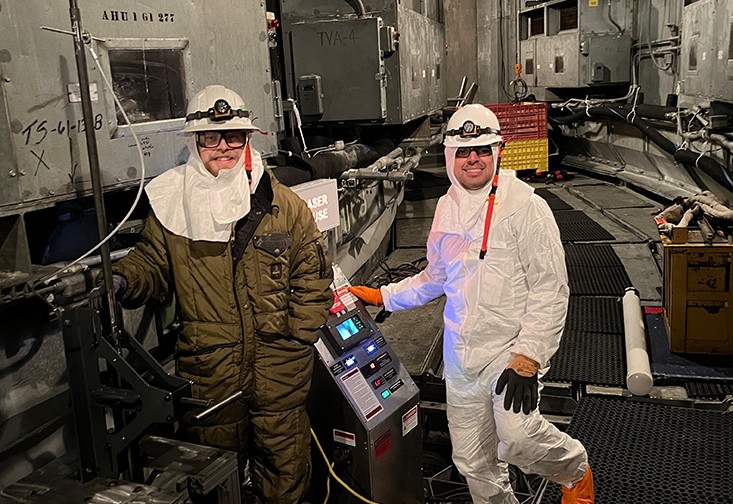
U.S. University Develops Laser De-icing Technology for Nuclear Power Plant Safety System Maintenance
An engineering team at the University of South Florida has developed a customized laser de-icing technology to address the issue of ice basket adhesion in the maintenance of critical safety systems at nuclear power plants. After four years of research, design, and testing, the technology has completed field testing at two nuclear power plants operated by the Tennessee Valley Authority (TVA). Developed jointly by Ahmed Vaselbehagh, Professor of Mechanical and Aerospace Engineering at the University of South Florida, and postdoctoral researcher Ty Hagan, the technology is primarily aimed at ice condenser systems used in certain nuclear power plants in the United States, Japan, and Finland...
2026-08-21
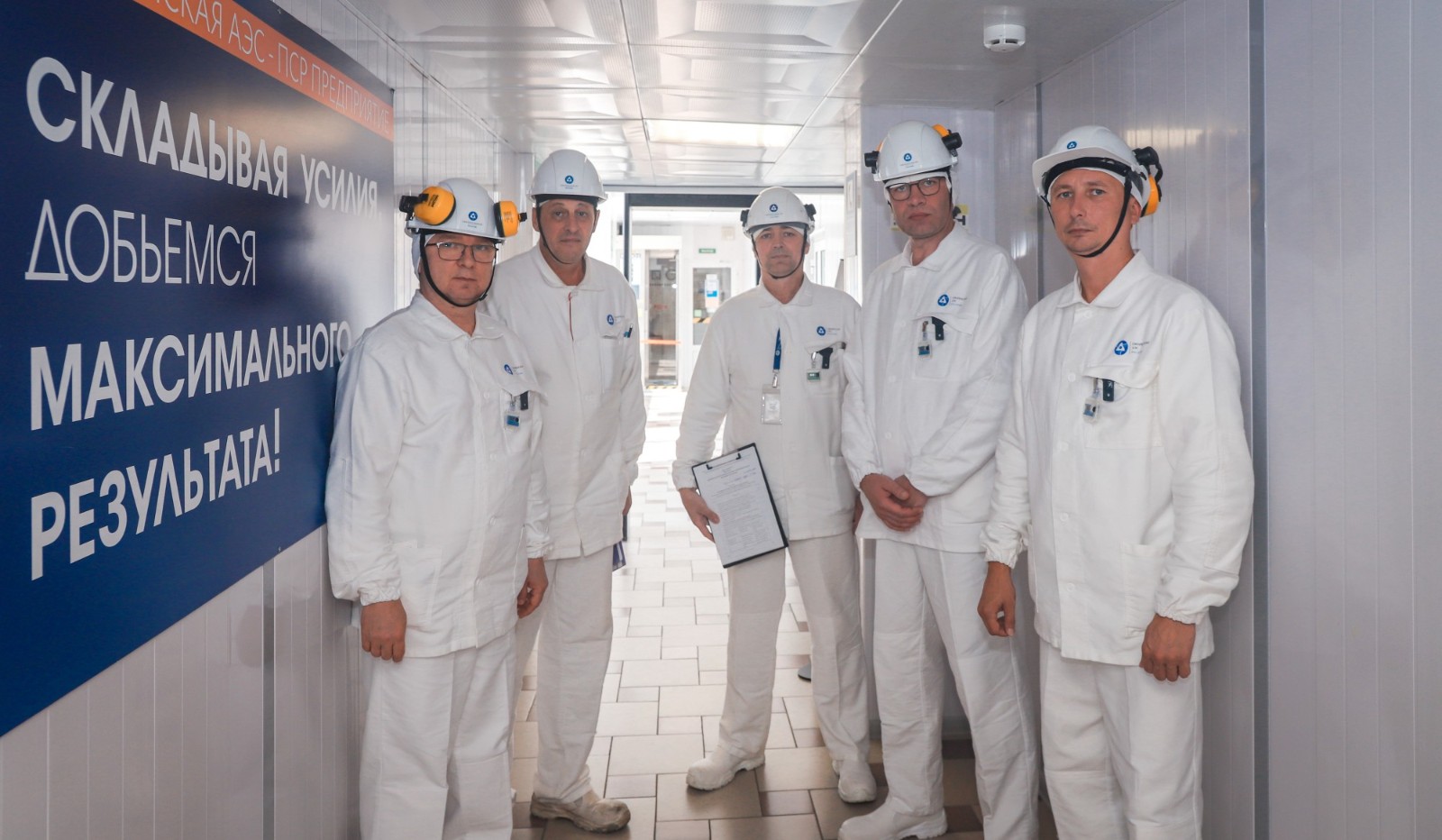
Organizational Diagnostic Assessment Completed at Russia's Smolensk Nuclear Power Plant
Russia's Smolensk Nuclear Power Plant has recently completed an organizational diagnostic assessment under a support mission of the WANO Moscow Centre. The assessment was carried out by a team of eight experts from the WANO Moscow Centre, Rosenergoatom, Beloyarsk Nuclear Power Plant, and Atomflot, among other organizations. Organizational diagnostics is a type of assessment that WANO has been conducting in recent years, focusing not on a single topic but on a comprehensive review of the plant from the organizational and operational perspective. The assessment covered areas including employee...
2026-08-21
22 Atmospheric Radiation Automatic Monitoring Stations in Shaanxi Operate Stably, with National-Controlled Stations Achieving 99.9% Data Acquisition Rate
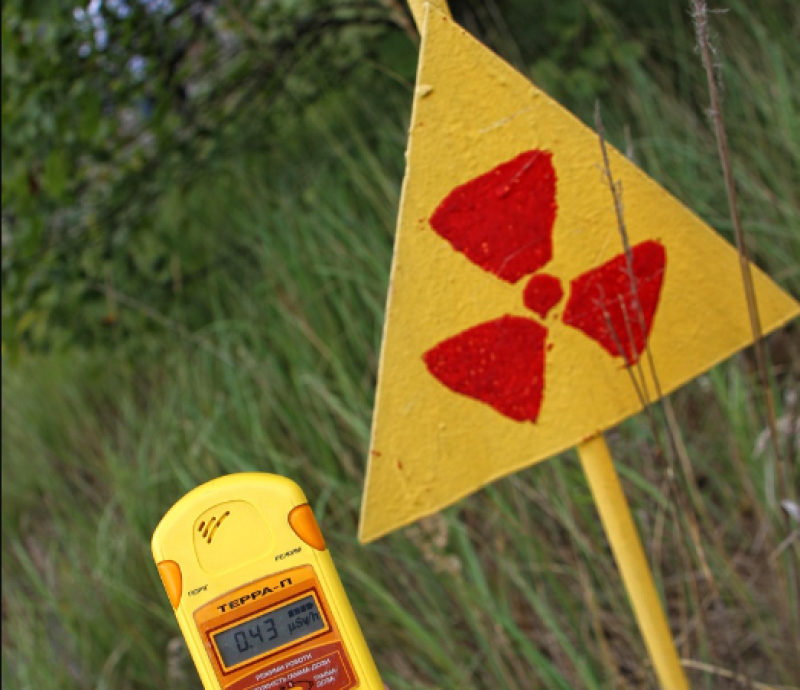
In recent years, Shaanxi Province has continuously strengthened the construction of its radiation environmental monitoring network. The 22 atmospheric radiation automatic monitoring stations across the province, including 12 national-controlled stations and 10 provincial-controlled stations, have maintained stable operation. These stations utilize high-pressure ionization chambers, ultra-high-flow aerosol samplers, gamma spectrometers, and other equipment to conduct continuous monitoring of atmospheric instantaneous gamma dose rates, aerosol samples, and gamma radionuclides. Relevant data are transmitted in real time to the system platform of the Shaanxi Provincial Nuclear and Radiation Safety Supervision Station. According to reports, Shaanxi has gradually established an automatic station operation and maintenance management system featuring strong organization, closed-loop responsibility, funding guarantees, standardized procedures, and digital-intelligent empowerment. In 2023, the 5-minute data acquisition rate of Shaanxi's 12 national-controlled stations reached 99.9%, ranking third nationwide.
2026-08-21

Norroy Bioscience's 68Ga-NYM096 Receives FDA Breakthrough Therapy and Fast Track Designations
China-based Norroy Bioscience announced on August 19 that the U.S. Food and Drug Administration (FDA) has granted Breakthrough Therapy and Fast Track designations to its radiopharmaceutical imaging agent 68Ga-NYM096. The agent is a PET imaging tracer targeting carbonic anhydrase IX (CAIX), intended for imaging clear cell renal cell carcinoma (ccRCC). According to the company, 68Ga-NYM096 is being developed as a non-invasive PET imaging tool to characterize renal masses detected by CT or MRI and to help distinguish clear cell renal cell carcinoma from other non-ccRCC renal lesions. Clear cell renal cell carcinoma is the most common subtype of renal cell carcinoma...
2026-08-21
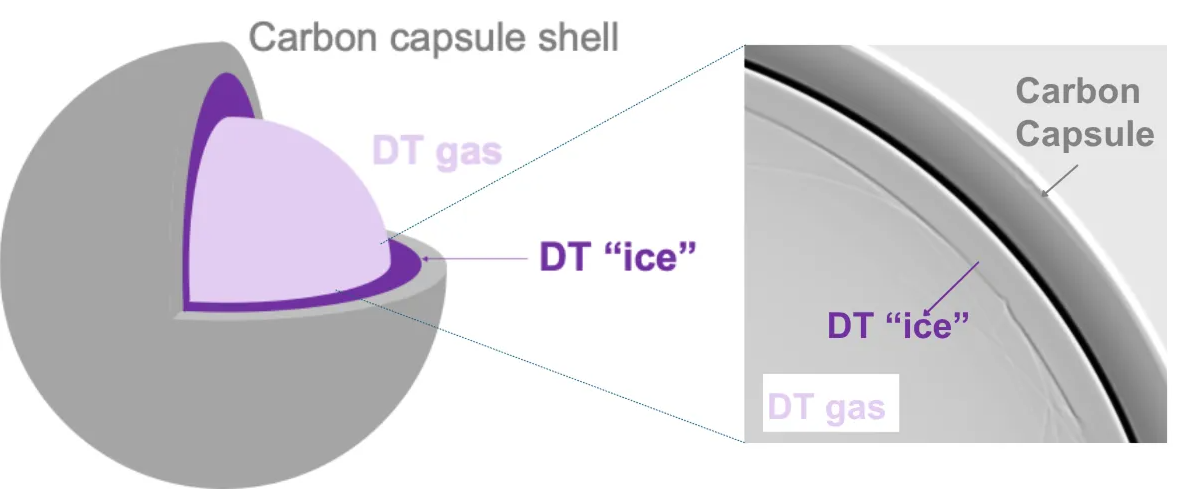
US Inertia Fusion Fuel Preparation Time Significantly Reduced
US fusion startup Inertia Enterprises said it has made progress in inertial fusion energy fuel preparation in collaboration with Lawrence Livermore National Laboratory (LLNL), reducing the time required for the critical step of forming a cryogenic deuterium-tritium fuel layer from potentially several days in the past to tens of minutes. The company said this achievement completes a key task in the first phase of its commercial fusion power plant development goals. The fundamental approach of inertial fusion energy involves using high-energy lasers to compress and heat small targets containing deuterium-tritium fuel, bringing the fuel to ignition conditions and releasing energy. The National Ignition Facility (NIF) has already...
2026-08-21
Two US Companies Partner to Bring AI to Nuclear Power Plant Simulation Training
Nuclearn, a US artificial intelligence solutions company, and GSE Solutions, a supplier of high-fidelity simulation and operator training systems for nuclear power plants, announced a strategic partnership on August 20. The two companies will combine Nuclearn's AI capabilities with GSE Solutions' nuclear power plant simulator technology for applications such as plant simulation, operator training, and engineering analysis. According to information released by the two companies, the collaboration will proceed along two tracks. GSE Solutions plans to integrate Nuclearn's AI features into its simulator products, providing training instructors with tools such as natural language scenario development, automatic performance summaries after training scenarios, adaptive quiz and assessment generation, and plant-specific physics explanations during training...
2026-08-21
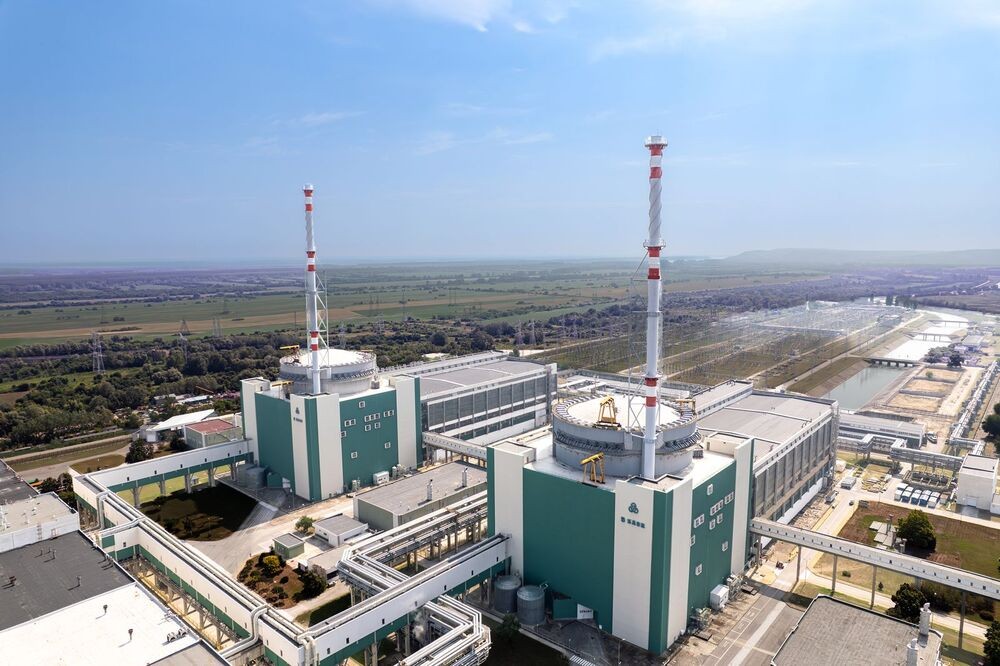
Bulgaria's Kozloduy NPP Reduces Power Output Due to Falling Danube River Levels
Bulgaria's Ministry of Energy stated that due to the sustained decline in the Danube River water level, Unit 5 of the Kozloduy NPP will reduce its power output by 120 megawatts starting August 21 to mitigate potential operational risks. The Ministry said in a statement that reducing reactor power is one of the measures to ensure the safe operation of the Kozloduy NPP, citing a sustained, abnormal, and rapid decline in the Danube River water level. The Danube River water level within Bulgaria is currently still on a downward trend. It is noted that this is the first time in the 52 years since the Kozloduy NPP was commissioned that its generating capacity has been reduced for such reasons. The plant uses Danube River water to cool the steam in the condensers of the conventional island, with water intake completed by dedicated pump stations located on the riverbank.
2026-08-21

US LIS Technologies Initiates Site Preparation for Oak Ridge Laser Uranium Enrichment Project
LIS Technologies Inc. (LIST) announced on August 20 that it has initiated preliminary site preparation work on the "LIST Island" parcel at the Heritage Center of the East Tennessee Technology Park in Oak Ridge, Tennessee. The 206-acre parcel is located within the former K-25 gaseous diffusion plant site. This phase of work includes environmental characterization, environmental assessment, and technical feasibility studies tailored to site conditions. These efforts will provide the preliminary basis for the company's planned commercial laser uranium enrichment headquarters and technology campus, LEU-3. Under current plans, the LEU-3 facility will host the company's FUEL project, namely the Future Uranium Enrichment by Laser project, and support its long-term operations and research...
2026-08-21
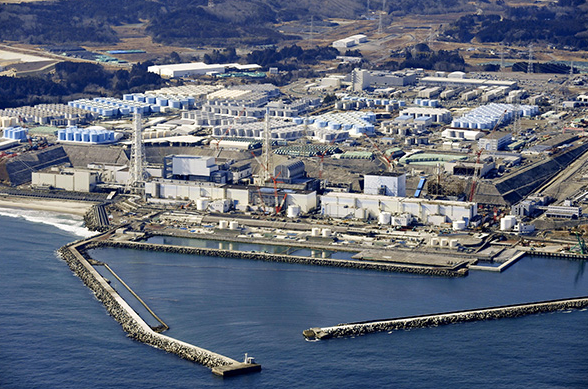
Fire alarm triggered for sixth time in August at Japan's Fukushima Daiichi Nuclear Power Station; fire department confirms no fire occurred
At approximately 3:54 a.m. on August 21, a fire alarm was triggered on the first floor of the access control building at the Fukushima Daiichi Nuclear Power Station. Tokyo Electric Power Company (TEPCO) stated that no open flames or smoke were found near the site; shortly after 5:00 a.m., the fire department confirmed that the alarm was not caused by a fire. Readings from radiation monitoring stations around the plant also showed no significant fluctuations. This was the sixth fire alarm at the Fukushima Daiichi Nuclear Power Station since the beginning of August. Previously, the maintenance building for Units 5 and 6 triggered a fire alarm on August 8; the emergency diesel generator room for the high-pressure core spray system of Unit 6 triggered a fire alarm on August 12; the main administration building triggered a fire alarm on August 13...
2026-08-21
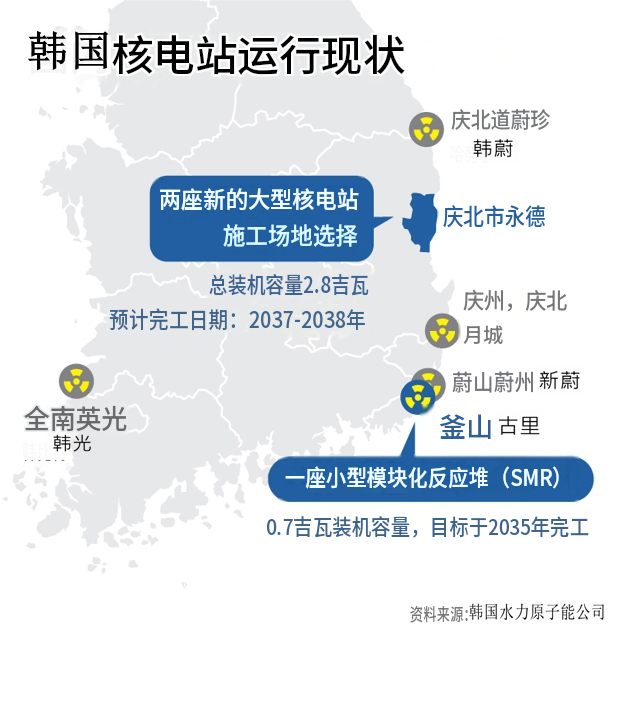
South Korea Raises 2040 Electricity Demand Forecast, Increment Equivalent to 19 Large Nuclear Power Units
A forum on the formulation of South Korea's 12th Basic Plan for Electricity Supply and Demand was held in Seoul on August 20. The new round of electricity demand forecasts submitted at the meeting showed that by 2040, South Korea's annual maximum electricity demand is expected to reach 158.4 GW to 165.0 GW, an upward revision of 26.6 GW to 26.8 GW compared to the forecast proposed in April this year. Based on the 1.4 GW single-unit capacity of the AP1400 large nuclear power unit under construction in South Korea, the increment in electricity demand from this upward revision is equivalent to the electricity provided by approximately 19 large nuclear power units operating at full power. The previous April forecast for the 2040 annual maximum electricity demand was 131.8 GW to 138.2 GW. The new forecast reflects semiconductor industry clusters...
2026-08-21