
Search Results
Keyword:fusion
Japan's JT-60SA Experimental Team Advances Preparations for Next Operation Phase
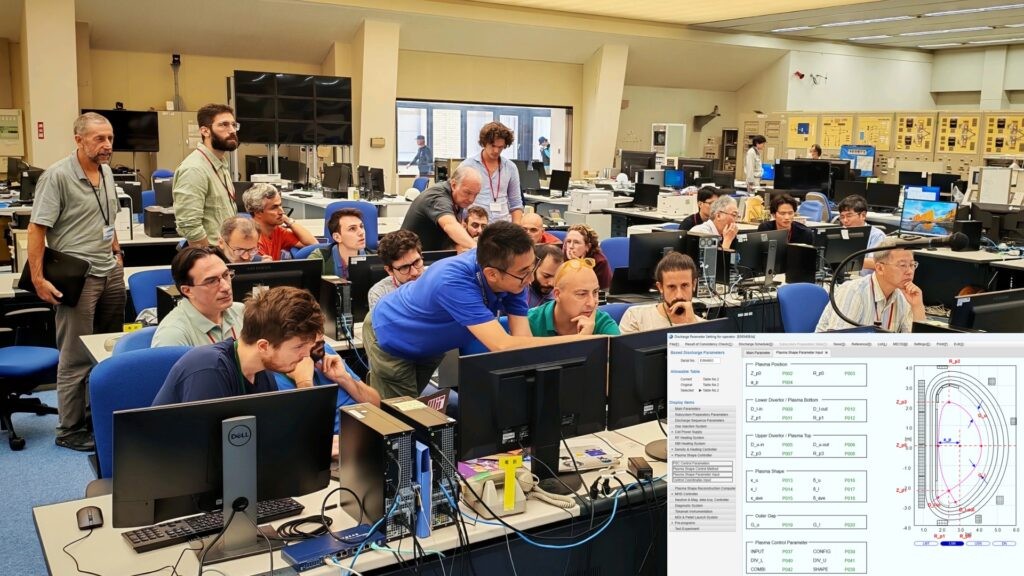
Preparations for the next phase of JT-60SA experimental activities are underway. The technical team is carrying out integrated commissioning as planned, while the experimental team is simultaneously refining related tools and software to enhance scientific output capabilities for the next operation phase. During a training course organized by QST, EUROfusion participants are learning how to configure discharge settings using the Human-Machine Interface (HMI) in preparation for the next JT-60SA campaign. Image credit: QST. The Third JT-60SA Experimental Team Workshop was held from July 27 to 31, 2026, at the Naka Institute of the National Institutes for Quantum Science and Technology (QST) in Japan. Approximately 50 experts attended, including 20 representatives from Europe...
2026-08-26
U.S. Research Reveals Diamond Melting Mechanism at High Pressure, Potentially Enhancing Inertial Confinement Fusion Performance
A research team at Lawrence Livermore National Laboratory (LLNL) in the U.S. recently published a study in Nature Physics reporting that the latest dynamic compression experiments have, for the first time, directly recorded atomic structural changes during diamond melting under extreme high pressure. The experiments showed that under high-pressure conditions, solid diamond can float in liquid metallic carbon, similar to ice floating on water. Diamond is not only a high-hardness carbon material but is also used as the fuel target capsule shell in inertial confinement fusion experiments. When intense lasers drive the capsule implosion, the compression and melting behavior of the diamond shell can affect whether the fusion fuel reaches the required high-temperature, high-pressure state. Meanwhile, the planetary science community has long focused on the high-pressure behavior of carbon in the deep interiors of ice giant planets...
2026-08-26
Japan's Helical Fusion Publishes Research Results on High-Temperature Superconducting Magnets
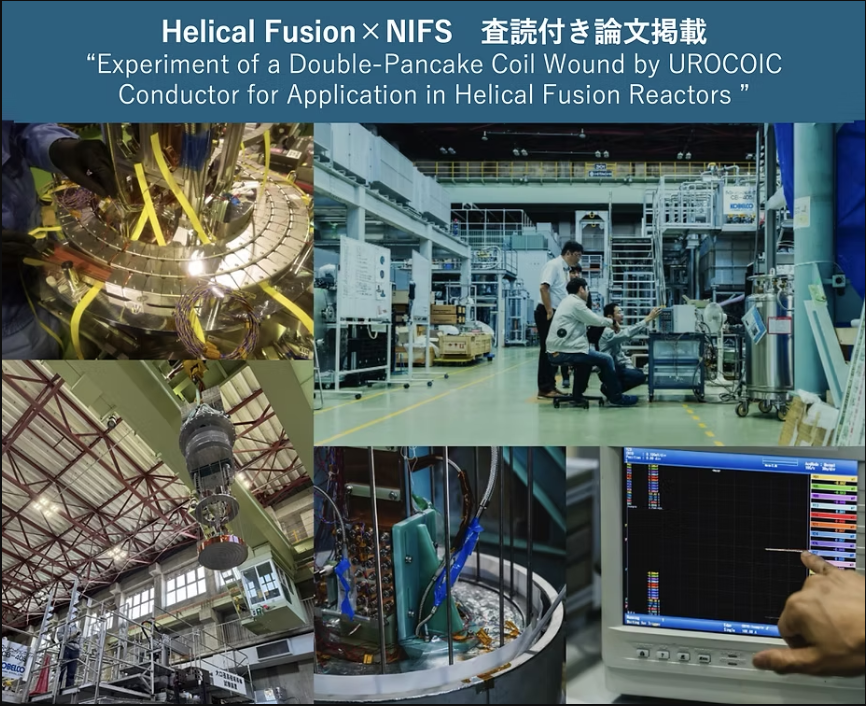
Helical Fusion recently announced that its joint research on high-temperature superconducting magnets with the National Institute for Fusion Science (NIFS) has passed peer review and been published in the Journal of Physics: Conference Series. The results, previously disclosed in a preliminary report, primarily validate the performance of high-temperature superconducting conductors for fusion reactor applications under strong magnetic fields and high currents. This study tested the UROCOIC high-temperature superconducting conductor independently developed by Helical Fusion. The research team fabricated the conductor into a double-pancake coil sample and used existing test equipment to simulate, as closely as possible, the magnetic field and current environment expected in future fusion reactors.
2026-08-26

South Korea launches next-generation nuclear energy research talent training program
South Korea's talent training program for postdoctoral researchers in the nuclear energy field has officially been launched, which will be based on university laboratories to promote future nuclear technology research, industry-academia-research cooperation, and employment linkage. On August 25, during the 2026 Climate and Energy Job Fair, the Ministry of Climate, Energy and Environment, the Korea Institute of Energy Technology Evaluation and Planning (KETEP), and the Korea Radiation Promotion Association held the next-generation energy leader training program in the nuclear energy field...
2026-08-26
China's Huanliu-4 High-Temperature Superconducting Magnet Development Roadmap Clarified
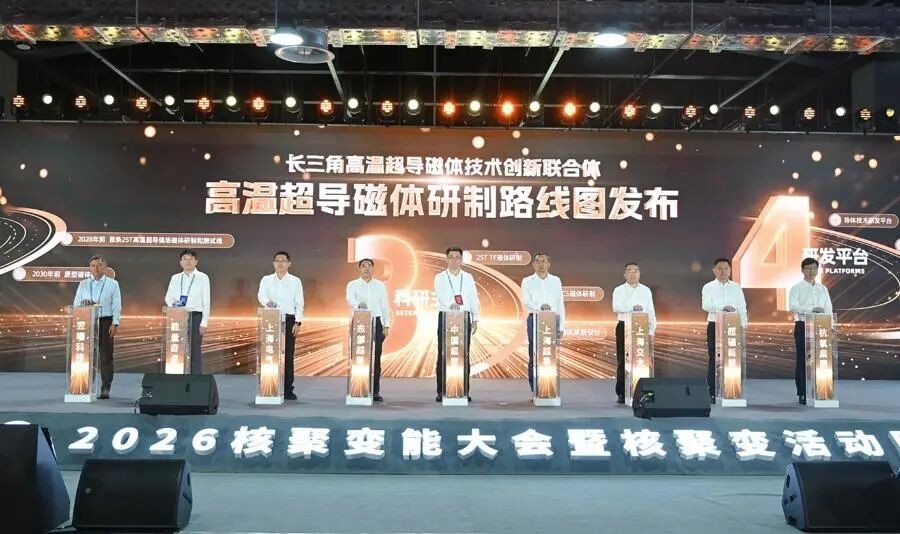
On August 25, during the 2026 Fusion Energy Conference and Fusion Energy Activity Week, the Yangtze River Delta Innovation Consortium, led by China Fusion Energy Co., Ltd., has clarified its development targets for high-temperature superconducting high-field tokamak magnets: to build the first 25T high-temperature superconducting high-field magnet development and testing line by 2028, and to complete prototype magnet development by 2030. The consortium is led by China Fusion Energy Co., Ltd., with members including Shanghai Superconductor, Eastern Superconductor, Shanghai Jiao Tong University, Shanghai Electric Nuclear Power Group, Chaoci Xinneng, Energy Singularity, Hangyang Group, and Yixi Technology. The consortium will focus on building high-temperature superconducting high-field tokamak magnet development capabilities and engineering technology systems to provide key technical support for the subsequent construction of China's Huanliu-4.
2026-08-26

U.S. Fusion Roadmap Targets Early Power Plant Deployment by Mid-2030s
The U.S. Department of Energy (DOE) recently released the "Fusion Science and Technology Roadmap," proposing to accelerate the deployment of early fusion power plants by the mid-2030s. The roadmap represents a key federal-level arrangement to advance fusion technology from experimental research toward engineering and commercialization, coordinated by the Office of Fusion established in November 2025. Unlike existing nuclear power plants that release energy through fission reactions, fusion devices attempt to fuse light atomic nuclei together, with an energy source principle identical to that of the Sun. Fusion power is regarded as a potential low-carbon energy direction, but the industry remains in the experimental and demonstration stage, with private developers yet to achieve commercial-scale net energy gain, i.e...
2026-08-26

US Pacific Fusion Breaks Ground on $1 Billion Fusion Facility in New Mexico
On August 25, local time, Pacific Fusion launched construction of a research and manufacturing campus in Albuquerque, New Mexico, USA. The project involves an investment of approximately $1 billion and will be used to build the company's fusion demonstration system, with goals including achieving net facility gain and producing high-yield fusion energy pulses. The campus is located in the Mesa del Sol area of Albuquerque. According to Pacific Fusion's plan, the demonstration system aims to achieve net energy gain at the facility level by 2030, meaning the fusion device outputs more energy than the total energy initially stored in the equipment. The company stated that if this goal is achieved, it will mark a significant technological milestone in the commercialization of fusion energy...
2026-08-26
Japan Completes Cryogenic Test of World's Largest Superconducting Toroidal Field Coil for ITER
Japan's National Institutes for Quantum Science and Technology (QST) and Toshiba Corporation announced on August 25 that they had successfully completed the first cryogenic current test of the world's largest superconducting toroidal field coil at the construction site of the International Thermonuclear Experimental Reactor (ITER). The test was conducted at an operating temperature of approximately minus 269 degrees Celsius, marking a critical technical milestone before ITER's commissioning. The superconducting toroidal field coil, also known as the TF coil, installed in the test facility is a key component of ITER's superconducting magnet system, used to generate the strong magnetic field required to confine plasma. During the test, the team cooled the coil from room temperature to cryogenic conditions, confirmed its transition to the superconducting state, and for the first time achieved stable conduction of 10,000 amperes of current while the coil was in the superconducting state.
2026-08-25
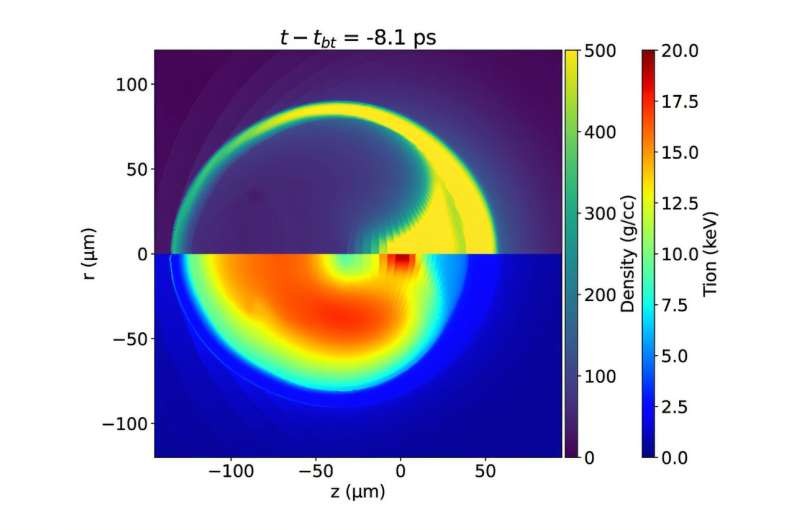
US Study Shows Inertial Fusion Implosions Can Tolerate Certain Asymmetries
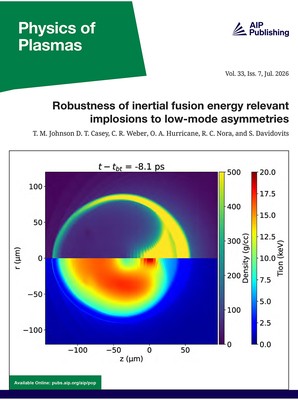
Researchers at the Lawrence Livermore National Laboratory (LLNL) in the US have recently found that implosion designs for inertial fusion energy (IFE) can withstand considerable imperfections before performance degrades sharply. This result aids in the design of fuel targets for future fusion power plants, particularly in assessing the tolerance of target capsules to errors under high-frequency injection and laser-driven conditions. The study's simulation results show the density (top) and temperature (bottom) at the instant just before fusion reactions peak in an asymmetric implosion. The hottest spot coincides with the point of highest fuel density, indicating direct ignition of high-density fuel jets driven by asymmetry. The image was recently selected for the cover of Physics of Plasmas...
2026-08-25
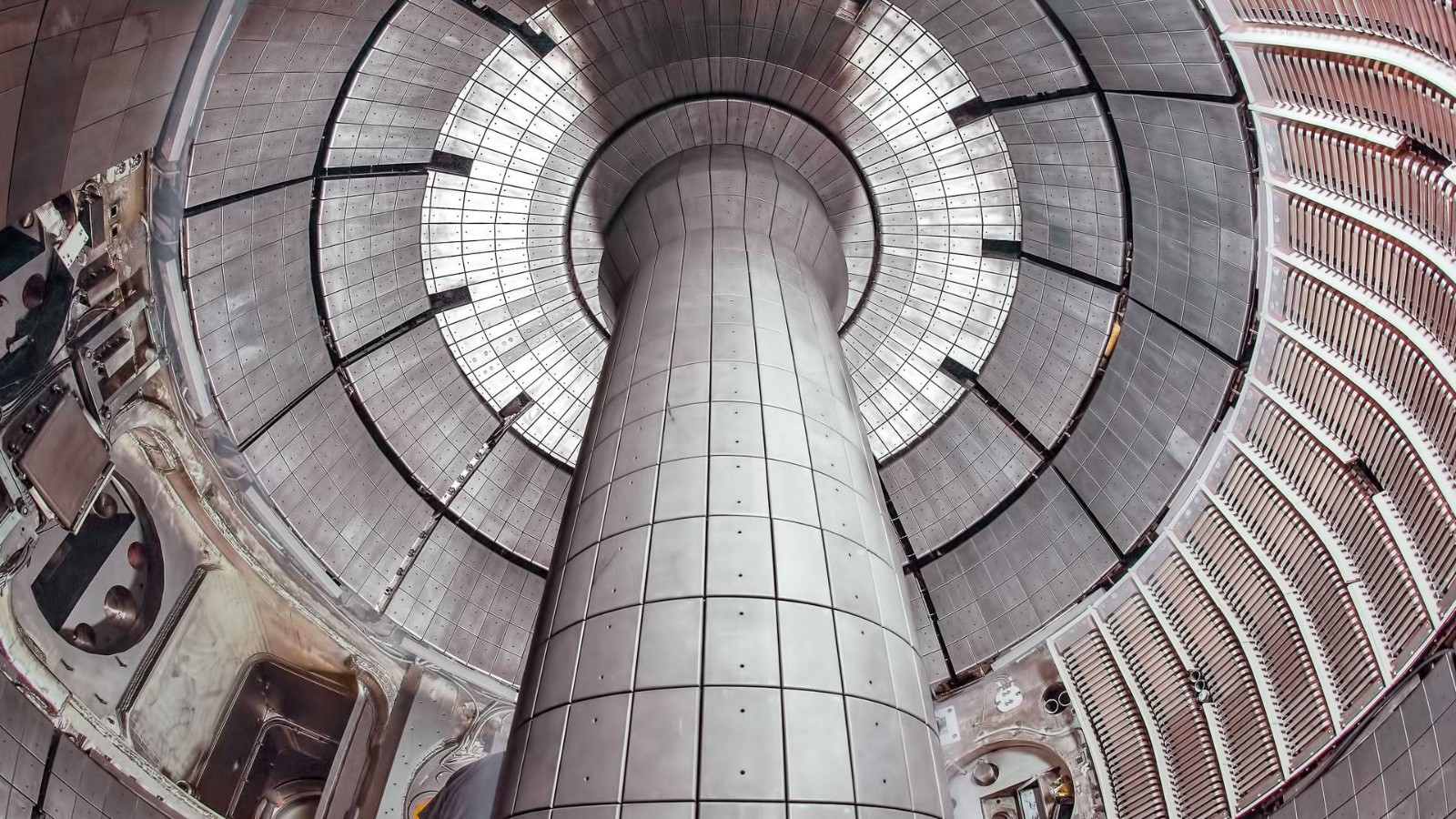
U.S. Department of Energy Extends Princeton University Contract to Operate PPPL
The U.S. Department of Energy (DOE) and Princeton University have extended the contract under which Princeton University manages and operates the Princeton Plasma Physics Laboratory (PPPL). The laboratory is located on Princeton University's Forrestal Campus in Plainsboro, New Jersey. Under the new extension, the contract will be renewed for five years starting April 1, 2027. Princeton University expects to strengthen collaboration with faculty and research teams on campus during the contract period, explore next-generation fusion energy research facilities, and enhance laboratory infrastructure and safety to support ongoing operational needs. Princeton University's office for research affairs...
2026-08-25
Rock Fusion Completes Key Processes for Stellarator 3D Non-Planar Superconducting Prototype Coil
Recently, the stellarator high-strength stainless steel armored 3D non-planar superconducting prototype coil developed by Rock Fusion (Shanghai) Technology Co., Ltd. has completed two key processes: 3D precision winding and ground insulation wrapping. The overall 3D geometric error of the coil is consistently controlled at the millimeter level, indicating that the company has preliminarily established key manufacturing processes including material adaptation, 3D precision forming, and insulation wrapping for high-field steady-state stellarator superconducting magnets. The stellarator is an important device for steady-state controlled nuclear fusion research, and 3D superconducting coils are used to generate the complex magnetic fields required to confine plasma. Unlike conventional planar coils, stellarator coils typically feature non-planar spatial structures with continuously varying curvature...
2026-08-25
American Fusion's Fusion Platform Patent Applications Reach 100
American Fusion announced on August 24 that the total number of patent applications it has filed around its Texatron Fusion Engine platform has reached 100, including 17 newly filed U.S. patent applications. The company stated that these applications primarily cover the structural design, fuel injection, electromagnetic configuration, and system architecture of the Texatron platform. According to the company's disclosure, the 17 newly filed applications were submitted between August 16 and 22, 2026, covering aluminum fusion confinement structures, clamshell and monobloc housings, hollow annular inner cavities, rifled inner wall geometries, electromagnetic field structures, helium-3 and deuterium...
2026-08-25
Expansion Project Advances at Centrus Energy's Uranium Enrichment Facility in Piketon, Ohio
Centrus Energy said on August 24 that Ohio Governor Mike DeWine, Lieutenant Governor Jim Tressel, JobsOhio CEO J.P. Nauseef, along with state, federal, and local stakeholders, visited the company's uranium enrichment facility in Piketon, Ohio, to discuss the development of the U.S. domestic nuclear fuel supply chain and Ohio's role in it. In September 2025, Centrus Energy announced a multi-billion-dollar expansion of the Piketon uranium enrichment plant. Currently, the expansion...
2026-08-25

SASAC: Accelerating the Cultivation of Talent for Controlled Nuclear Fusion
The website of the State-owned Assets Supervision and Administration Commission of the State Council (SASAC) released a notice on August 24, stating that on August 19, the Special Training Program for Talent in the Future Energy Sector of Central Enterprises, hosted by SASAC, commenced in a combined online and offline format. Tan Zuojun, Member of the Party Committee and Deputy Director of SASAC, attended the opening ceremony and delivered a speech. The training program focuses on the direction of controlled nuclear fusion within the future energy sector, leveraging the Controlled Nuclear Fusion Innovation Consortium to promote collaborative research among industry chain-related units and accelerate the cultivation of urgently needed talent in the field of controlled nuclear fusion. The opening ceremony emphasized the need to strengthen research and understanding of the development patterns of controlled nuclear fusion, clarify the main technical roadmap directions, drive original innovation and breakthroughs in foundational technologies,...
2026-08-24

Kyoto Fusioneering Completes 25.72 Billion Yen Series D Funding Round
Japanese fusion startup Kyoto Fusioneering announced on August 24 that it has completed the first closing of its Series D funding round, with total financing of 25.72 billion yen. Of this amount, equity financing totaled 16.72 billion yen and debt financing totaled 9 billion yen, with the debt portion comprising credit lines and loan facilities. With this, the company's cumulative equity financing has reached 32.98 billion yen. Following this funding round, Kyoto Fusioneering is valued at approximately 120 billion yen, a significant increase from its pre-funding valuation, making it the first startup in Japan's fusion sector to exceed a valuation of 100 billion yen. The company has previously secured contracts exceeding 14 billion yen cumulatively in markets such as North America and Europe, and has set a short-term sales target of approximately 10 billion yen.
2026-08-24