Registration
REGISTER FOR THE CONFERENCE
Registration
REGISTER FOR THE CONFERENCE
 Apply to Exhibit
APPLICATION FOR EXHIBITION
Apply to Exhibit
APPLICATION FOR EXHIBITION
 Sponsorship
SPONSORSHIP APPLICATION
Sponsorship
SPONSORSHIP APPLICATION

IAEA Publishes Report on Aging Management of Spent Fuel Dry Storage Systems
The International Atomic Energy Agency (IAEA) has published the findings of a decade-long study on aging management of spent fuel dry storage systems. According to IAEA estimates, by the end of 2024, spent fuel discharged from nuclear power plants worldwide had exceeded 400,000 tonnes of heavy metal (tHM). Of this, 106,000 tHM is in dry storage, a long-term storage method that is becoming increasingly common compared with wet storage. Most IAEA member states are still decades away from commissioning permanent spent fuel repositories, which means dry storage systems will likely need to continue operating safely beyond their design lifetimes. Wet storage has been in operation for decades, and the IAEA states that aging management of such facilities is generally well understood. Utilities choose dry storage for its passive safety features, and many dry storage facilities have already received license extensions. The IAEA expects demand for dry storage to continue growing, with service periods extending well beyond the original 20-to-40-year licensing terms, potentially exceeding 120 years. Aging management programs (AMPs) are therefore needed to verify continued safe operation.
2026-08-06
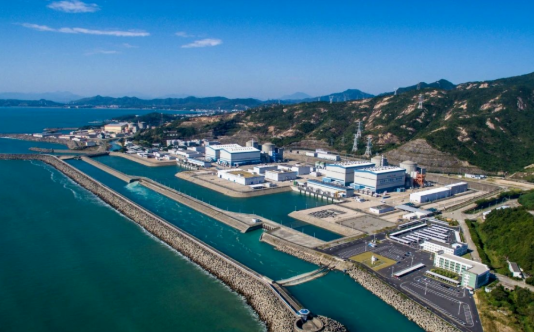
South China Regional Office of the Ministry of Ecology and Environment Conducts Unannounced Special Inspection on Typhoon and Flood Prevention at Daya Bay Nuclear Power Base
2026-08-06
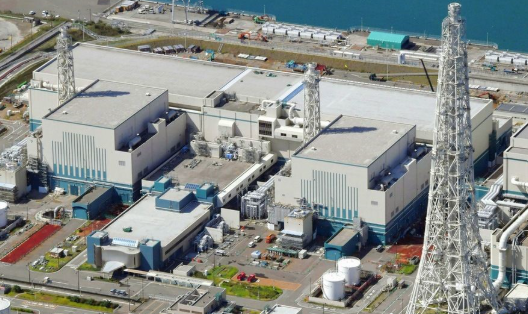
IAEA Director General to Inspect Kashiwazaki-Kariwa Nuclear Power Plant
2026-08-06
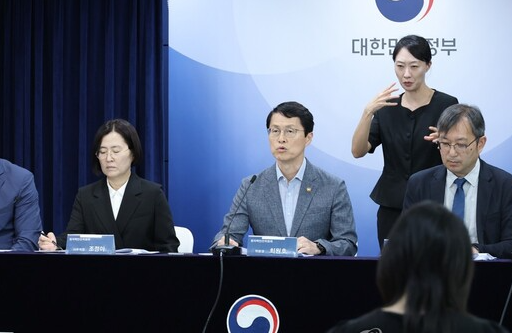
Korea's Nuclear Safety and Security Commission Conducts Safety Inspection at Hanul Nuclear Power Plant
2026-08-06
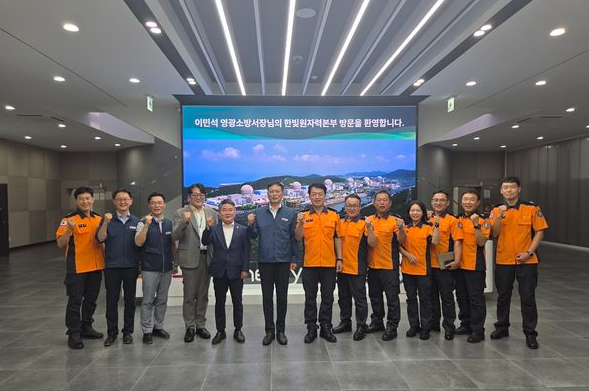
Yeonggwang Fire Station in South Jeolla Province, South Korea, visited Hanbit Nuclear Power Plant to strengthen the disaster response coordination system.
2026-08-06

Final Voyage Completed for Rebar Cage Sea Transport to Hinkley Point C Nuclear Power Station
2026-08-06

United States to Host IAEA ATLAS Initiative Ministerial Launch
2026-08-06
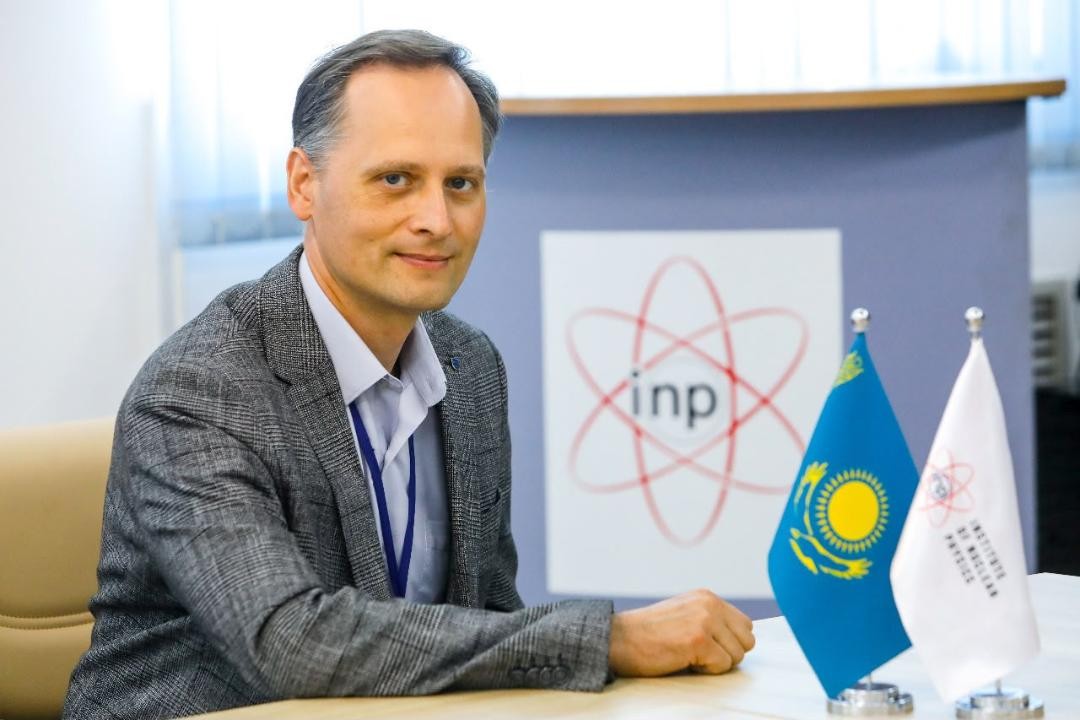
Kazakh experts call for enhanced radioecological monitoring in border regions
2026-08-06
Germany Establishes Three Fusion Centers, HZDR Contributes to Advancing Key Technologies for Fusion Power Plants
2026-08-06
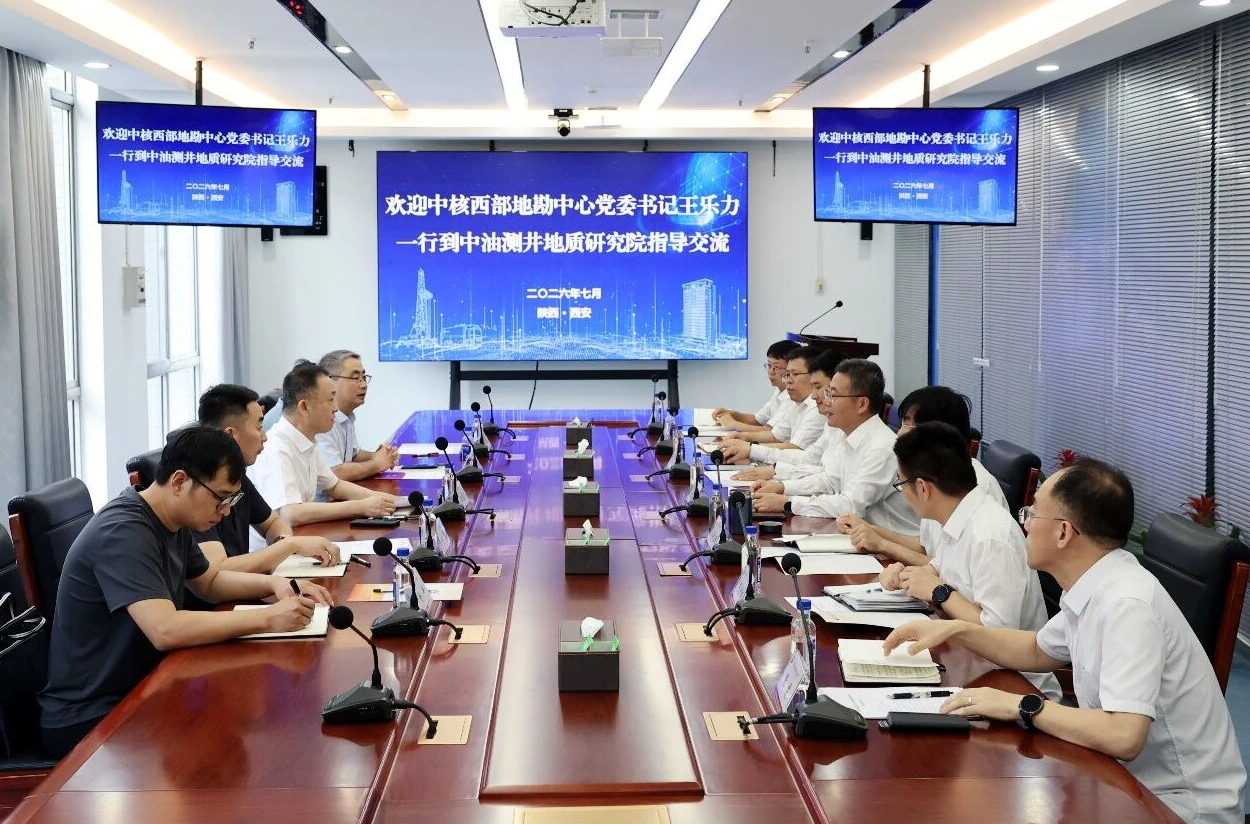
To thoroughly implement the national strategy for energy and resource security, promote the integration and mutual enhancement of oil and gas logging and uranium ore geological survey technologies, facilitate cross-industry research resource sharing and joint tackling of key technologies, recently, Wang Leli, Party Secretary of CNNC Western Geological Survey Center, led a team to CNPC Logging Geological Research Institute for a special technical exchange and discussion. At the meeting, Wan Jinbin, Party Secretary of CNPC Logging Geological Research Institute, systematically introduced mature technology systems including domestic integrated oil and gas logging equipment, downhole detection, petrophysical experiments, intelligent logging interpretation, deep well detection, and multi-source geological data analysis, and shared uranium exploration experience in oil- and gas-bearing basins through practical case studies. Wang Leli introduced the reform and development overview of the Western Center, its uranium exploration history, major achievements, and research directions such as technical difficulties and metallogenic prediction in uranium exploration of key northwestern basins.
2026-08-06
Korea Hydro & Nuclear Power (KHNP) plans to use the heavy water reactors at the Wolsong Nuclear Power Plant to produce, for the first time domestically, the radioisotope lutetium-177 (Lu-177) for cancer treatment. Currently, South Korea relies entirely on imports for this material, which imposes cost pressures and supply instability on local radiopharmaceutical companies such as Cellbion and FutureChem. Industry experts generally believe that domestic production will help build a diversified supply chain and shorten transportation times. The primary goal of this plan is to achieve commercial production of Lu-177, with pilot production expected in 2028 and full-scale production commencing in 2031. Subsequently, KHNP will expand production to include cobalt...
2026-08-06
Clobot, a specialized enterprise in intelligent robot services and integrated control of heterogeneous robots, announced on August 6 that it will apply its multi-robot integrated control system to radioactive waste safety management sites. On August 3, the company signed a business agreement at the headquarters of the Korea Atomic Energy Environment Corporation, with partners including T-Robotics, the Gyeongbuk ICT Convergence Industry Promotion Association, and the Korea Atomic Energy Environment Corporation, under the project name "Demonstration Project for Multi-Robot Operation in High-Risk Radioactive Waste Safety Management." The collaboration is based on the selection through the public call for proposals for the "Large-Scale Converged Robot Demonstration Project: Social Problem-Solving Type" hosted by the Korea Institute for Robot Industry Advancement in 2026, with Clobot serving as the lead organization.
2026-08-06
Researchers at the Massachusetts Institute of Technology (MIT) have developed a new method for observing how heat transfers through multilayer materials, which can be used to precisely measure heat flow variations inside electronic devices such as computer chips. The findings have been published in Nature Communications. As computer chips continue to shrink in size and power density keeps rising, device overheating has become a major factor limiting performance improvements. Traditional heat flow measurement methods face limitations when dealing with the multilayer structures of real electronic devices—for example, the commonly used time-domain thermoreflectance method struggles to distinguish heat transport in different material layers, while infrared imaging and other approaches also fail to capture rapid changes at microscopic scales. To address this issue...
2026-08-06
On August 4, the Dark Energy Survey (DES) project released its six-year findings on dark energy detection. The project compiled 18 related papers, based on nearly 300,000 astronomical images captured between 2013 and 2019, recording information on 669 million galaxies, thousands of galaxy clusters, and more than 3,000 supernovae to study the accelerated expansion of the universe and the evolution of cosmic structure. To carry out DES, Fermi National Accelerator Laboratory built an extremely sensitive 570-megapixel digital camera, DECam, which was installed on the Blanco 4-meter telescope at the National Science Foundation's Cerro Tololo Inter-American Observatory in the Chilean Andes. (Image courtesy of Reidar Hahn/Fermi National Acceler...
2026-08-06
Researchers at the U.S. Department of Energy's Argonne National Laboratory, Lawrence Berkeley National Laboratory, Oak Ridge National Laboratory, and Northwestern University are planning to develop a Materials Discovery Cloud platform that leverages a physics-based artificial intelligence framework to predict how tiny defects affect the performance and lifespan of microelectronic devices. Visualization of the Materials Discovery Cloud, a physics-based AI framework that integrates experimental data, simulations, and high-performance computing to predict how tiny defects affect the performance and lifespan of microelectronic devices. (Image provided by ChatGPT.) Microelectronic devices are widely used in smartphones, laptops, secure communications, and artificial intelligence hardware. As device dimensions continue to shrink and operating speeds increase, tiny defects within materials and at interfaces have a more pronounced impact on device stability. These defects can cause overheating, leakage current, switching instability, and other issues, or in certain conditions, improve electrical or thermal performance. Identifying critical defects and understanding their evolution under real-world operating conditions has become a key challenge in the design of next-generation microelectronic materials.
2026-08-06
Ajou University Hospital announced on August 6 that it has established a Halcyon 5.0 integrated precision radiotherapy solution and has begun full-scale use for patient treatment. The system integrates high-definition high-speed image acquisition, six-degree-of-freedom patient positioning correction, and markerless real-time motion management into a single treatment workflow to enhance the accuracy and safety of image-guided radiotherapy. This implementation is based on Halcyon system software version 5.0, integrating the high-resolution cone-beam CT imaging system HyperSight, the six-degree-of-freedom patient positioning couch Dynamic Couch, and the surface-guided radiotherapy system IDENTIFY. Ajou University Hospital stated that it is the first hospital in Korea to establish the integrated Halcyon system and the second in Asia to use the system for actual patient treatment.
2026-08-06