Registration
REGISTER FOR THE CONFERENCE
Registration
REGISTER FOR THE CONFERENCE
 Apply to Exhibit
APPLICATION FOR EXHIBITION
Apply to Exhibit
APPLICATION FOR EXHIBITION
 Sponsorship
SPONSORSHIP APPLICATION
Sponsorship
SPONSORSHIP APPLICATION

First Main Girder of Main Crane B Hoisted into Place in Conventional Island of Lufeng Nuclear Power Plant Unit 1
The first main girder of Main Crane B, the first main crane in the conventional island of Lufeng Nuclear Power Plant Unit 1, began lifting at 8:45 on August 7, 2026, and was positioned at 11:31. This marks the official commencement of main crane hoisting work in Conventional Island Unit 1; all hoisting work for Main Cranes A/B is expected to be completed by August 10. The main building of Conventional Island Unit 1 of Lufeng Nuclear Power Plant Unit 1 is equipped with two main cranes, designated Main Crane A and Main Crane B, arranged on the same level with a lifting capacity of 240t/40t each. These are critical lifting equipment for the nuclear power plant, primarily used during the construction phase for hoisting major conventional island equipment such as steam turbines, generators, condensers, moisture separator reheaters, and condensate pumps, as well as other installation work including piping and valves. During the operational phase of the nuclear power plant, they are used for maintenance of the turbine-generator unit and other in-plant items during overhaul periods.
2026-08-07

Hu Jinjun, Member of the Standing Committee of the Guangdong Provincial Party Committee and Head of the Publicity Department, Conducts Research in Huizhou: Advancing Marine Economy Toward High-Quality Development by Leveraging the Sea
2026-08-07

Harbin Fusion and Superconducting Industry Technology Innovation Alliance Established
2026-08-07
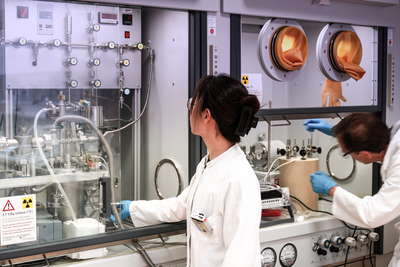
German team achieves first separation of tritium-containing hydrogen isotope mixtures using silver-exchanged zeolites
2026-08-07
U.S. NRC to Debut Modernized Hearing Process in Advanced Reactor Licensing Review for the First Time
2026-08-07
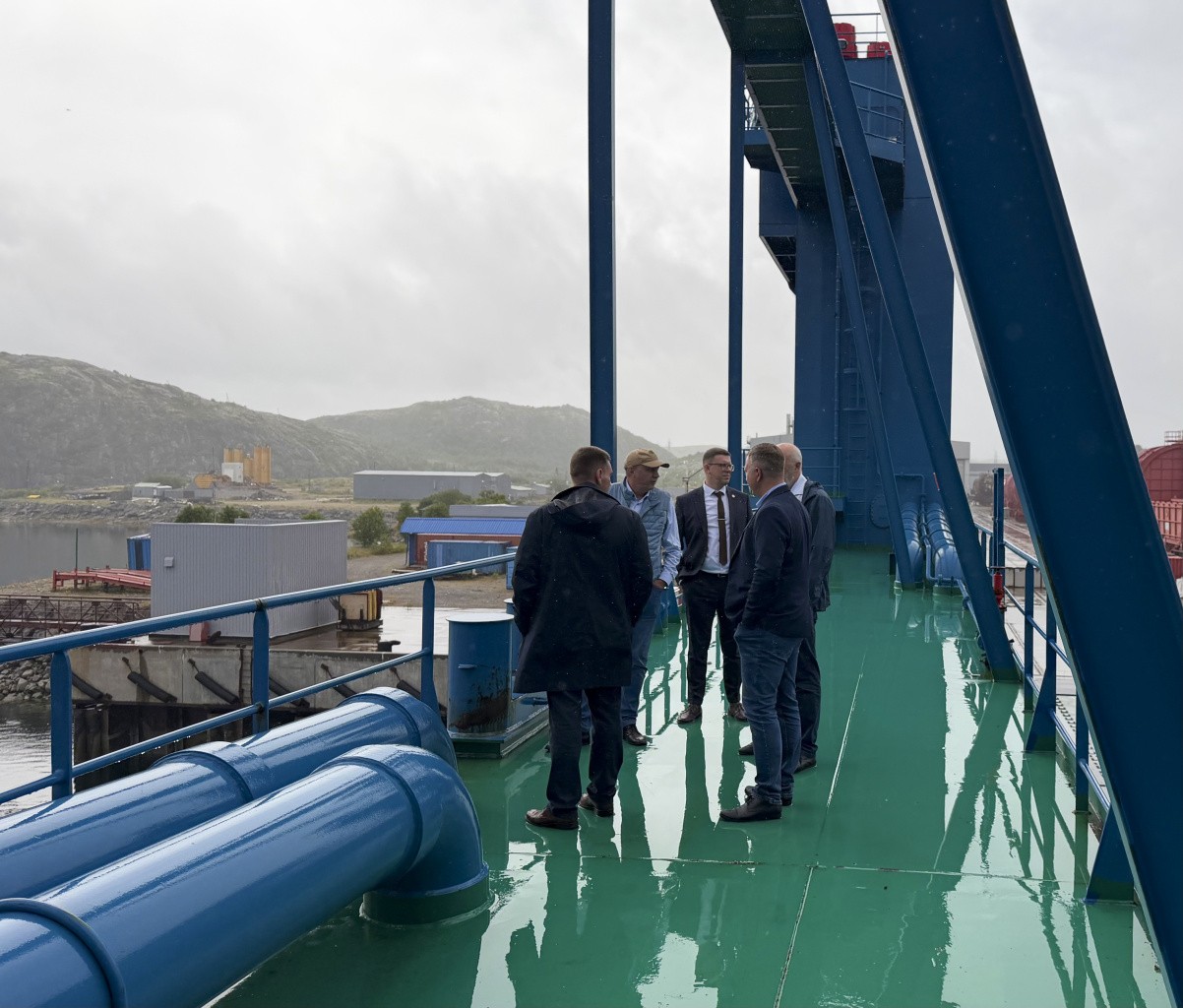
Rosatom Delegation Visits SevRAO Radioactive Waste Management Facilities
2026-08-07
SHINE Selected for Two U.S. Department of Energy AI Nuclear Fuel Recycling Projects
2026-08-07
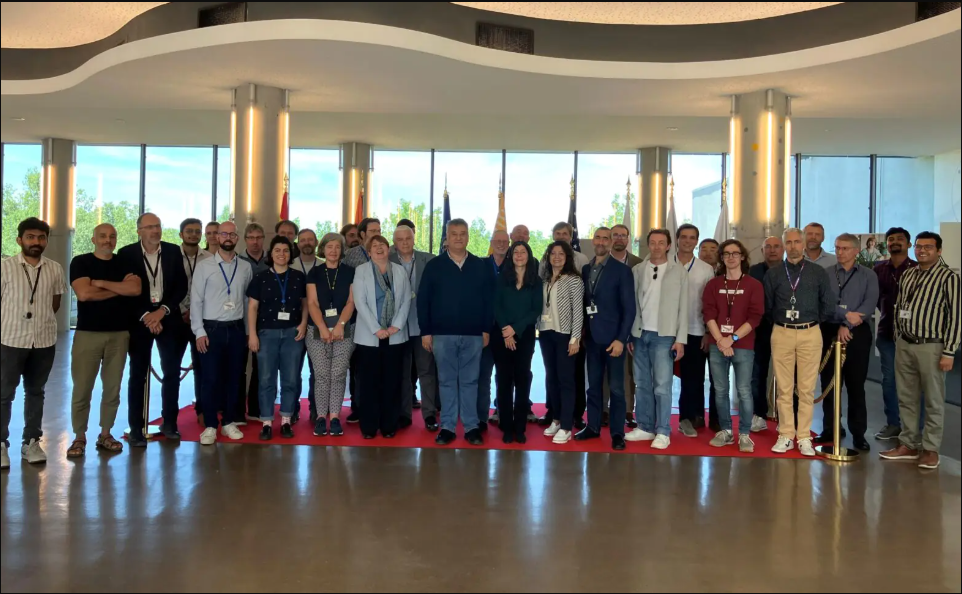
ITER Test Blanket Modules Enter Key Phase of Preliminary Design Review
2026-08-07

American Fusion Adds Six New Patent Applications for Texatron Fusion Technology
2026-08-07
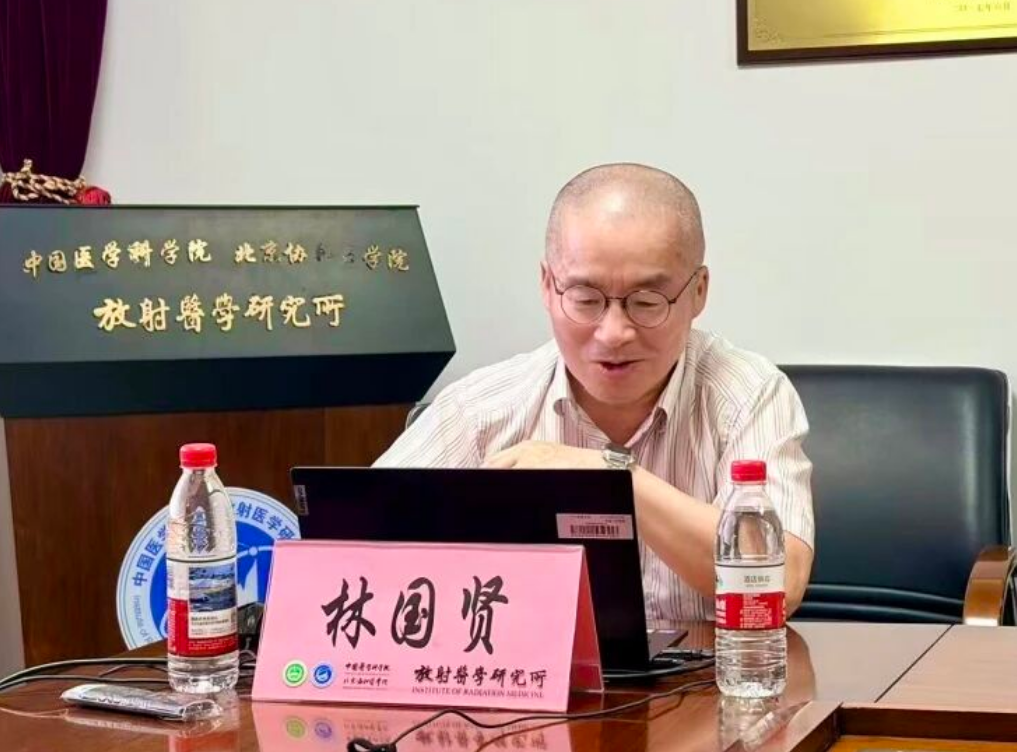
Lin Guoxian: Professor at the BC Cancer Agency, whose research focuses on the development of targeted radiopharmaceuticals for the diagnosis and treatment of various tumors. To date, he has led/participated in the publication of over 135 peer-reviewed journal articles, filed more than 30 patent applications related to radiopharmaceuticals, and completed the clinical translation of 7 self-developed radiopharmaceuticals for the diagnosis and treatment of multiple tumor types. During the seminar, Professor Lin Guoxian, based on his team's years of frontier exploration, systematically reviewed the research progress of nuclear drugs targeting PSMA for prostate cancer: first, the molecular design and clinical advantages of F-18 labeled PSMA-targeted PET imaging agents; second, the substantial improvement of tumor targeting of Lu-177 labeled therapeutic radiopharmaceuticals through rational optimization of molecular structures,...
2026-08-07
According to the press service of the Moscow Oblast Ministry of Investment, Industry and Science, the Selyatino Transport and Logistics Center (TLC), located in the Naro-Fominsk urban district of Moscow Oblast, Russia, has installed a modern inspection and screening facility to improve the efficiency of container cargo inspection and the level of transport safety. The equipment enables rapid inspection of cargo inside containers without opening them, helping staff determine whether dangerous goods or related substances are present inside. Yekaterina Zinovieva, Deputy Prime Minister of Moscow Oblast and Minister of Investment, Industry and Science, stated that deploying such systems is one of the measures in the region to enhance the safety of cargo storage and transportation at container yards...
2026-08-07
On August 3, the Institute of Radiation Medicine, Chinese Academy of Medical Sciences held an academic seminar, inviting Professor Lin Guoxian from the BC Cancer Agency in Vancouver, Canada, to deliver a lecture titled "Development of Prostate-Specific Membrane Antigen-Targeted Radiopharmaceuticals for the Diagnosis and Treatment of Prostate Cancer." The seminar was held in a hybrid format, with some researchers and graduate students from the institute attending in person. Professor Lin Guoxian has long been engaged in the development of targeted radiopharmaceuticals for cancer diagnosis and therapy, having led or contributed to the publication of over 135 peer-reviewed journal articles, filed more than 30 patent applications related to radiopharmaceuticals, and completed clinical translation of 7 self-developed radiopharmaceuticals applied in...
2026-08-07
The team at the U.S. Fermi National Accelerator Laboratory is advancing the Deep Underground Neutrino Experiment (DUNE) by integrating artificial intelligence and machine learning tools into experiment design, detector operations, and data analysis workflows, aiming to improve neutrino interaction identification, event classification, and detector management capabilities. Located at the Long-Baseline Neutrino Facility, DUNE has begun installing structural components for its large neutrino detector modules. The experiment consists of a near detector and a far detector: the near detector is situated at Fermilab, while the far detector is located approximately one mile underground at the Sanford Underground Research Facility in South Dakota. Both detectors will employ liquid argon time projection chamber technology to record neutrino...
2026-08-07
On August 6, the High Energy Accelerator Research Organization (KEK) announced that the BL-11A and BL-11B beamlines at its Photon Factory (PF) synchrotron radiation experimental facility have been completed as the world's first quantum multi-beam utilization beamlines, enabling the simultaneous use of hard X-ray and soft X-ray beams. According to reports, BL-11A and BL-11B were constructed in collaboration with the Synchrotron Radiation Academic Infrastructure Network. This network consists of synchrotron radiation facilities operated by university joint-use organizations and joint-use/joint-research centers, positioned as scientific research and educational infrastructure. The main feature of the new beamlines is the ability to simultaneously use hard X-ray and soft X-ray under the same experimental conditions, completing observations that previously required separate measurements...
2026-08-07
On the morning of August 7, the domestically developed superconducting cyclotron proton therapy system, independently developed by Hefei CYC-Ion Medical Technology Equipment Co., Ltd., completed the first clinical trial treatment of a subject at Hefei Ion Medical Center. This marks a significant breakthrough as the first domestically produced superconducting cyclotron proton radiation therapy system in China. The subject in this case was a lung cancer patient. The superconducting proton therapy system used in the trial is equipped with the SC240 superconducting cyclotron independently developed by CYC-Ion, featuring an ultra-large irradiation field and 360° full-angle beam delivery capability. The entire treatment process relied on multi-modal fusion 4D image-guided precise positioning, enabling dynamic adaptation and precise treatment. The equipment operated smoothly with low noise, and the treatment control software ran...
2026-08-07
The National Research and Innovation Agency (BRIN) of Indonesia recently showcased its nuclear technology research achievements at the Presidential Palace in Jakarta. BRIN Head Arief Satria stated that the relevant technologies fall within the scope of peaceful uses of nuclear energy, with applications extending beyond energy to also cover food and health sectors. In the health sector, BRIN is developing radiopharmaceuticals for nuclear medicine. These drugs contain radioactive substances and can be used for cancer diagnosis and treatment. Arief stated that radiopharmaceutical research and development is of great significance for cancer detection and therapy. In the food sector, BRIN applies nuclear technology to food preservation, with a focus on irradiation treatment of export fruits. Arief explained that some importing countries re...
2026-08-07