
Search Results
Keyword:El
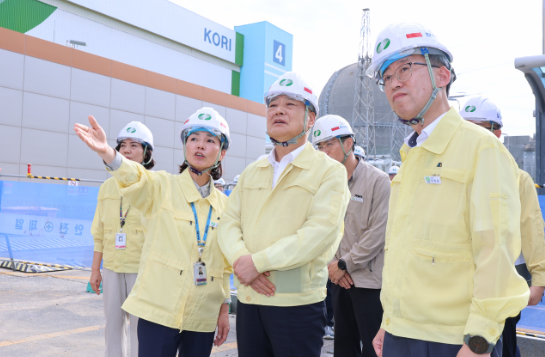
KHNP President Visits Kori Nuclear Power Plant, Pledges Stable Power Supply
Amid sustained heat waves driving up electricity demand, Kim Hoi-cheon, President of Korea Hydro & Nuclear Power (KHNP), recently conducted an on-site inspection at the Kori Nuclear Power Plant headquarters, focusing on the operational status of power generation facilities and frontline working conditions under high-temperature environments. The visit came as the South Korean government issued extreme heat warnings and strengthened its response posture, reflecting heightened attention to the stability of nuclear power as a baseload source in summer electricity supply. According to KHNP, Kim inspected work areas at the Kori plant that are vulnerable to high temperatures, reviewing employee health conditions, working environments, and the implementation of heat prevention and cooling measures. He also examined the operation of...
2026-08-10

U.S. Navy Decommissions Nuclear Submarine USS San Juan; Kittery Shipyard in Maine Helped Extend Its Service Life
The U.S. Navy recently held a decommissioning ceremony for the USS San Juan, as the Los Angeles-class fast attack nuclear submarine officially departed the fleet at Naval Base Kitsap in Washington State after nearly four decades of service. Named after the capital of Puerto Rico, a U.S. territory, the San Juan was commissioned on August 6, 1988, and its decommissioning coinciding with its commissioning anniversary carries notable symbolic significance. The San Juan had an important connection with Portsmouth Naval Shipyard in Kittery, Maine. Approximately 15 years ago, the submarine entered the shipyard for a major engineering overhaul, completing critical overhaul work between 2010 and 2012. Photographs released by the U.S. Navy in 2011 showed shipyard workers completing the submarine's undocking one day ahead of schedule, reflecting the maintenance progress and shipyard support capabilities at the time.
2026-08-10
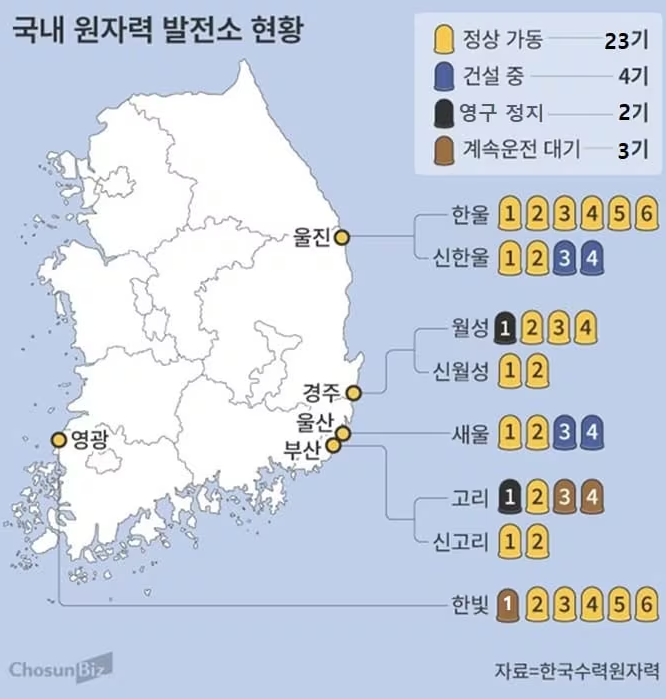
Sea Temperature Approaching Shutdown Threshold, Nuclear Power Belt on South Korea's East Coast Faces Load Reduction Pressure
Climate change is pushing nuclear power plants on South Korea's east coast toward new operational boundaries. South Korean nuclear plants generally rely on seawater as cooling water; after the heat generated by the reactor drives the turbine, seawater is needed to condense the steam back into water. Once the intake water temperature approaches or exceeds the design seawater temperature set by the equipment, heat exchange efficiency declines, affecting the heat dissipation capacity of key safety systems, and the plant must reduce load or even shut down in accordance with safety regulations. The area currently at greatest risk is around Uljin in North Gyeongsang Province. Data from the National Institute of Fisheries Science shows that nearshore surface seawater temperatures along parts of the east coast have approached 30°C, with multiple observation points near Uljin recording approximately 29.6°C to 30.2°C on the afternoon of August 7.
2026-08-10
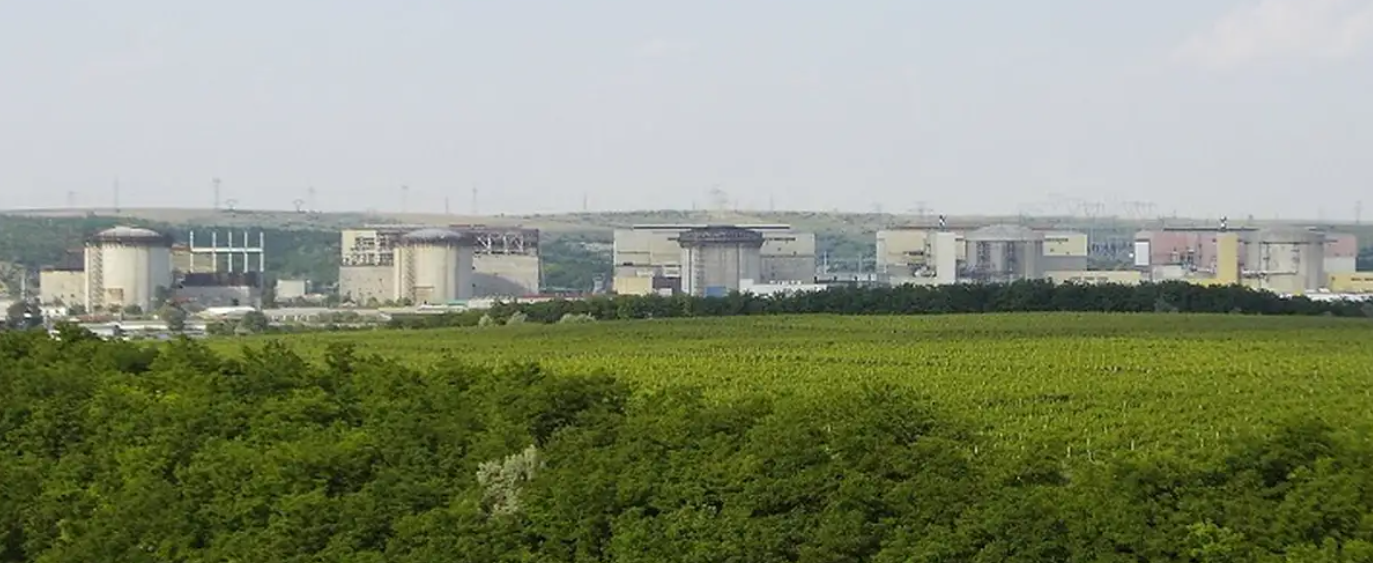
Unit 2 of Romania's Cernavoda Nuclear Power Plant to Operate for at Least 9 More Days
Unit 2 of Romania's Cernavoda Nuclear Power Plant is expected to continue operating for at least 9 more days. Romania's Acting Minister of Defense and Transport, Radu Miruță, stated that after blasting operations and the removal of underwater obstacles in the Danube River, the water level in the Cernavoda area rose by 4 centimeters over the past 24 hours. The previous day, the water level in the area had dropped by 3 centimeters. Recently, due to persistent drought, the Danube River's water level has fallen to historic lows, putting pressure on the plant's water intake and reactor cooling. To increase water supply in the river section near the Cernavoda Nuclear Power Plant, Romania last week implemented unconventional engineering measures, including blasting a rock formation in the Danube and sinking barges loaded with cargo to alter...
2026-08-10
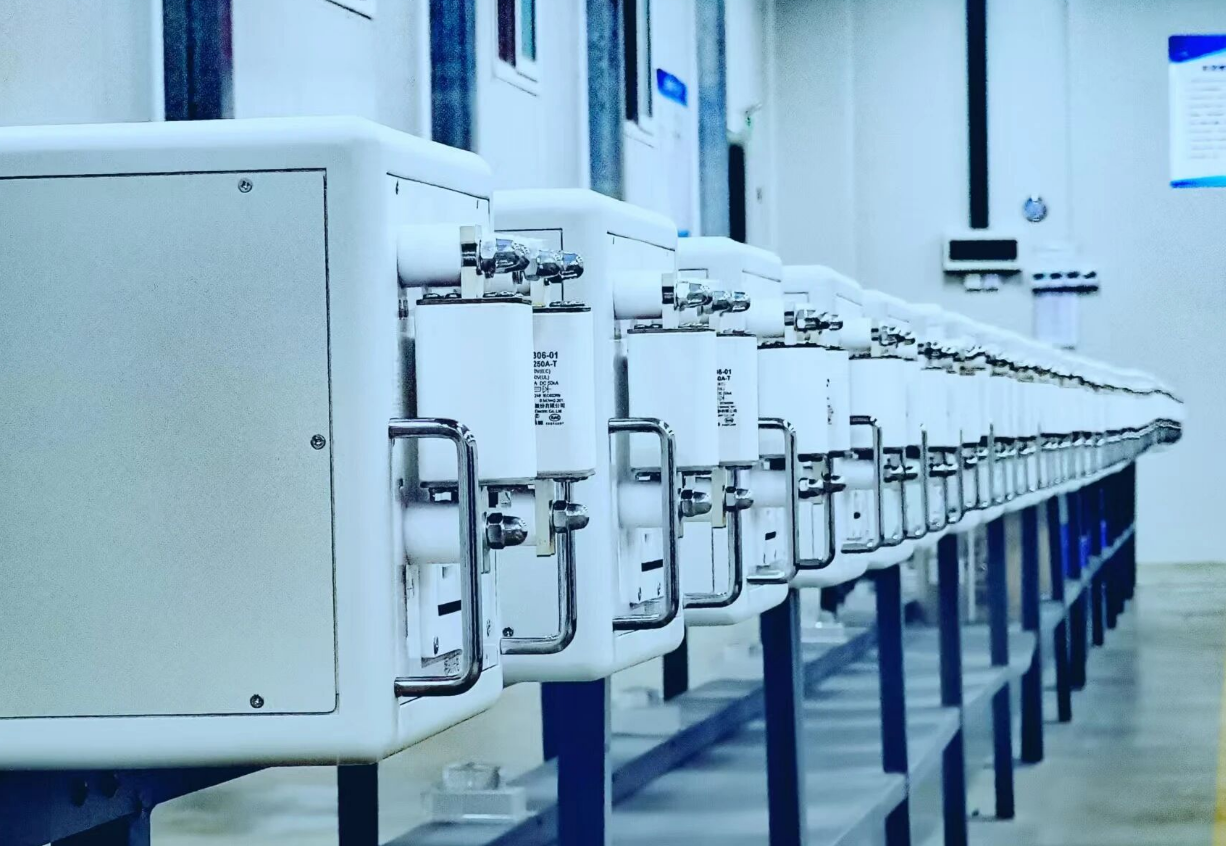
Cathode High-Voltage Power Supply for CFQS Device ECRH System Manufactured by CNNC Tongchuang Successfully Shipped
On August 3, the cathode high-voltage power supply for the Electron Cyclotron Resonance Heating (ECRH) system of China's first Quasi-Axisymmetric Stellarator (CFQS) device, manufactured by CNNC Tongchuang (Chengdu) Technology Co., Ltd., successfully passed factory acceptance and was officially shipped. The CFQS device is a major scientific and technological infrastructure project of Sichuan Province. The device adopts an advanced quasi-axisymmetric magnetic field configuration, combining the advantages of high confinement performance and steady-state operation. Under low-parameter operating conditions, the CFQS test platform confirmed that the quasi-axisymmetric magnetic field configuration can effectively reduce neoclassical transport losses in plasma and improve plasma confinement, marking the first international experimental verification of the superiority of the quasi-axisymmetric magnetic field configuration. Next, the CFQS stellarator...
2026-08-10
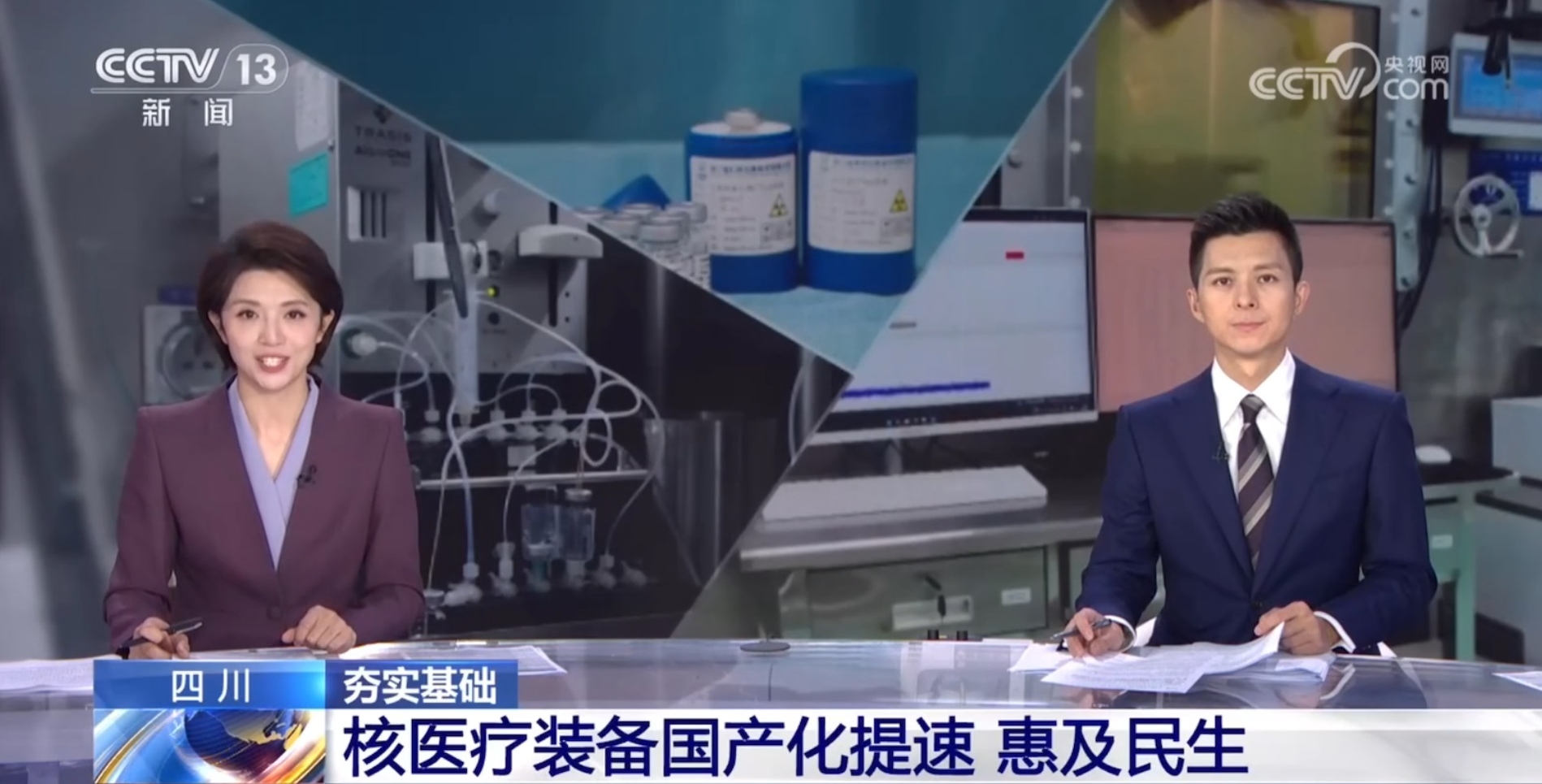
Consolidating Foundations·Sichuan: Accelerated Localization of Nuclear Medical Equipment Benefits the Public
On August 9, 2026, CCTV's "Morning News" program aired a feature titled "Consolidating Foundations·Sichuan: Accelerated Localization of Nuclear Medical Equipment Benefits the Public," reporting on Jiuyiyuan Company. Founded in February 2017, Sichuan Jiuyiyuan Particle Technology Co., Ltd. is a national high-tech enterprise integrating R&D, production, and services of high-end nuclear medical equipment, committed to providing overall solutions for radiopharmaceuticals. A cyclotron is a device that uses magnetic and electric fields to drive charged particles in a circular motion, repeatedly accelerating them via high-frequency electric fields during their movement. Low- and medium-energy cyclotrons applied in the medical field are devices that produce positron-emitting radionuclides, generating a variety of radionuclides that not only meet clinical PET/CT examination needs but also support the clinical positron drug and new drug development demands of the molecular imaging and precision medicine era. The report noted that core nuclear medicine equipment has long relied on imports, which is a key bottleneck constraining the development of nuclear medicine in China. In 2021, Jiuyiyuan successfully developed the first domestically produced medical cyclotron, breaking foreign technological monopoly. In June this year, the company launched the first domestically produced 30MeV multi-particle medium-to-high-energy cyclotron with fully independent intellectual property rights, with mass production planned for September, achieving internationally advanced product performance.
2026-08-10
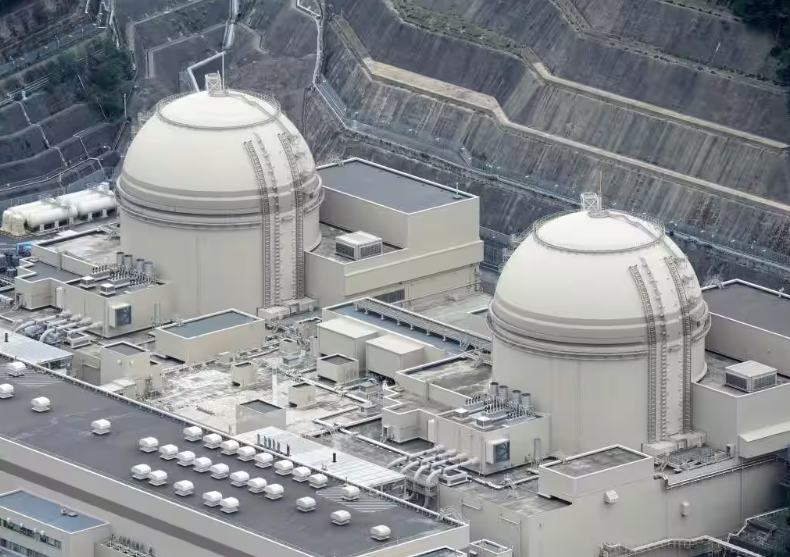
Unit 3 of Japan's Ohi Nuclear Power Plant Automatically Shuts Down
Kansai Electric Power Co. announced in the early hours of the 9th that Unit 3 of the Ohi Nuclear Power Plant, located in Ohi Town, Fukui Prefecture, Japan, automatically shut down during operation. The unit has a generating capacity of 1.18 million kilowatts. According to Kansai Electric Power, at around 23:56 on the 8th, an alarm was triggered at the unit, indicating that the generator had lost the conditions required to produce a magnetic field. Subsequently, the generator automatically stopped operating, and the reactor also automatically shut down. Preliminary information suggests that the anomaly may involve the exciter, a device used to establish the magnetic field for the generator. Kansai Electric Power stated that no radioactive material leakage occurred as a result of this incident, and there was no radiological impact on nearby personnel or the environment. The cause of the malfunction...
2026-08-10

SPIC Archives Management Project Selected for National Archives Administration AI Application Pilot
On July 29, the National Archives Administration issued the "Notice on Announcing AI Application Pilot Projects." The archives management AI application pilot project submitted by State Power Investment Corporation (SPIC) stood out from 253 pilot projects and was successfully selected, thanks to its solid digitalization foundation for archives, clear AI integration implementation roadmap, and distinctive application scenarios characteristic of central energy enterprises, becoming an important practical vehicle for digital transformation of archives in central enterprises. In April this year, to safely, steadily, and orderly promote the application of AI in the archives industry, the National Archives Administration issued the "Notice on Carrying Out AI Application Pilot Work," requiring pilot efforts in five aspects: computing power, models, data, scenarios, and security...
2026-08-10
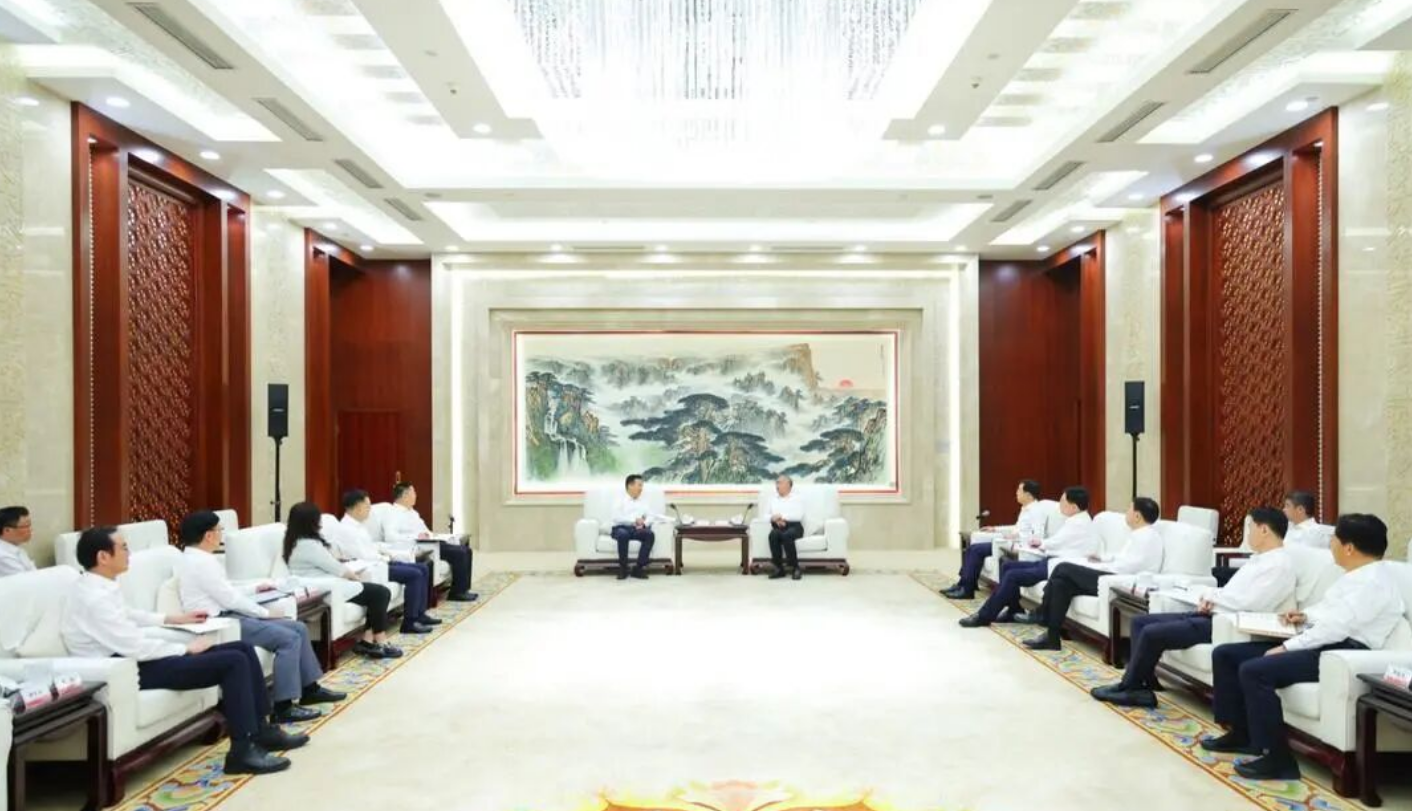
SPIC Signs Strategic Cooperation Agreement with Shandong Provincial Government
On August 7, SPIC and the Shandong Provincial Government signed a strategic cooperation agreement in Jinan. Prior to the signing, Liu Mingsheng, Secretary of the Party Leadership Group and Chairman of SPIC, held working talks with Lin Wu, Secretary of the Shandong Provincial Party Committee and Chairman of the Standing Committee of the Provincial People's Congress. Zhou Naixiang, Deputy Secretary of the Shandong Provincial Party Committee and Governor of the Province, together with Liu Mingsheng, witnessed the signing of the strategic cooperation agreement. Zhang Haibo, Member of the Standing Committee of the Shandong Provincial Party Committee and Executive Vice Governor, Shan Yi, Member of the Standing Committee and Secretary-General of the Provincial Party Committee, and Lu Hongzao and Chen Haibin, Members of the Party Leadership Group and Vice Presidents of SPIC, attended the events. Lin Wu, on behalf of the Shandong Provincial Party Committee and the Provincial Government, expressed gratitude to SPIC for its long-term strong support for Shandong's development and introduced the province's economic...
2026-08-10
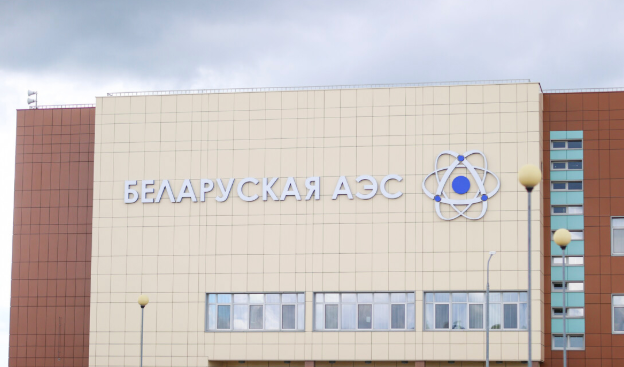
Belarus Plans Nuclear Expansion: BelAES Unit 3 and Second NPP in Mogilev Region to Advance in Parallel
Belarusian Energy Minister Denis Moroz recently stated that nuclear energy has become a strategic energy direction for Belarus, bearing on national energy security, economic growth, and technological sovereignty. Since the Belarusian Nuclear Power Plant was commissioned, it has helped the country reduce its dependence on imported natural gas, cumulatively replacing approximately 14.5 billion cubic meters of natural gas and saving over $600 million in budget funds. After assessing the multiplier effect of nuclear power on the economy, Belarus has decided to continue advancing its nuclear energy development. Moroz stated that the country has made a principled decision: on the one hand, to build a third unit at the Belarusian Nuclear Power Plant (BelAES) in Ostrovets, and on the other hand, to simultaneously study the plan for constructing a second nuclear power plant.
2026-08-09
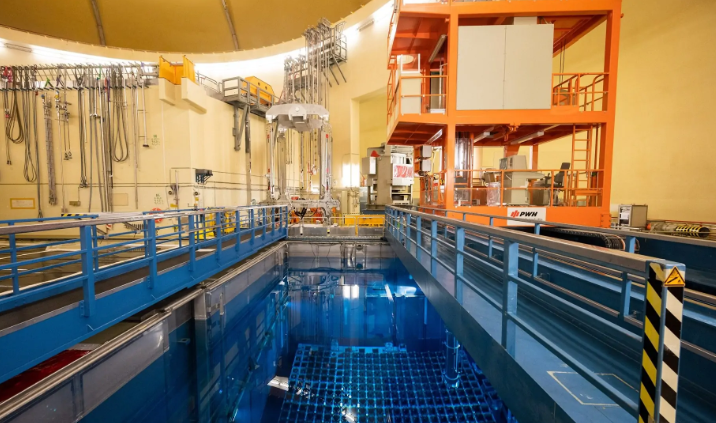
U.S. Department of Energy Selects SHINE Technologies for Genesis Initiative, AI to Optimize Reprocessing of 95,000 Tons of Spent Nuclear Fuel
The U.S. Department of Energy has selected SHINE Technologies to participate in the Genesis mission, advancing the application of artificial intelligence in the nuclear industry. The core objective of the project is to develop an AI-assisted design system for engineers to plan more efficient spent fuel reprocessing facilities. The United States currently has approximately 95,000 tons of accumulated spent nuclear fuel, which has historically posed long-term storage and disposal challenges. The new approach seeks to recover still-valuable components from this material, reducing waste volume and improving resource utilization. The key to this project lies in transforming traditional engineering design methods. In the past, metrics such as throughput, final product quality, and waste volume in nuclear fuel reprocessing processes were typically evaluated separately...
2026-08-09
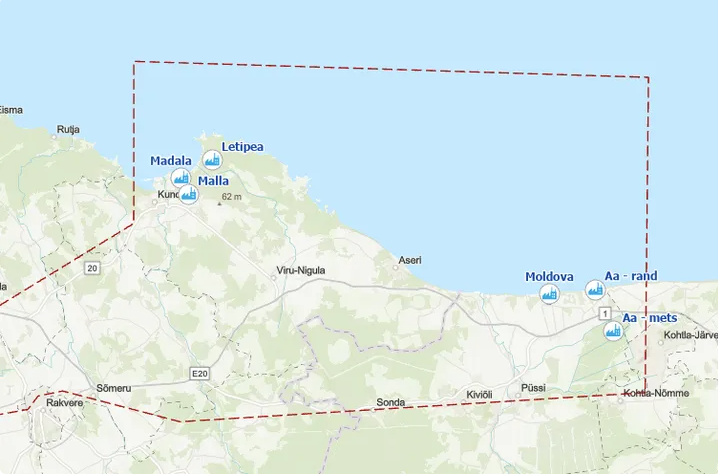
Estonia's Nuclear Power Plant Site Selection Enters New Phase, with All Six Candidate Locations on the Northern Coast
Estonia's special plan for building a nuclear power plant has entered a critical screening phase. Following the government's decision launched last spring, six potential sites have been identified, all located on Estonia's northern coast. Three of the sites are in Lääne-Viru County, and the other three are in Ida-Virumaa County, indicating that the northern coastal region has become a key focus area for nuclear power project development. The planning is being organized by Estonia's Ministry of Economic Affairs and Communications, with Fermi Energia AS being the company interested in the plan and its implementation. The two parties will introduce the candidate sites and the criteria for final site selection through public events in early August. Relevant information was already presented on Wednesday in Rakvere, indicating the project is moving from internal assessment toward public engagement.
2026-08-09

Low Danube Water Level Tests Bulgaria's Nuclear Operations, Energy Minister Says Kozloduy Plant Can Sustain Operations for About a Week and a Half
Bulgarian Energy Minister Iva Petrova said on August 7 that if the Danube River water level remains at its current level, the Kozloduy nuclear power plant can continue normal operations for about a week and a half. She described the situation facing the plant as difficult and dynamically changing, while emphasizing that the plant is currently operating stably with no direct failures affecting power generation. The Kozloduy nuclear power plant is a critical facility in Bulgaria's power system, and the high attention paid to Danube water level changes is mainly related to the cooling conditions required for plant operations. Persistently low water levels may increase operational dispatch pressure and require the energy sector to more frequently assess safety margins and subsequent response measures.
2026-08-08
Russia Offers Brazil Nuclear Technology Cooperation and Small Modular Reactor Projects, Including Floating Nuclear Power Plants and Arctic/Antarctic Scientific Research
During his visit to Brazil, Nikolai Patrushev, aide to the Russian President and head of Russia's Maritime Board, proposed cooperation initiatives involving nuclear energy, scientific research, and maritime security to the Lula administration. This agenda indicates that Brazil continues to pursue a relatively autonomous diplomatic approach in its relations with major powers, while seeking to expand external cooperation space in areas such as energy transition, defense technology, and protection of maritime rights. In the nuclear energy sector, the Russian side focused on promoting small nuclear reactors and low-power nuclear technologies, including the Elena-M small nuclear power plant and floating offshore power generation units. The Russian side described these technologies as capable of long-term operation, relatively cost-effective...
2026-08-08

Russia Advances Rare Earth Extraction Technology Using Hyperaccumulator Plants, Plans Field Trials
August 7 news - Russian researchers have developed a technology for extracting rare earth metals using hyperaccumulator plants. The technology involves planting crops such as mustard, buckwheat, and sunflower at engineered landfill sites, allowing them to absorb metal elements from the soil and concentrate them in their biomass; after harvest, the plants are incinerated, and valuable elements are extracted from the ash. Mustard plantation. Photo: Pustovoit All-Russian Research Institute of Oil Crops. According to reports, under natural conditions in Russia, the relevant crops can be harvested two to three times per growing season. Estimates indicate that a single landfill site can yield up to 15 tons of rare earth metals annually. Currently, the laboratory has conducted tests using phosphogypsum waste from the Voskresensk and Balakovo areas, as well as loparite from the Lovozersky Mining and Processing Plant. The project plans to conduct field trials under real-world conditions this year, with pilot planting scheduled for next year.
2026-08-09