
Search Results
Keyword:FIRST
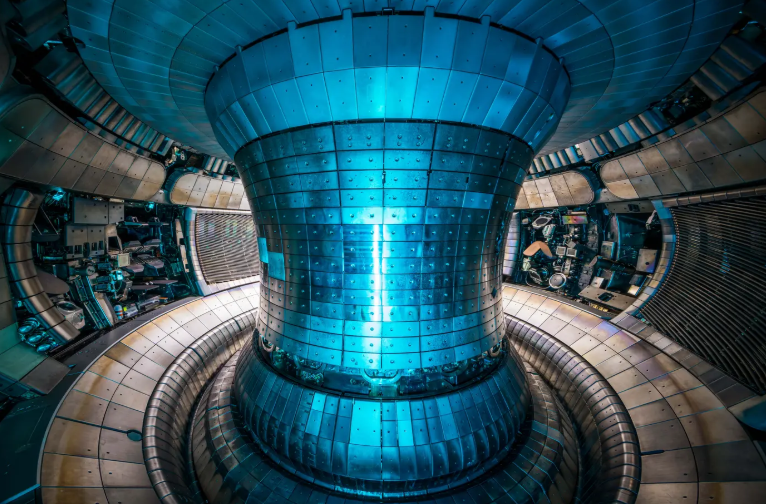
Two IPP studies reveal edge turbulence mechanisms in fusion plasmas from first principles
On August 10, 2026, two research teams at the Max Planck Institute for Plasma Physics (IPP) independently published findings that, for the first time, explain key phenomena in the extremely thin edge layer of fusion plasmas starting from fundamental physics equations. Both papers were published in Physical Review Letters, with one highlighted as an editor's suggestion. For stable operation of a fusion power plant, two requirements must be met simultaneously: on the one hand, the plasma at temperatures of around 100 million degrees Celsius must be effectively confined to achieve fusion ignition conditions; on the other hand, the generated heat must be distributed over a sufficiently large area to prevent damage to the device walls from excessive local heat loads. Whether this conflict can be resolved depends largely on a region only a few centimeters thick at the plasma edge.
2026-08-10

Belarusian NPP safe operation period may be extended to 100 years, with first spent fuel to be shipped to Russia for reprocessing in 2034
Stanislav Levitsky, head of the Rosatom representative office in Belarus, stated on the "Economic Environment" program of Belarusian TV Channel One that Belarusian nuclear energy development is backed by comprehensive safety assurances. He emphasized that while nuclear facilities can indeed have serious consequences if mismanaged, under the existing risk control system and modern technological support at the Belarusian NPP, nuclear power can become a low-cost, stable, and safe energy source. Levitsky believes that amid intense competition in the energy sector, some irresponsible players may use information tactics to create anxiety and attempt to provoke panic among the public...
2026-08-10
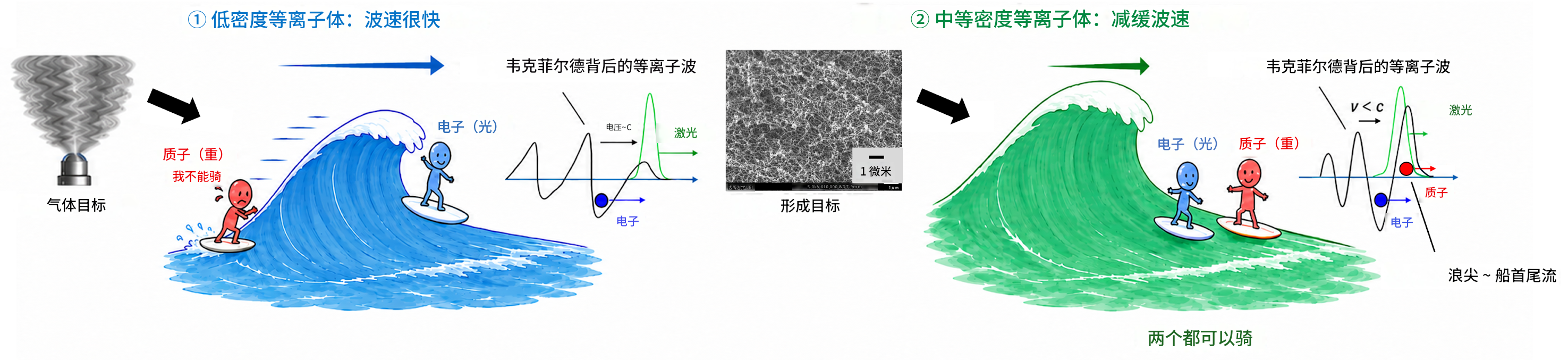
Japanese research team demonstrates ion wakefield acceleration for the first time, accelerating protons to a maximum of 60 MeV
Kyushu University, the National Institutes for Quantum Science and Technology (QST), and Osaka University recently announced jointly that the research team used high-intensity laser irradiation on a foam target to experimentally demonstrate the ion wakefield acceleration mechanism for the first time, providing a new experimental foundation for research on next-generation laser-driven ion accelerators. The results were published in *Communications Physics* on August 3, Japan time. According to the report, the research aims to reproduce physical processes similar to high-energy particle acceleration in space within a laboratory setting. Traditional high-energy accelerators typically require long acceleration tubes or large ring-shaped facilities, while the strong electric fields generated by plasma waves are considered promising for advancing accelerator miniaturization. However, compared with electrons, protons and ions...
2026-08-10

Chinese Team Wins One Gold and Three Silver Medals in First Participation at International Nuclear Science Olympiad
The 2026 International Nuclear Science Olympiad concluded on the evening of the 8th in Jeddah, a city in western Saudi Arabia. The Chinese team, participating for the first time, had four contestants win one gold and three silver medals, with overall results ranking among the top participating countries. The International Nuclear Science Olympiad, supported by the International Atomic Energy Agency, is the world's first international youth Olympiad themed on nuclear science. It aims to stimulate young people's interest in nuclear science, promote international youth exchange, and guide more young people into the fields of nuclear science and nuclear technology. The event was inaugurated in 2024, and this year's competition is the third edition, with teams from 19 countries participating. The eight-day event featured theoretical and practical examinations...
2026-08-10

First Concrete Pour (FCD) Successfully Completed for the Conventional Island of Unit 2 at Guangxi Bailong Nuclear Power Plant
At 10:06 on August 9, after 38 hours and 46 minutes of continuous effort, the First Concrete Pour (FCD) for the conventional island of Unit 2 at the SPIC Guangxi Bailong Nuclear Power Plant was successfully completed, marking the full commencement of the main construction phase for the conventional island. The basement floor slab of the conventional island of Unit 2 adopts an integral raft foundation, divided into 9 construction zones using the sequence method. This concrete pour covered Zone 1, starting at 19:20 on August 7, with a cumulative pour of 1,732 cubic meters of concrete, conducted safely and orderly throughout the process. Since July, Typhoon Maysak directly struck Fangchenggang, bringing successive storms, followed by days of high temperatures at the Bailong nuclear site, posing significant challenges to on-site construction. In response...
2026-08-10
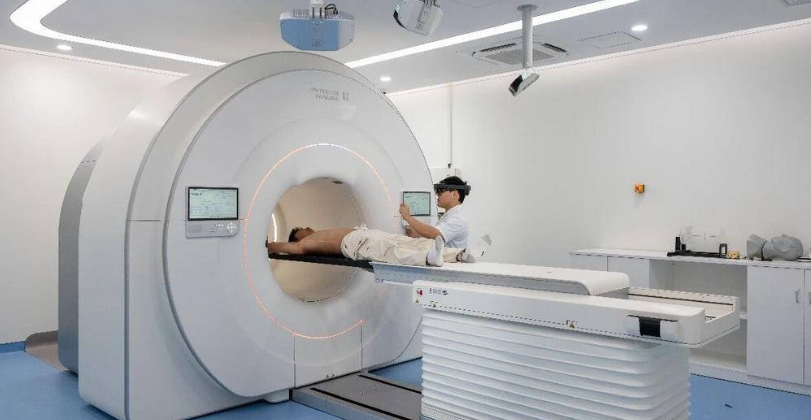
Jiangsu's First uLinac HalosTx Integrated Ring-Gantry CT Linac Enters Clinical Use
On August 7, the first uLinac HalosTx integrated ring-gantry CT linear accelerator in Jiangsu Province was officially put into clinical use at the Third Affiliated Hospital of Nanjing Medical University (Changzhou Second People's Hospital). The system integrates a diagnostic-grade CT scanner and a ring-gantry accelerator on a single platform, shifting regional tumor radiotherapy from the traditional step-by-step positioning approach to a same-platform real-time model. Radiotherapy is one of the important modalities for cancer treatment. In the conventional split-system radiotherapy workflow, patients typically need to be transported between the CT room and the treatment room, and treatment plans are mostly formulated based on static images acquired beforehand. In cases such as tumor regression or changes in patient weight, previous images may not fully reflect the actual condition on the day of treatment...
2026-08-08

Russia's First Domestic 3D Scanner Helix Included in National Product Registry, Rosatom Completes Additive Manufacturing Technology Chain
The Russian Ministry of Industry and Trade has included the first domestically produced 3D scanner, the RangeVision Helix, in the Unified Register of Russian Electronic Products and the confirmed register of Russian-made industrial products. The registration was carried out in accordance with Russian Government Resolutions No. 878 and No. 719. Thus, the Helix has become the first and currently the only 3D scanner in Russia to be included in the aforementioned national registers. The RangeVision Helix was developed and manufactured by RangeVision, an additive manufacturing partner of Rosatom. Since 2025, the company has become the only Russian 3D scanner manufacturer included in Rosatom's additive manufacturing ecosystem...
2026-08-08
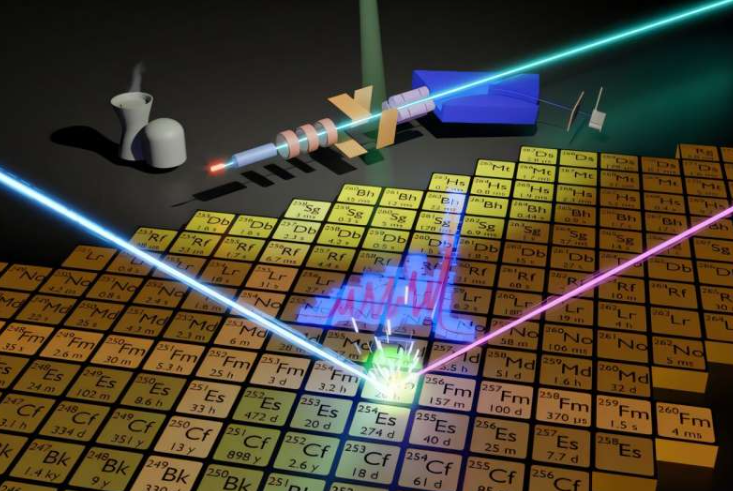
Laser spectroscopy reveals for the first time the precise nuclear shape of fermium-255, offering new clues in the search for superheavy elements
An international research team has, for the first time, precisely determined the nuclear structure of the actinide fermium-255, confirming that its nucleus exhibits a pronounced prolate deformation, similar to a rugby ball. The study, published in *Physical Review Letters*, was conducted in collaboration with 18 institutions, including Johannes Gutenberg University Mainz in Germany, the Helmholtz Institute Mainz, and the University of Gothenburg in Sweden. The findings not only correct several unreasonable nuclear property values in previous standard data tables but also provide crucial experimental validation for modern nuclear theory models. Fermium is a synthetic heavy element that does not exist in nature. Fermium-255 contains 100 protons and 155 neutrons, making its experimental production extremely challenging. The research team...
2026-08-08
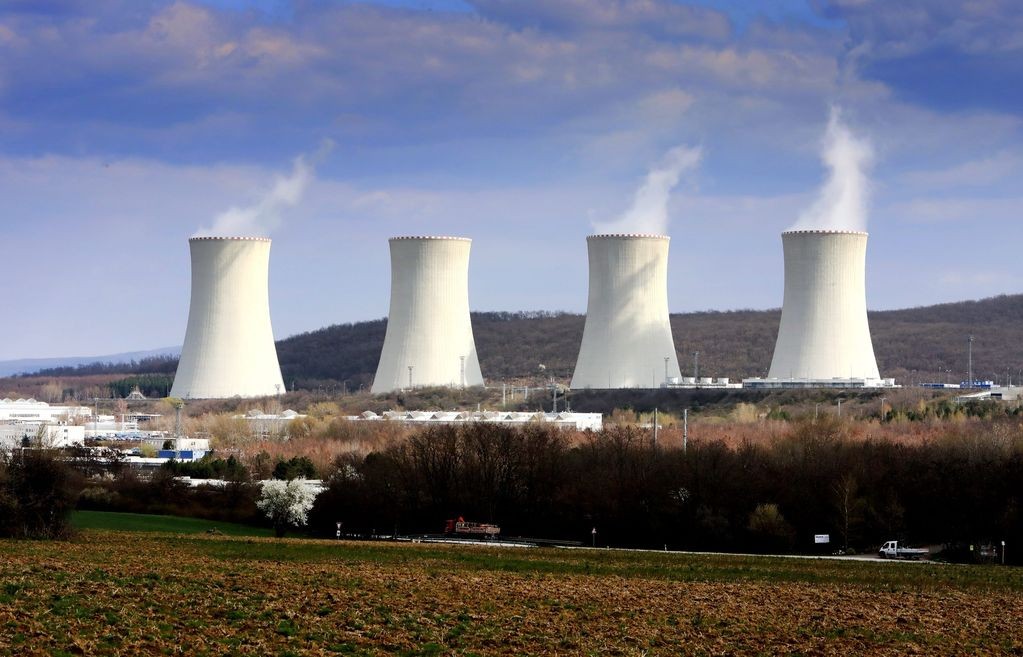
Unit 4 of Slovakia's Mochovce Nuclear Power Plant Reaches First Criticality
Slovenské Elektrárne stated that Unit 4 of the Mochovce Nuclear Power Plant reached first reactor criticality at 22:10 local time on August 6, and achieved minimum controllable power at 22:31. This is a key milestone in the pre-commissioning work of the unit, indicating that the reactor is ready for subsequent testing. First criticality refers to the first time the nuclear fuel in the core achieves a self-sustaining fission chain reaction. Slovenské Elektrárne stated that first criticality and reaching minimum controllable power are important steps in the commissioning process of a nuclear power plant, used to confirm the unit's readiness to enter the next phase of testing...
2026-08-08
China's First Homegrown Radiopharmaceutical Receives Dual FDA Breakthrough Therapy and Fast Track Designations
On August 6, Nuoyu Medical announced that the U.S. Food and Drug Administration (FDA) has officially granted Breakthrough Therapy Designation (BTD) and Fast Track Designation (FTD) to the company's independently developed 68Ga-NYM096. This marks the first product in China's original radiopharmaceutical field to receive FDA Breakthrough Therapy Designation, and the first to receive both FDA Breakthrough Therapy and Fast Track designations simultaneously, creating a milestone breakthrough in the radiopharmaceutical field. 68Ga-NYM096 is a small-molecule diagnostic radiopharmaceutical for renal cancer that specifically binds to CAIX, suitable for positron emission tomography (PET) imaging of suspected or confirmed metastatic clear cell renal cell carcinoma (c...
2026-08-08

First Batch of Non-Safety-Class Main Instrumentation and Control Cabinets for Unit 1 of Xudabao Nuclear Power Plant Successfully Arrived
Recently, the non-safety-class main instrumentation and control (I&C) cabinets for Unit 1 of Xudabao Nuclear Power Plant arrived smoothly and were delivered to the plant site. The main I&C cabinets are core critical equipment for unit control and operation management at nuclear power plants, undertaking full-process functions such as data acquisition, logic calculation, process control, interlock protection, and operation monitoring. They can be regarded as the "central brain" ensuring the safe, controllable, and stable operation of nuclear power units. This equipment features high technical precision, strong integration, and stringent safety classification requirements, offering advantages such as high control accuracy, fast response speed, strong operational stability, and excellent fault tolerance, thereby ensuring safe, stable, and efficient unit operation. To ensure the equipment arrived on schedule, Liaoning Nuclear Power proactively took the lead, coordinated precisely, and efficiently linked the efforts of the general contractor, equipment manufacturer, and design institute, breaking through the collaborative chain across solution optimization, manufacturing, and factory acceptance testing, overcoming difficulties and advancing efficiently. By the end of July, all preparatory work was completed ahead of schedule, and the equipment arrived on time, laying a solid foundation for subsequent project milestones.
2026-08-08

First Main Girder of Main Crane B Hoisted into Place in Conventional Island of Lufeng Nuclear Power Plant Unit 1
The first main girder of Main Crane B, the first main crane in the conventional island of Lufeng Nuclear Power Plant Unit 1, began lifting at 8:45 on August 7, 2026, and was positioned at 11:31. This marks the official commencement of main crane hoisting work in Conventional Island Unit 1; all hoisting work for Main Cranes A/B is expected to be completed by August 10. The main building of Conventional Island Unit 1 of Lufeng Nuclear Power Plant Unit 1 is equipped with two main cranes, designated Main Crane A and Main Crane B, arranged on the same level with a lifting capacity of 240t/40t each. These are critical lifting equipment for the nuclear power plant, primarily used during the construction phase for hoisting major conventional island equipment such as steam turbines, generators, condensers, moisture separator reheaters, and condensate pumps, as well as other installation work including piping and valves. During the operational phase of the nuclear power plant, they are used for maintenance of the turbine-generator unit and other in-plant items during overhaul periods.
2026-08-07
German team achieves first separation of tritium-containing hydrogen isotope mixtures using silver-exchanged zeolites
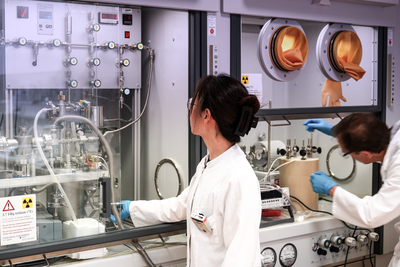
A team at the Helmholtz-Zentrum Dresden-Rossendorf (HZDR) and partners recently demonstrated a new method for separating hydrogen isotopes using silver-containing zeolites, successfully separating hydrogen isotope mixtures containing radioactive tritium through a porous solid material for the first time. The research findings were published in Nature Communications. Future fusion power plants will require not only high-temperature plasma and strong magnetic fields during operation, but also a stable fuel cycle system for recovering, separating, and reusing deuterium and tritium. Inside a fusion reactor, deuterium and tritium participate in reactions and release energy, but the fuel is not completely consumed, and the residual gas may also contain ordinary hydrogen (protium), forming a mixture of protium, deuterium, and tritium...
2026-08-07

U.S. NRC to Debut Modernized Hearing Process in Advanced Reactor Licensing Review for the First Time
The U.S. Nuclear Regulatory Commission (NRC) will hold a public hearing on August 13 in Oak Ridge, Tennessee, to consider the Tennessee Valley Authority's (TVA) application to build a small modular reactor at the Clinch River site. This will mark the first time the NRC applies its modernized mandatory hearing framework in an advanced reactor licensing review. According to the NRC, the new hearing process is designed to give the public earlier insight into the agency's review of the project's safety and environmental impacts, while improving the transparency, predictability, and efficiency of licensing reviews. As part of its licensing modernization efforts, the NRC currently aims to complete construction permit-related decisions within 18 months. TVA plans to...
2026-08-07

KEK in Japan Completes World's First "Quantum Multi-Beam Utilization" Synchrotron Radiation Beamlines
On August 6, the High Energy Accelerator Research Organization (KEK) announced that the BL-11A and BL-11B beamlines at its Photon Factory (PF) synchrotron radiation experimental facility have been completed as the world's first quantum multi-beam utilization beamlines, enabling the simultaneous use of hard X-ray and soft X-ray beams. According to reports, BL-11A and BL-11B were constructed in collaboration with the Synchrotron Radiation Academic Infrastructure Network. This network consists of synchrotron radiation facilities operated by university joint-use organizations and joint-use/joint-research centers, positioned as scientific research and educational infrastructure. The main feature of the new beamlines is the ability to simultaneously use hard X-ray and soft X-ray under the same experimental conditions, completing observations that previously required separate measurements...
2026-08-07