
Search Results
Keyword:FIRST
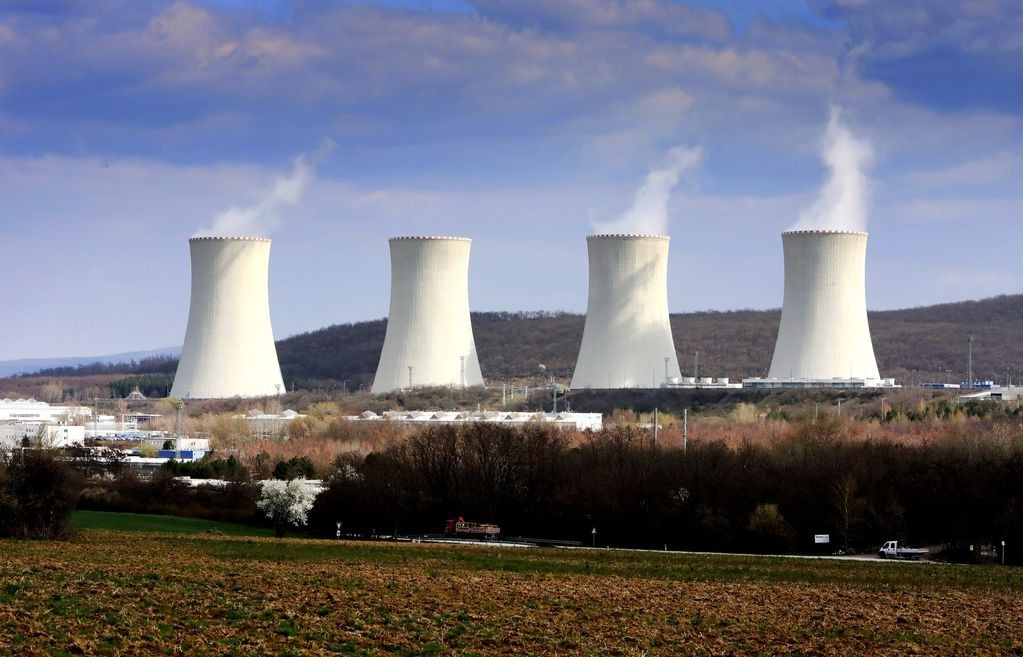
Unit 4 of Slovakia's Mochovce Nuclear Power Plant Reaches First Criticality
Slovenské Elektrárne stated that Unit 4 of the Mochovce Nuclear Power Plant reached first reactor criticality at 22:10 local time on August 6, and achieved minimum controllable power at 22:31. This is a key milestone in the pre-commissioning work of the unit, indicating that the reactor is ready for subsequent testing. First criticality refers to the first time the nuclear fuel in the core achieves a self-sustaining fission chain reaction. Slovenské Elektrárne stated that first criticality and reaching minimum controllable power are important steps in the commissioning process of a nuclear power plant, used to confirm the unit's readiness to enter the next phase of testing...
2026-08-08
China's First Homegrown Radiopharmaceutical Receives Dual FDA Breakthrough Therapy and Fast Track Designations
On August 6, Nuoyu Medical announced that the U.S. Food and Drug Administration (FDA) has officially granted Breakthrough Therapy Designation (BTD) and Fast Track Designation (FTD) to the company's independently developed 68Ga-NYM096. This marks the first product in China's original radiopharmaceutical field to receive FDA Breakthrough Therapy Designation, and the first to receive both FDA Breakthrough Therapy and Fast Track designations simultaneously, creating a milestone breakthrough in the radiopharmaceutical field. 68Ga-NYM096 is a small-molecule diagnostic radiopharmaceutical for renal cancer that specifically binds to CAIX, suitable for positron emission tomography (PET) imaging of suspected or confirmed metastatic clear cell renal cell carcinoma (c...
2026-08-08
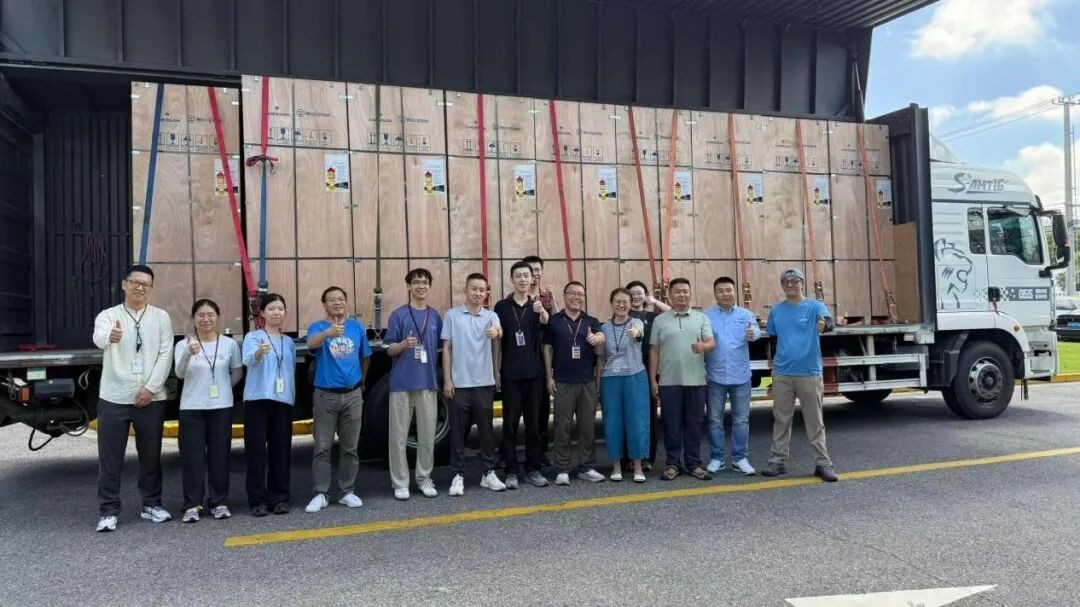
First Batch of Non-Safety-Class Main Instrumentation and Control Cabinets for Unit 1 of Xudabao Nuclear Power Plant Successfully Arrived
Recently, the non-safety-class main instrumentation and control (I&C) cabinets for Unit 1 of Xudabao Nuclear Power Plant arrived smoothly and were delivered to the plant site. The main I&C cabinets are core critical equipment for unit control and operation management at nuclear power plants, undertaking full-process functions such as data acquisition, logic calculation, process control, interlock protection, and operation monitoring. They can be regarded as the "central brain" ensuring the safe, controllable, and stable operation of nuclear power units. This equipment features high technical precision, strong integration, and stringent safety classification requirements, offering advantages such as high control accuracy, fast response speed, strong operational stability, and excellent fault tolerance, thereby ensuring safe, stable, and efficient unit operation. To ensure the equipment arrived on schedule, Liaoning Nuclear Power proactively took the lead, coordinated precisely, and efficiently linked the efforts of the general contractor, equipment manufacturer, and design institute, breaking through the collaborative chain across solution optimization, manufacturing, and factory acceptance testing, overcoming difficulties and advancing efficiently. By the end of July, all preparatory work was completed ahead of schedule, and the equipment arrived on time, laying a solid foundation for subsequent project milestones.
2026-08-08

First Main Girder of Main Crane B Hoisted into Place in Conventional Island of Lufeng Nuclear Power Plant Unit 1
The first main girder of Main Crane B, the first main crane in the conventional island of Lufeng Nuclear Power Plant Unit 1, began lifting at 8:45 on August 7, 2026, and was positioned at 11:31. This marks the official commencement of main crane hoisting work in Conventional Island Unit 1; all hoisting work for Main Cranes A/B is expected to be completed by August 10. The main building of Conventional Island Unit 1 of Lufeng Nuclear Power Plant Unit 1 is equipped with two main cranes, designated Main Crane A and Main Crane B, arranged on the same level with a lifting capacity of 240t/40t each. These are critical lifting equipment for the nuclear power plant, primarily used during the construction phase for hoisting major conventional island equipment such as steam turbines, generators, condensers, moisture separator reheaters, and condensate pumps, as well as other installation work including piping and valves. During the operational phase of the nuclear power plant, they are used for maintenance of the turbine-generator unit and other in-plant items during overhaul periods.
2026-08-07
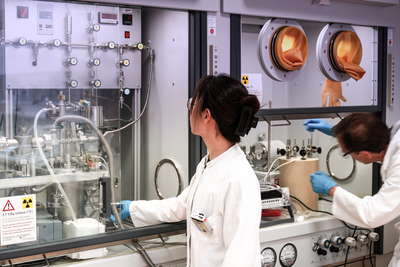
German team achieves first separation of tritium-containing hydrogen isotope mixtures using silver-exchanged zeolites
A team at the Helmholtz-Zentrum Dresden-Rossendorf (HZDR) and partners recently demonstrated a new method for separating hydrogen isotopes using silver-containing zeolites, successfully separating hydrogen isotope mixtures containing radioactive tritium through a porous solid material for the first time. The research findings were published in Nature Communications. Future fusion power plants will require not only high-temperature plasma and strong magnetic fields during operation, but also a stable fuel cycle system for recovering, separating, and reusing deuterium and tritium. Inside a fusion reactor, deuterium and tritium participate in reactions and release energy, but the fuel is not completely consumed, and the residual gas may also contain ordinary hydrogen (protium), forming a mixture of protium, deuterium, and tritium...
2026-08-07
U.S. NRC to Debut Modernized Hearing Process in Advanced Reactor Licensing Review for the First Time
The U.S. Nuclear Regulatory Commission (NRC) will hold a public hearing on August 13 in Oak Ridge, Tennessee, to consider the Tennessee Valley Authority's (TVA) application to build a small modular reactor at the Clinch River site. This will mark the first time the NRC applies its modernized mandatory hearing framework in an advanced reactor licensing review. According to the NRC, the new hearing process is designed to give the public earlier insight into the agency's review of the project's safety and environmental impacts, while improving the transparency, predictability, and efficiency of licensing reviews. As part of its licensing modernization efforts, the NRC currently aims to complete construction permit-related decisions within 18 months. TVA plans to...
2026-08-07
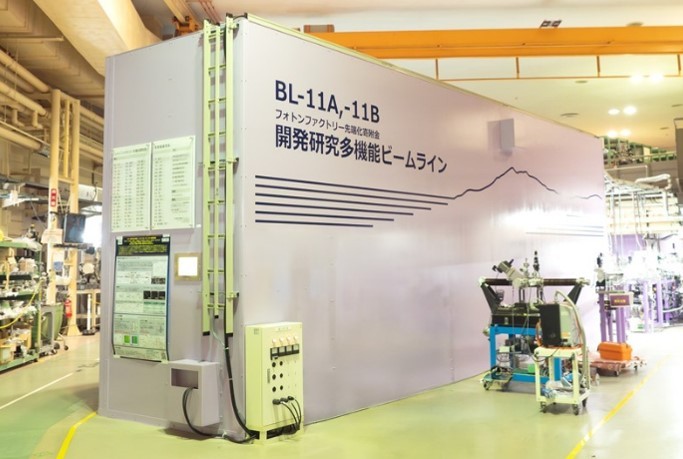
KEK in Japan Completes World's First "Quantum Multi-Beam Utilization" Synchrotron Radiation Beamlines
On August 6, the High Energy Accelerator Research Organization (KEK) announced that the BL-11A and BL-11B beamlines at its Photon Factory (PF) synchrotron radiation experimental facility have been completed as the world's first quantum multi-beam utilization beamlines, enabling the simultaneous use of hard X-ray and soft X-ray beams. According to reports, BL-11A and BL-11B were constructed in collaboration with the Synchrotron Radiation Academic Infrastructure Network. This network consists of synchrotron radiation facilities operated by university joint-use organizations and joint-use/joint-research centers, positioned as scientific research and educational infrastructure. The main feature of the new beamlines is the ability to simultaneously use hard X-ray and soft X-ray under the same experimental conditions, completing observations that previously required separate measurements...
2026-08-07
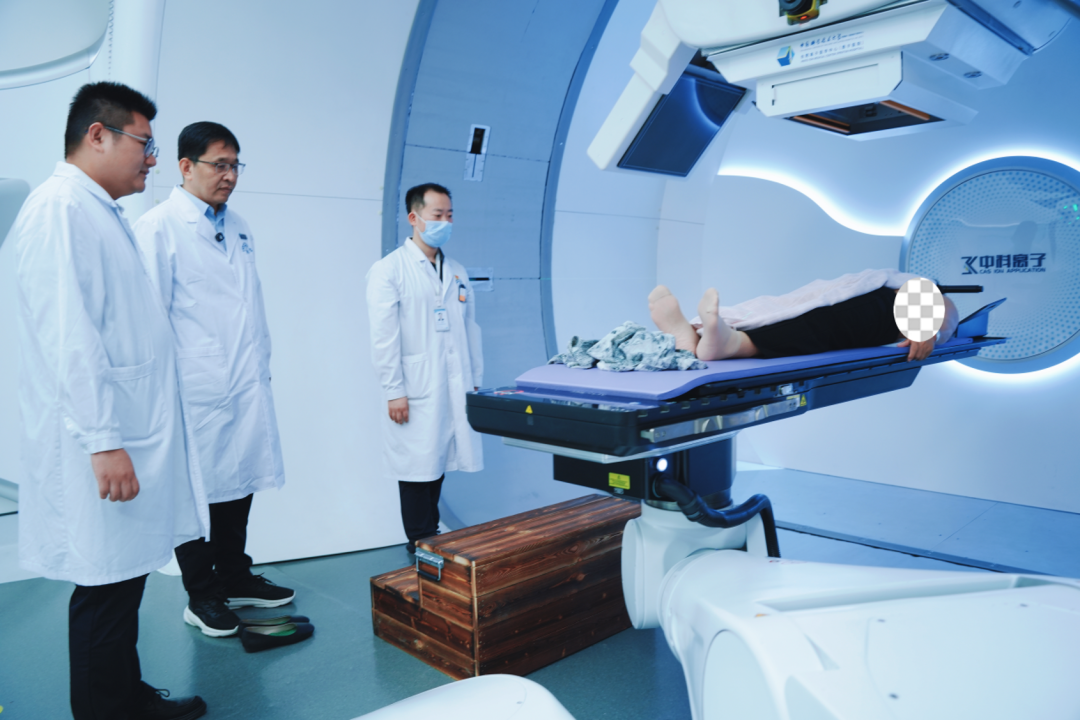
First Clinical Treatment Successfully Completed with China's Domestic Superconducting Cyclotron Proton Therapy System by CYC-Ion
On the morning of August 7, the domestically developed superconducting cyclotron proton therapy system, independently developed by Hefei CYC-Ion Medical Technology Equipment Co., Ltd., completed the first clinical trial treatment of a subject at Hefei Ion Medical Center. This marks a significant breakthrough as the first domestically produced superconducting cyclotron proton radiation therapy system in China. The subject in this case was a lung cancer patient. The superconducting proton therapy system used in the trial is equipped with the SC240 superconducting cyclotron independently developed by CYC-Ion, featuring an ultra-large irradiation field and 360° full-angle beam delivery capability. The entire treatment process relied on multi-modal fusion 4D image-guided precise positioning, enabling dynamic adaptation and precise treatment. The equipment operated smoothly with low noise, and the treatment control software ran...
2026-08-07
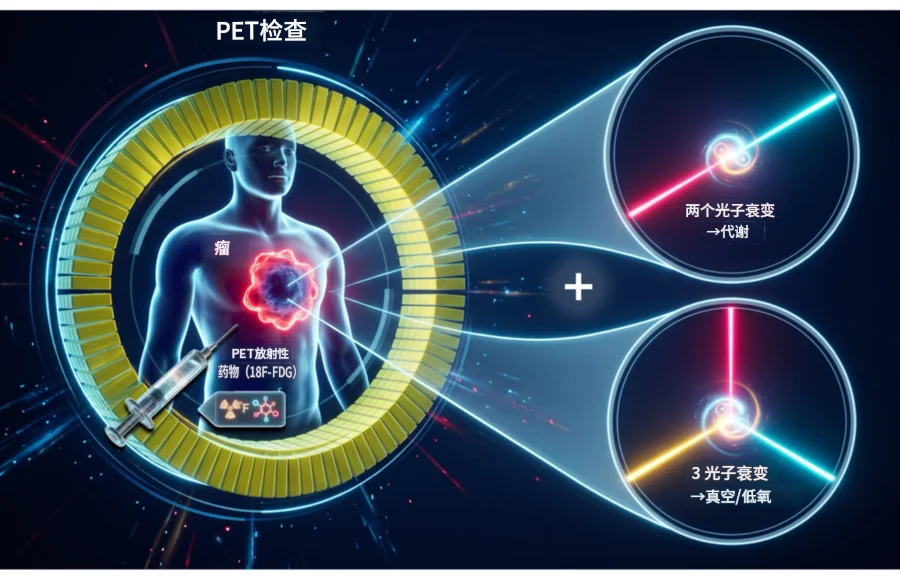
First Validation of Novel PRI Technology: Existing PET Tracers Can Image Tissue Microenvironment
August 6, 2026 - A joint research team from the Graduate School of Engineering at the University of Tokyo and the University of York in the UK announced that they have established a novel geometric imaging principle utilizing positron three-photon decay and successfully validated Positronium Ratio Imaging (PRI) technology for the first time. This method can be used in conjunction with existing clinical PET tracers and is expected to provide a new means of observing tissue microenvironments in nuclear medicine imaging. Conceptual diagram of next-generation nuclear medicine imaging utilizing positron-3-photon decay. Current clinical PET scans primarily rely on the positron two-photon annihilation process to visualize the distribution and accumulation of tracers in the body, but they provide limited information on microenvironmental factors such as tissue hypoxia that are associated with disease malignancy...
2026-08-07
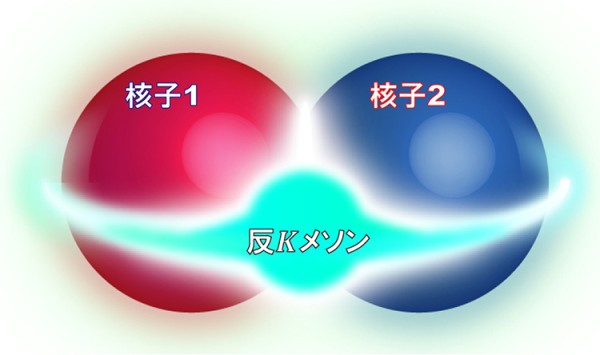
First Observation of Anti-Kaonic Nuclei in Photon Beam Experiments
The LEPS2/Solenoid collaboration, composed of researchers from the Research Center for Nuclear Physics at Osaka University, Kyoto Sangyo University, the Research Center for Advanced Quantum Beam Science at Tohoku University, Korea University, Gifu University, the Institute of Modern Physics of the Chinese Academy of Sciences, RIKEN, Kyoto University, the Institute of Physics at Academia Sinica in Taiwan, and the University of Saskatchewan in Canada, has for the first time observed nuclei containing anti-kaons in a photon beam experiment. This achievement provides new experimental evidence confirming the existence of anti-kaonic nuclei and offers important clues for understanding high-density nuclear matter and the internal structure of neutron stars. The research team conducted the experiment at the LEPS2 laser-electron photon facility at the large synchrotron radiation facility SPring-8 in Hyogo Prefecture, Japan...
2026-08-07
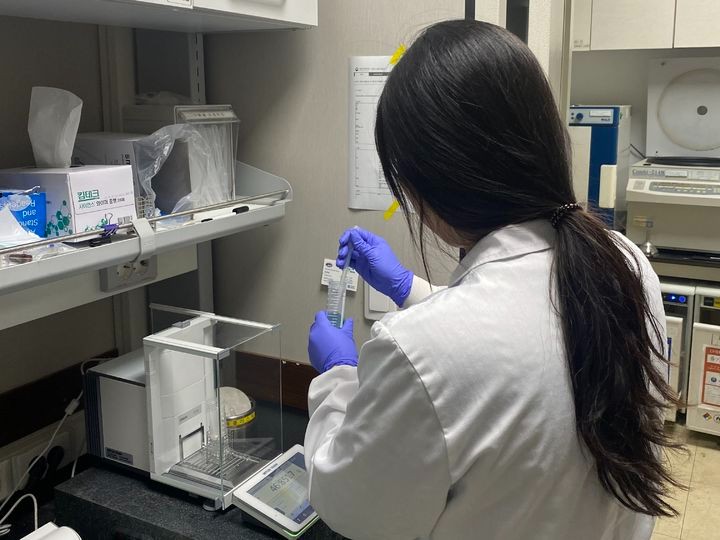
Radioactivity test results for agricultural and fishery products in North Chungcheong Province, South Korea, pass standards in first half of the year
The Chungcheongbuk-do Institute of Health and Environment announced on August 7 that it conducted radioactivity safety testing on agricultural and fishery products sold and used within the province in the first half of this year, and the results showed that all relevant samples met food radioactivity safety standards. The testing covered 119 types of agricultural products and 274 types of fishery products sold at large supermarkets, local food direct-sale stores, or used as ingredients for school meals. Testing items included indicators such as radioactive iodine, radioactive cesium, and tritium. The test results showed that the levels of radioactive iodine and radioactive cesium in the samples did not exceed the permissible limit of 100 Bq/kg for food radioactivity; tritium was not detected in any of the 80 seafood samples. The relevant test results can be found on the Chungcheongbuk-do Institute of Health and Environment website.
2026-08-07
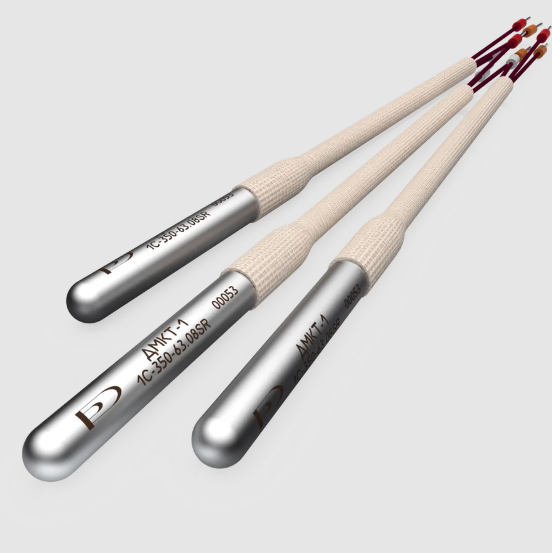
Rostec's RosEl Delivers First Batch of Vulkan Magnetic Contact Sensors
RosEl Holding Company (RosEl), a subsidiary of Rostec, has delivered the first batch of Vulkan magnetic contact sensors to customers. The product is designed for high-pressure steam pipeline applications and can be used in automation and signaling systems, including those at nuclear power plants. According to reports, Vulkan sensors are installed inside steam pipeline valves and are primarily used to monitor and control the valve closing process. The device can operate at temperatures up to 350 degrees Celsius, withstand mechanical shock acceleration of 150g, and achieve seismic category 1 rating, maintaining operational capability under strong earthquake conditions. The sensor features a stainless steel housing and has a design service life of up to 12 years. Its core reed switch...
2026-08-07
Rosatom Completes First Batch of Certification for Energy Critical Information Infrastructure Products
Rosatom has recently completed the first batch of product certification for critical information infrastructure in the fuel and energy sector under the KII-Sert voluntary certification system. The certification system has been operating in Russia's nuclear energy and aerospace industries since 2024, primarily used to assess the reliability, technological independence, and sustainability of solutions related to critical information infrastructure. The certification was carried out by Atomenergoproekt JSC, part of Rosatom's engineering division. As an authorized certification body for trusted products and processes within the KII-Sert system, the company, in cooperation with the industrial testing laboratory Avtomatika-Servis LLC, certified a software and hardware system used in the oil and gas industry.
2026-08-07

Oklo's Groves Isotope Test Reactor Achieves First Criticality
Oklo, a U.S. advanced nuclear technology company, announced on August 6 that its Groves Isotope Test Reactor has achieved a controlled self-sustaining nuclear chain reaction at low power, reaching first criticality. This milestone comes less than a year after the project broke ground. Groves Isotope Test Reactor facility (Image: Groves) The Groves low-power test reactor, located in Lockhart, Texas, is the first reactor to achieve criticality on private land under the U.S. Department of Energy's Reactor Pilot Program. According to Oklo, the facility was built from undeveloped land, completing civil excavation, engineering construction, component fabrication or procurement, fuel configuration, and...
2026-08-07
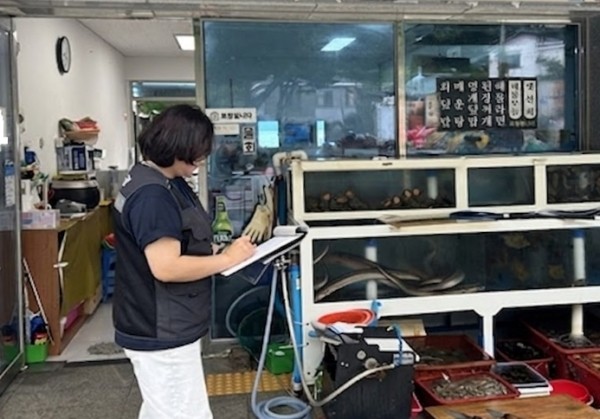
South Gyeongsang Province Completes 380 Food Radioactivity Tests in First Half of Year, All Meeting Standards
The Gyeongsangnam-do Institute of Health and Environment recently announced that in the first half of this year, it conducted radioactivity testing on agricultural products, aquatic products, and processed foods already in circulation, completing tests on 380 samples. Testing items included radioactive iodine, radioactive cesium, and tritium, with all results meeting food radiation-related standards. According to the institute, it continues to conduct radiation monitoring on foods with high market consumption to ensure the daily dietary safety of residents. Of the 380 tests completed in the first half of this year, 338 were for iodine and cesium, and 42 were for tritium, with no samples exceeding permissible levels. In terms of monitoring methods, the institute has established a...
2026-07-27