
Search Results
Keyword:Nuclear Physics
Rosatom Launches Full-Cycle Production of High-Purity Germanium Detectors
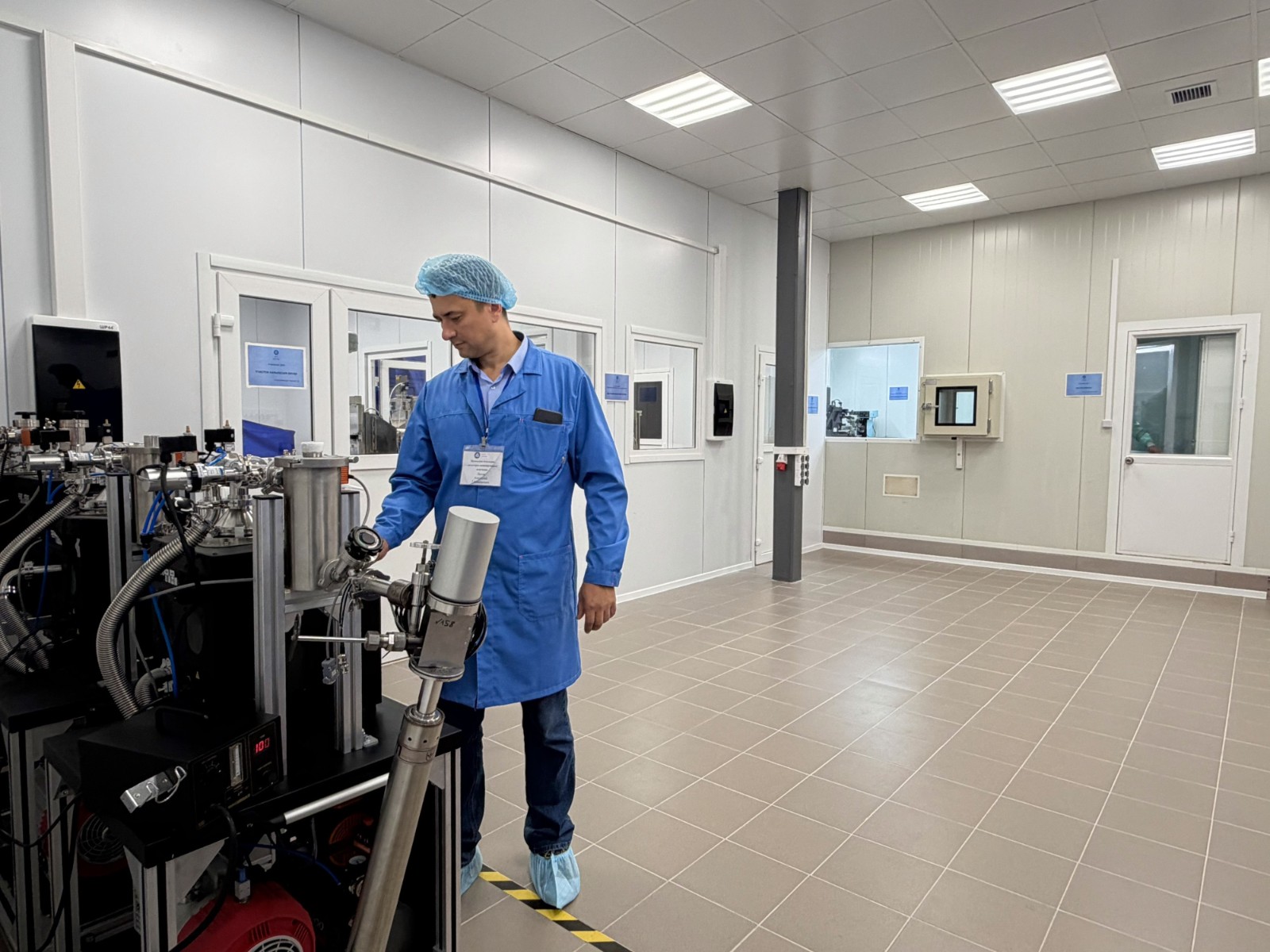
Rosatom announced on September 9 that its subsidiary enterprises have begun producing detectors made of high-purity germanium and have established a complete domestic technology chain in Russia, from deep purification of germanium raw materials and detector manufacturing to the assembly of spectrometers and measurement instruments. The final stage of this production chain is located at a new production facility of a plant under Rosatom's Automated Control Systems and Electrical Engineering Division. To meet the requirements for processing ultrapure materials, the facility has specially built a cleanroom compliant with ISO Class 8 standards to reduce contamination of germanium materials, improve product stability and extend equipment service life. High-purity germanium detectors are a key...
2026-09-10
CERN Accelerator Control Systems to Migrate to Debian 13
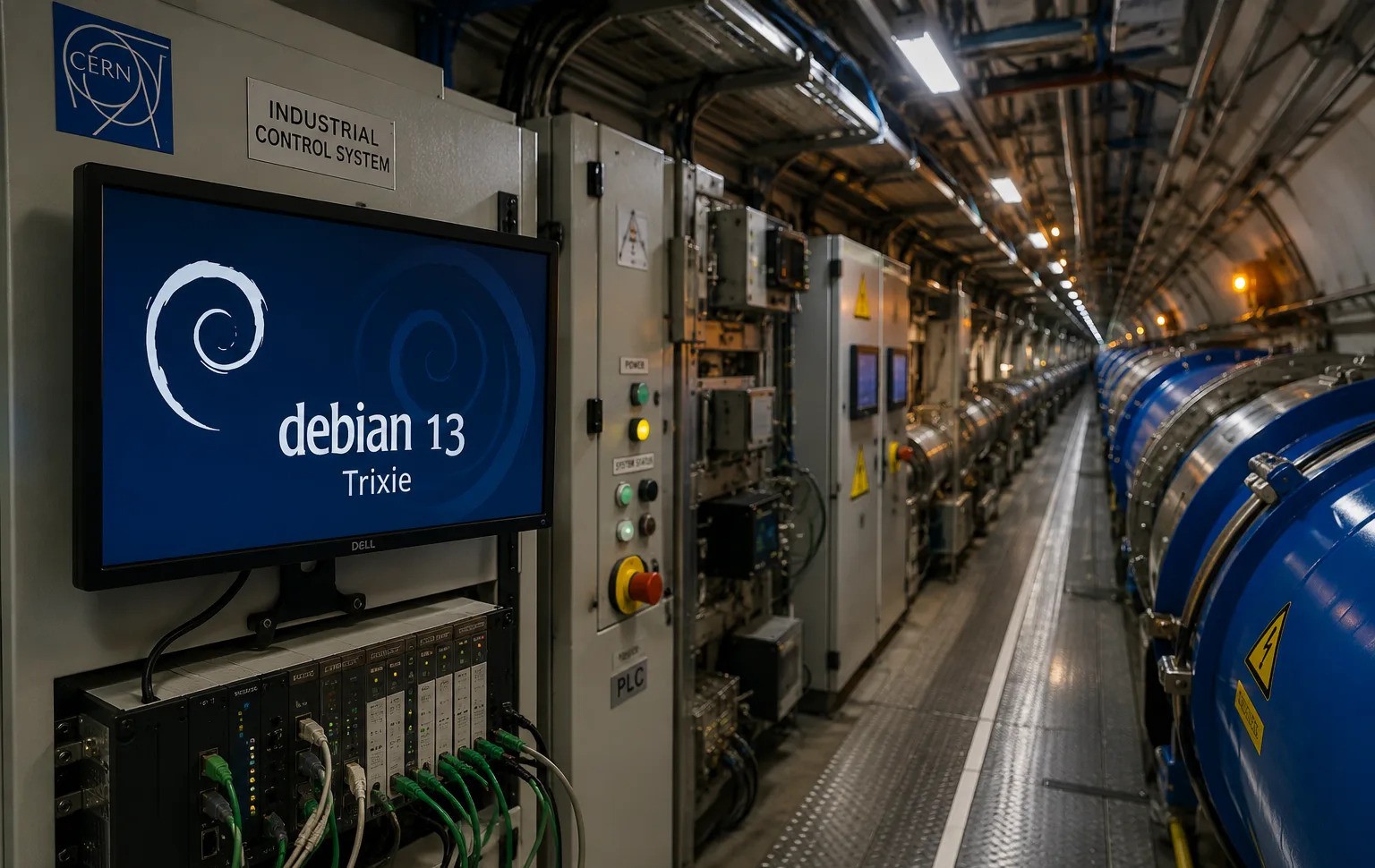
Representatives from the European Organization for Nuclear Research (CERN) stated at the MiniDebConf conference that they plan to migrate over 2,200 industrial and embedded computers used to control their accelerator complex from RHEL to Debian 13 by the end of 2026. The systems involved include control computers for the Large Hadron Collider as well as several independent experimental facilities. CERN also clarified that this migration applies only to accelerator control-related equipment and will not affect data centers or experimental systems. Those data centers and experimental systems will continue to use RHEL/AlmaLinux. According to reports, CERN engineers had previously considered migrating the relevant systems to CentOS Stream, but...
2026-09-08
IAEA Technical Meeting on Data Requirements for Ion Beam Analysis Explores Prospects for Nuclear Track Emulsion Applications
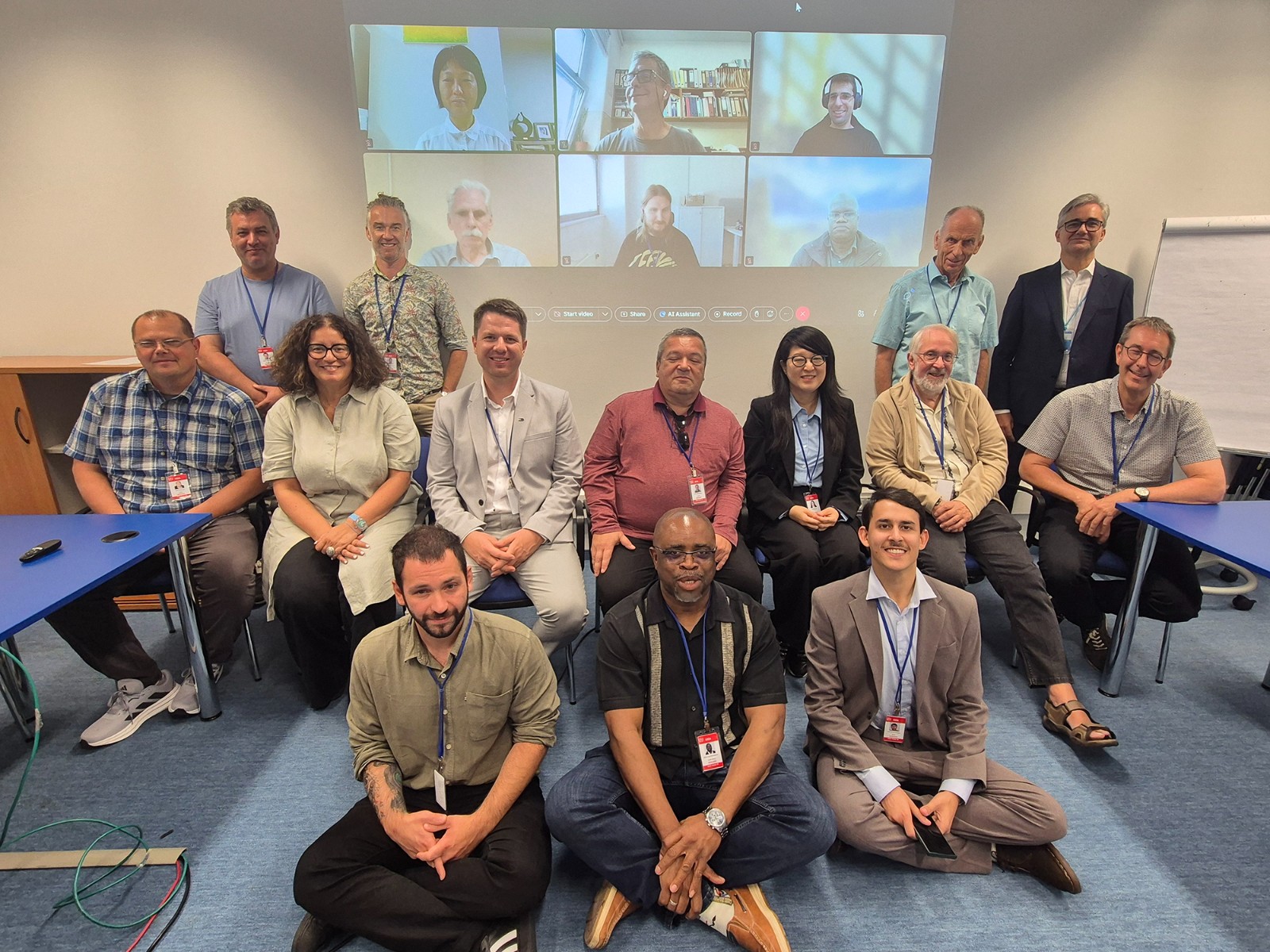
From 24 to 28 August 2026, the International Atomic Energy Agency convened a Technical Meeting on Data Requirements for Ion Beam Analysis Experiments in Vienna, Austria, attended by scientists and experts from multiple nuclear physics research institutions. The meeting discussed the nuclear data requirements for current and future applications of ion beam analysis, with attention to new experimental methods and the application of artificial intelligence and machine learning in experiments and data processing. The meeting focused on assessing whether existing nuclear data can meet the needs of ion beam analysis applications, covering areas such as elastic recoil cross sections, nuclear reaction data, and gamma-ray spectrum analysis. Experts discussed the limitations that insufficient existing data impose on quantitative analysis and uncertainty assessment...
2026-09-08
XENONnT Observes First Low-Energy Solar Neutrino-Electron Scattering Signals
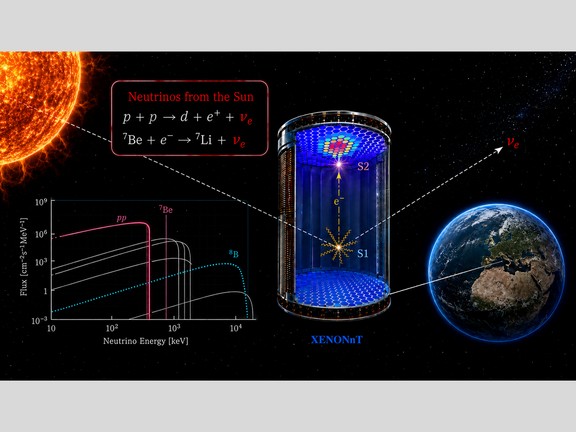
Scientists of the XENON collaboration recently announced the first observation of low-energy solar neutrino scattering off electrons in the XENONnT particle detector. The results were presented at a workshop held on August 31, 2026, at the Gran Sasso National Laboratory of the Italian National Institute for Nuclear Physics. The team of Prof. Teresa Marrodán Undagoitia and Dr. Hardy Simgen from the Max Planck Institute for Nuclear Physics played a key role in the experiment. Nuclear fusion in the Sun continuously produces vast numbers of neutrinos, with hundreds of billions passing through every square centimeter of Earth each second. Because neutrinos interact with matter extremely weakly, detecting these particles...
2026-09-07
No Evidence of Mirror Neutrons Found in Swiss PSI Ultracold Neutron Experiment
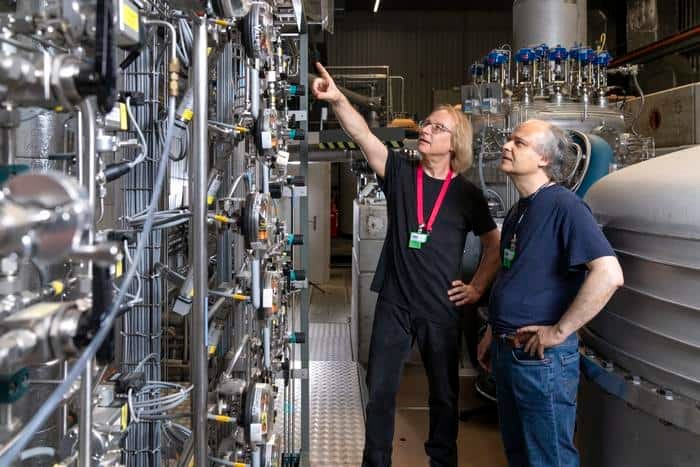
The Ultracold Neutron Physics Group at the Paul Scherrer Institute (PSI) in Switzerland recently stated that its research team found no evidence of spontaneous transformation of ordinary neutrons into mirror neutrons in a high-precision experiment. The researchers said the result essentially rules out the main parameter space previously suggested for anomalous neutron-mirror neutron oscillation signals, and also weakens the possibility that mirror neutrons could be a component of dark matter. Bernhard Lauss (left) and Géza Zsigmond examined approximately 2.5 billion neutrons at the ultracold neutron source at the Paul Scherrer Institute (PSI). They essentially ruled out the hypothesis of spontaneous transformation of neutrons into mirror neutrons. (Image courtesy of Paul Scherrer Institute PSI/Ma...
2026-09-07
Japanese research team accelerates muons to 0.3 MeV, taking a step toward the world's only muon accelerator
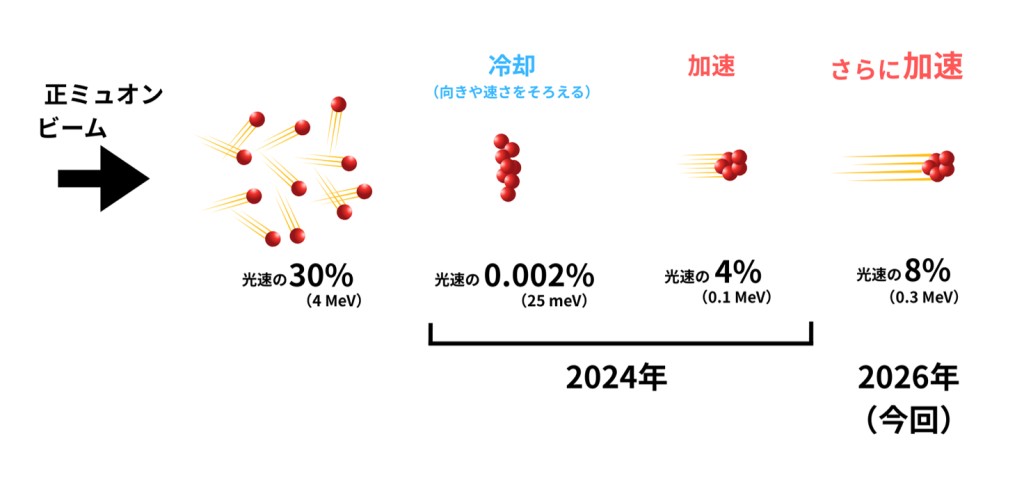
A research team comprising the J-PARC Center, High Energy Accelerator Research Organization (KEK), the University of Tokyo, Tokai National Higher Education and Research System, Nagoya University, and RIKEN recently completed muon cooling and radio-frequency acceleration experiments in the newly constructed muon acceleration experimental area at the J-PARC Materials and Life Science Experimental Facility, successfully accelerating muons to a kinetic energy of 0.3 MeV, corresponding to approximately 8% of the speed of light. Conceptual diagram of cooling and accelerating positive muon beams. By cooling positive muons with non-uniform direction and velocity, efficient high-frequency acceleration can be achieved. Muons are elementary particles similar to electrons that can be artificially produced by accelerators and are widely used in materials science, particle physics research...
2026-09-07
IAEA Meeting Focuses on Data Needs for Ion Beam Analysis, JINR Presents Progress in Nuclear Track Emulsion Research
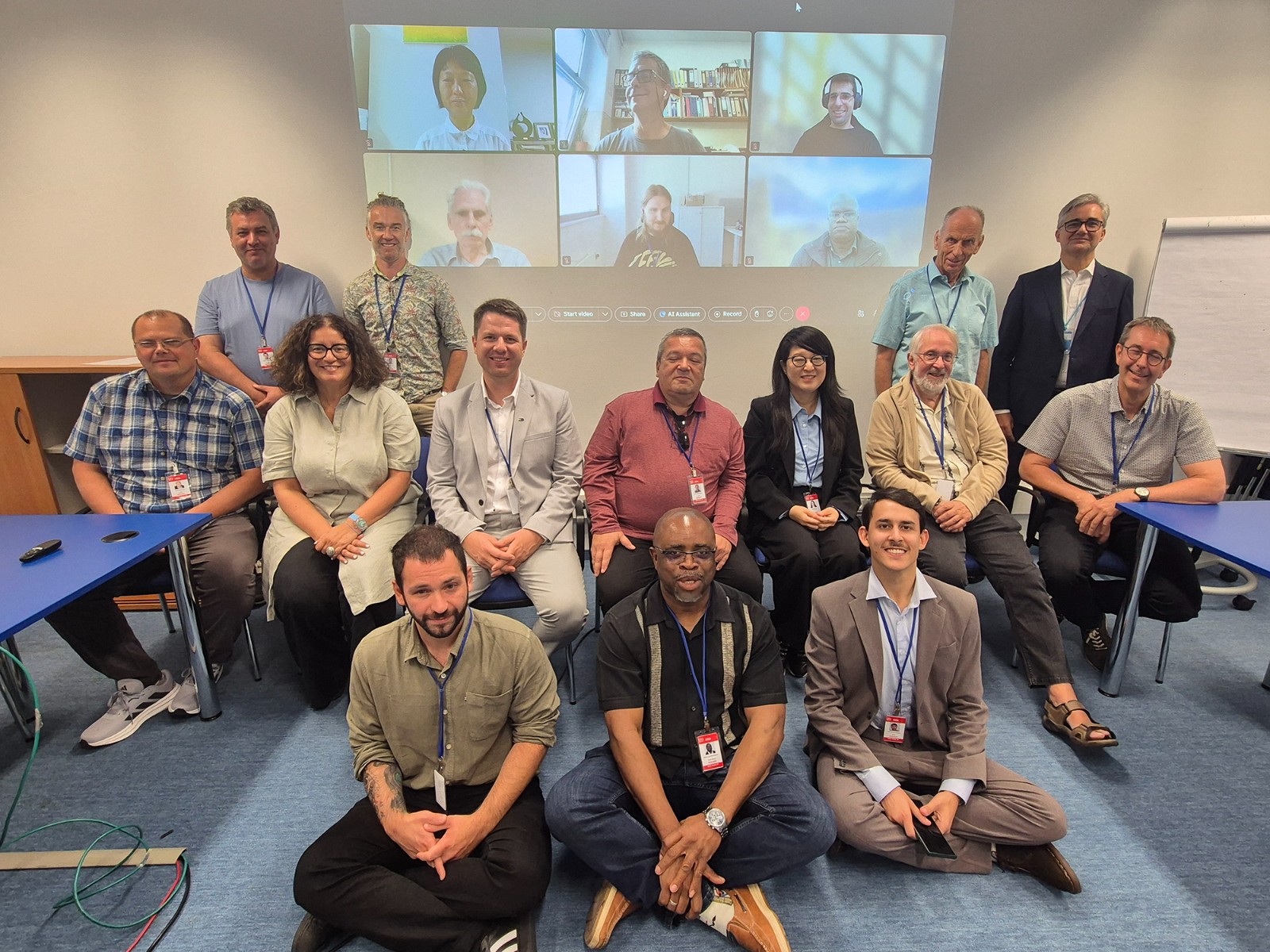
From August 24 to 28, 2026, the International Atomic Energy Agency held a Technical Meeting on Data Requirements for Ion Beam Analysis in Vienna, Austria, attended by scientists and experts from multiple nuclear physics research institutions. Andrey Zaitsev, Senior Researcher at the High Energy Physics Laboratory of the Joint Institute for Nuclear Research, delivered a report at the meeting, presenting the current performance of nuclear track emulsions and research progress related to the BECQUEREL project. The meeting focused on assessing whether existing nuclear data can meet current and future application needs of ion beam analysis, and discussed new experimental methods, as well as the application of artificial intelligence and machine learning in experiments and data processing. Topics included elastic backscattering cross sections, nuclear re...
2026-09-05

Fudan team extracts CKM matrix element |Vus| via quantum entanglement in collider experiment for the first time
On the evening of September 2, 2026, Beijing time, the team led by Luo Tao from the Institute of Modern Physics at Fudan University, together with collaborators, published a research achievement titled "Exploring baryon semileptonic decays through polarization and entanglement" in Nature. This study, for the first time in a collider experiment, utilized quantum entanglement and polarization information to extract the Cabibbo-Kobayashi-Maskawa (CKM) matrix element |Vus|, providing a new experimental pathway for precisely testing the Standard Model of particle physics. The CKM matrix describes the strength of transitions between different quarks under the weak interaction. Among them, |Vus| corresponds to the transition from the strange quark to the up quark, and its numerical precision is related to the test of the three-generation quark mixing mechanism in the Standard Model. Currently, results for |Vus| obtained from different decay processes still show discrepancies, and the unitarity test of the first row of the CKM matrix also exhibits some tension, necessitating more independent measurement methods for verification.
2026-09-04

CERN removes first giant beam absorbers from LHC, making room for High-Luminosity Large Hadron Collider upgrade
CERN recently completed a complex transport operation, moving the first two giant components from the Large Hadron Collider (LHC) tunnel to the surface, making room for the operation and upgrade of the future High-Luminosity Large Hadron Collider (HiLumi LHC). The equipment removed this time consists of two beam absorbers, also known as TAN absorbers. Each absorber is about 5 meters long and weighs about 30 tons, made of iron, copper, and marble, primarily used to protect accelerator magnets from damage caused by neutral particles generated along the beam direction during collisions. A relevant official stated that this type of equipment is among the heaviest and largest devices that need to be removed from the LHC during this shutdown period...
2026-09-03

Study Says Neutrino Laser Physically Impossible Due to Mechanism Constraints
On September 2, physicists at the Massachusetts Institute of Technology published two papers in Physical Review Letters analyzing a previously proposed neutrino laser concept. The research concludes that, due to atomic recoil effects and the fermionic nature of neutrinos, the scheme of using radioactive atomic clouds to produce laser-like neutrino beams is physically impractical. Neutrinos are elementary particles with extremely small mass and very weak interactions with ordinary matter. Earlier research had envisioned cooling radioactive atomic clouds to nanokelvin temperatures to form a Bose-Einstein condensate. According to this concept, atoms in a quantum coherent state might decay synchronously, producing neutrino beams with strong directionality through a quantum amplification effect similar to superradiance...
2026-09-03

LUX-ZEPLIN Experiment Reports Anomalous Event in Dark Matter Search, More Data Needed for Verification
On September 1, the LUX-ZEPLIN (LZ) dark matter direct detection experiment released a new analysis result: researchers recorded a single-particle interaction event in the data whose characteristics could be interpreted as a Weakly Interacting Massive Particle (WIMP) signal, but the current evidence is insufficient to confirm a dark matter discovery. The LUX-ZEPLIN main detector is shown in a surface laboratory before being installed underground. (Matthew Kapust/Sanford Underground Research Facility) The LZ experiment involves approximately 250 scientists and engineers from 39 institutions, with the detector located nearly one mile underground at the Sanford Underground Research Facility in South Dakota, USA, and managed by the U.S. Department of Energy's Lawrence Berkeley National...
2026-09-02

U.S. to Conduct Underwater Neutrino Detection Tests in Lake Superior and Vermilion Lake
From October 2026 to approximately April 2027, a team of researchers from U.S. universities and government agencies will conduct underwater neutrino tests in Lake Superior and Vermilion Lake. The project, named the Experimental Neutrino Detector (END), aims to validate a baseline detection system in natural water bodies to identify the NuMI neutrino beam produced by Fermi National Accelerator Laboratory and distinguish it from cosmic-ray backgrounds and other noise in shallow-water environments. END will place underwater neutrino detectors on the lakebed of Lake Superior where the Fermilab neutrino beamline passes through—near Two Harbors, Minnesota. The beamline will continue toward...
2026-09-02
CERN Finds Statistical Hints of Higgs Boson Pair Production
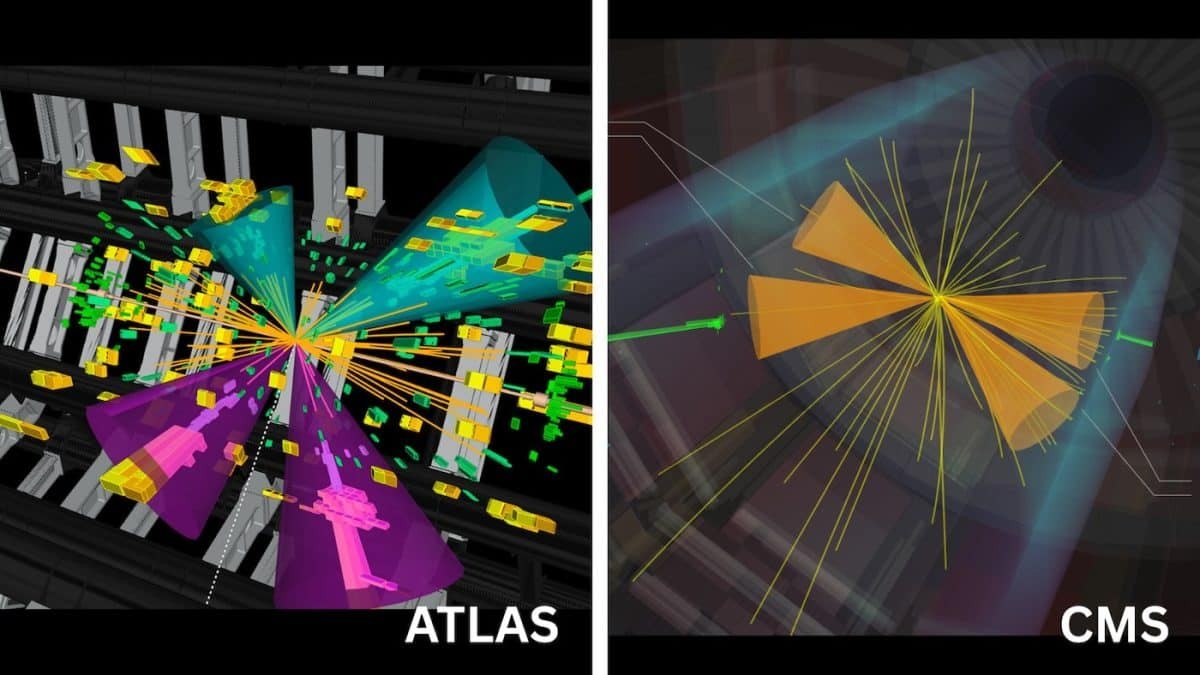
Physics teams at CERN have recently found statistical hints of Higgs boson pair production in data analysis from the Large Hadron Collider. Researchers analyzed millions of collision results over eight years at the collider, with the findings presented at the ICHEP conference and published as two preprints. The figure shows schematic diagrams of events involving the production of two Higgs bosons as observed by ATLAS (left) and CMS (right) CERN The Higgs boson was discovered in 2012, and since then physicists have continuously measured its interactions with other elementary particles to test the Standard Model's explanation of the origin of mass. However, the self-interaction of the Higgs boson has not yet been directly observed.
2026-09-02
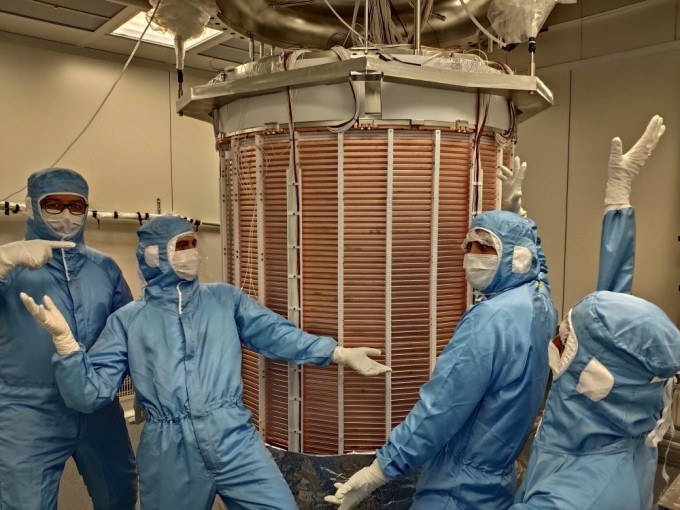
XENONnT Dark Matter Detector Captures Faintest Solar Neutrino Signal Ever Observed
September 1 news - The XENONnT dark matter detection experiment at the Gran Sasso National Laboratory in Italy has achieved new progress. The XENON collaboration research team announced that the detector has captured low-energy solar neutrino collision signals never observed before, lowering the neutrino detection energy threshold to approximately 17 kiloelectron-volts (keV). The research team's analysis indicates that the probability of the signal being merely a statistical fluctuation is less than one in a million. Neutrinos are elementary particles with no electric charge and extremely small mass, which can be produced in processes such as nuclear fusion reactions in the solar core, supernova explosions, and nuclear fission in reactors. Due to the extremely weak interaction between neutrinos and matter, vast numbers of neutrinos can pass through the Earth, which also makes detection...
2026-09-02
CERN Accelerator Complex Enters Full LS3 Shutdown for Upgrades, Paving the Way for the High-Luminosity LHC Era
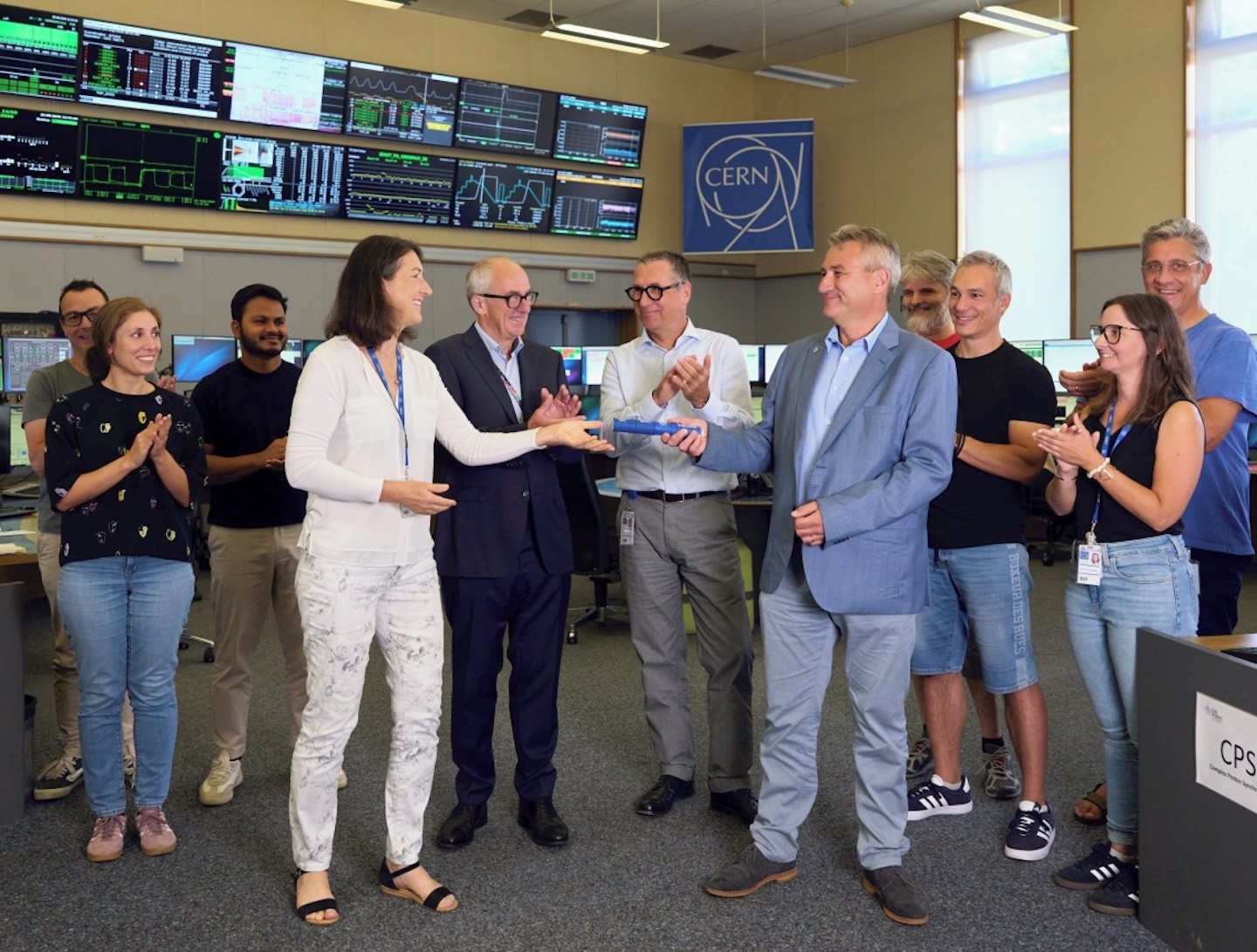
On the morning of August 31 local time, the injector complex and the Antimatter Factory at the European Organization for Nuclear Research (CERN) ceased operation after completing their final beam deliveries, officially entering the third Long Shutdown (LS3) phase. Earlier, the Large Hadron Collider (LHC) had been closed in June, marking the flagship accelerator as the first to kick off LS3 upgrade work at the center. Bettina Mikulec (left), head of the Operations Group at CERN, handed a symbolic baton—a miniature superconducting magnet from the LHC—to Jean-Philippe Tock (right), head of the LS3 Coordination Group, with CERN Director-General Mark Thomson (second from left) and Oliver Brüning (third from left), head of Accelerators and Technology, in attendance.
2026-09-01