Registration
REGISTER FOR THE CONFERENCE
Registration
REGISTER FOR THE CONFERENCE
 Apply to Exhibit
APPLICATION FOR EXHIBITION
Apply to Exhibit
APPLICATION FOR EXHIBITION
 Sponsorship
SPONSORSHIP APPLICATION
Sponsorship
SPONSORSHIP APPLICATION

NPCIL plans new design unit to support indigenous PHWR deployment
Months after India's tightly regulated nuclear power sector opened up to private capital, Nuclear Power Corporation of India Limited (NPCIL) plans to establish a new design unit to provide technical support to private companies and state governments interested in adopting indigenous nuclear reactor technology. The proposal for this business segment is still under approval. Under the plan, the new unit will offer technical support, design review, and quality assurance services to entities seeking access to Pressurized Heavy Water Reactor (PHWR) technology and related engineering expertise. With the release of draft rules under the Sustainable Harmonious Advancement of Nuclear Technology in India (SHANTI) Act, the legal framework for licensing new nuclear projects in India is expected to be further clarified, and NPCIL also hopes to reorganize its internal functions accordingly.
2026-08-27

Gujarat Plans Large Nuclear Power Project at Dhuvaran
2026-08-27

Iran Says Nuclear Fusion to Become Priority in Nuclear Industry Development
2026-08-27

Bangladesh Highlights Potential of Nuclear Technology for Maritime Applications at ATLAS Ministerial Meeting
2026-08-27

Bulgarian Environmental Groups Demand Public Review of Water Engineering Project Near Kozloduy Nuclear Power Plant
2026-08-27
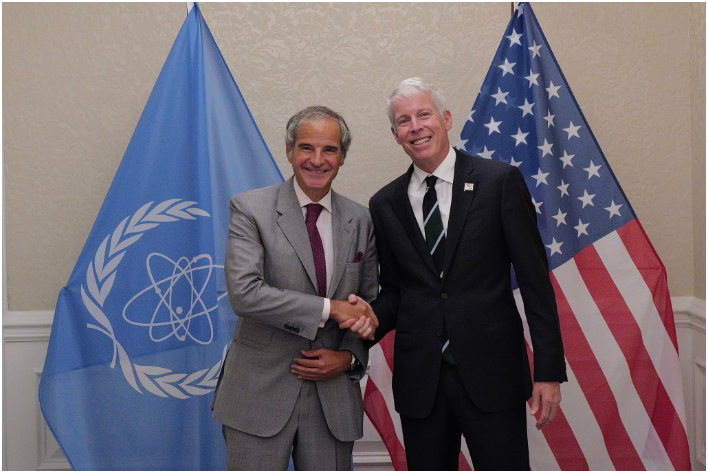
IAEA Launches ATLAS Initiative to Advance Nuclear Energy Maritime Applications
2026-08-27

Malaysia Advances Nuclear Energy Workforce Planning Capacity Building
2026-08-27
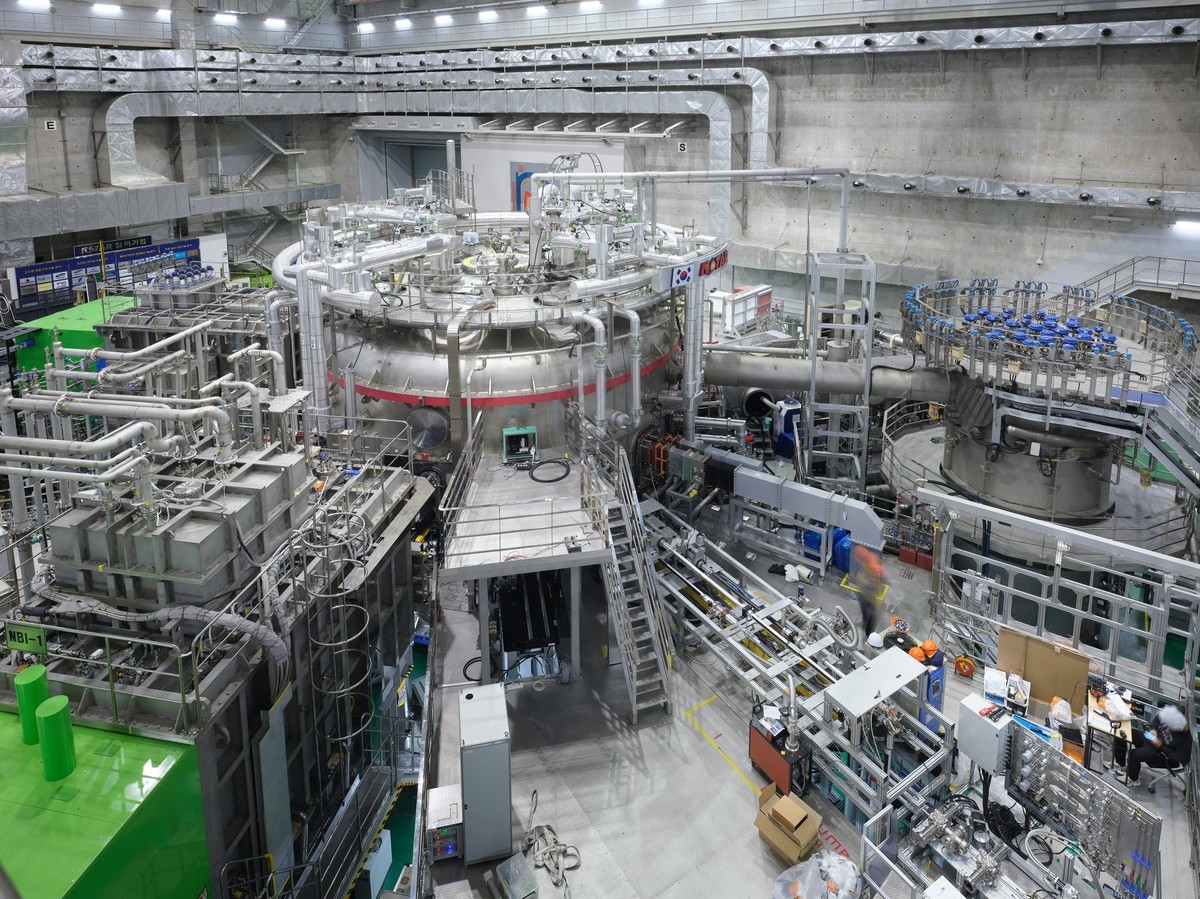
South Korea's KSTAR to Conduct Long-Pulse Fusion Research in Tungsten Environment with European Institutions
2026-08-27
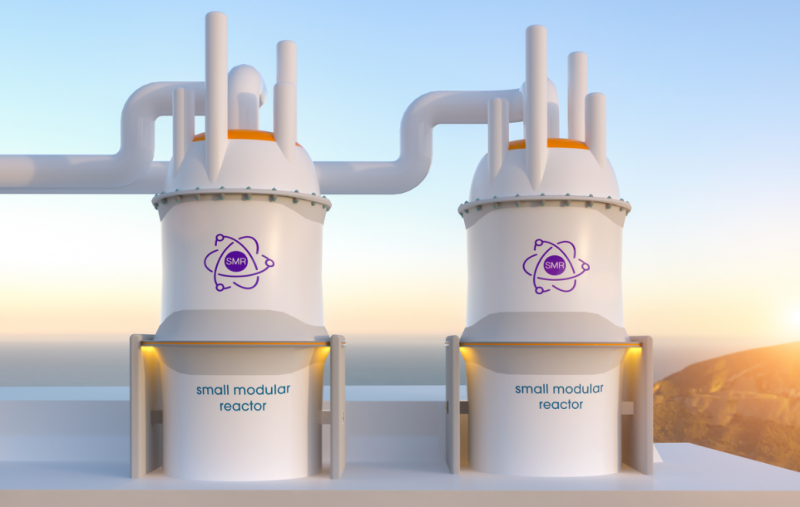
Thailand Plans to Include Small Modular Reactors in Power Development Plan, Targeting 9 GW by 2050
2026-08-27
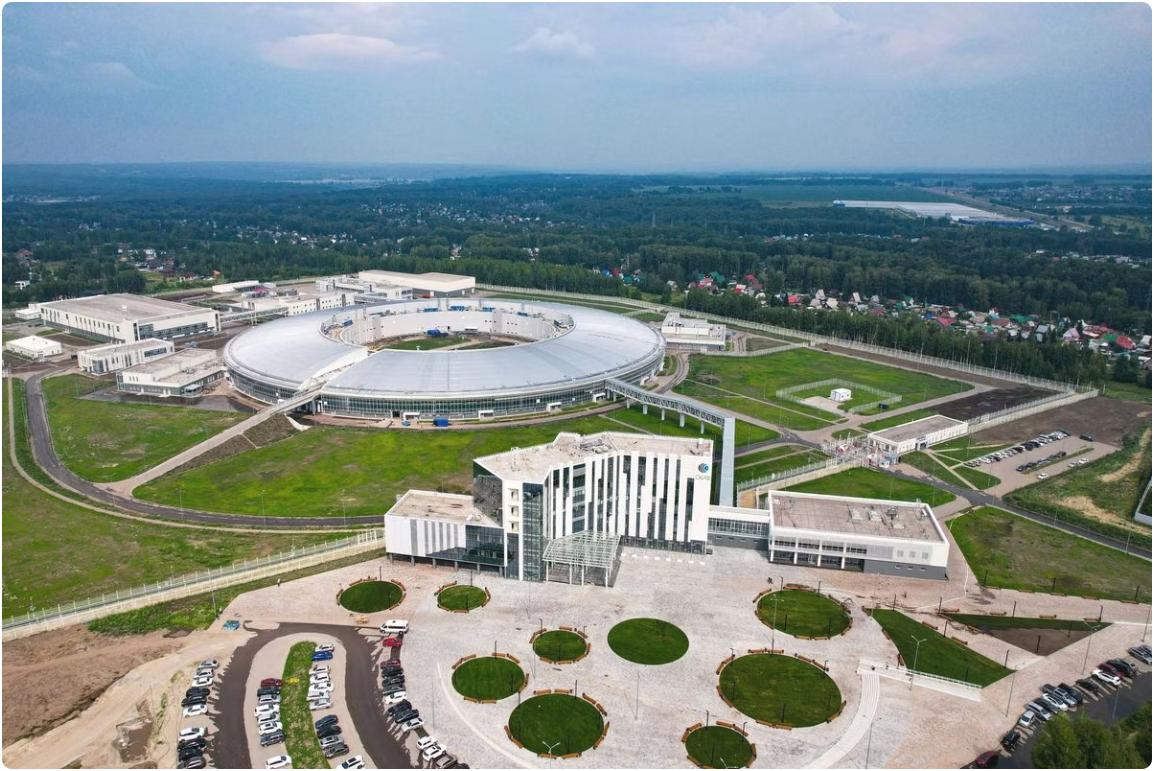
The competition to select the first research teams for the Siberian Circular Photon Source (SKIF) synchrotron in Russia is planned for the second half of 2027. Valery Bukhtiyarov, Director of the Boreskov Institute of Catalysis of the Siberian Branch of the Russian Academy of Sciences, stated at the Technoprom-2026 forum held in Novosibirsk that the first open competition will be launched in the second half of 2027. The institute is responsible for commissioning the construction of this large-scale scientific facility. Bukhtiyarov noted that SKIF is scheduled to receive synchrotron radiation and conduct its first experiments in the autumn. Construction of the facility was completed in June 2026, with an opening ceremony held in August 2026. Once operational, SKIF will use synchrotron radiation to help...
2026-08-27
Moffitt Cancer Center in Tampa, Florida, recently announced the launch of a new radiopharmaceutical program, planning to accelerate radiopharmaceutical research, development, and clinical translation through a total infrastructure investment of $600 million. The program will be advanced at the Speros campus of Moffitt Cancer Center in Pasco County, Florida. The campus spans 775 acres, and the related investment will support the development of radiopharmaceutical research and development capabilities, including the construction of new radiochemistry laboratories within the Moffitt Discovery and Innovation Center, which opens this fall. The innovation center has a building area of approximately 255,000 square feet. The program funding will also support the planned comprehensive theranostics center...
2026-08-27
U.S. space infrastructure and resources company Interlune announced on August 26, 2026, that it has successfully injected helium-4 into and released it from simulated lunar soil material, with experimental results consistent with the behavior of real lunar samples collected by the Apollo program. The company stated that this capability can simulate nearly 15,000 years of solar wind exposure on the lunar surface in approximately 4 hours, providing a material basis closer to real conditions for testing lunar resource development equipment on Earth. The experiment focused primarily on ilmenite. According to studies of Apollo mission samples, ilmenite is the main helium-bearing mineral in lunar soil. Interlune formed a plasma by ionizing helium gas in a vacuum environment, then...
2026-08-27
From August 21 to 22, Professor Sun Long from the PET Center of the First Affiliated Hospital of Xiamen University was invited to the Department of Nuclear Medicine at the Affiliated Hospital of Southwest Medical University for academic exchange, and on the following day provided on-site guidance for the hospital's first PET/CT-guided interventional puncture procedure. The successful completion of this procedure marks a new clinical practice milestone for the department in the field of interventional nuclear medicine. On August 21, Professor Sun Long delivered a special lecture titled "Exploration of Clinical Integrated Application of Diagnostic Nuclear Medicine and Interventional Nuclear Medicine Based on the PET Platform," focusing on how the PET platform extends from disease diagnosis and precise localization to interventional diagnosis and treatment. Drawing on clinical practice and typical cases, he introduced the application of interventional nuclear medicine in lesion...
2026-08-27
To further enhance the technical support capability for marine radiation environment monitoring and promote scientific research innovation and practical application in marine radiation monitoring and emergency response, the National Marine Environmental Monitoring Center (hereinafter referred to as the Marine Center) recently conducted a technical exchange with the Jinan Zhongke Nuclear Technology Research Institute. The two sides engaged in comprehensive discussions on technology development, equipment application, data analysis, and standards development, focusing on the new situation and new requirements facing marine radiation environmental safety. The Marine Center systematically presented its operational system, technical capabilities, and practical experience in the field of marine radiation monitoring and emergency response. The Jinan Zhongke Nuclear Technology Research Institute highlighted its core...
2026-08-27
The first domestically produced multi-ion therapy device HiTS400, independently developed by Lanzhou Taiji and installed at Shandong Cancer Hospital, recently completed phased joint commissioning. After one week of operational testing, all beam parameters of the device met or exceeded contractual requirements, laying the foundation for subsequent clinical registration work. According to reports, HiTS400 is a medical ion accelerator independently developed by Lanzhou Taiji with full intellectual property rights. It can stably deliver four ion species: C^6+, H^+, He^2+, and O^8+, and is equipped with multi-angle fixed treatment nozzles and a lightweight superconducting heavy-ion rotating gantry, integrating modulated scanning technology to advance the development and application of multi-ion combined therapy devices. On August 14, 2026, the device obtained an amendment to its Radiation Safety License from the Ministry of Ecology and Environment, granting qualification for commissioning and operation. In the early morning of August 20, the equipment achieved stable acceleration and precise extraction of carbon ion beams. Measured data show that the particle number after synchrotron acceleration reached 3.26E9 ppp, the terminal particle number reached 3.02E9 ppp, the extraction efficiency was 92%, and beam stability was no less than 95%.
2026-08-26
The U.S. Department of Energy Oak Ridge Environmental Management Office (OREM) and its contractor Isotek Systems completed installation of a new analytical laboratory at Oak Ridge National Laboratory (ORNL) on August 25, 2026. The laboratory will support ORNL's highest-priority environmental cleanup project and accelerate delivery of critical medical isotope materials for cancer treatment research. Isotek Systems is responsible for removing the U.S. uranium-233 inventory stored at Oak Ridge National Laboratory. Uranium-233 was primarily developed in the 1950s and 1960s, initially intended for use as nuclear reactor fuel, but was later proven unsuitable as a commercial fuel source...
2026-08-26