Registration
REGISTER FOR THE CONFERENCE
Registration
REGISTER FOR THE CONFERENCE
 Apply to Exhibit
APPLICATION FOR EXHIBITION
Apply to Exhibit
APPLICATION FOR EXHIBITION
 Sponsorship
SPONSORSHIP APPLICATION
Sponsorship
SPONSORSHIP APPLICATION

Adani Group Enters Nuclear Power, India's Energy Landscape May See Transformation
The Adani Group plans to triple its power generation capacity by 2035, becoming the largest private power producer. Currently, feasibility studies at Bina and Nigari are progressing intensively, and the CEO of Adani Power has also hinted at related information. Although no official announcement has been made, the company has clearly stated that it is actively evaluating the relevant possibilities. At present, only two state-owned enterprises in India produce nuclear power: the Nuclear Power Corporation and NTPC Limited. The former plans to develop 30 GW of nuclear capacity, while the latter is also preparing to develop 30 GW. Adani Power has an operating capacity of over 3.2 GW and is currently conducting evaluations...
2026-08-02
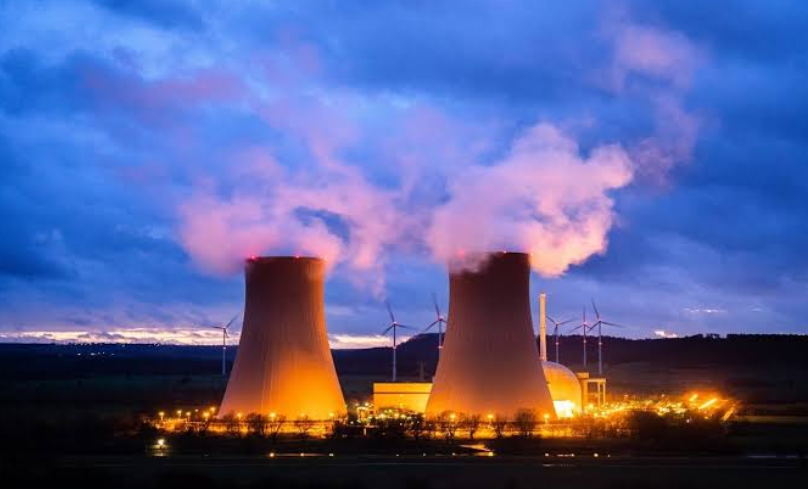
Four new units at India's Kudankulam nuclear power plant delayed by three years, cost overrun of 55% to $14.4 billion
2026-08-02

Nuclear Emergency Seminar Held in Angra dos Reis, Brazil to Strengthen Risk Prevention and Control
2026-08-02
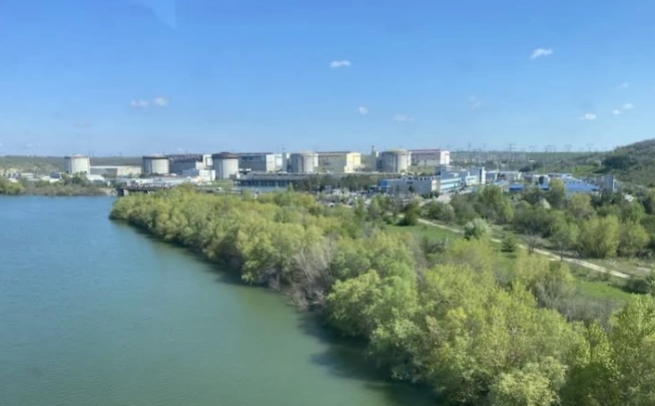
Romanian Army Deploys on the Danube to Protect Nuclear Power Plant Operations
2026-08-02
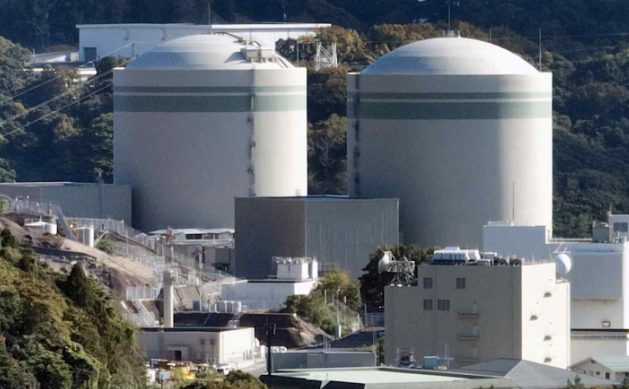
Japan's Nuclear Plant Renewal Faces Labor Shortage Challenges
2026-08-02
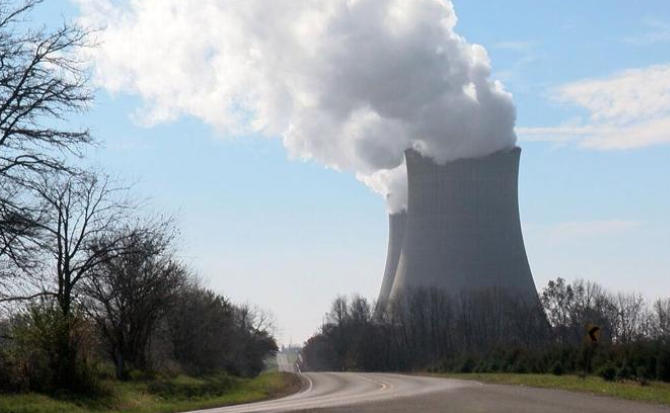
Illinois Restarts Nuclear Power in Bid to Address Energy Challenges
2026-08-02

Romania Stands by NuScale SMR Project Amid Growing Controversy
2026-08-02

Italy Moves to Approve Advanced Nuclear Legal Framework, Paving Way for Small Modular Reactors
2026-08-02
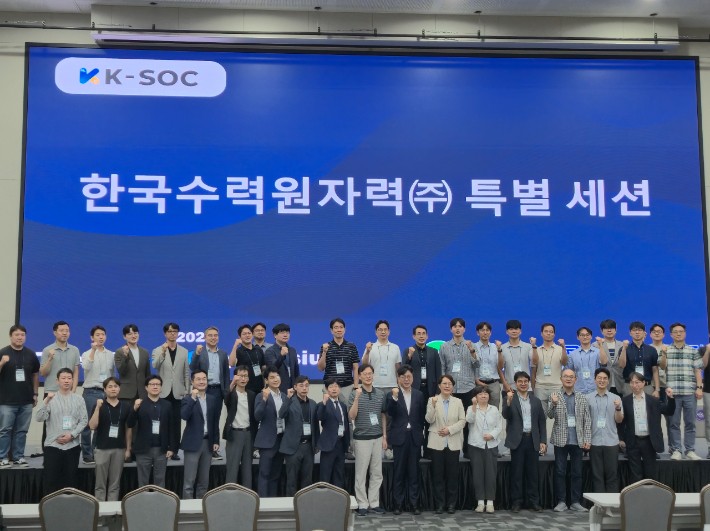
KHNP Unveils Research Findings on High-Temperature Steam Electrolysis Demonstration Planning Integrated with Nuclear Power Plants
2026-08-02
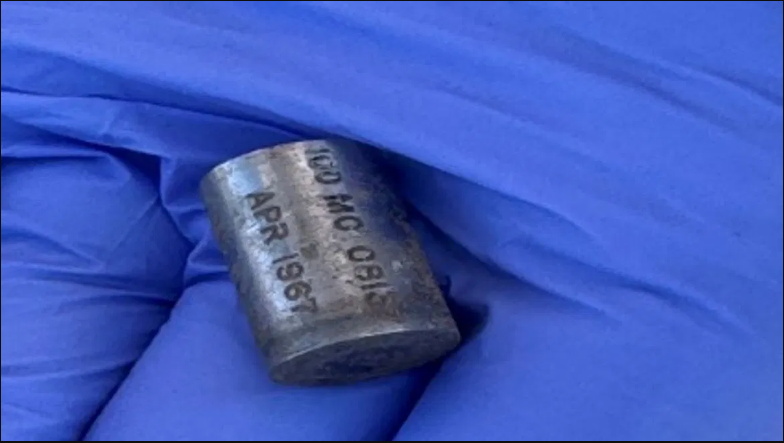
According to the Texas Department of Public Safety, a corporal with the department recently discovered a buried cesium-137 sealed radioactive source with an activity of 100 millicuries during a routine patrol near a roadway in Midland County. The incident resulted in no injuries or radiation contamination, and public safety was not threatened. On July 24 local time, the corporal, assigned to the department's Radioactive/Nuclear Threat Detection Section, was patrolling near South County Road 1210 when the vehicle-mounted radiation detection system activated. He then used other detection equipment to survey the surrounding area and traced the radiation signal to an underground location. To ensure safe disposal, he requested assistance from local, state, and federal...
2026-08-02
A research team at the Czech Radiocarbon Laboratory (CRL) of the Nuclear Physics Institute of the Czech Academy of Sciences has developed a minimally invasive sampling method for dating carbon-based rock art, enabling the acquisition of materials needed for radiocarbon dating with virtually no damage to the rock art's appearance. After sampling, the outline of the rock art remains intact, with only a slight lightening of color in the sampled area. This method provides a new technical pathway for dating cave paintings of historical value. In the past, sampling of cave paintings was often strictly restricted for heritage conservation reasons, which also hindered related chronological determination efforts. The new method, through a gentler sampling approach, enhances the feasibility of dating carbon-based rock art while maximizing the preservation of its scientific and cultural value...
2026-08-02
According to a South Korean diplomatic source on July 31, South Korea and the United States have yet to finalize the schedule for the second working-level consultation, and the follow-up talks originally planned for July have not yet taken place. The consultations are aimed at implementing the security-related agreements outlined in the joint statement issued at last year's summit between the two countries, including South Korea's introduction of nuclear-powered submarines and the revision of nuclear cooperation arrangements regarding uranium enrichment and spent nuclear fuel reprocessing. The two sides previously held their first working-level consultation in Seoul on the 2nd and 3rd of last month. U.S. Under Secretary of State for Political Affairs Allison Hooker led a cross-agency delegation to South Korea at the time to discuss the implementation of the security agreement with the South Korean side. Observers...
2026-08-02
The research team from the Department of Radiation Oncology at Kangbuk Samsung Hospital in South Korea announced on July 31 that they have completed validation of the geometric accuracy and respiratory tracking performance of a new-generation surface-guided radiation therapy system. The research findings have been published in the latest issue of the international academic journal *Radiation Physics and Chemistry*. In breast cancer radiotherapy, the deep inspiration breath-hold technique is commonly used in clinical practice to reduce radiation exposure to the heart and lungs. Traditional procedures typically require tattoo marks or drawn guide lines on the patient's skin surface, along with wearing sensors to monitor respiratory motion, which somewhat compromises treatment convenience and patient comfort. The new-generation surface-guided radiation therapy system validated in this study utilizes 3D stereoscopic cameras and thermal imaging technology...
2026-08-02
From July 29 to 30, 2026, a research team from the Henan Provincial Ecological Environment Monitoring and Safety Center visited Wancheng District, Nanyang City, to conduct special supervision and inspection on nuclear and radiation safety for randomly selected nuclear technology utilization units within the jurisdiction, accompanied throughout by the Wancheng Branch of the Nanyang Municipal Ecological Environment Bureau. The inspection focused on aspects including institutional development, personnel management, on-site protection, equipment operation, ledger documentation, emergency management, testing and evaluation, and system data of radiation units, with emphasis on identifying radiation safety risks and hidden dangers. The inspection team conducted detailed verification of radiation safety license applications to confirm whether relevant units carried out radiation operations in accordance with laws and regulations; it also examined the establishment of radiation safety management organizations, job responsibility implementation, certification of radiation workers, annual training, and assessment management.
2026-08-02
Brazilian researchers are developing a timber traceability tool based on stable isotope analysis to help identify the origins of illegally logged wood in the Amazon region. Illegal logging is reported to be one of the major causes of deforestation in the Amazon. Local environmental and law enforcement agencies currently typically determine timber origins through plant anatomical characteristics, tree species distribution, and official records such as forest origin documents, but these methods are not always sufficient to prove that timber comes from legal areas. A research team at the Center for Nuclear Energy in Agriculture, University of São Paulo (CENA-USP) is mapping the isotopic distribution of Amazon trees. The method analyzes the ratios of different isotopes of elements such as oxygen, carbon, nitrogen, and strontium in wood cellulose to narrow down the potential harvesting areas of timber. Team leader Luiz Antonio Martinelli stated that stable isotopes are difficult to forge artificially, offering the potential to provide federal police with a more tamper-resistant technical tool.
2026-08-02
An international research team led by scientists from the Facility for Rare Isotope Beams (FRIB) at Michigan State University has recently identified the source of the large number of low-energy gamma rays emitted by zinc-70 nuclei. The study suggests that magnetic transitions occurring within the nucleus are the key reason for this anomalous signal enhancement. The findings were published in the journal Nature under the title "Magnetic character of the low-energy enhancement in 70Zn." Gamma rays are electromagnetic radiation released when excited atomic nuclei transition to lower, more stable energy levels. For a long time, scientists have observed an anomalous increase in the number of low-energy gamma rays in some atomic nuclei, known as the low-energy enhancement (LEE), but its physical mechanism had remained unclear...
2026-08-02