
Search Results
Keyword:IC

Princeton University and PPPL Launch Collaborative Graduate Program in Plasma Science and Technology
The Princeton Plasma Physics Laboratory (PPPL), a U.S. Department of Energy (DOE) facility, and Princeton University recently launched the Collaborative Research Program in Plasma Science and Technology (CRPST). This two-year program, which began on July 1, 2026, aims to establish a more formal joint mentorship mechanism and expand opportunities for Princeton University graduate students in engineering, physics, and related disciplines to participate in research at PPPL. Under the program, selected students will be jointly mentored by a PPPL scientist and a Princeton University faculty member. Students will work at PPPL at least one day per week, participate in relevant research groups, and use laboratory facilities to advance their projects...
2026-07-30

SuperCritical Obtains Exclusive License for Uranium Extraction from Seawater Technology, Plans Industrial Deployment in the United States
SuperCritical Materials Corp., a U.S. developer of nuclear fuel and critical materials infrastructure, announced on July 24 that it has obtained an exclusive license from Battelle Memorial Institute for a patented uranium adsorbent technology used to extract uranium from seawater. The technology was originally developed by Pacific Northwest National Laboratory (PNNL) and its research partners. Battelle Memorial Institute currently manages eight national laboratories for the U.S. federal government. SuperCritical stated that the technology has been verified to extract uranium from seawater...
2026-07-30
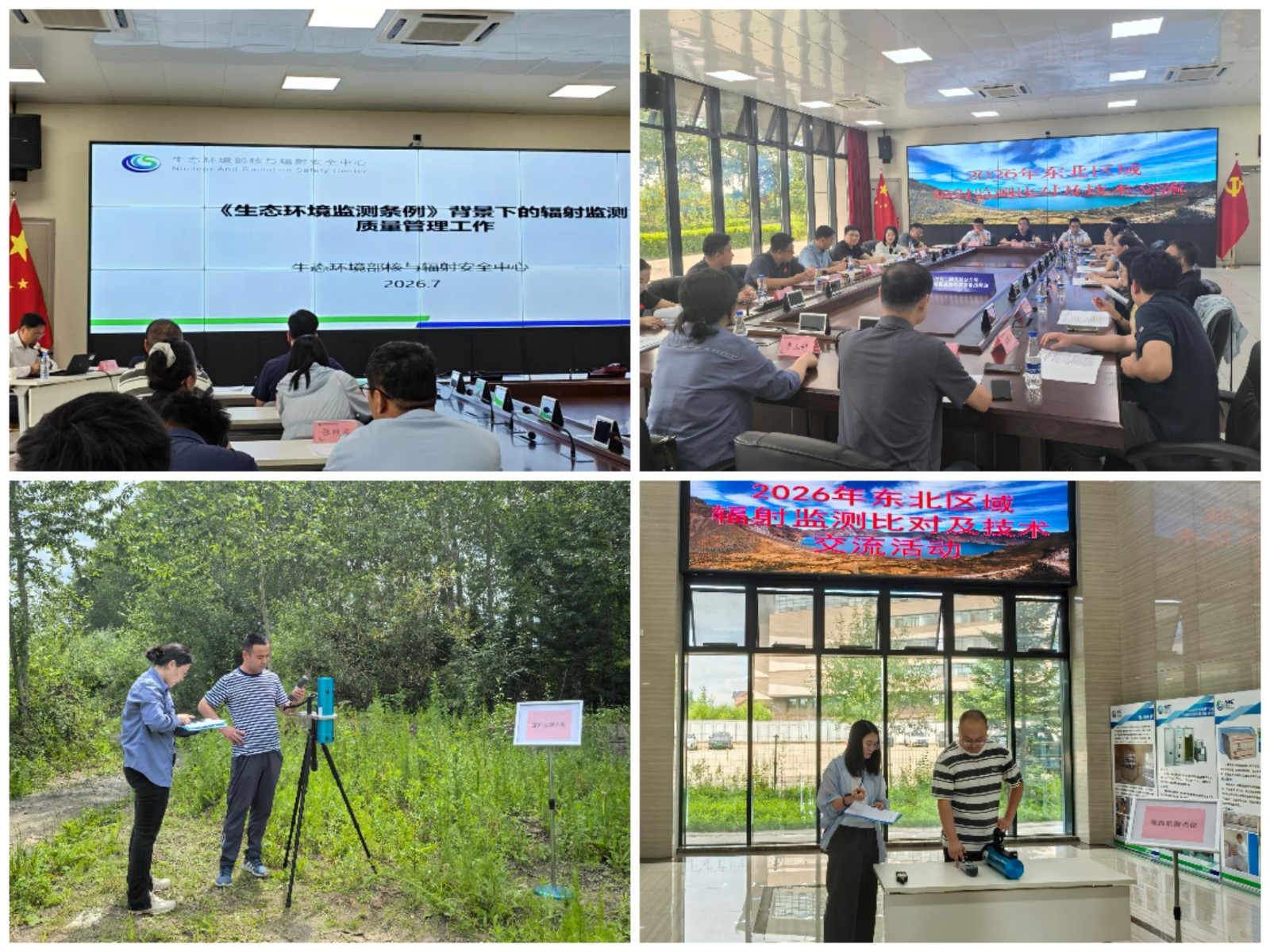
Northeast China Regional Nuclear and Radiation Safety Supervision Station of the Ministry of Ecology and Environment Organizes 2026 Northeast Regional Radiation Monitoring Comparison and Technical Exchange Activity
To further enhance the radiation monitoring capability and level in Northeast China and deepen technical exchanges and cooperation in radiation monitoring within the region, the Northeast China Regional Nuclear and Radiation Safety Supervision Station of the Ministry of Ecology and Environment (hereinafter referred to as the Northeast Supervision Station), relying on the Northeast Base of the Nuclear and Radiation Safety Center of the Ministry of Ecology and Environment, recently organized the 2026 Northeast Regional Radiation Monitoring Comparison and Technical Exchange Activity. Frontline monitoring technical experts from units including the Nuclear and Radiation Safety Center of the Ministry of Ecology and Environment, the National Marine Environmental Monitoring Center, provincial-level radiation monitoring institutions of the three northeastern provinces, Liaoning Hongyanhe Nuclear Power Co., Ltd., and CNNC Liaoning Nuclear Power Co., Ltd. participated in this event. This technical exchange activity closely aligns with the actual...
2026-07-30
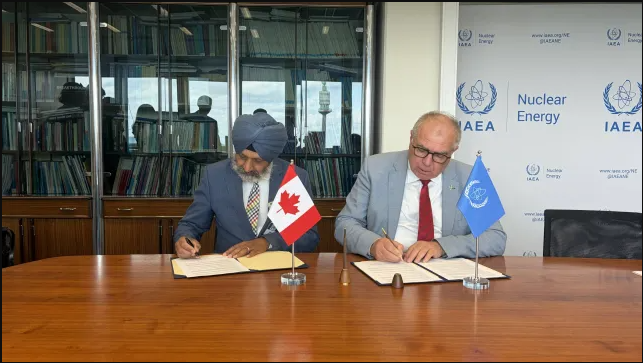
IAEA and University of Saskatchewan Sign Agreement to Strengthen Nuclear Talent Development
The International Atomic Energy Agency (IAEA) and the University of Saskatchewan recently signed a "Practical Arrangement" to enhance cooperation in nuclear knowledge management, nuclear energy education, research support, and talent development. The agreement was signed on July 24 at IAEA headquarters. Baljit Singh, Vice-President of the University of Saskatchewan, and Mikhail Chudakov, IAEA Deputy Director General and Head of the Department of Nuclear Energy, signed the "Practical Arrangement" on July 24 at IAEA headquarters. (Photo: IAEA) Under the agreement, the two parties will collaborate through training workshops, expert missions, and educational material development...
2026-07-30

American Fusion Company Launches Texatron Test Program at Texas Tech University
American Fusion Company announced on July 29 that, after completing preliminary laboratory preparations and verifying the remote ignition system, the company has launched the Texatron test program at Texas Tech University. The company is the developer of proprietary technologies related to the Texatron fusion engine. According to the company, a total of seven members of the American Fusion engineering and scientific team conducted a one-day preparation session at the research facilities of the Department of Physics and Astronomy at Texas Tech University. The activities included laboratory environment setup, inspection of instrumentation and supporting systems, system interface verification, and preparation for Texatron platform operation...
2026-07-30
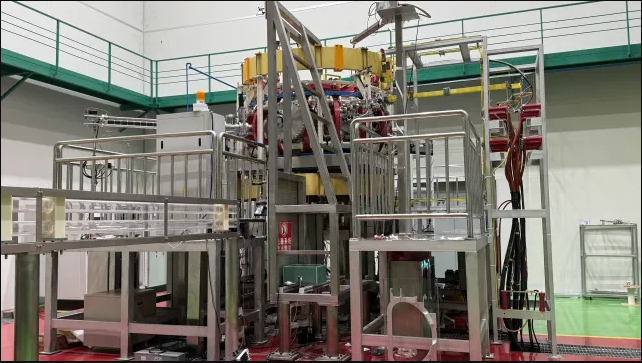
IAEA Launches New Project to Advance Research Network on Small and Medium-Sized Fusion Devices
The International Atomic Energy Agency recently launched a new Coordinated Research Project, aiming to further strengthen the global network of small and medium-sized fusion devices, supporting multinational coordinated experiments, diagnostic technology development, and personnel training, providing a platform for cultivating the next generation of fusion researchers. The Tokamak TT-1 device at the Thailand Institute of Nuclear Technology (TINT) has long participated in the IAEA Coordinated Research Project on the network of small and medium-sized fusion devices, contributing to international cooperation, research, and capacity building. (Photo: JP Cayol/IAEA) This project builds upon a previous five-year collaborative research program. The previous project was named Small and Medium-Sized Magnetic Confinement...
2026-07-30
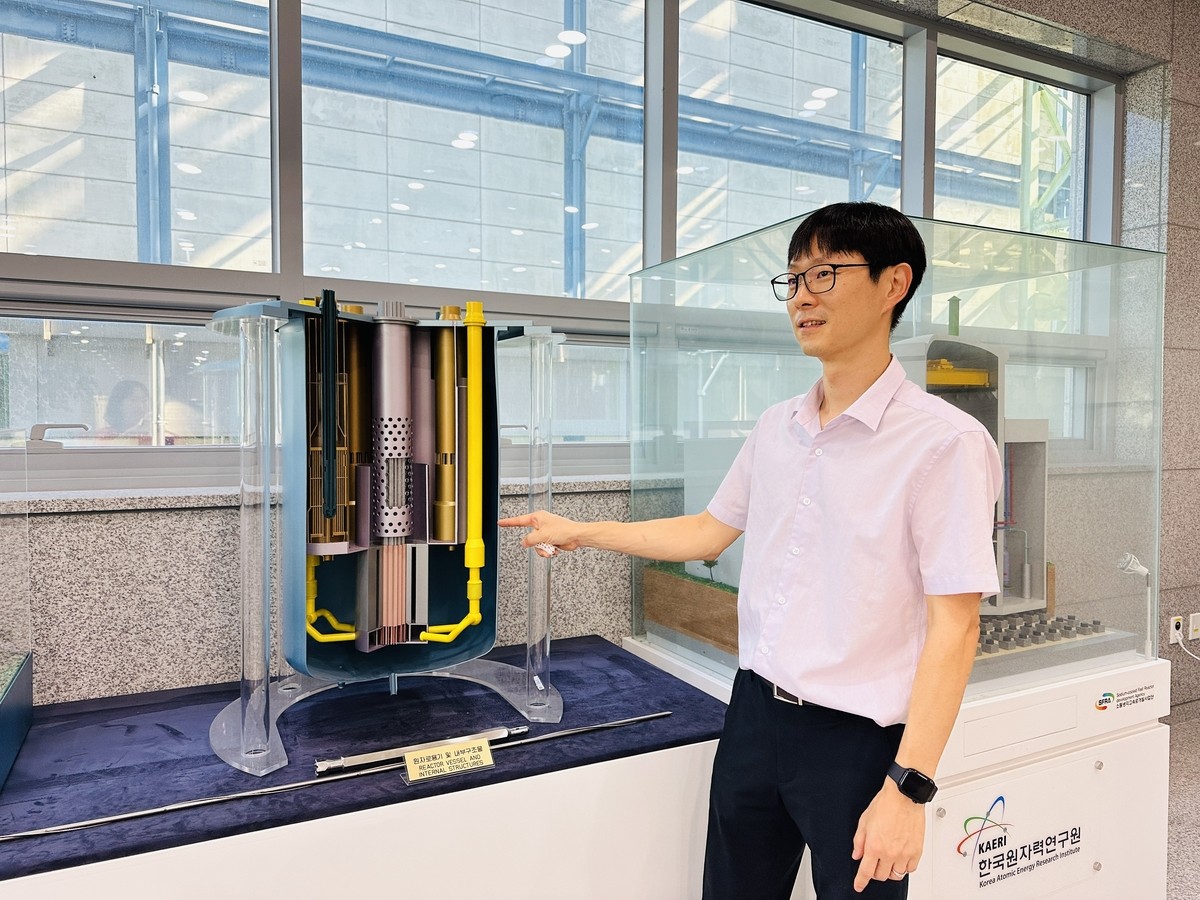
South Korea launches design of 250 MWe sodium-cooled fast reactor Helios
The Korea Atomic Energy Research Institute (KAERI), in collaboration with Hyundai Engineering & Construction and KEPCO E&C, has initiated the design of the next-generation sodium-cooled fast reactor Helios. The reactor is planned to have an electrical output of 250 MWe, based on the existing 100 MWe-class sodium-cooled fast reactor Salus-100 design, targeting large-scale power consumption applications such as AI data centers and industrial parks. Lee Je-hwan, head of the Fourth Generation Reactor Technology Development Department at KAERI, stated that future demand for large-scale carbon-free electricity around AI data centers and industrial parks...
2026-07-30
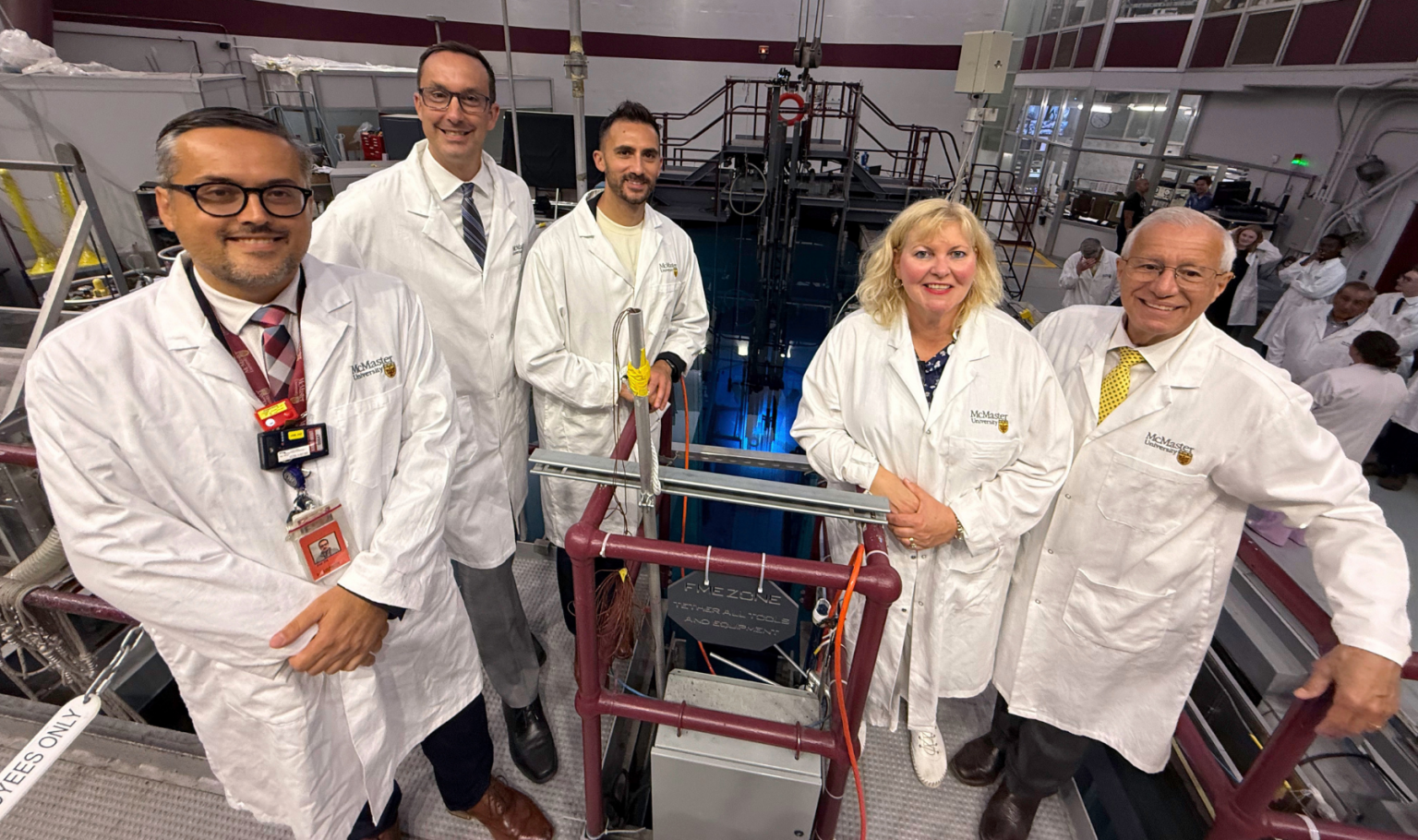
Ontario Invests Additional $4.6 Million in McMaster Nuclear Reactor to Expand Medical Isotope Production Capacity
The Government of Ontario, Canada, recently announced an additional investment of $4.6 million in the McMaster Nuclear Reactor to expand the production capacity of life-saving medical isotopes, supporting more cancer patients in accessing the critical radioisotopes needed for diagnosis and treatment. From left to right: Josip Zikic, Chief Nuclear Officer at McMaster University; Nolan Quinn, Minister of Colleges and Universities, Research Excellence and Security; Stephen Lecce, Minister of Energy and Mining; Susan Tighe, President and Vice-Chancellor of McMaster University; and Victor Fedeli, Minister of Economic Development, Job Creation and Trade. (Georgia Kirkos/McMaster University) This investment builds on a previous $18 million...
2026-07-30
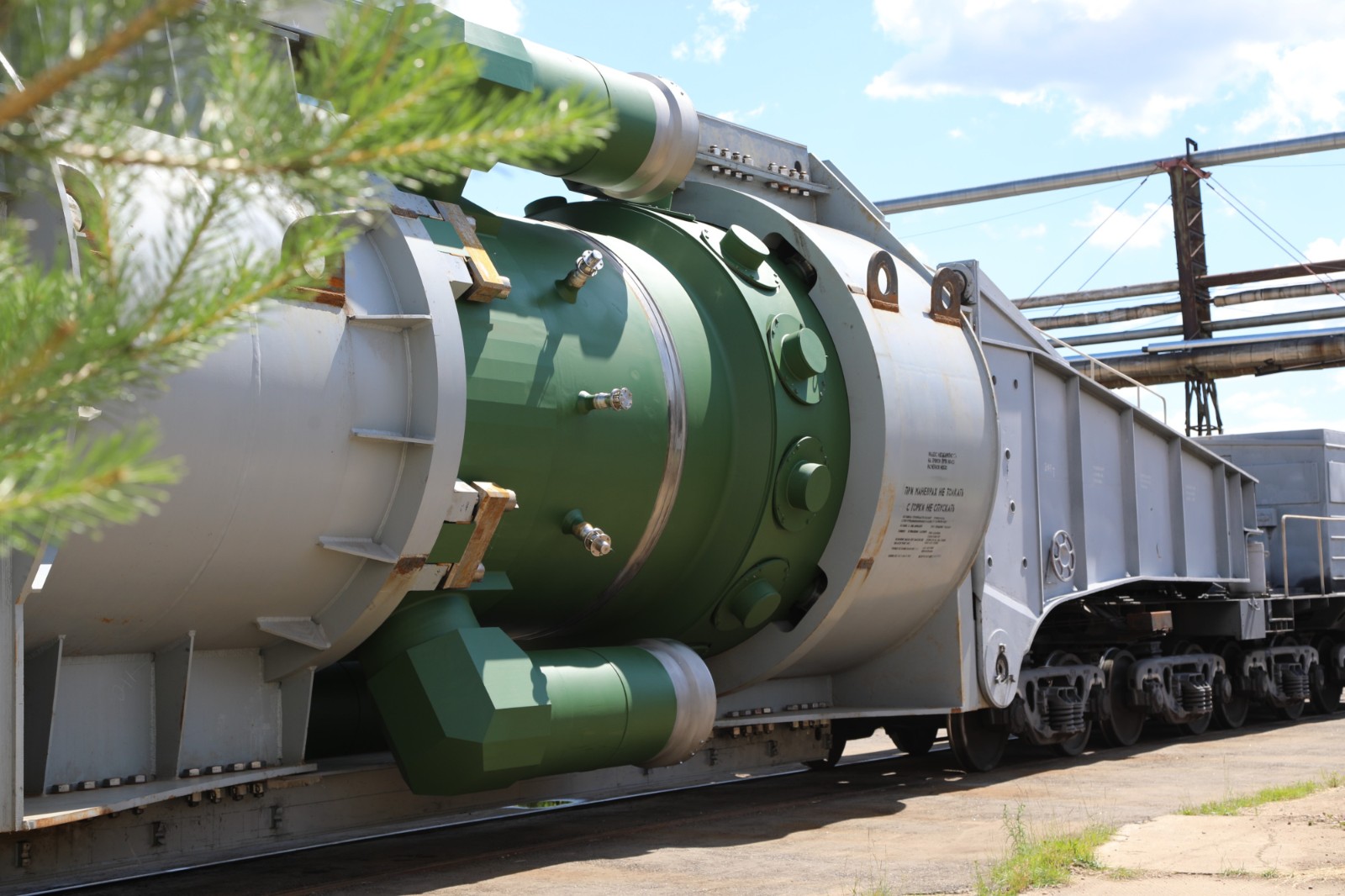
Russia Completes Manufacturing of Second RITM-200 Reactor Unit for Leningrad Nuclear-Powered Icebreaker
On July 29, Rosatom's ZiO-Podolsk Mechanical Plant in the Moscow Region completed the manufacturing of the second RITM-200 reactor unit for the Leningrad nuclear-powered icebreaker. With this, the manufacturing of all major equipment for the reactor compartment of this under-construction 22220-type universal nuclear-powered icebreaker has been fully completed. The Leningrad nuclear-powered icebreaker began construction in January 2024. The naming of the vessel is linked to the 80th anniversary of the lifting of the Siege of Leningrad, with veterans and survivors of the siege proposing that this new-generation nuclear-powered icebreaker be named Leningrad. Following Rosatom's tradition of naming reactor units, the two completed reactor units of the Leningrad have been named "Iskra" and "Grom," commemorating the operations that broke and ultimately lifted the Siege of Leningrad between 1943 and 1944.
2026-07-30

Japan's Nuclear Regulation Authority to Revise Seismic Review Guidelines for Nuclear Power Plants
Following the exposure of Chubu Electric Power Co., Inc.'s alleged tampering with data related to earthquake assumptions at the Hamaoka Nuclear Power Plant in Shizuoka Prefecture, Japan's Nuclear Regulation Authority (NRA) has decided to revise certain seismic review guidelines for nuclear power plants to strengthen prevention of similar misconduct. At a regular meeting held on July 29, the NRA decided to proceed with revisions to the guidelines concerning seismic assumption reviews. Previously, the review process primarily focused on the calculation results submitted by nuclear power plant operators. The revision will extend the scope of verification to include the calculation process and the data used therein, in order to prevent companies from intentionally selecting, adjusting, or manipulating data.
2026-07-30
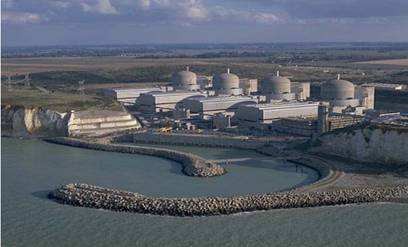
Public Meeting Held on Restart Plan for Three Mile Island Unit 1
As electricity demand from AI-related data centers rises, multiple locations across the United States are reassessing the value of nuclear reactors originally slated for decommissioning. Recently, the restart plan for Unit 1 of the Three Mile Island Nuclear Power Plant in eastern Pennsylvania has entered the public engagement phase. The Three Mile Island plant has long been under scrutiny due to the 1979 accident at Unit 2, which involved a nuclear fuel meltdown and the release of radioactive materials. The proposed restart involves the adjacent Unit 1, which has been in the decommissioning process since 2019. Upon restart, it will operate under the name "Crane Clean Energy Center." On July 28, the U.S. Nuclear Regulatory Commission...
2026-07-30
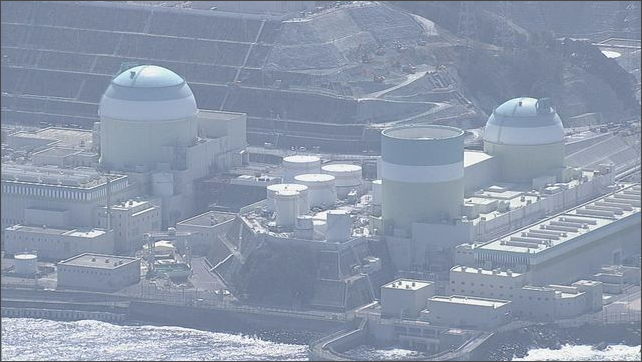
Japan's Ikata Nuclear Power Plant Unit 1 Decommissioning Plan to Enter Second Phase
The Environmental Safety Management Committee for the Ikata Nuclear Power Plant, established by the Ehime Prefectural Government, recently held a meeting to review the progress of the decommissioning plan for Unit 1 of the Ikata Nuclear Power Plant. The unit ceased operation in 2016 and is currently in the decommissioning implementation phase. Unit 1 of the Ikata Nuclear Power Plant is operated by Shikoku Electric Power Co. The company began decommissioning the unit in 2017, planning to carry out the work in four phases over a total period of approximately 40 years. Currently, the first phase has been largely completed, primarily involving the removal of nuclear fuel. Shikoku Electric Power Co. has applied to the Japanese central government to enter the second phase, which involves dismantling equipment around the reactor area, and has...
2026-07-30
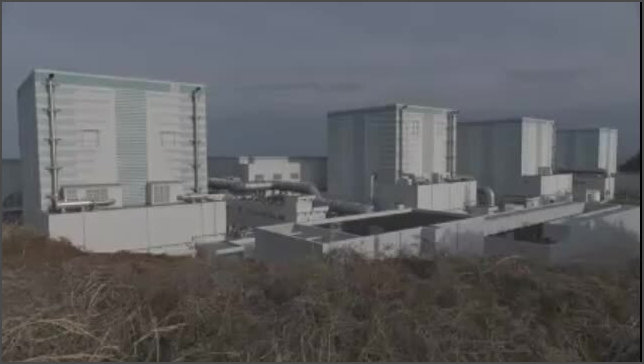
TEPCO says cooling interruption of spent fuel pool at Fukushima Daini Unit 1 due to human error
Tokyo Electric Power Company (TEPCO) announced on July 29 that the event in April 2026, where the spent fuel pool cooling system at Unit 1 of the Fukushima Daini Nuclear Power Plant was shut down for approximately 32 hours, was determined to be caused by human error. At the time of the incident, the plant was in the decommissioning phase. On April 5, a fault alarm was triggered by the cooling water circulation pump of Unit 1 at Fukushima Daini. After on-site personnel confirmed smoke from the equipment, the pump was stopped, resulting in an interruption of the spent fuel pool cooling system for about 32 hours. TEPCO previously stated that the cause was damage to the cable connecting the pump motor. According to TEPCO's latest explanation, the cable melting may be related to the installation method when the cable was replaced in 2012...
2026-07-30

NextEra and Brookfield Plan $100 Billion Data Center Campus at Former Paducah Uranium Enrichment Site in the U.S.
NextEra Energy and Brookfield Asset Management plan to develop a data center campus and supporting power generation facilities with a total investment exceeding $100 billion at a federally owned former uranium enrichment site in Paducah, Kentucky, USA. The project is located on or near the U.S. Department of Energy (DOE) Paducah site. According to relevant announcements, the campus is expected to provide over 1.2 gigawatts of data center computing capacity and deliver up to 1.8 gigawatts of power to the grid. The project is scheduled to begin operations in 2028 and reach full development approximately four years later; other information indicates that overall construction is expected to be completed around 2031.
2026-07-30

SK Innovation Proposes LNG and Small Modular Reactor Cooperation in Vietnam
South Korea's SK Innovation has proposed a phased energy cooperation plan for Vietnam, initially using liquefied natural gas (LNG) power generation to ensure electricity supply, and later expanding to next-generation nuclear energy technologies such as small modular reactors (SMRs), in response to growing electricity demand driven by Vietnam's artificial intelligence and high-tech industry development. On July 29, SK Innovation announced that its CEO, Choo Hyeong-wook, visited Vietnam from the 16th to the 17th and met with officials from the Ministry of Industry and Trade, Vietnam Oil and Gas Group (PVN), and its power generation subsidiary, PetroVietnam Power Corporation (PV Power), to discuss cooperation in the energy and high-tech sectors. According to SK Innovation's...
2026-07-30