
Search Results
Keyword:IC

US NRC Approves Oyster Creek Nuclear Power Plant License Termination Plan
The U.S. Nuclear Regulatory Commission (NRC) has approved the license termination plan for the Oyster Creek Generating Station. Located in Lacey Township, New Jersey, the plant is now more than halfway through its decommissioning and dismantlement work. With this approval, the project will proceed with the final phases of decommissioning and site restoration in accordance with the approved document. Before dismantlement of the Oyster Creek Generating Station in Lacey Township, New Jersey, Holtec International stated that the approval of the license termination plan involved coordinated efforts across multiple departments, including engineering, radiation protection, environmental services, work management, project controls, licensing, communications, and security, led by the regulatory affairs department. The Vice President of Oyster Creek Nuclear Power Plant...
2026-07-31
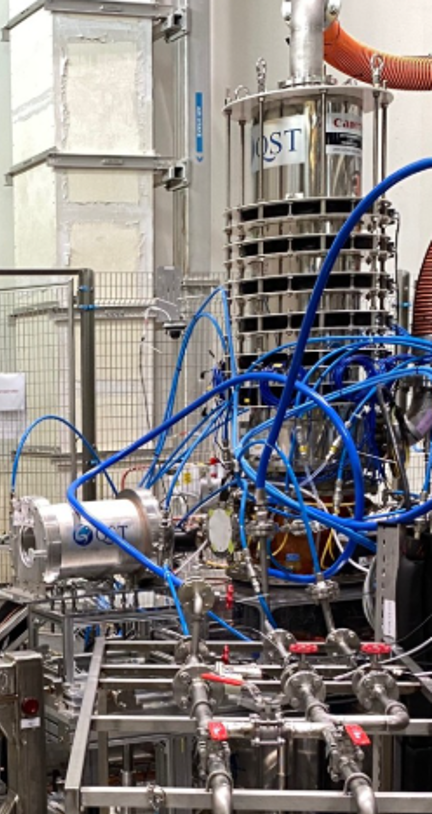
QST completes first gyrotron 170 GHz microwave output test at ITER site
The National Institutes for Quantum Science and Technology (QST) of Japan announced on July 31 that it has completed the integration and operational testing of the first gyrotron system at the International Thermonuclear Experimental Reactor (ITER) site in southern France, successfully producing 170 GHz microwave output. This system is used for ITER plasma generation and heating, and is one of the key devices for ITER's plan to commence operations in 2034. The core equipment of this test is the gyrotron, a high-power microwave source. Gyrotron operation requires the coordinated work of peripheral equipment such as power supplies, superconducting coils, and cooling systems. QST previously completed performance testing of eight ITER gyrotron systems at the gyrotron test facility of the Naka Fusion Institute in Japan, and transported components including gyrotrons, superconducting coils, and quasi-optical matching units to the ITER site. Over the past three years, QST has advanced system installation, commissioning, and operational preparation at the site.
2026-07-31

IAEA Launches ATLAS Initiative: Building a New International Governance Framework for Maritime Nuclear Applications
As global shipping demand for alternative fuels continues to grow and small modular reactor technology matures, nuclear applications in the maritime sector are accelerating from concept to reality. However, offshore nuclear deployment involves a complex set of issues including safety, security, safeguards, legal liability, insurance, and jurisdiction. The existing international regulatory framework is fragmented and ill-suited to the deployment needs of modern reactor designs. Against this backdrop, the International Atomic Energy Agency (IAEA) has officially launched the Atomic Technologies Licensed for Applications at Sea (ATLAS) initiative, aiming to establish an integrated framework encompassing nuclear saf...
2026-07-31
German state of Lower Saxony approves production of Russian-designed VVER nuclear fuel at Lingen plant under additional strict conditions
The government of Lower Saxony in northwestern Germany has approved a nuclear project linked to Russia's state nuclear corporation Rosatom. The project, operated by French company Framatome, aims to produce Russian-designed nuclear fuel rods and fuel assemblies in the city of Lingen, with key components to be supplied by Rosatom's subsidiary TVEL. Nevertheless, to address potential security risks, particularly threats of espionage and sabotage from Russian participants, the approval was granted with strict conditions. Under the terms of the approval, employees of Rosatom and TVEL will be barred from entering the facility, except in exceptional circumstances and when accompanied by nuclear regulatory authorities. Additionally, all...
2026-07-31
LHAASO "Sees" for the First Time How Black Holes Produce the Highest-Energy Particles in the Universe
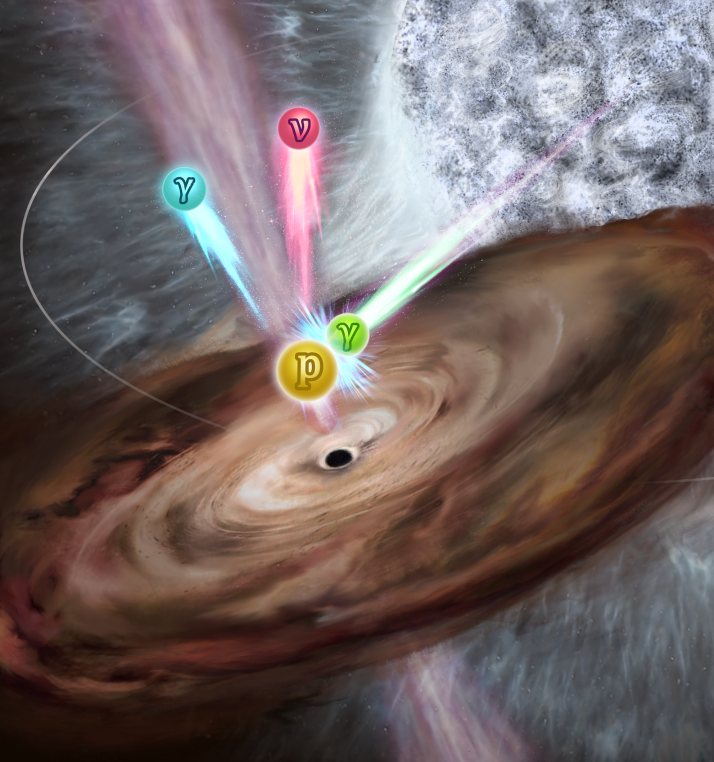
How do black holes accelerate particles to the highest energies in the universe? The latest research provides the answer. On July 31, it was learned from the Institute of High Energy Physics of the Chinese Academy of Sciences that the Large High Altitude Air Shower Observatory (LHAASO, "Lasso"), a major national scientific and technological infrastructure, has for the first time clearly observed the process by which a black hole, while devouring material from its companion star, regularly produces the highest-energy particles in the universe like a metronome, and has identified the first PeV gamma-ray variable source. The related research results were published in the *National Science Review*. Cygnus X-3 is a binary system located in the constellation Cygnus, consisting of a black hole and a massive companion star. The gravitational pull there is extremely strong, and the black hole frantically accretes the stellar wind blown off by its companion. LHAASO detected...
2026-07-31
Russian researchers detect anomalous signs in bottomonium states using Belle II experiment data
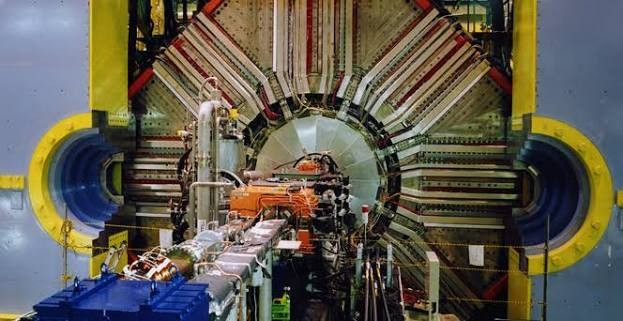
The Budker Institute of Nuclear Physics of the Siberian Branch of the Russian Academy of Sciences recently announced that Russian researchers have detected anomalous phenomena in the analysis of data from the international Belle II experiment, indicating that the structure of certain excited states of bottomonium may be more complex than predicted by traditional models. Bottomonium is a class of unstable heavy particles composed of a bottom quark and an anti-bottom quark. Yevgeny Kovalenko, a young researcher at the Budker Institute of Nuclear Physics of the Siberian Branch of the Russian Academy of Sciences, stated that analysis of Belle II experiment data suggests that certain excited states of bottomonium may contain lighter quark components. In other words, these particles in specific states may not simply be plain bottom quark–anti-bottom quark combinations.
2026-07-31
IAEA Training Course for Owner/Operator Organizations of New Nuclear Power Projects Concludes in Russia
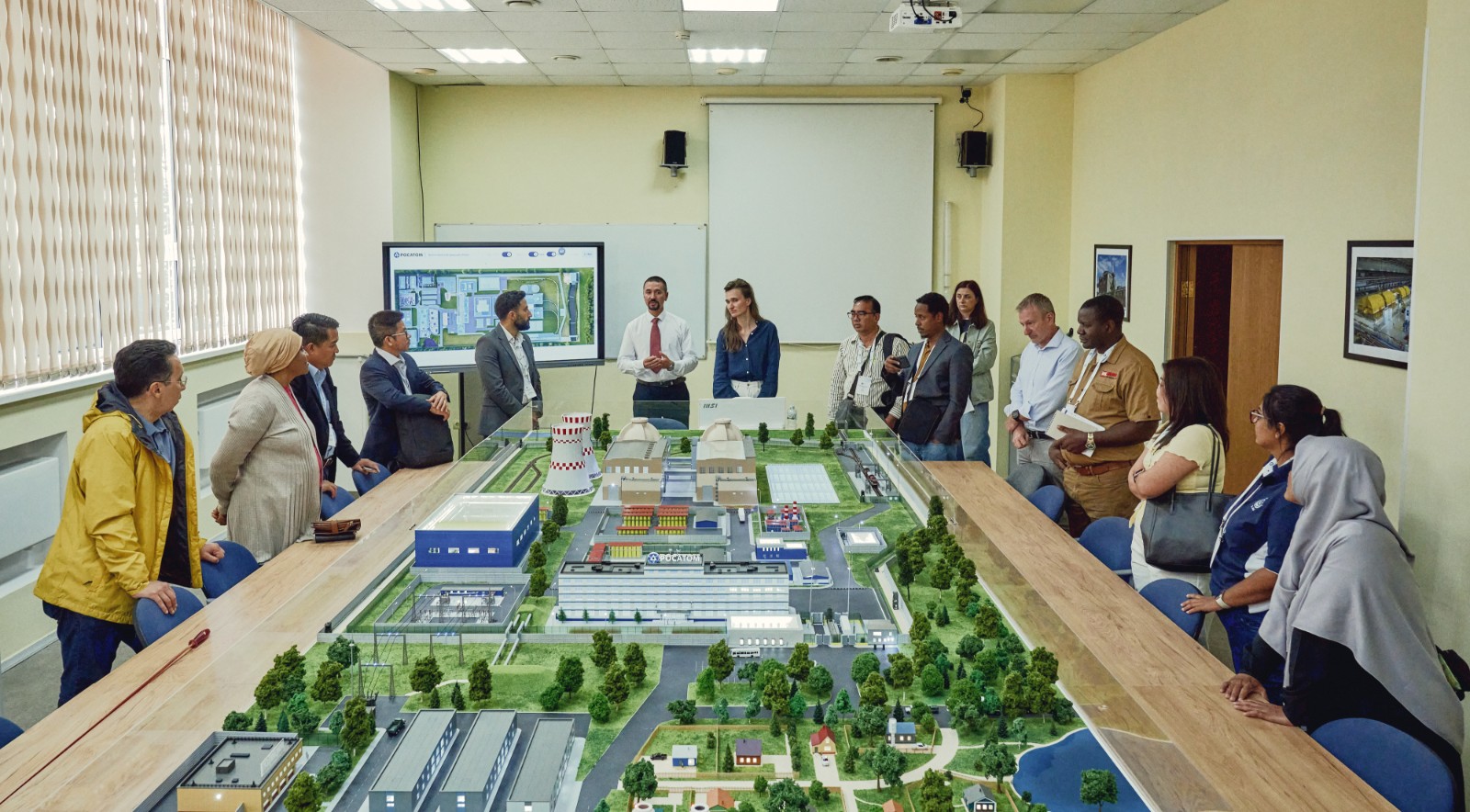
On July 30, the Interregional Training Course on the Establishment of Owner/Operator Organizations for New Nuclear Power Projects, jointly organized by Rosatom and the International Atomic Energy Agency (IAEA), concluded at the Rosatom Technical Academy. Eighteen experts from 15 countries in Asia and Africa completed the five-day training. The participants were primarily from national nuclear energy institutions, regulatory bodies, and relevant competent authorities responsible for nuclear infrastructure development in their respective countries. The course focused on the establishment and capacity building of owner/operator organizations for new nuclear power projects, covering topics such as license applications, change management, feasibility study preparation, personnel competency development, organizational structure design, and contract management.
2026-07-31
Crusoe and Aalo Atomics Forge Strategic Partnership: First Nuclear-Powered AI Facility Planned
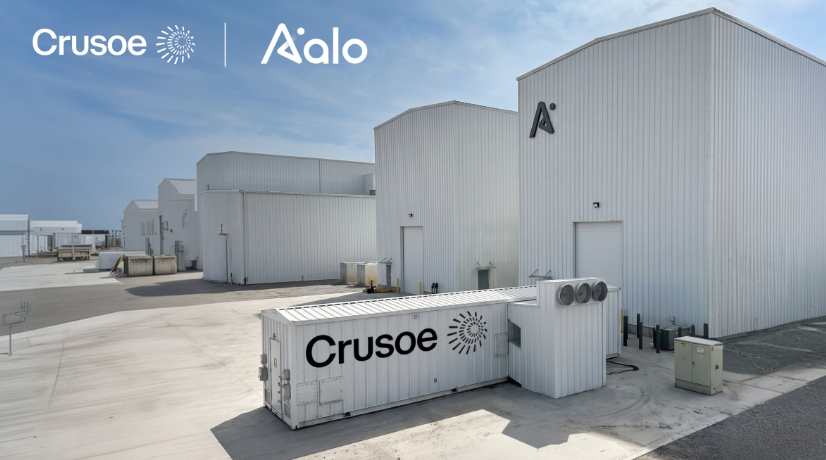
U.S.-based Crusoe and Aalo Atomics have reached a strategic partnership aimed at deploying the first nuclear-powered artificial intelligence facility. This commercial collaboration builds on Aalo's recent criticality achievement, underscoring U.S. leadership in AI and energy. Crusoe's Spark modular AI data centers will be co-located with Aalo Atomics' nuclear reactor buildings at Idaho National Laboratory. The project aims to validate the effectiveness of nuclear energy for AI workloads. Cully Cavness, co-founder, president, and chief strategy officer of Crusoe, stated that next-generation AI infrastructure requires reliable, abundant, clean, and scalable power, and Aalo's reactors are designed precisely for that purpose. Crusoe's core value is "bending the energy arc toward sustainability," guided by the principle of leveraging its market position to support and accelerate energy innovation...
2026-07-31

NuAlaska Initiative Launched: Long-Life Nuclear Microreactors Target Remote Alaskan Regions
An initiative in Alaska called NuAlaska is working to bring long-life nuclear microreactors to remote areas. This collaboration, co-launched by NuCube Energy Inc. and the Alaska Fund, aims to develop, finance, own, and operate advanced nuclear energy projects in Alaska. The plan combines NuCube's NuSun-1 micro-modular reactor technology with the Alaska Fund's mission to support projects that meet Alaska's unique energy and infrastructure needs. The initiative targets remote communities, mines, military installations, and other isolated locations where harsh weather, long transportation routes, and reliance on imported diesel fuel...
2026-07-31
Japan Atomic Industrial Forum Chairman: Overseas SMR Projects Help Sustain Supply Chain, but Japan Still Needs to Build New Nuclear Plants
Hideki Masui, Chairman of the Japan Atomic Industrial Forum (JAIF), stated on May 31 that Japanese companies are playing a significant role in global small modular reactor (SMR) projects through design and equipment supply, but the long-term maintenance and development of Japan's nuclear technology base ultimately requires the construction of new nuclear power plants domestically. At a regular press conference, Masui reviewed international developments in the SMR field. He noted that approximately 30 countries currently use nuclear energy, and about 20 countries are studying the deployment of SMRs in some form. Projects involving Japanese companies include GE Vernova Hitachi Nuclear Energy's BWRX-300 and NuScale Power's VOYGR SMR, whi...
2026-06-06
Russia says its nuclear power plant designs can adapt to construction requirements in seismically active regions
On June 25, Dmitry Ivanov, Chief Engineer of the Atomenergoproekt Integrated Design Institute under the engineering division of Rosatom, stated that Rosatom incorporates seismic requirements into its nuclear power plant designs, enabling relevant units to be constructed and operated in seismically unstable regions. Ivanov noted that Rosatom is currently building or overseeing the construction of nuclear power plants in Russia as well as in India, Bangladesh, Hungary, Egypt, Turkey, and Iran. The seismic impacts faced by different project sites vary, with some regions potentially experiencing higher seismic intensity. Drawing on experience from past projects, the company implements corresponding seismic resistance into nuclear power plant designs in accordance with regulatory document requirements to ensure safe plant operation.
2026-06-26

South Korean Presidential Office: Expanding Renewable Energy Does Not Mean Abandoning Nuclear Power; New Nuclear and SMR Projects Already Decided
On July 3, Kim Woo-chang, Secretary for National AI Policy at the South Korean Presidential Office, responded on a program to external concerns over the power supply capacity of the semiconductor cluster in the Honam region, stating that the southwestern region of South Korea already possesses sufficient renewable energy conditions, with further room for expansion in the future. Kim Woo-chang said that South Korea's power generation resources are generally concentrated in the southwestern region, the Busan–Ulsan–Gyeongnam area, and the vicinity of nuclear power plants in Gangwon-do; the Seoul metropolitan area and central regions such as Chungcheong-do rely primarily on transmission networks for electricity. Therefore, locating large-scale power-consuming projects near power sources is one of the realistic options. In response to whether renewable energy alone is sufficient to support the semiconductor industry...
2026-07-03

Mangoceuticals to Merge with Nuclea to Advance Morpheus Microreactor to Market
Mangoceuticals announced on July 30 that it has signed a definitive business combination agreement with advanced nuclear technology company Nuclea Energy Inc., aiming to bring the latter's Morpheus microreactor to the public capital markets. Nuclea was founded in August 2023 and is headquartered in Mississauga, Ontario, Canada, focusing on the development of lead-cooled, factory-fabricated micro-modular reactors. Under the agreement, a newly formed subsidiary of Mangoceuticals will merge with Nuclea, and the combined company will operate as an indirect wholly owned subsidiary of Mangoceuticals. Upon completion of the transaction, holders of Nuclea common shares will receive...
2026-07-31

ITER Organization Director-General Attends Aix Economic Forum to Discuss Complexity Management of Pioneering Strongly-Coupled Mega-Projects
From July 2 to 4, the Aix Economic Forum (Les Rencontres Économiques d’Aix) was held in Provence, France, under the annual theme "Navigating a World of Uncertainty." Pietro Barabaschi, Director-General of the ITER Organization, was invited to attend the forum, where he presented the ITER Project and its pivotal role in addressing future energy challenges. His remarks centered on two core themes—climate change and the energy crisis—covering topics such as mega-project management experience and the development of the global fusion industry. As the world's first fusion verification experimental reactor, ITER's core mission is to validate the engineering feasibility of fusion power generation, paving the way for subsequent demonstration fusion power plants...
2026-07-15
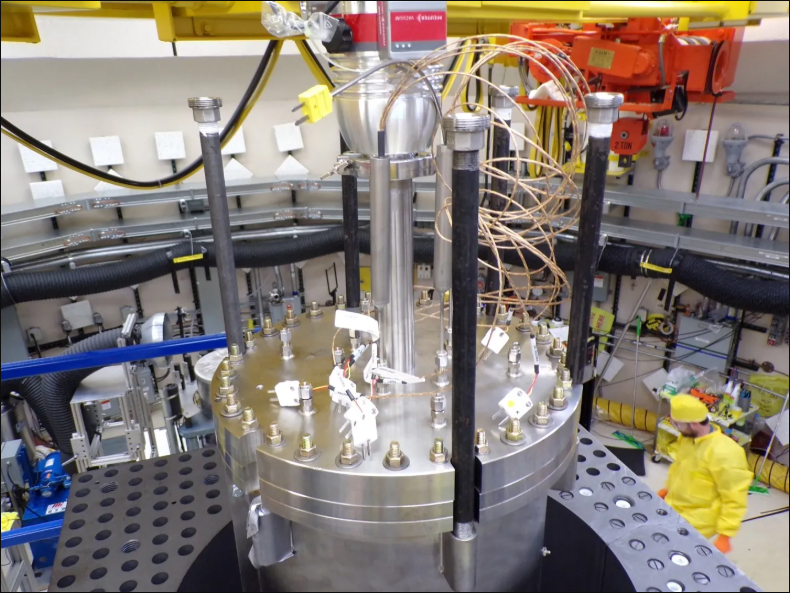
ZiaCore Microreactor Achieves Criticality in High-Temperature Zero-Power Experiment
Los Alamos National Laboratory announced on July 30 that its ZiaCore microreactor design has completed a high-temperature zero-power criticality proof-of-principle experiment at the National Criticality Experiments Research Center (NCERC) in Nevada, successfully achieving initial criticality. ZiaCore is an advanced nuclear energy microreactor design that uses low-enriched uranium dioxide fuel. The experiment lasted approximately four weeks from April to May this year, advancing the ZiaCore system to zero-power criticality under high-temperature conditions. According to the reactor design and verification process, zero-power criticality experiments can be used to validate the effectiveness of reactor physics designs, providing key benchmark data for subsequent engineering development.
2026-07-31