
Search Results
Keyword:NI
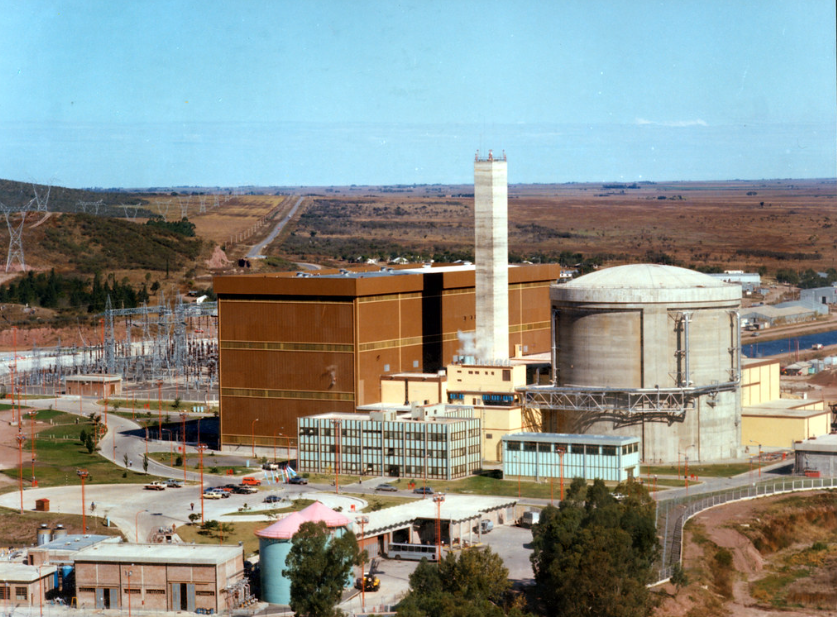
Romania and Argentina Nuclear Power Companies Sign Memorandum of Understanding to Deepen CANDU 6 Heavy Water Reactor Technology Cooperation
Romania's National Nuclear Power Company (SNN) and Argentina's Nuclear Power Company (NASA) signed a non-binding memorandum of understanding on Thursday. According to a press release issued by the Romanian company, the two parties will engage in in-depth cooperation in the operation and development of CANDU 6 heavy water reactor technology. Both companies possess strong technical strength and rich practical experience in the engineering design, daily operation, equipment maintenance, large-scale project management, life extension, nuclear safety analysis, and reactor operation of CANDU 6 technology nuclear reactors. Argentina's Nuclear Power Company had previously successfully completed the refurbishment and upgrade of the Embalse Nuclear Power Plant, which uses CANDU technology...
2026-09-18
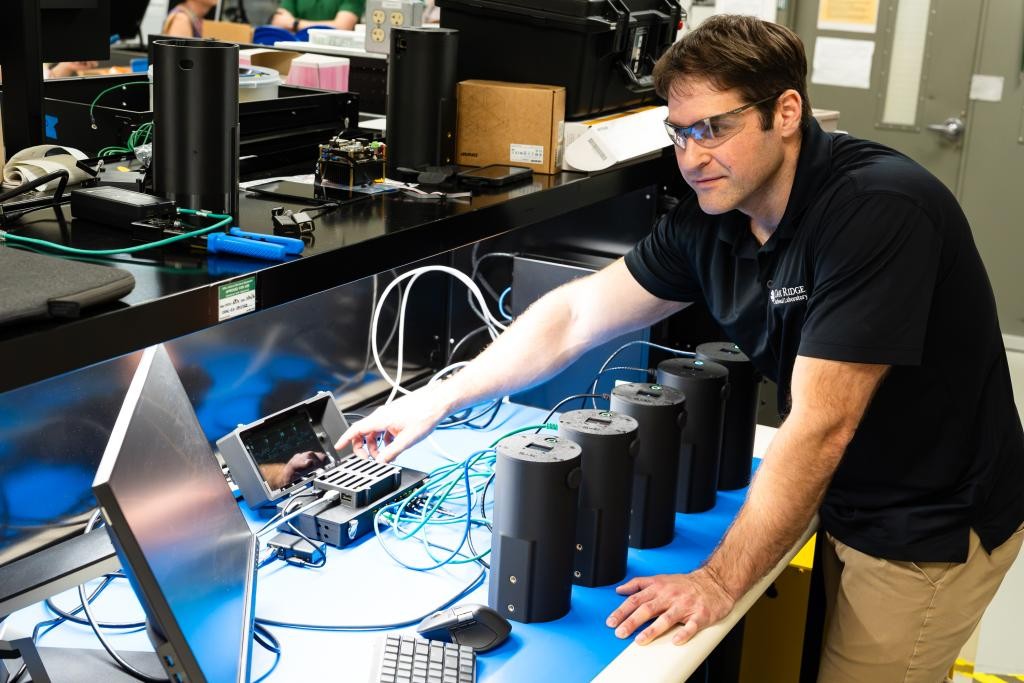
ORNL Develops Duct Radiation Monitoring System to Enhance Fuel Cycle Facility Safety and Protection
Recently, a research team at Oak Ridge National Laboratory (ORNL), led by embedded systems hardware and software engineer Brett Witherspoon, successfully developed a new type of radiation monitoring system. The system can continuously assess the accumulation of radioactive materials inside ventilation ducts at facilities that manufacture nuclear fuel or process nuclear waste. The system can be powered by battery or Ethernet, with a core cylindrical device approximately 12 inches tall. The device is installed inside the duct, and ORNL states that it can provide unprecedented monitoring frequency and accuracy at a lower cost than existing detection systems, thereby effectively protecting people...
2026-09-18
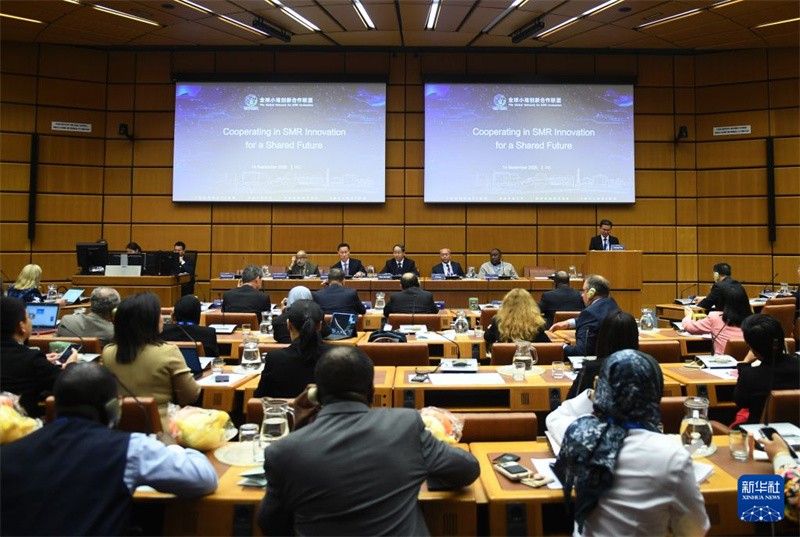
China Calls for Advancing SMR Innovation and Strengthening Global Nuclear Energy Cooperation
During the 70th General Conference of the International Atomic Energy Agency, China on the 14th hosted a side event themed "Pooling Efforts for SMR Innovation, Building a Nuclear-Beautiful Home Together," focusing on strengthening international cooperation on small modular reactors (SMRs) worldwide, promoting technological innovation, standards coordination, capacity building and related deployment and application, and providing support for global climate governance and sustainable development. At the side event themed "Pooling Efforts for SMR Innovation, Building a Nuclear-Beautiful Home Together," Shan Zhongde, Director of the China Atomic Energy Authority, said that China regards nuclear energy as an important option for building a new energy system and achieving the carbon peak and carbon neutrality goals, and, relying on a complete nuclear industry innovation chain, industrial chain and talent chain, has become one of the pioneers and pathbreakers in SMR development and deployment...
2026-09-18

Planning permission granted for tunnel component production facility for Sizewell C nuclear power station in the UK
The Sizewell C nuclear power station project in the UK has successfully obtained planning permission to build a dedicated tunnel component production facility at Avonmouth in Bristol. The factory will be responsible for producing 38,000 precast concrete segments as well as tunnel head pieces for the three subsea tunnels of Sizewell C. All finished components will be transported by rail and water to the Sizewell C construction site in Suffolk, which directly supports the project's environmental commitment that at least 60% of construction materials will be transported by rail and sea. Subject to the relevant preconditions being met, the facility is expected to officially begin production in 2028....
2026-09-18
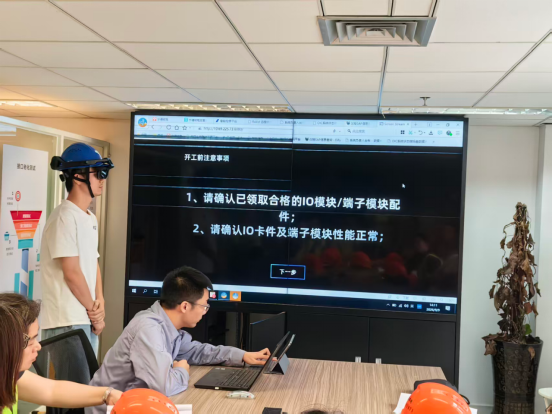
Ningde Nuclear Power adopts AR maintenance solution, greatly boosting the efficiency of frontline operation and maintenance personnel
On September 9, at the production command center of Ningde Nuclear Power Plant, staff members only need to put on lightweight AR smart helmets and can obtain the required work information through voice commands. Equipment temperature and vibration data are automatically entered into the system, greatly shortening the time for inspection data entry. This AR smart helmet is an important benchmark project of Ningde Nuclear Power as a pilot enterprise for digital transformation under SASAC. It integrates information such as operation data, equipment drawings, work packages, and training materials, changing the traditional model in which nuclear power personnel rely on paper documents for on-site operations. This AR maintenance platform relies on technologies such as diffractive optical waveguides, 5G real-time transmission, and cross-system data interoperability, and integrates temperature measurement, vibration measurement...
2026-09-18

US and OECD Nuclear Energy Agency Call for Unified Regulatory Standards to Break the Vicious Cycle of Cost Overruns and Delays in New Nuclear Power Plants
The U.S. Department of Energy stated that it is engaged in close communication with partner countries, aiming to promote the unification of global nuclear power regulatory standards, thereby accelerating nuclear power capacity expansion and reducing construction costs. During the New Nuclear Roadmap conference organized by the OECD Nuclear Energy Agency (NEA) in Paris, U.S. Department of Energy Deputy Secretary James Danly emphasized to the media that countries should establish a unified regulatory mechanism. He pointed out that many countries have decades of mature experience in nuclear power regulation, and it would be very regrettable if unnecessary obstacles were placed on nuclear power development due to a lack of consistency in regulatory systems. The United States is currently actively promoting greater regulatory consensus among countries. The OECD Nuclear Energy Agency...
2026-09-18
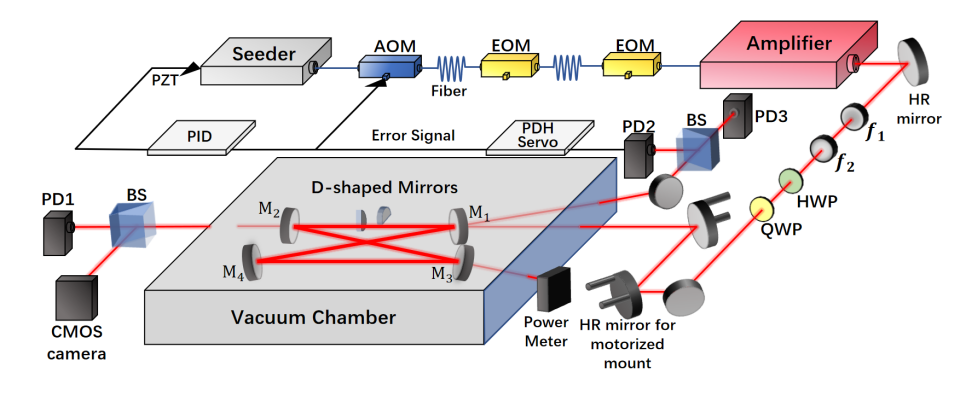
Professor Yan Lixin's Research Group in the Department of Engineering Physics at Tsinghua University Collaborates to Achieve a Beyond-Megawatt Average Power Laser Optical Enhancement Cavity
Recently, the research group of Professor Yan Lixin from the Department of Engineering Physics at Tsinghua University, in collaboration with the team of Professor Fabian Zomer from IJCLab at Université Paris-Saclay, France, published important progress in the field of high-finesse optical enhancement cavities. The research team achieved a four-mirror bow-tie optical cavity with an average laser power exceeding 1 megawatt and its stable operation at the Tsinghua University Accelerator Laboratory, with a maximum intracavity average power of 1.15 MW, while maintaining an excellent Gaussian fundamental mode. This is the first published work internationally on an optical enhancement cavity with an intracavity average laser power reaching the megawatt level, which will lay a solid foundation for important applications such as the development of steady-state microbunching (SSMB) extreme ultraviolet light sources, quantum electrodynamics (QED) vacuum nonlinearity detection, ion beam photoneutralization for magnetic confinement fusion, and the development of future inertial confinement fusion reactors.
2026-09-18

Commissioning Preparation Work Begins for the Control System of Akkuyu NPP Unit 1 in Turkey
The process automation control system of Akkuyu NPP Unit 1 in Turkey has begun preparations for pre-commissioning signal testing, which will be carried out before the physical start-up of the reactor. The process automation control system is the core hub of a nuclear power plant, enabling plant operating personnel to monitor and manage all process systems that support power generation. Akkuyu Nuclear Company noted in its announcement that the control systems used in the units of Akkuyu NPP possess the extremely high reliability characteristic of Russian-designed units. The control safety system responsible for automatic start-up and management of active safety systems has excellent fault tolerance, with a failure rate indicator reaching only one possible error per 1...
2026-09-18
Idaho State University to Build Second Nuclear Reactor
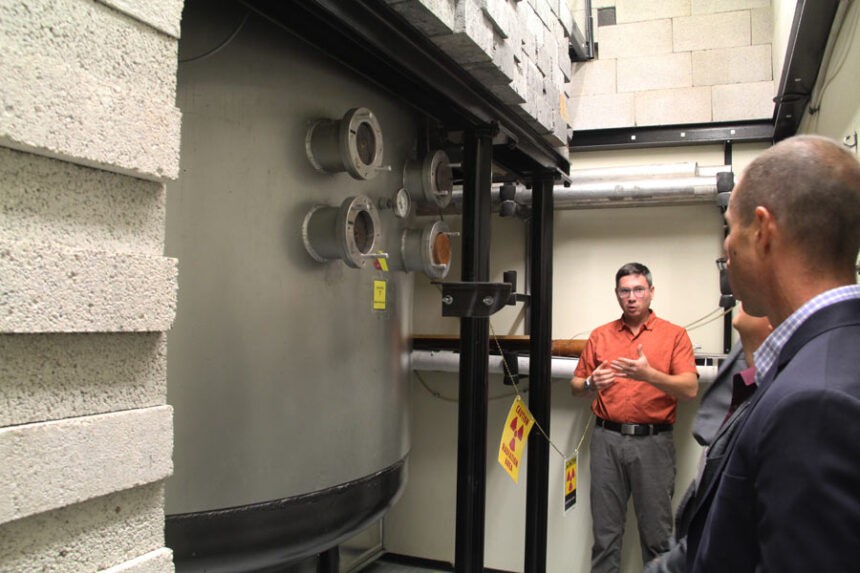
Idaho State University will add a second nuclear reactor, injecting new momentum into the local energy future. On September 17, local and state leaders gathered on the Idaho State University campus to officially announce an upcoming new project. It is reported that the project will give the university a second nuclear reactor, marking another important step in the university's nuclear power research and education. On the morning of the ceremony, participants gathered along Alvin Ricken Drive to listen to the presentation. The 275-acre research park is adjacent to the planned reactor site and is officially called an "advanced nuclear microreactor," with the formal name "Advanced Research and Test Reactor." If the project proceeds smoothly, the new reactor will, together with the...
2026-09-18
Two UK nuclear companies sign memorandum of understanding to jointly develop nuclear microreactor
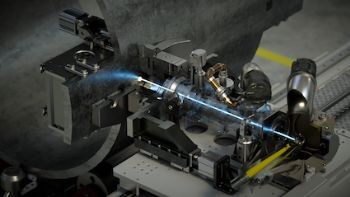
Cambridge Vacuum Engineering (CVE) and Cambridge Atomworks have signed a memorandum of understanding (MoU) under which the two companies will engage in deep collaboration on a UK-built nuclear microreactor. Cambridge Atomworks is an ambitious and vibrant nuclear engineering startup whose core goal is to build a nuclear microreactor in the UK for off-grid applications. The signing of this memorandum of understanding marks that the two companies will jointly explore how to maximize CVE's deep expertise in electron beam welding, including the company's Ebflow technology, which has been proven to significantly accelerate the production process of key nuclear power components such as reactor vessels...
2026-09-18

The SM-1 Nuclear Power Plant at Fort Belvoir, United States, Has Completed All On-Site Decommissioning and Dismantlement Work
The Baltimore District of the U.S. Army Corps of Engineers recently announced that the SM-1 nuclear power plant at Fort Belvoir, Virginia, has completed all on-site decommissioning and dismantlement work. On September 9, 2026, at the closing ceremony of the SM-1 nuclear power plant decommissioning and dismantlement project held at Fort Belvoir, Virginia, leaders from the U.S. Army, the U.S. Army Corps of Engineers, the Fort Belvoir Garrison, and the project contractor posed for a photo with the original 1957 building sign of the SM-1 nuclear power plant. The ceremony marked the successful completion of all on-site work related to the decommissioning and dismantlement of the nuclear power plant. The U.S. Army's SM-1 (Stationary Medium Power Reactor Prototype No. 1) is a 2-megawatt experimental small...
2026-09-17
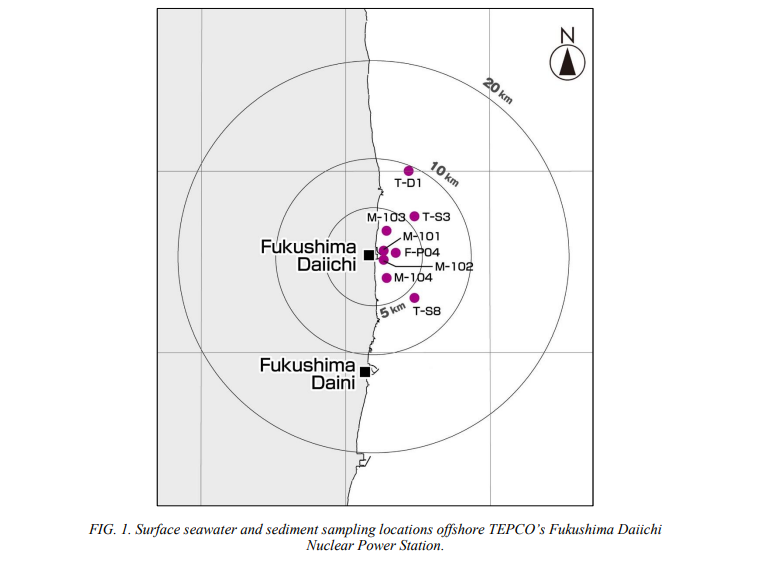
IAEA 2024 Marine Radionuclide Intercomparison Exercise Shows: Credibility of Japan's Monitoring Data Continues to Remain High
The International Atomic Energy Agency (IAEA) recently released the results of the 2024 Interlaboratory Comparison (ILC) on radionuclides in the marine environment. The report shows that relevant Japanese monitoring institutions have demonstrated a high level of professionalism and data reliability in marine radionuclide analysis, and the credibility of the test data they provided continues to remain high. This intercomparison, as an important component of the IAEA's "Ocean Monitoring: Building Trust and Data Quality Assurance" project, constitutes another independent and systematic verification of Japan's Comprehensive Radiation Monitoring Plan (CRMP). This intercomparison exercise covered three main types of marine environmental media: seawater, sediment, and fish. Sampling work was conducted from September to October 2024 in the waters near the Fukushima Daiichi Nuclear Power Station and surrounding markets.
2026-09-17
CNNC 404 Overcomes Krypton Isotope Technical Challenges, Multiple Krypton Isotope Thickness Sources Achieve "Fully Domestic Production"
It was learned from China National Nuclear Corporation (CNNC) that CNNC 404 Co., Ltd., a subsidiary of CNNC, has achieved a breakthrough in the field of radioisotope technology, marking China's leap from reliance on imports to fully domestic production of krypton isotope thickness sources. It is understood that krypton isotopes, as important radioisotopes, are widely used in industrial thickness measurement, instrument and meter calibration, tracer monitoring, and other fields, and are particularly indispensable in quality control for high-end manufacturing such as new energy batteries, specialty papermaking, and thin films. In this instance, CNNC 404 successfully developed multiple specifications of krypton isotope thickness source products with independent intellectual property rights, capable of matching the needs of different industrial thickness measurement application scenarios, which has provided solid support for the sustainable and high-quality development of China's high-end...
2026-09-17

The "Weaponized" Nuclear Power Plant: Dual Narratives and Governance Dilemmas in the Zaporizhzhia Nuclear Crisis
The "Weaponized" Nuclear Power Plant: Dual Narratives and Governance Dilemmas in the Zaporizhzhia Nuclear Crisis
2026-09-17

Canada's Cameco Signs Exclusive Offtake Agreement to Lock Up All Future Output from U.S. Paducah Laser Enrichment Plant
Canadian nuclear fuel giant Cameco has signed a new exclusive offtake agreement with Global Laser Enrichment (GLE), under which Cameco will purchase all nuclear fuel products from the future production of the Paducah Laser Enrichment Facility (PLEF) that GLE plans to build in Kentucky, United States. This major agreement was formally announced by Australia's Silex Systems. GLE was founded in 2007 to develop and commercialize laser-based uranium enrichment technology in the United States. The company is currently 51% owned by Silex Systems, the developer of SILEX laser enrichment technology, and 49% by Cameco. Silex Chief Executive Officer and Managing Director Mike...
2026-09-17