
Search Results
Keyword:Nuclear Power
Russia Plans Floating Small Nuclear Power Plant in Yakutia
Andrey Petrov, First Deputy CEO for Nuclear Energy at Rosatom and President of JSC Atomstroyexport, stated that Russia's Ministry of Energy has supported the advancement of a floating small nuclear power plant project in the Republic of Sakha (Yakutia). Speaking at the Eastern Economic Forum, Petrov noted that according to the relevant master plan, the Yakutia small nuclear power plant needs to be completed by 2031. The new option currently under study involves converting the originally planned land-based nuclear power plant into a floating nuclear power plant. He said the floating option offers lower costs and shorter construction timelines, and can meet Yakutia's current electricity demand of approximately 106 MW...
2026-09-04
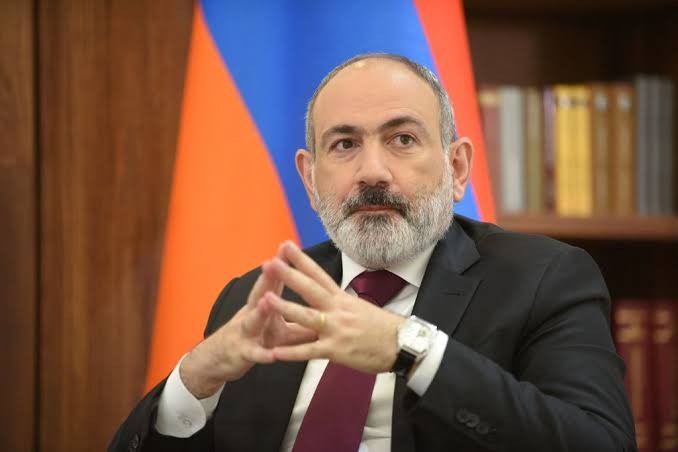
Armenia to Discuss New Nuclear Power Plant Options with Rosatom
Armenian Prime Minister Nikol Pashinyan stated at a press conference on September 3 that Alexey Likhachev, Director General of Rosatom, will visit Armenia in September, and the two sides will discuss possible options for constructing a new nuclear power plant within Armenia. Pashinyan noted that Armenia expects Likhachev's visit to bring forward Russia's specific proposals regarding the construction of a new nuclear power plant in Armenia. He said that Armenia will prioritize economic viability and project pricing when selecting a nuclear power project, aiming to secure the most cost-effective construction plan. In May of this year, the Russian side had indicated...
2026-09-04
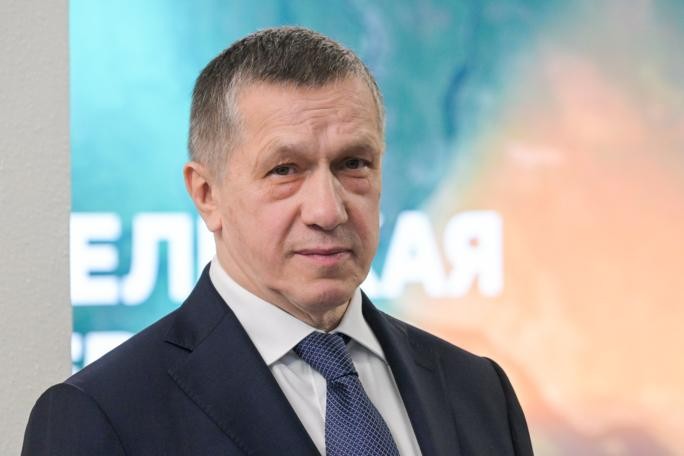
Russia Says Small Nuclear Power Plants Can Improve Energy Supply in Remote Areas
Russian Deputy Prime Minister and Presidential Plenipotentiary Envoy to the Far Eastern Federal District Yuri Trutnev said on September 3 during the Eastern Economic Forum (EEF) that deploying small nuclear power plants in remote areas of Russia, including the Arctic region, is expected to significantly change the local energy consumption structure and supply methods. Trutnev said that remote areas, especially the Arctic region, have a real demand for stable energy supply, and low-power nuclear power plants can play a role in these areas. He stated that Russia has begun constructing and deploying relevant facilities. Trutnev...
2026-09-04

Hungary's Paks II Nuclear Project May Require Major Adjustments
According to sources familiar with Hungary's nuclear industry and discussions on the Paks II nuclear project, the new Hungarian government led by Peter Magyar believes that the Paks II project, based on Russia's Rosatom design, can only proceed if major adjustments are made. Sources said that due to factors such as ethics, technology, sanctions restrictions, licensing procedures, and existing contract terms, the Paks II project is difficult to continue under its original arrangement. However, industry insiders also believe that it would not be appropriate to abandon the project outright due to short-term sentiment or temporary setbacks. If more participants could be brought in,...
2026-09-04
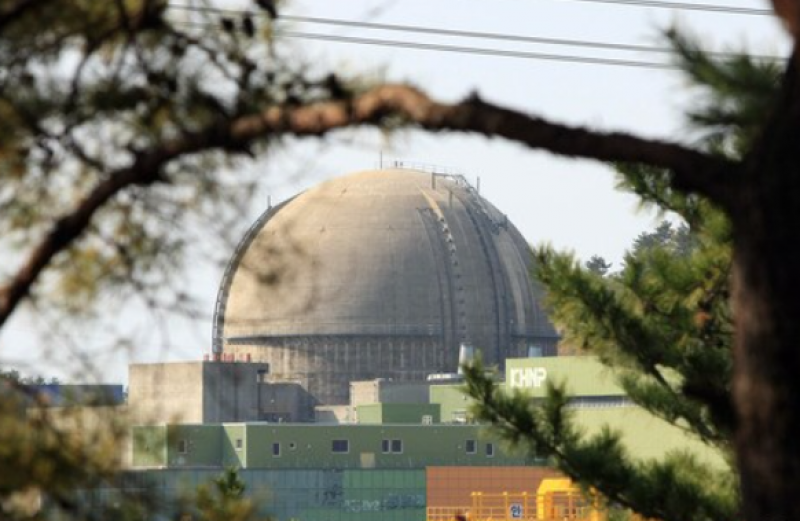
Non-compliant Welding Procedures at Two Units of South Korea's Hanbit Nuclear Power Plant
The Hanbit Nuclear Power Plant headquarters of Korea Hydro & Nuclear Power Co., Ltd. (KHNP) recently confirmed that Units 1 and 2 of the plant had used welding procedure specifications (WPS) that had not undergone impact testing during maintenance of the component cooling water heat exchangers. A retrospective inspection found that among 14 repair activities conducted since the relevant heat exchangers were replaced in 2007, 6 cases involved similar non-compliance. The issue was identified during the 28th planned preventive maintenance outage of Hanbit Unit 1. Inspections revealed that some welding procedure specifications used for repairs to the water chambers of the component cooling water heat exchangers did not meet requirements, involving repair work on worn areas inside the heat exchanger water chambers in the cooling systems of Units 1 and 2. Hanbit Nuclear...
2026-09-04
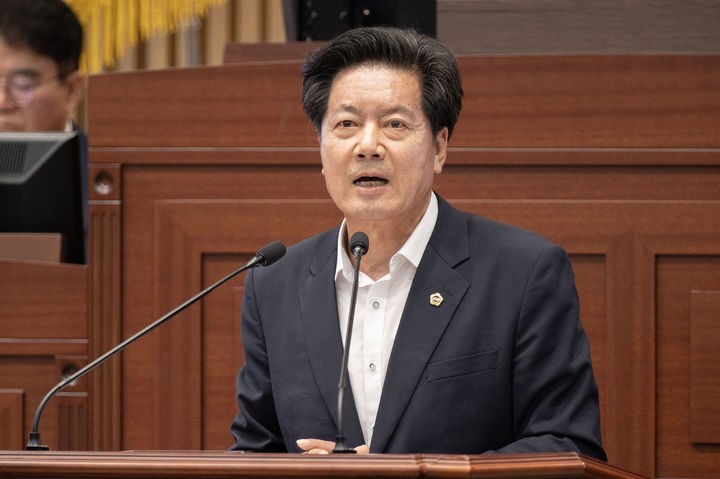
Gyeongsangbuk-do lawmakers demand stronger nuclear power plant accident notification and oversight
On September 3, Gyeongsangbuk-do lawmaker Kim Jae-jun spoke at the 365th provisional session of the Gyeongsangbuk-do Council, criticizing the delayed notification and inadequate response to the recent boric acid solution leak at Unit 6 of the Hanul Nuclear Power Plant, and calling for stronger resident safety protection mechanisms in areas with concentrated nuclear power plants. Kim stated that on August 3, a boric acid solution containing radioactive materials leaked from Unit 6 of the Hanul Nuclear Power Plant during spent fuel transfer, but local residents were not informed of the incident until approximately three weeks after it occurred. He argued that Korea Hydro & Nuclear Power (KHNP) failed to disclose information about the incident promptly and transparently, undermining residents' trust in nuclear safety management...
2026-09-04
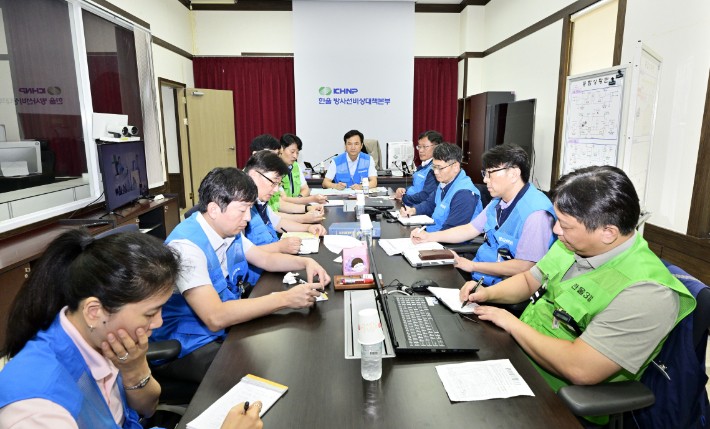
Radiation Emergency Drill Conducted at Unit 6 of South Korea's Hanul Nuclear Power Plant
Korea Hydro & Nuclear Power (KHNP) recently conducted a comprehensive radiation disaster prevention drill at Unit 6 of its Hanul Nuclear Power Plant to test the emergency response system and on-site handling capabilities under radiation emergency conditions. According to the Hanul Nuclear Power Plant, the drill was held on September 3, organized in accordance with the evaluation guidelines established by the Korea Institute of Nuclear Safety (KINS) and based on the National Radiation Emergency Plan. The drill scenario was not disclosed in advance, and the evaluation methods were also adjusted, with a focus on verifying the unit's response capabilities under actual emergency scenarios. During the drill, all emergency personnel of Unit 6 at Hanul Nuclear Power Plant participated in the response. The scenario simulated a casualty incident occurring within the controlled area, with medical rescue operations organized, and a 3.2 MW mobile generator was used to inspect the operational capability of emergency facilities.
2026-09-04

US NANO Nuclear KRONOS MMR Main Helium Circulator Enters Detailed Design Phase
NANO Nuclear Energy Inc. announced on September 3 that new progress has been made in the development of the main helium circulator for its KRONOS MMR energy system. The engineering collaboration with Howden, a Baker Hughes company, has advanced from preliminary engineering design to the detailed design phase. The main helium circulator is a critical mechanical subsystem of the KRONOS MMR energy system, primarily responsible for driving the helium coolant circulation within the reactor to efficiently transfer heat generated in the core to downstream systems. The performance of this equipment directly affects the reactor's thermal-hydraulic performance, overall efficiency, and long-term operational reliability. According to NANO Nuclear...
2026-09-04

Israel's Quantum X Labs Claims Efficient Geometric Encoding for Complex Nuclear Environments
Quantum X Labs Inc. of Israel announced on September 3 that it has achieved a key milestone in its nuclear quantum business: the company has developed a new method to more efficiently encode complex spatial geometries into quantum transport frameworks. The company stated that the new method can be used to simulate the trajectories of particles moving through complex material boundaries and heterogeneous structures, providing a new technical pathway for representing more complex physical systems within quantum computing frameworks. Such capabilities are closely related to simulation needs in practical nuclear-related scenarios such as nuclear power plants, medical devices, and space exploration. In photon and particle transport simulations, real-world systems often contain complex boundaries,...
2026-09-04
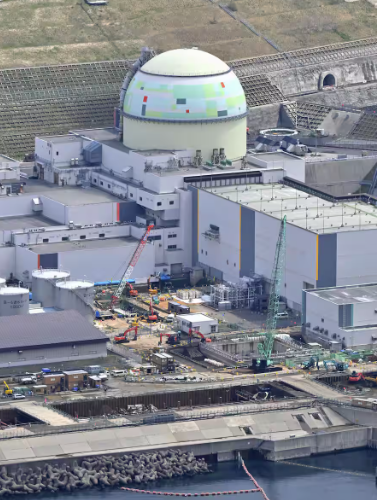
Japan's Tomari Nuclear Power Plant Unit 3 Restart Review Still Requires Additional Fire Safety Documentation
On September 3, a review meeting was held for the restart plan of Unit 3 at Japan's Tomari Nuclear Power Plant. The Nuclear Regulation Authority (NRA) pointed out that the explanations submitted by Hokkaido Electric Power regarding fire safety measures still contain issues requiring further confirmation, and requested the company to provide more detailed assessment materials. The equipment design and construction plan required for the restart of Tomari Unit 3 has been under review since last year. One of the current review priorities is whether relevant workers have adequate and feasible evacuation measures in the event of a fire on site. At the meeting that day, representatives of Hokkaido Electric Power explained the revised fire safety...
2026-09-04
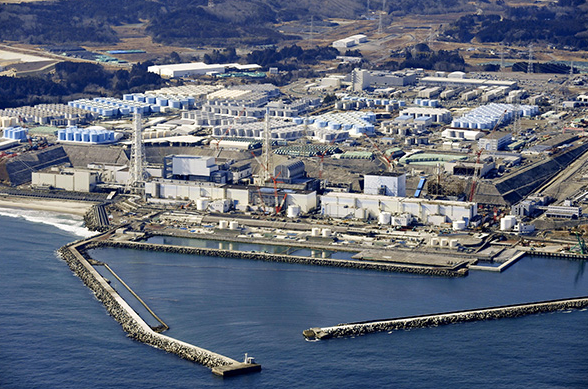
Fire alarms triggered nine times in four weeks at Japan's Fukushima Daiichi Nuclear Power Station
At 21:44 on September 3, a fire alarm was triggered in the water treatment control room building of Japan's Fukushima Daiichi Nuclear Power Station. Tokyo Electric Power Company (TEPCO) stated that no open flames or smoke were found at the scene. After firefighters arrived and conducted inspections, it was confirmed shortly after 22:30 that evening that this was not a fire. TEPCO said it would subsequently inspect the relevant detectors. Including this incident, the Fukushima Daiichi Nuclear Power Station has triggered a total of nine fire alarms in the past four weeks. Previously, on August 8, a fire alarm was triggered in the maintenance building for Units 5 and 6; on August 12, an alarm sounded in the emergency diesel generator room for the high-pressure core spray system of Unit 6; on August 13, an alarm sounded in the main office building; on August 15, an alarm sounded in the southwest stairwell area of the turbine building for Unit 5...
2026-09-04
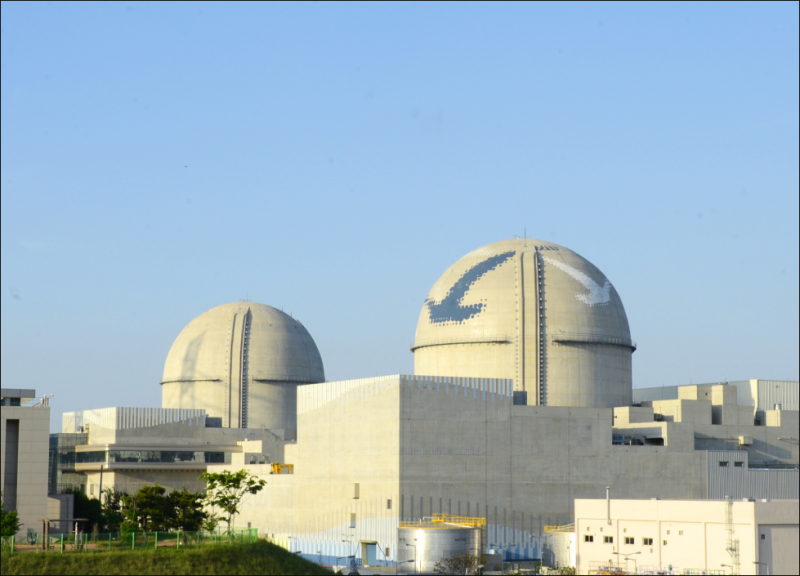
Cause Identified for Automatic Shutdown of Unit 3 at Shin-Kori Nuclear Power Plant in South Korea
The Nuclear Safety and Security Commission (NSSC) of South Korea reported on the 4th that it has completed its investigation into the automatic shutdown of Unit 3 at the Shin-Kori nuclear power plant during commissioning tests on the 11th of last month, and has approved the resumption of commissioning tests for the unit. The investigation confirmed that the direct cause of the incident was an operator error in inputting parameters during the process of restoring reactor power after the tests. According to the investigation findings, at the time of the incident, while setting the parameters for the turbine control valve position limiter, the operator mistakenly entered a value intended to limit the upper opening limit of the valve as a value in the valve closing direction. This limiter is used to prevent a rapid increase in the amount of steam entering the turbine for power generation within a short period. After the parameter error, the unit experienced an interruption in power output at approximately 80% power level, followed by an automatic shutdown.
2026-09-04
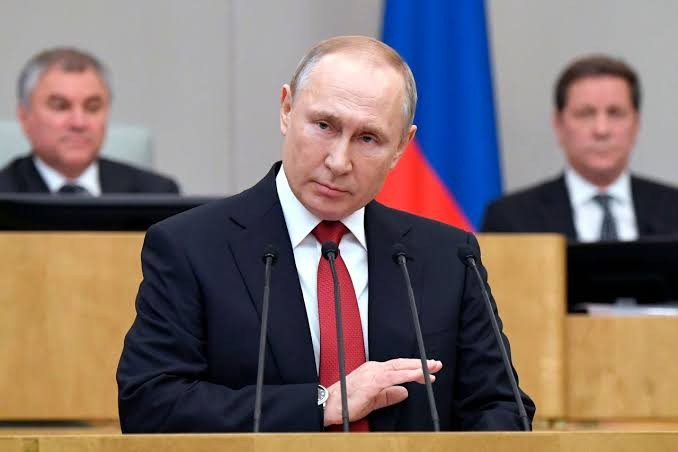
Russia Says It Is Advancing Construction of Small Nuclear Power Plants
Russian President Vladimir Putin stated at the plenary session of the Eastern Economic Forum (EEF) that Russia holds a unique position in the construction of small nuclear power plants, with related projects not merely in the planning and discussion stage but already entering actual construction. Putin said at the meeting that Russia is the only country in the world that is not only discussing the necessity and feasibility of developing small-scale nuclear power but is also taking action to build it. He noted that currently, no other country besides Russia has undertaken similar construction. ...
2026-09-04
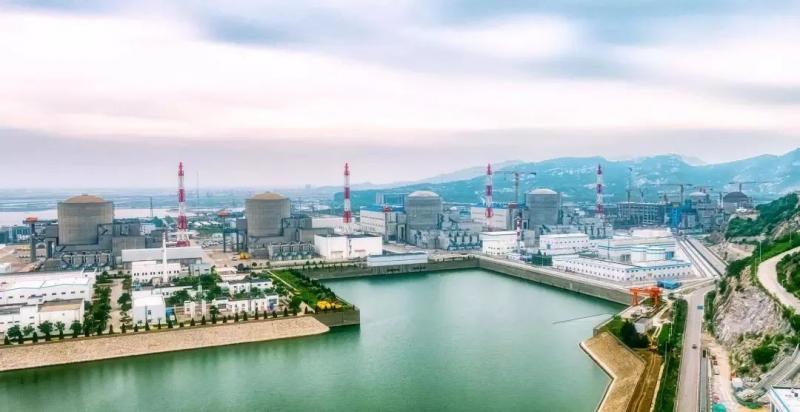
Russia Says Will Advance Nuclear Cooperation with China, India
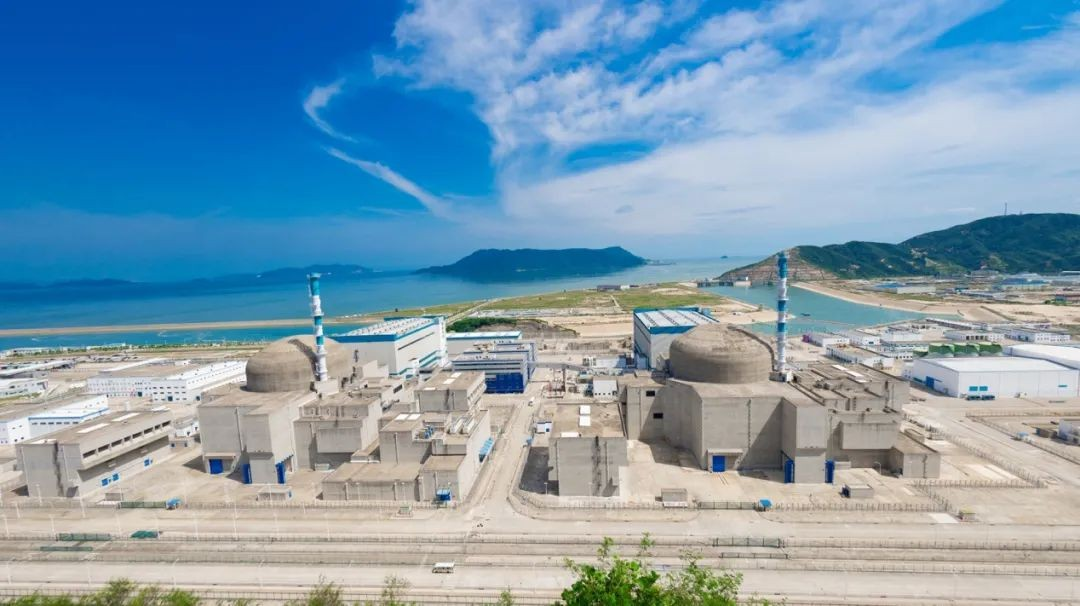
Russian Foreign Minister Sergey Lavrov said that Russia has multiple cooperation plans with China and India, including in the nuclear energy sector. Speaking at a lecture held by the Russian Znanie society during the Eastern Economic Forum, Lavrov stated that Russia has many plans with both China and India, specifically mentioning nuclear energy cooperation. In recent years, cooperation between Russia and China and India in the nuclear energy field has continued to advance. On the China-Russia front, physical startup of Unit 7 at the Tianwan Nuclear Power Plant was initiated on August 12, 2026. This unit, along with Unit 8 at Tianwan and Units 3 and 4 at the Xudabao Nuclear Power Plant, are part of the Russia-China nuclear cooperation projects, adopting Russia's VVER-1200 Generation III reactor design, with related construction work launched in the spring of 2022.
2026-09-04
The Fifth Meeting of 2026 on the Construction of the Nuclear Power Safety and Health Archive System Convened
Recently, the Working Group on the Construction of the Nuclear Power Safety and Health Archive System held its fifth promotion meeting of 2026 and thematic subgroup meetings. Representatives from all member units of the working group and relevant organizations attended the meetings. The meetings discussed the progress of informatization construction, computing resource allocation, data governance and sharing, and R&D of digital and intelligent applications for the nuclear power safety and health archive system. Live demonstrations were conducted on the functional implementation of the health archive information systems on both the regulatory side and across various corporate groups. The achievements in system construction were summarized on a phased basis, existing issues were reviewed, and near-term work tasks were deployed. The meetings noted that the construction of the nuclear power safety and health archive system is an important endeavor in promoting the transformation of nuclear safety management and regulatory mechanisms. At present, data governance has achieved initial results, the data verification mechanism has been effectively implemented, and the development of application scenarios is being steadily advanced, creating conditions for the continued improvement of the system. The meetings required that: first, continue to adhere to a goal-oriented and problem-oriented approach, focus on the fundamental functions of the system, concentrate efforts on further addressing shortcomings in a targeted manner, and steadily advance system construction; second, in light of pilot application results, promptly conduct reviews and summaries, comprehensively identify difficulties, bottlenecks, and weak links, and improve the system's operational effectiveness across the entire process; third, continue to coordinate and advance various tasks including data benchmarking and warehousing, frontline demand research, and scenario development and implementation, making every effort to ensure the high-quality completion of the nuclear power safety and health archive system, thereby contributing to the continuous improvement of the operational safety and construction quality of nuclear power plants in China.
2026-09-04