
Search Results
Keyword:nuclear
XENONnT Observes First Low-Energy Solar Neutrino-Electron Scattering Signals
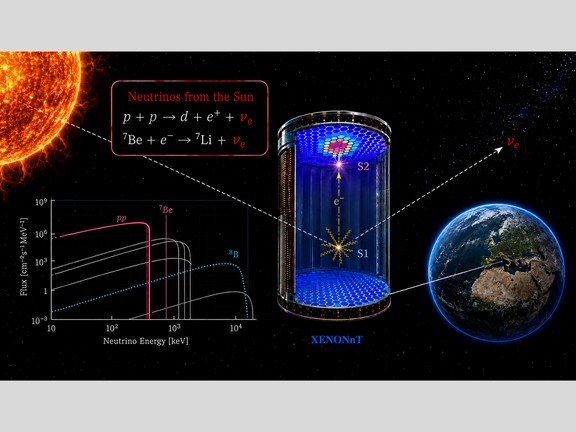
Scientists of the XENON collaboration recently announced the first observation of low-energy solar neutrino scattering off electrons in the XENONnT particle detector. The results were presented at a workshop held on August 31, 2026, at the Gran Sasso National Laboratory of the Italian National Institute for Nuclear Physics. The team of Prof. Teresa Marrodán Undagoitia and Dr. Hardy Simgen from the Max Planck Institute for Nuclear Physics played a key role in the experiment. Nuclear fusion in the Sun continuously produces vast numbers of neutrinos, with hundreds of billions passing through every square centimeter of Earth each second. Because neutrinos interact with matter extremely weakly, detecting these particles...
2026-09-07
No Evidence of Mirror Neutrons Found in Swiss PSI Ultracold Neutron Experiment
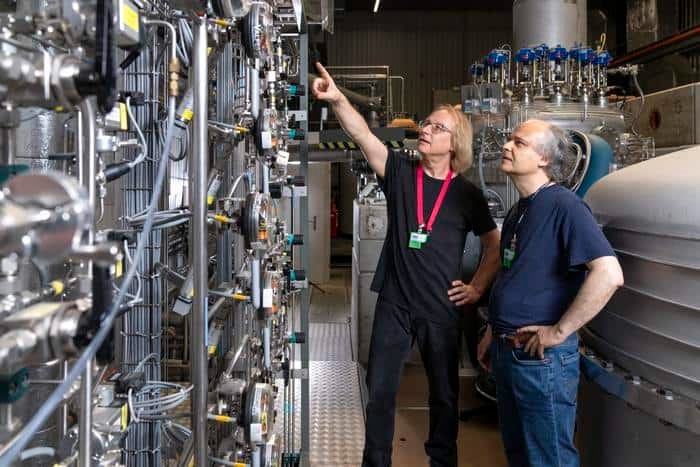
The Ultracold Neutron Physics Group at the Paul Scherrer Institute (PSI) in Switzerland recently stated that its research team found no evidence of spontaneous transformation of ordinary neutrons into mirror neutrons in a high-precision experiment. The researchers said the result essentially rules out the main parameter space previously suggested for anomalous neutron-mirror neutron oscillation signals, and also weakens the possibility that mirror neutrons could be a component of dark matter. Bernhard Lauss (left) and Géza Zsigmond examined approximately 2.5 billion neutrons at the ultracold neutron source at the Paul Scherrer Institute (PSI). They essentially ruled out the hypothesis of spontaneous transformation of neutrons into mirror neutrons. (Image courtesy of Paul Scherrer Institute PSI/Ma...
2026-09-07

China officially promotes Hualong One 2.0 Gen-III+ nuclear power technology to the global market
Nine key safety indicators of the Hualong One 2.0 Gen-III+ nuclear power technology have been significantly improved, the number of cabinets in the new-generation Harmony system has been reduced by approximately 40%, and the world's first 8.6-meter-aperture solar thermal collector, Yuanyao-1, can achieve a photoelectric efficiency of 17%... These were the highlights reported by this journalist at the CGN 2026 Sustainable Development Conference held in Shenzhen on September 7. At the conference, CGN officially released the "2025 CGN Sustainable Development Report," and simultaneously launched its global responsibility brand, the "CGN Firefly Plan." As the APEC Economic Leaders' Meeting draws near, Shenzhen is becoming the focus of Asia-Pacific attention. On September 7, CGN, headquartered in Shenzhen, hosted a sustainable development conference themed "Green Energy Illuminating Mountains and Seas, Joining Hands to Create the Future," showcasing China's clean energy development landscape and its latest progress in going global to think tanks, media, and other stakeholders from APEC member economies and countries jointly building the "Belt and Road."
2026-09-07
Japanese research team accelerates muons to 0.3 MeV, taking a step toward the world's only muon accelerator
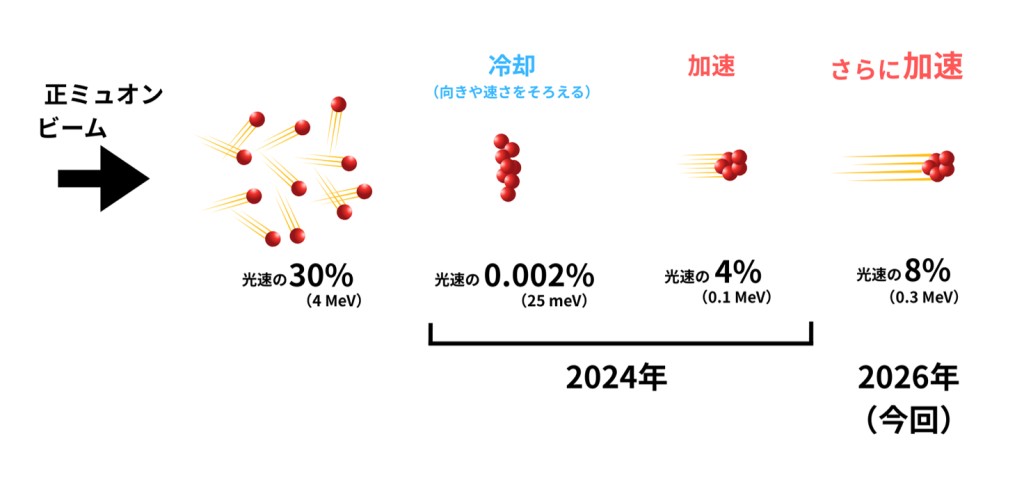
A research team comprising the J-PARC Center, High Energy Accelerator Research Organization (KEK), the University of Tokyo, Tokai National Higher Education and Research System, Nagoya University, and RIKEN recently completed muon cooling and radio-frequency acceleration experiments in the newly constructed muon acceleration experimental area at the J-PARC Materials and Life Science Experimental Facility, successfully accelerating muons to a kinetic energy of 0.3 MeV, corresponding to approximately 8% of the speed of light. Conceptual diagram of cooling and accelerating positive muon beams. By cooling positive muons with non-uniform direction and velocity, efficient high-frequency acceleration can be achieved. Muons are elementary particles similar to electrons that can be artificially produced by accelerators and are widely used in materials science, particle physics research...
2026-09-07

Malaysia Expands Nuclear Radiation Mutation Breeding Applications to Bolster Food Security and Industrial Inspection
Malaysia's nuclear technology applications are extending from traditional fields such as medicine and industry further into agricultural production and food security. Dr. Sukri, Senior Director of Project Management at the Malaysian Nuclear Agency, stated that through research and development using nuclear radiation mutation breeding technology, the agency has shortened the maturation period of cassava from the original 10 to 12 months down to 6 months. Sukri noted that this technological application helps reduce farmers' production costs, improve land use efficiency, and cultivate larger cassava varieties. In addition to cassava, the Malaysian Nuclear Agency, in collaboration with the Ministry of Agriculture and Food Security and the Department of Agriculture, has successfully developed two new rice varieties, NMR 151 and NMR 152. These new varieties feature higher yields and demonstrate strong resistance to diseases, extreme weather conditions such as prolonged drought, and flooding.
2026-09-07
Uzbekistan's Jizzakh Nuclear Power Project Investment Estimate Reaches $9.5 Billion
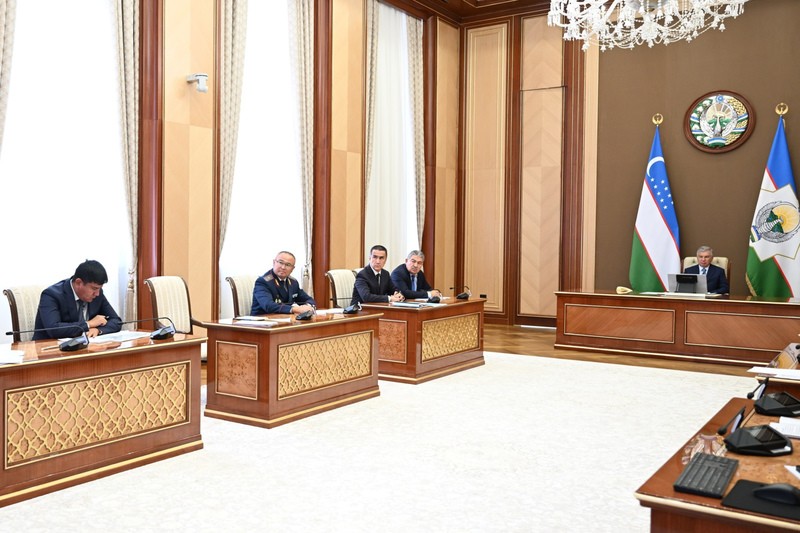
The nuclear power project in the Jizzakh region, developed by Uzbekistan in cooperation with Russia's State Atomic Energy Corporation (Rosatom), has a total capital expenditure estimate of $9.5 billion. The investment scope includes site preparation, reactor construction, regulatory compliance, and high-voltage grid connection. Under the project arrangement, the nuclear power plant will adopt Russian-designed advanced reactor technology to meet regional baseload power supply demands and adapt to Uzbekistan's geographical and climatic conditions. The project site in the Jizzakh region is intended to enhance power supply reliability for the central industrial corridor of Uzbekistan and promote a reduction in the country's energy structure's dependence on natural gas. Uzbek President Shavkat...
2026-09-07
Malaysia Evaluates Inclusion of Nuclear Power in Long-Term Energy Mix
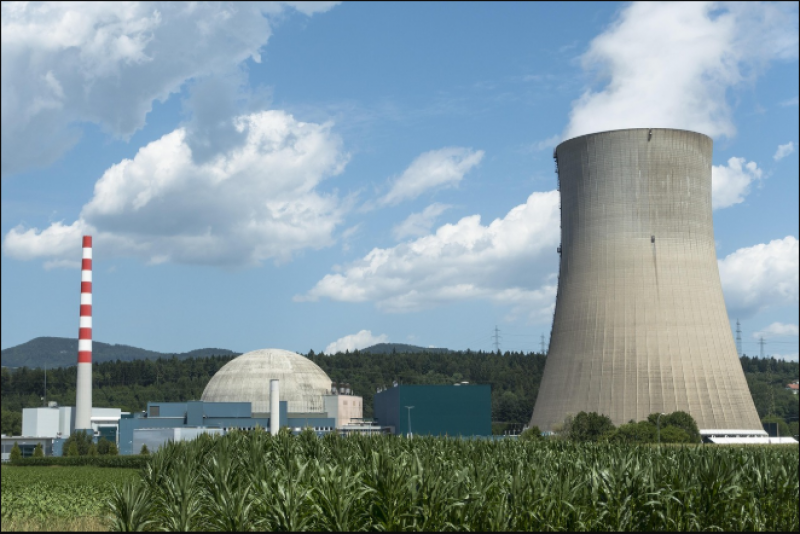
Malaysia is steadily paving the way for the future introduction of nuclear energy into its energy mix. Although such plans are unlikely to materialize in the short term, policy assessments, regulatory preparations, talent development, and business model discussions surrounding civilian nuclear energy have noticeably accelerated. The International Atomic Energy Agency (IAEA) recently held a national workshop in Malaysia to introduce a human resource development model for the nuclear sector, aimed at helping the country forecast future staffing needs and support workforce planning required for nuclear technology applications. In March this year, Malaysian Deputy Prime Minister and Minister of Energy Transition and Water Transformation Fadillah Yusof stated that Malaysia has conducted a comprehensive assessment of a potential nuclear energy program, covering policy formulation, regulatory...
2026-09-07
Kenya seeks IAEA review support to advance nuclear power project by 2034
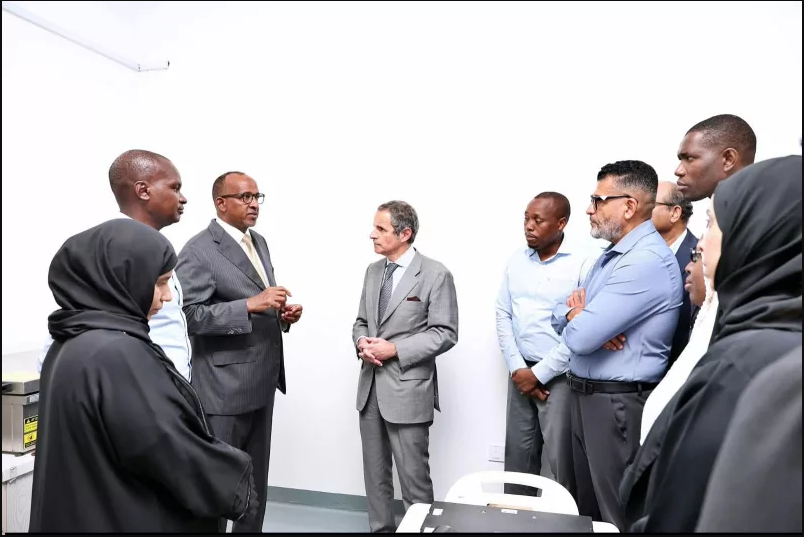
Kenya is seeking a new round of review and expanded technical support from the International Atomic Energy Agency (IAEA) to advance its long-planned nuclear power program toward construction readiness by 2034. According to relevant meeting briefings, Kenya hopes the IAEA will conduct a Phase 2 Integrated Nuclear Infrastructure Review (INIR) mission in the fourth quarter of 2026, along with support in training nuclear engineers and nuclear scientists. Kenya also plans to leverage the IAEA's 70th General Conference, to be held in Vienna from September 14 to 18, to secure advisory services, skills training, and technical assistance for advancing its nuclear power project and nuclear research reactor construction. Kenya is expected to send a high-level delegation of approximately 30 people...
2026-09-07
Russia masters production technology of ultra-pure germanium for gamma detectors
The Giredmet Research Institute, part of Rosatom, recently announced that its researchers have developed technology for producing high-purity germanium (HPGe) for gamma-ray detectors. This breakthrough is expected to replace imported crystals and promote the formation of a complete production cycle for detector equipment within Russia. According to reports, experts at Giredmet have designed and manufactured experimental equipment, and based on this, developed a process for preparing ultra-high-purity germanium single crystals. The purity of the germanium material reaches at least 7N, i.e., 99.99999%, equivalent to only one impurity atom per 10 million atoms of the primary material. The institute stated that the first batch of experimental samples has been obtained, verifying the effectiveness of the adopted deep germanium purification method in achieving the purity level required for detector applications.
2026-09-07
Russian Researchers Propose New Method for Preparing Iron-59 Magnetite Nanoparticles, Potentially Advancing Nuclear Medicine Diagnostics and Therapy
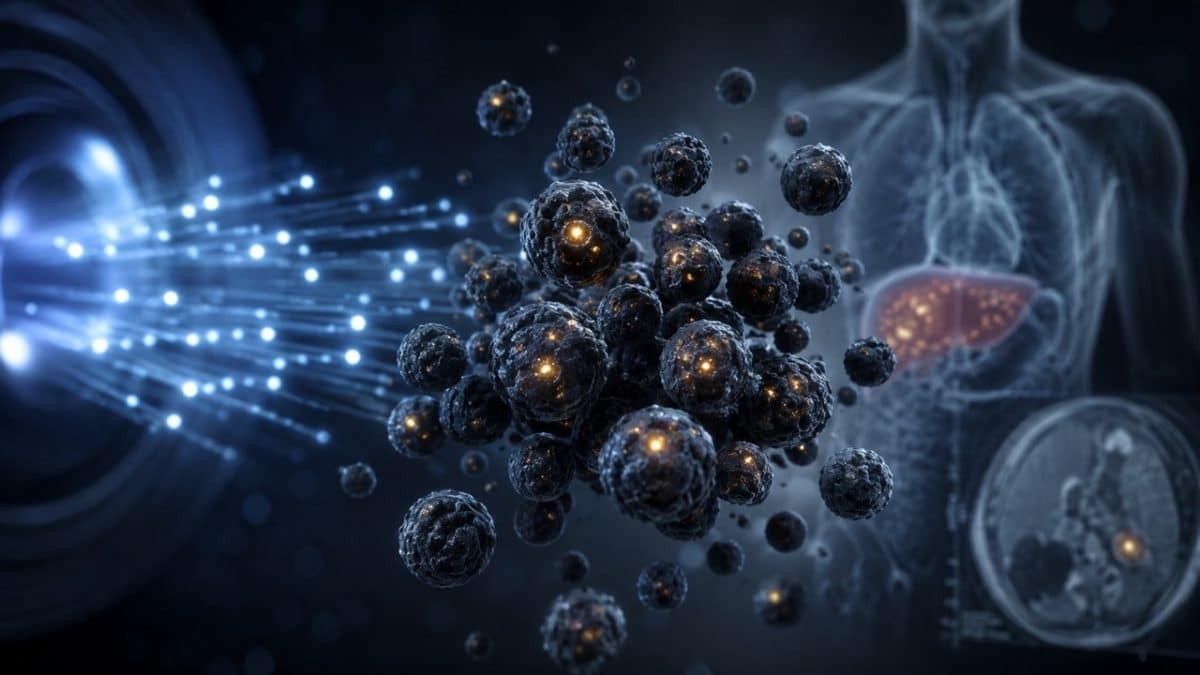
Russian researchers have developed a new method for preparing iron-59-labeled magnetite nanoparticles, which is expected to provide a new material preparation pathway for medical applications such as magnetic resonance imaging, single-photon emission computed tomography, and radionuclide therapy. According to reports, researchers from the Vernadsky Institute of Geochemistry and Analytical Chemistry and the Karpov Institute of Physical Chemistry, both under the Russian Academy of Sciences, have proposed synthesizing iron-59 magnetite nanoparticles using the sol-gel method. The relevant findings have been published in the journal Applied Radiation and Isotopes. The sol-gel method is a chemical approach for preparing nanomaterials, with the core process involving the conversion of a liquid colloidal solution into a gel-like network...
2026-09-07
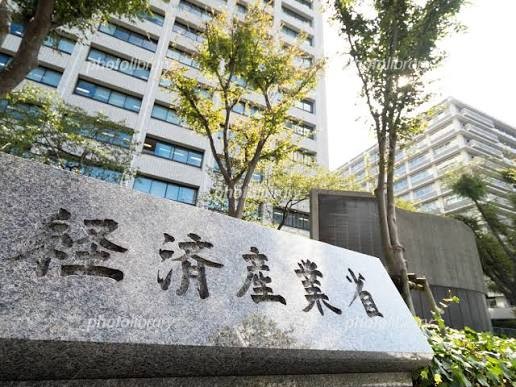
Japan Selects Four Companies for Fusion Power Program
Japan's Ministry of Economy, Trade and Industry (METI) has conditionally selected EX-Fusion, Helical Fusion, Linea Innovation, and Starlight Engine to participate in a fusion program targeting reactor operation in the 2030s. The program will provide approximately $370 million, equivalent to around €318 million, in subsidies to selected projects by the end of February 2029. Specific funding allocations are still subject to formal grant decisions. The support corresponds to commitments in Japan's 2023 fusion strategy, which sets out the goal of achieving fusion power in the 2030s...
2026-09-07
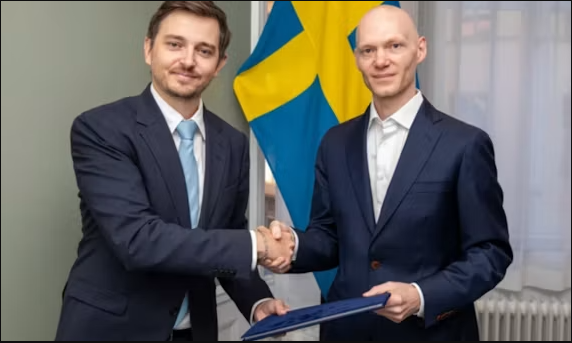
Sweden receives sixth state aid application for new nuclear power
The Swedish government has recently received its sixth state aid application for the construction of new nuclear reactors. Swedish Minister for Financial Markets Niklas Wykman stated that Nordic energy company Fortum's establishment of a project company in Sweden to advance new nuclear reactor plans demonstrates that Sweden's current state aid model has been carefully designed to accommodate project development needs. The application was submitted by NuCore Energi, a newly established project company under Fortum, with the project site located at Ävrö near the Oskarshamn nuclear power plant. Wykman has previously expressed repeated support for expanding nuclear energy in Sweden, believing that new nuclear power is of significant importance for long-term economic stability, industrial competitiveness, and climate goals.
2026-09-07
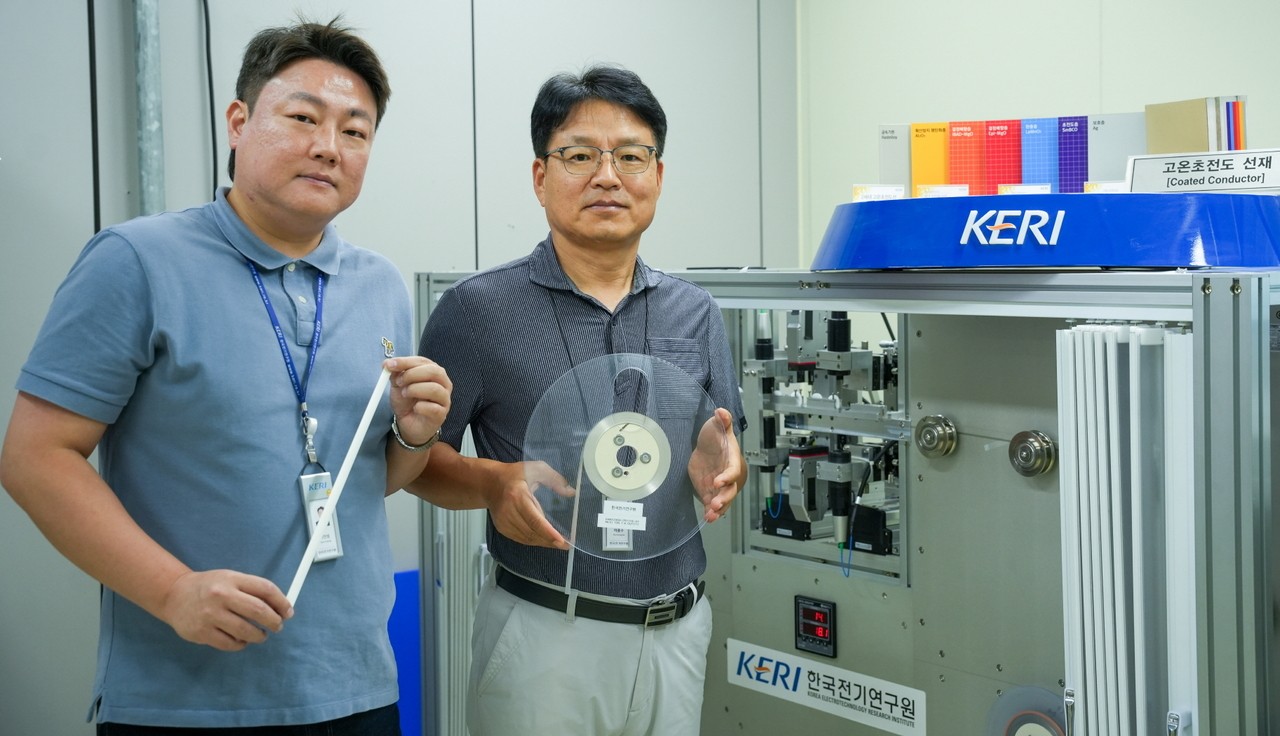
South Korea Develops 3D Non-Contact Inspection System for High-Temperature Superconducting Wire
The Korea Electrotechnology Research Institute (KERI) recently announced that a research team led by Ha Hong-su and Park In-sung at its Low-Temperature Device Research Center has developed a three-dimensional non-contact ultra-precision inspection system capable of continuously measuring the thickness and width of high-temperature superconducting (HTS) wire. The institute stated that this is the world's first such inspection system for HTS wire. KERI researchers Ha Hong-su and Park In-sung pose with a high-temperature superconducting wire beside the 3D non-contact ultra-precision inspection system. [Korea Electrotechnology Research Institute] HTS wire exhibits near-zero electrical resistance below a specific temperature, enabling high-current, low-loss transmission,...
2026-09-07

Russian designers propose hybrid powerplant concept for small nuclear submarine
Nikolai Kirillov, a designer from St. Petersburg, Russia, has proposed a powerplant concept for a small nuclear submarine, envisioning a combination of a diesel engine, a small nuclear reactor, and an electric motor to provide the submarine with three operating modes: diesel surface cruising, electric submerged navigation, and sustained nuclear power generation. Under this concept, the submarine is powered by the diesel engine while surface cruising. The diesel engine drives a fixed-pitch propeller through a gearbox and a dedicated propeller shaft, allowing the diesel to operate as close to its rated conditions as possible to reduce equipment wear. In submerged conditions, the diesel engine is shut down, and propulsion is provided by a separate electric motor. This motor is paired with a controllable-pitch propeller and draws power from a battery bank.
2026-09-07
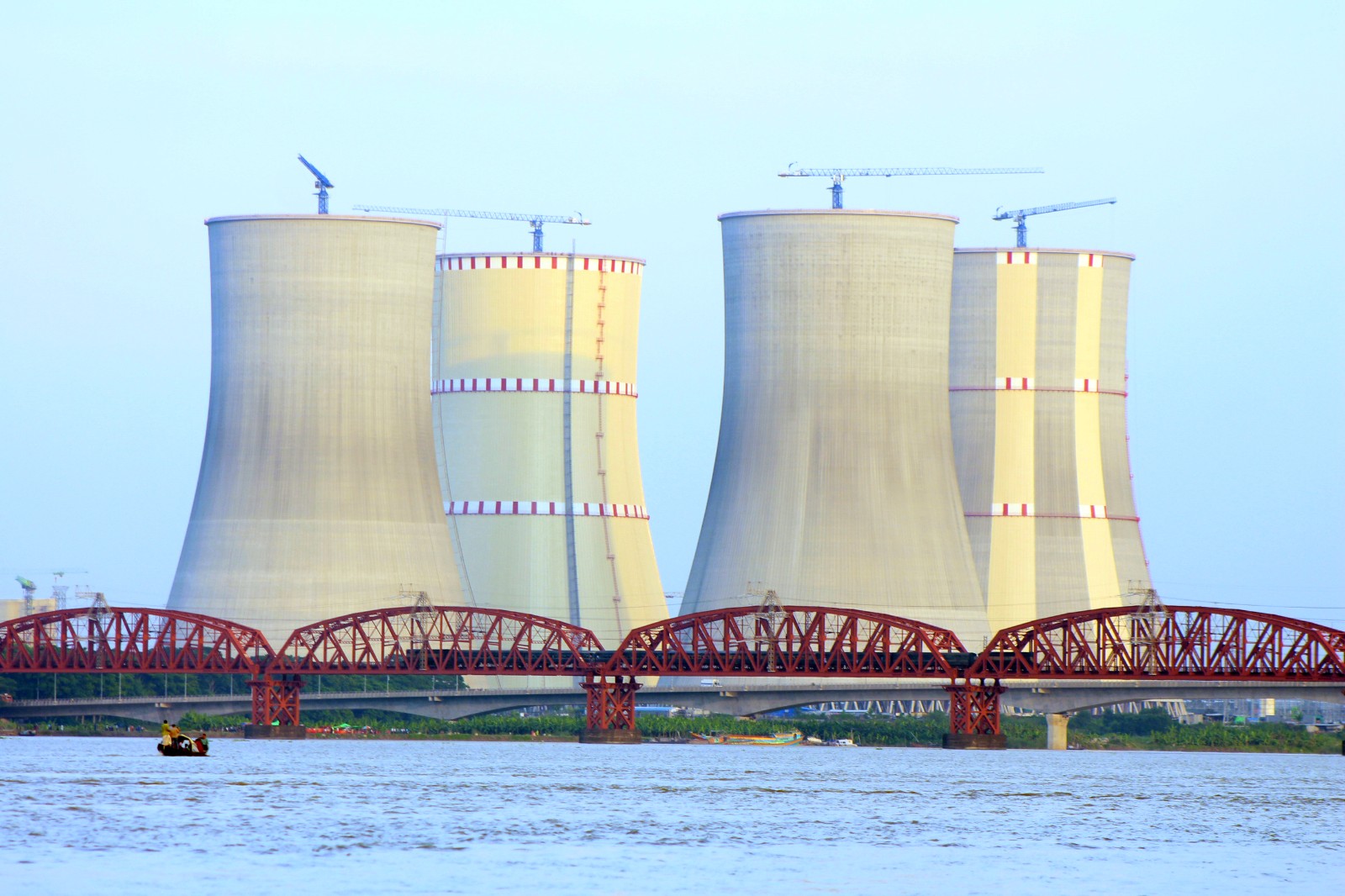
Grid Connection of Unit 1 at Bangladesh's Rooppur Nuclear Power Plant Delayed Again
The grid connection of Unit 1 at Bangladesh's Rooppur Nuclear Power Plant has been delayed once again. Fakir Mahbub Anam, Bangladesh's Minister of Science and Technology, stated that two critical safety valves of the unit exposed technical faults during testing, and the next phase of testing cannot be initiated for the time being. A specific timeline for troubleshooting and grid connection of the unit has yet to be determined. Located in the Pabna region of Bangladesh, the Rooppur Nuclear Power Plant is being constructed with financing and technical support from Russia, with plans for two VVER-1200 units totaling approximately 2,400 megawatts of installed capacity. On April 28 this year, the unit commenced fuel loading preparation and testing work, when the project...
2026-09-07