Registration
REGISTER FOR THE CONFERENCE
Registration
REGISTER FOR THE CONFERENCE
 Apply to Exhibit
APPLICATION FOR EXHIBITION
Apply to Exhibit
APPLICATION FOR EXHIBITION
 Sponsorship
SPONSORSHIP APPLICATION
Sponsorship
SPONSORSHIP APPLICATION
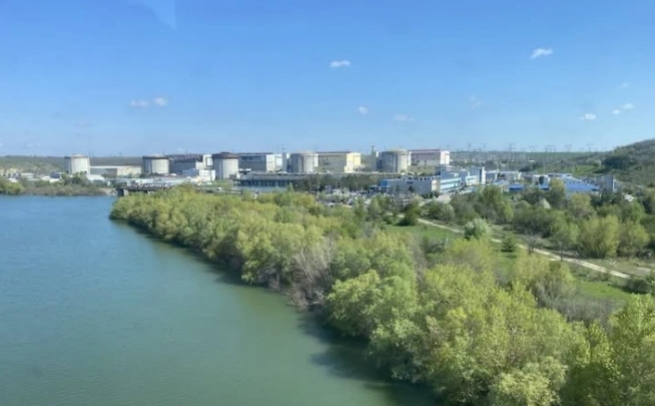
Wachtebeke Municipal Council Reintroduces Nuclear Power Plant Motion
The municipal council of Wachtebeke, Belgium, has once again seen a motion regarding the construction of a nuclear power plant in Paulina Polder, but this time, unlike before, the motion has gained the support of the far-right PVV party. Previously, the plan had been highly controversial, with local residents and environmental organizations strongly opposing the construction of a new nuclear power plant in this sensitive wetland area. They fear irreversible environmental impacts and question the necessity of building new nuclear plants during the energy transition. The introduction of this motion marks a further strengthening of opposition to the project. The PVV's support increases the likelihood of the motion passing and places greater pressure on local authorities. More...
2026-08-01

Six Polish companies enter final stage of supplier qualification for Westinghouse AP1000 first reactor
2026-08-01

Units 3 and 4 of Dukovany Nuclear Power Plant to Undergo Joint Maintenance of Shared Systems
2026-08-01

Portuguese Parliament Advised to Assess Feasibility of Small Modular Reactors in the Country
2026-08-01

Philippine Lawmaker Says Nuclear Energy Could Ease Power Supply Pressure in Western Visayas
2026-08-01

Vietnam's National Assembly Committee on Defense, Security and Foreign Affairs officially reviews approval contents related to Ninh Thuan Nuclear Power Plant
2026-08-01
Russia Suspends Payments to Nuclear Agency, Redirects Funds to Rosatom
2026-08-01

American Fusion Completes First Phase of Texatron Testing at Texas Tech University
2026-08-01

Greenpeace accuses Spanish Nuclear Safety Council of improperly renewing Almaraz nuclear power plant license until 2030
2026-08-01
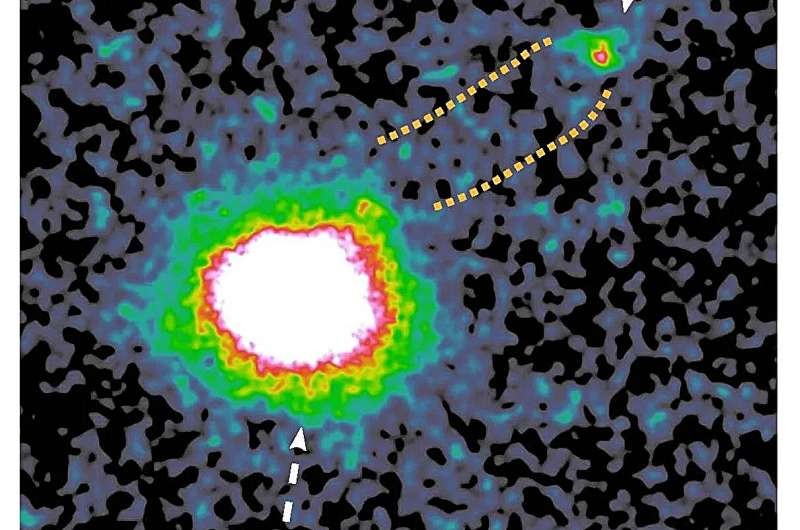
On July 31, the German eROSITA consortium, led by the Max Planck Institute for Extraterrestrial Physics with participation from the University of Bonn, released its second major public dataset, eROSITA Data Release 2 (DR2). Built from the first three all-sky survey observations conducted by the eROSITA telescope aboard the Spectrum-Roentgen-Gamma (SRG) mission, this dataset is considered one of the most sensitive and comprehensive X-ray catalogs currently available to the public. The DR2 main catalog covers the 0.2–2.3 kiloelectron-volt (keV) band in the western hemisphere, containing nearly two million X-ray sources. Among these, over 1.9 million are point-like sources, primarily consisting of stars and actively accreting supermassive black holes; approximately 64,000 are extended sources,...
2026-08-01
A materials study released on July 31 shows that a research team used laser powder directed energy deposition (LP-DED) technology to fabricate a novel Cr₁₀Mo₂₅Ta₂₅Ti₁₅V₂₅ refractory complex concentrated alloy and systematically evaluated its structural stability and mechanical properties under irradiation environments. The study targets the demand for high-temperature, high-irradiation structural materials in next-generation nuclear fission and fusion devices. In the study, samples were subjected to 3.5 MeV Fe²⁺ ion irradiation at the Ion Beam Materials Laboratory of Los Alamos National Laboratory in the United States, at irradiation temperatures of room temperature and 650°C, with local doses reaching approximately 1.8, 6, and 18 dpa. Microstructural analysis...
2026-08-01
On July 31, Egypt's Ministry of Health and Population stated that it reaffirmed its critical role in improving Egypt's national radiation safety system during a 12-day Integrated Regulatory Review Service (IRRS) mission conducted by the International Atomic Energy Agency (IAEA). The IRRS mission, involving a team of international experts and reviewers, was conducted at the invitation of the Egyptian Nuclear and Radiological Regulatory Authority (ENRRA). Egyptian authorities stated that this step is part of the country's ongoing efforts to strengthen its national radiation safety framework and enhance its regulatory infrastructure in line with the latest international standards. The Ministry of Health and Population submitted a topical report through the Radiation Protection Executive Office of the General Department of Radiology, detailing its role in regulating and supervising the use of medical radiation...
2026-08-01
Bengaluru, India – Manipal Hospital Yelahanka has become the first healthcare facility in India to install Elekta Evo, Elekta's AI-enhanced adaptive CT linac platform, which will support clinical teams in delivering online adaptive radiotherapy for more personalized and precise cancer treatment. The system was previously showcased at AROICON 2025, India's radiation oncology conference. According to data from the Indian Council of Medical Research, India records an estimated 1.46 million new cancer cases annually, with radiotherapy demand continuing to grow. For patients with complex conditions or those presenting at advanced stages...
2026-08-01
The Anambra State Government of Nigeria recently stated that it will strengthen cooperation with the Nigerian Nuclear Regulatory Authority (NNRA) to enhance radiation safety across the state and ensure the safe and compliant use of radioactive materials in medical institutions. At a meeting held in Awka, the capital of Anambra State, Dr. Afam Obidike, the State Commissioner for Health, exchanged views on relevant cooperation with a delegation from the NNRA. The delegation was led by Ekene Efenemoku, the NNRA's Southeast Zonal Coordinator. Efenemoku stated that the visit aimed to deepen bilateral cooperation and brief the state government on the NNRA's statutory responsibilities. According to his introduction, the...
2026-08-01
Researchers at the Indian Institute of Technology Roorkee have developed an acid-resistant magnetic nanocomposite capable of recovering uranium and rare earth elements from acidic leach solutions. The material consists of core active nanoparticles encapsulated in a protective silica layer, enabling efficient absorption and extraction of these valuable resources in complex acidic aqueous media. By synthesizing the silica shell using biocompatible reagents, the researchers not only enhanced the material's corrosion resistance but also made it safer and more environmentally friendly. This novel nanocomposite demonstrated exceptional performance in laboratory tests, recovering up to 370 grams of uranium and rare earth elements per kilogram of material. It can operate effectively not only under conditions such as natural groundwater...
2026-08-01
On July 31, researchers at Lawrence Berkeley National Laboratory, in collaboration with scientists from the University of Maryland and the University of Hawaii, proposed a new method for locating subsurface ice deposits on the Moon using seismic waves. The findings, published in the journal Science Advances, are expected to provide a reference for interpreting detection data and locating water resources in future lunar landing missions. The research focuses on how subsurface lunar materials respond to seismic waves. The team developed computational models to predict the behavior of lunar subsurface media of varying compositions under seismic wave excitation. Experimental results showed differences in seismic response between ice-bearing and dry rocks, indicating that seismological methods have the potential to identify ice layers buried beneath lunar regolith and rock.
2026-08-01