Registration
REGISTER FOR THE CONFERENCE
Registration
REGISTER FOR THE CONFERENCE
 Apply to Exhibit
APPLICATION FOR EXHIBITION
Apply to Exhibit
APPLICATION FOR EXHIBITION
 Sponsorship
SPONSORSHIP APPLICATION
Sponsorship
SPONSORSHIP APPLICATION
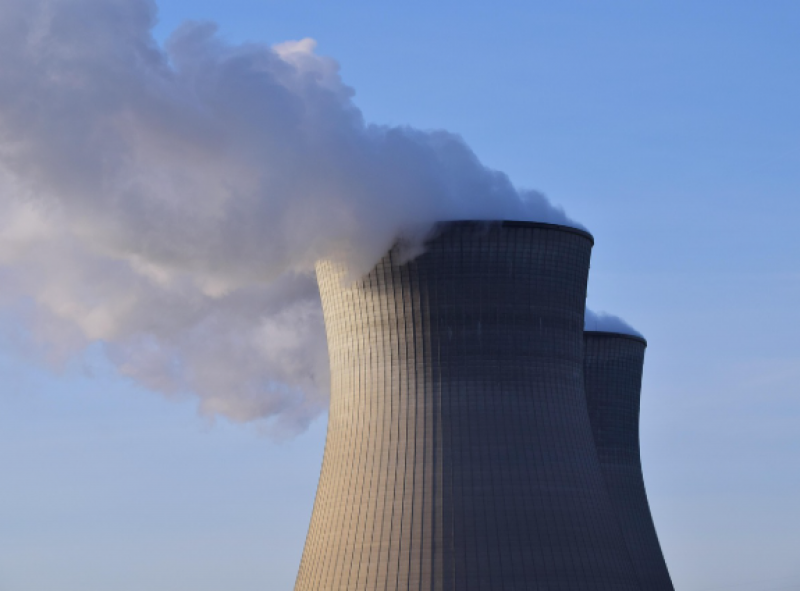
Climate change impact assessment to be conducted for new nuclear power plant in Yeongdeok, South Korea
South Korea's Ministry of Climate, Energy and Environment announced on August 12 that the proposed Yeongdeok nuclear power plant will undergo a climate change impact assessment in parallel with the strategic environmental impact assessment procedure. The assessment will be conducted in accordance with the Framework Act on Carbon Neutrality and the Environmental Impact Assessment Act, focusing on reviewing the project's alignment with higher-level plans such as the Nationally Determined Contributions (NDC), and evaluating greenhouse gas emissions and mitigation measures during the construction and operation phases. The assessment will cover the entire lifecycle of the nuclear power plant, from construction to operation. While the nuclear power generation process itself emits almost no greenhouse gases, emissions will still arise from large-scale civil engineering works, operation of construction equipment, and the production and transportation of building materials...
2026-08-13
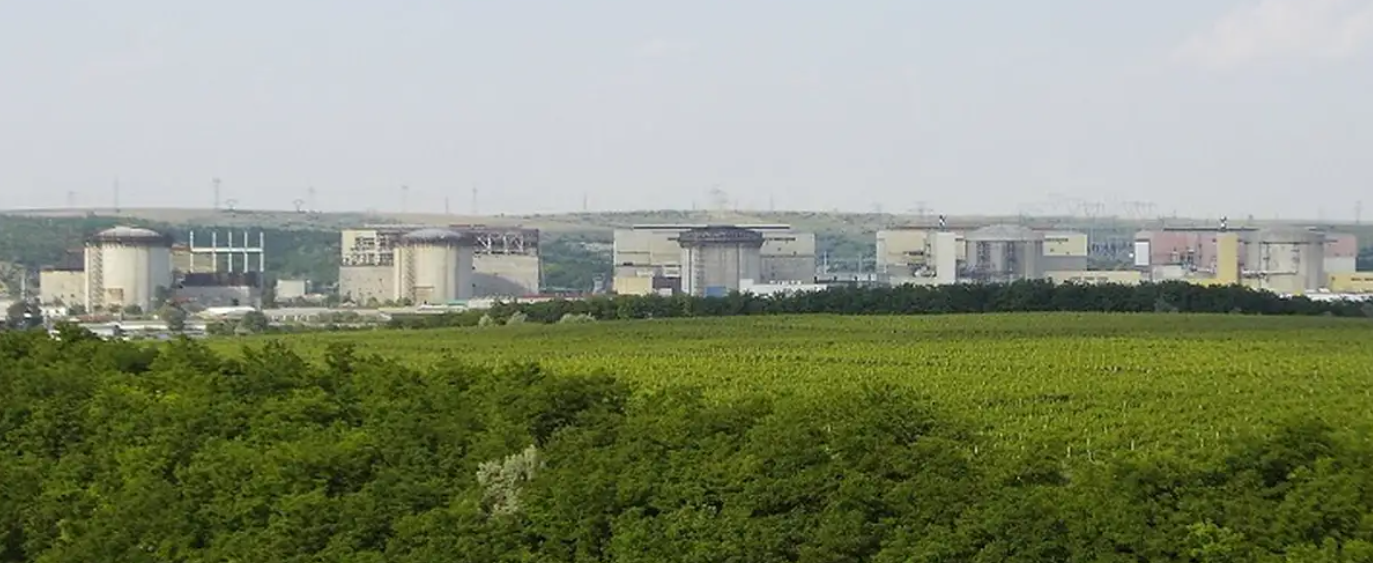
Romania's Cernavoda Nuclear Power Plant to Shut Down Due to Falling Danube River Levels
2026-08-13
Rosatom Starts Preparations for Long-Lead Equipment Contracts at Primorskaya NPP
2026-08-13
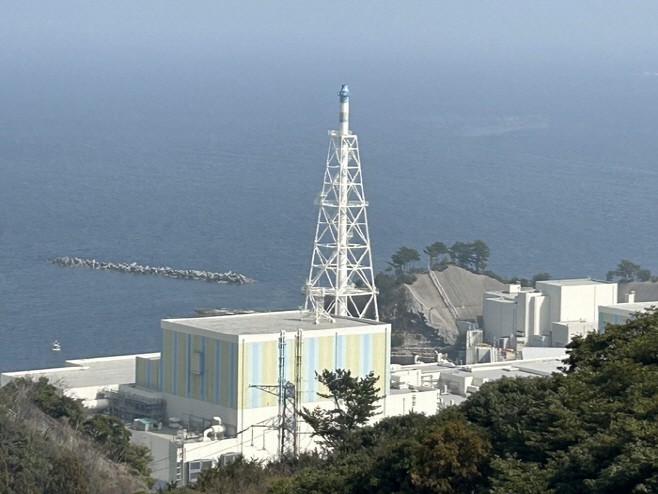
Shimane Nuclear Power Station Unit 2 completes containment vessel-related repairs, scheduled to resume commercial operation on the 16th of next month
2026-08-13
TEPCO and JAPC invite eight power companies to participate in spent fuel transport
2026-08-13

South Korea Sets 2035 Commercialization Target for Small Modular Reactors
2026-08-13

HD Hyundai Chairman to Meet Bill Gates to Advance SMR Cooperation
2026-08-13

South Korea's Two Ministries Sign MOU to Promote Regulatory Cooperation for Nuclear Power Exports
2026-08-13

Hungary Plans to Build Bottom Sills on the Danube to Ensure Cooling Water for Paks Nuclear Power Plant
2026-08-13
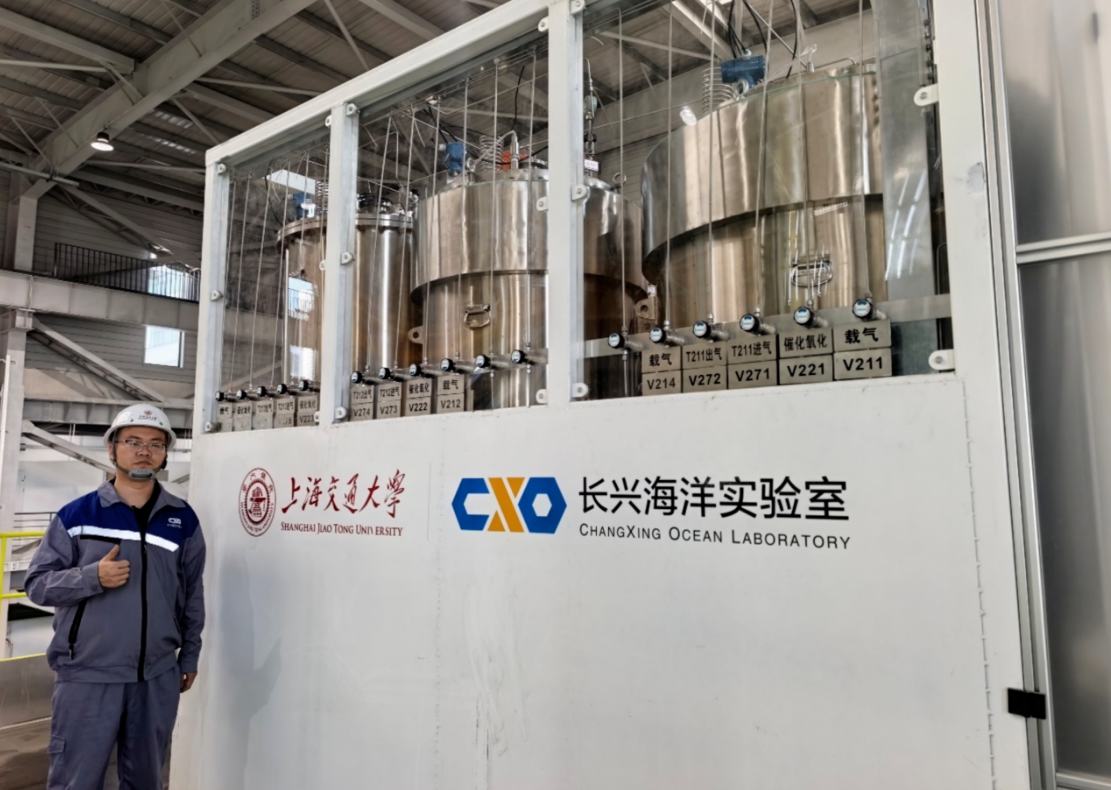
Shanghai Jiao Tong University's Changxing Ocean Laboratory is dedicated to building a quasi-industrial research platform for high-end marine equipment. The Marine Isotope Separation Applied Research Center, focusing on the industrial context of isotope production, separation, and application, and supported by the ministerial-level Isotope Separation Science and Technology Center, conducts research and development of key isotope separation technologies and engineering equipment for Generation III reactors, Generation IV reactors, and fusion reactors, establishing an innovative platform integrating R&D, testing, validation, data, and technical services. Major research facility: Recently, the construction of the hundred-ton-per-year light water hydrogen isotope separation pilot platform has achieved phased results, with the system facility undergoing full-process commissioning. The platform adopts a self-developed water distillation coupled with cryogenic hydrogen isotope separation process, achieving large-scale efficient separation and enrichment of hydrogen isotopes from light water. The platform's outcomes hold broad engineering application value in fields such as pressurized water reactor wastewater treatment, deuterium-tritium isotope separation, fusion tritium plant operation, and heavy water/heavy hydrogen production. At 18:00 on August 4, 2026, at the Marine Isotope Separation Applied Research Center of Changxing Ocean Laboratory, the hundred-ton-per-year light water hydrogen isotope separation pilot facility was commissioned through its full process! The commissioning and operation of this pilot facility was undertaken by the Marine Isotope Separation Applied Research Center, with all departments coordinating collaboratively, making meticulous arrangements, and dedicating full efforts. During the operation, the team successively overcame multiple challenges including tight schedules, heavy workloads, and persistent high temperatures. This achievement not only fully validated the stability and reliability of the process platform but also demonstrated the researchers' responsibility and commitment in rising to challenges and persevering diligently. In the next phase, the project technical team will continue to deepen process optimization based on existing achievements, focus on advancing continuous and stable facility operation, accelerate engineering application, and provide strong support for breakthroughs in key core technologies in China's hydrogen isotope separation field.
2026-08-13
As the southwestern region enters the main flood season, multiple rounds of heavy rainfall have frequently occurred across Sichuan, Chongqing, Yunnan, and Guizhou, with continuously escalating risks of flooding and waterlogging backflow, putting the radiation safety of urban radioactive waste temporary storage facilities to the test. The Ministry of Ecology and Environment's Southwest Regional Office of Nuclear and Radiation Safety Supervision (hereinafter referred to as the Southwest Office) has focused on advance warning and source prevention, urging urban radioactive waste temporary storage facilities in the southwestern region (hereinafter referred to as waste storage facilities) to conduct flood season self-inspections and proactively identify and rectify safety hazards through on-site inspections, online coordination, and work reminders. The Southwest Office has adhered to early planning, early deployment, and early action, conducting special pre-flood-season studies to arrange flood prevention work and urging all waste storage facilities to firmly establish bottom-line and extreme thinking...
2026-08-13
Starting December 1, 2026, a new national standard concerning food safety on your dining table will officially take effect — Recently, the State Administration for Market Regulation and the Standardization Administration of China issued the 2026 No. 23 National Standard Announcement, among which the "Irradiation Technology for Agricultural Products — Part 1: Legumes and Their Products" (GB/T 18525.1-2026) is particularly noteworthy. This standard, led by the Institute of Food Science and Technology, Chinese Academy of Agricultural Sciences, will officially take effect on December 1, 2026, replacing the old standard (GB/T 18525.1-2001) that has been in use for over 20 years. When hearing the word "irradiation," many people's first reaction is: "Is it safe?" "Will food become radioactive after being irradiated..."
2026-08-13
On July 31, the expert review meeting for the clinical performance evaluation of the CGN Hezhi® Proton Therapy System was held at the CGN Proton Therapy Equipment Manufacturing Base. Clinical experts from Sun Yat-sen University Cancer Center, National Cancer Center/Cancer Hospital of Chinese Academy of Medical Sciences, Sichuan Cancer Hospital, National Cancer Center/Cancer Hospital of Chinese Academy of Medical Sciences Shenzhen Hospital, and Shandong First Medical University Affiliated Cancer Hospital attended the review meeting.▲Expert review of CGN Hezhi® Proton Therapy System clinical performanceAt the review meeting, the relevant person in charge of CGN Medical Technology Co., Ltd. (hereinafter referred to as the "Company") introduced that the comprehensive verification platform for the proton therapy system has achieved full-process independent controllability from design, procurement, production,...
2026-08-12
Recently, the Beijing Municipal Health Commission, in accordance with the "Administrative Measures for Radiation Health Technical Service Institutions" (Guoweiban ZhiJian Fa [2026] No. 1), organized experts to conduct on-site reviews of two qualification expansion applications submitted by the National Center for Occupational Safety and Health under the National Health Commission. The projects include performance testing and evaluation of Boron Neutron Capture Therapy (BNCT) equipment and thyroid iodine-131 testing. During the review process, the expert panel conducted a comprehensive examination of the center's management system, personnel allocation, instruments and equipment, and technical capabilities related to radiation health testing and evaluation through document review, technical inquiries, on-site practical operations, and simulated demonstrations...
2026-08-12
The OPAL multipurpose reactor at the Lucas Heights campus of the Australian Nuclear Science and Technology Organisation (ANSTO), located south of Sydney, has marked the 20th anniversary of achieving first criticality. On August 12, 2006, OPAL achieved a self-sustaining controlled nuclear chain reaction, marking the facility's transition from the construction phase to the scientific operations phase. ANSTO stated that over the past 20 years, OPAL has become one of Australia's key nuclear science infrastructures, serving multiple fields including medicine, industry, and scientific research. OPAL is not a power reactor and is not used for electricity generation. According to available information, Australian federal law and relevant state and territory legislation prohibit the construction of nuclear power reactors, fuel fabrication, and waste disposal facilities. Unlike power reactors used for...
2026-08-12
On August 11, the National Nuclear Center of the Republic of Kazakhstan presented its progress in research on structural materials for advanced reactors. Yerzhan Ernatuly Sapataev, head of the Radiation Materials Science Laboratory at the center's Institute of Atomic Energy, stated that the development of next-generation reactors and fusion technologies has imposed higher requirements on structural materials in terms of high-temperature resistance, radiation tolerance, and corrosion resistance, and that material reliability will directly determine the safety and service life of future nuclear energy systems. Materials inside future reactors typically need to...
2026-08-12