
Search Results
Keyword:Al
ANSTO Australia Develops New Solution for Immobilizing Sulfate-Bearing Radioactive Waste
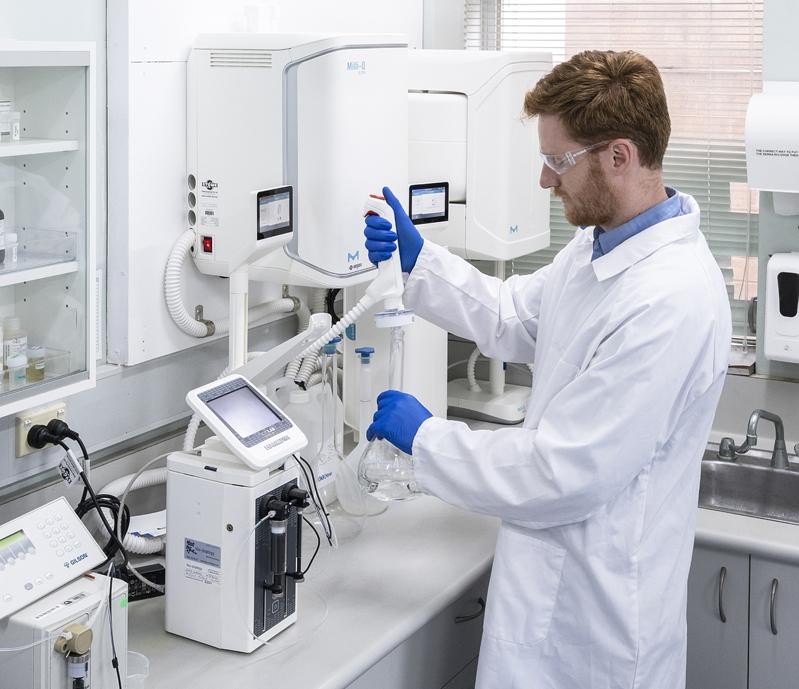
The Australian Nuclear Science and Technology Organisation (ANSTO) announced on July 31, 2026, that its researchers have developed a new waste treatment material for immobilizing sulfate-bearing radioactive waste, which is expected to solve the technical challenges in the long-term management of such waste and provide a reference pathway for similar radioactive waste treatment internationally. The related research has been published in the Journal of the European Ceramic Society. The study demonstrates for the first time the application of Hot Isostatic Pressing (HIP) technology in consolidating a dedicated glass-ceramic waste form for sulfate-rich nuclear waste. The research originated from ANSTO's need to manage waste generated during the production of medical radioisotopes, among which sulfate-bearing liquid waste...
2026-07-31
Shanghai Synchrotron Radiation Facility Science Center Organizes 2026 Annual Major Science and Technology Infrastructure Operation Training
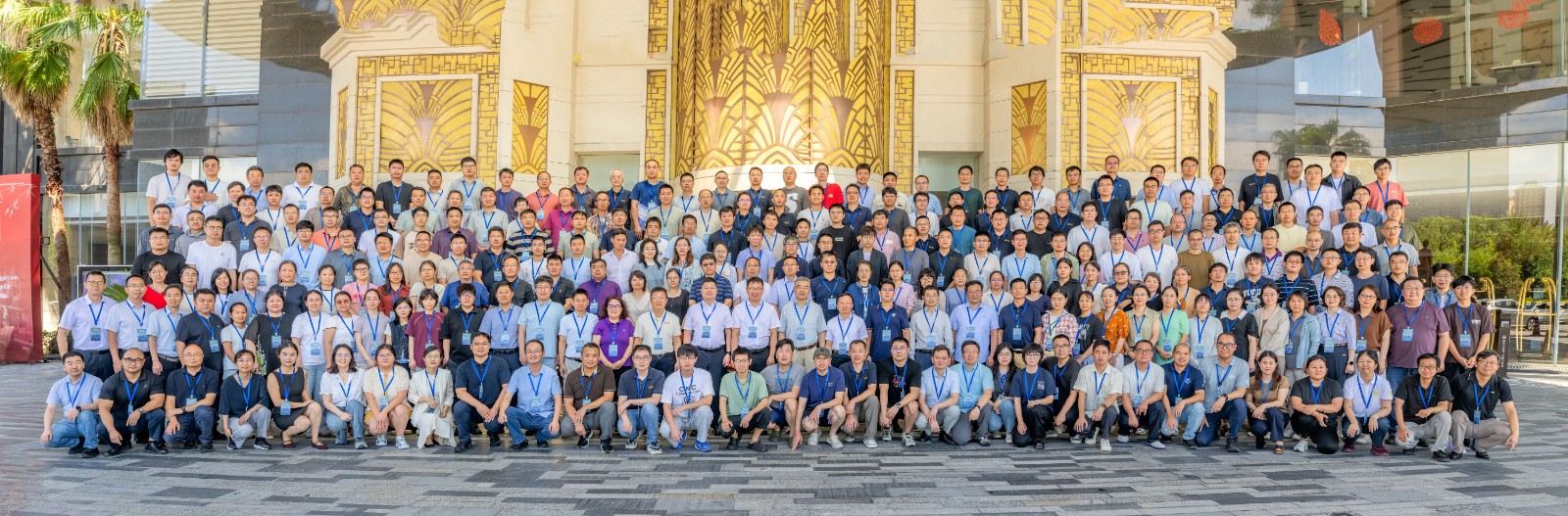
The joint training for the 2026 annual operating facilities (SSRF & SXFEL) of the Shanghai Synchrotron Radiation Facility Science Center, Chinese Academy of Sciences Shanghai Advanced Research Institute (hereinafter referred to as "Shanghai Advanced Research Institute"), was held in Haiyan, Zhejiang Province from July 28 to 30. Academician Zhao Zhentang, Director of the Academic Committee of Shanghai Advanced Research Institute and Director of the Shanghai Synchrotron Radiation Facility Science Center; Deng Haixiao, President and Deputy Secretary of the Party Committee of Shanghai Advanced Research Institute; Chen Fengwei, Secretary of the Party Committee; Tai Renzhong, Vice President and Executive Deputy Director of the Shanghai Synchrotron Radiation Facility Science Center; Zhou Sigen, Vice President; and over 260 representatives from the operation team of the Shanghai Synchrotron Radiation Facility Science Center, various functional departments of Shanghai Advanced Research Institute, and sister institutions participated in the training. The opening session was hosted by...
2026-07-31
QST completes first gyrotron 170 GHz microwave output test at ITER site
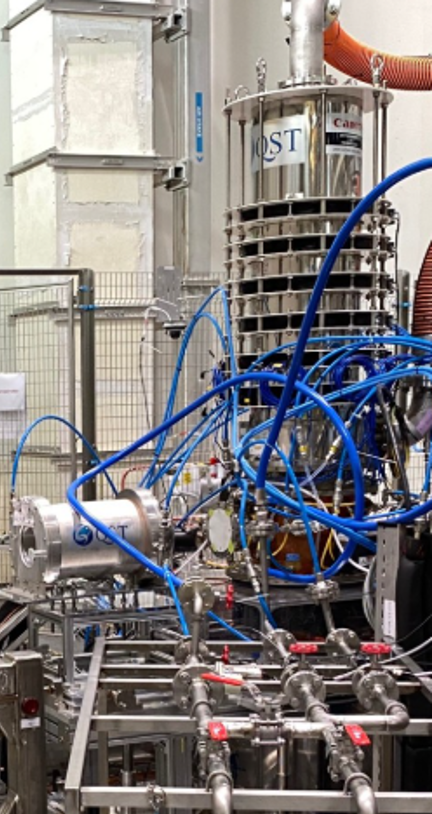
The National Institutes for Quantum Science and Technology (QST) of Japan announced on July 31 that it has completed the integration and operational testing of the first gyrotron system at the International Thermonuclear Experimental Reactor (ITER) site in southern France, successfully producing 170 GHz microwave output. This system is used for ITER plasma generation and heating, and is one of the key devices for ITER's plan to commence operations in 2034. The core equipment of this test is the gyrotron, a high-power microwave source. Gyrotron operation requires the coordinated work of peripheral equipment such as power supplies, superconducting coils, and cooling systems. QST previously completed performance testing of eight ITER gyrotron systems at the gyrotron test facility of the Naka Fusion Institute in Japan, and transported components including gyrotrons, superconducting coils, and quasi-optical matching units to the ITER site. Over the past three years, QST has advanced system installation, commissioning, and operational preparation at the site.
2026-07-31

South Korean University Team Files Patent for Fusion Reactor Optimization Design Method
Professor Hong Bong-geun of the Department of Quantum System Engineering at the College of Engineering, Jeonbuk National University, South Korea, has recently filed a patent for a fusion reactor optimization design method. This method can determine device dimensions and key component structures while enabling customized performance design for fusion reactors based on different applications such as power generation, thermal energy utilization, and transmutation neutron sources. According to reports, this design technology targets the early-stage R&D phase of fusion devices and can be used to rapidly assess the technical and economic feasibility of proposals, thereby reducing trial-and-error, shortening development cycles, and lowering development costs, providing design support for fusion energy commercialization...
2026-07-31
IAEA Launches ATLAS Initiative: Building a New International Governance Framework for Maritime Nuclear Applications
As global shipping demand for alternative fuels continues to grow and small modular reactor technology matures, nuclear applications in the maritime sector are accelerating from concept to reality. However, offshore nuclear deployment involves a complex set of issues including safety, security, safeguards, legal liability, insurance, and jurisdiction. The existing international regulatory framework is fragmented and ill-suited to the deployment needs of modern reactor designs. Against this backdrop, the International Atomic Energy Agency (IAEA) has officially launched the Atomic Technologies Licensed for Applications at Sea (ATLAS) initiative, aiming to establish an integrated framework encompassing nuclear saf...
2026-07-31
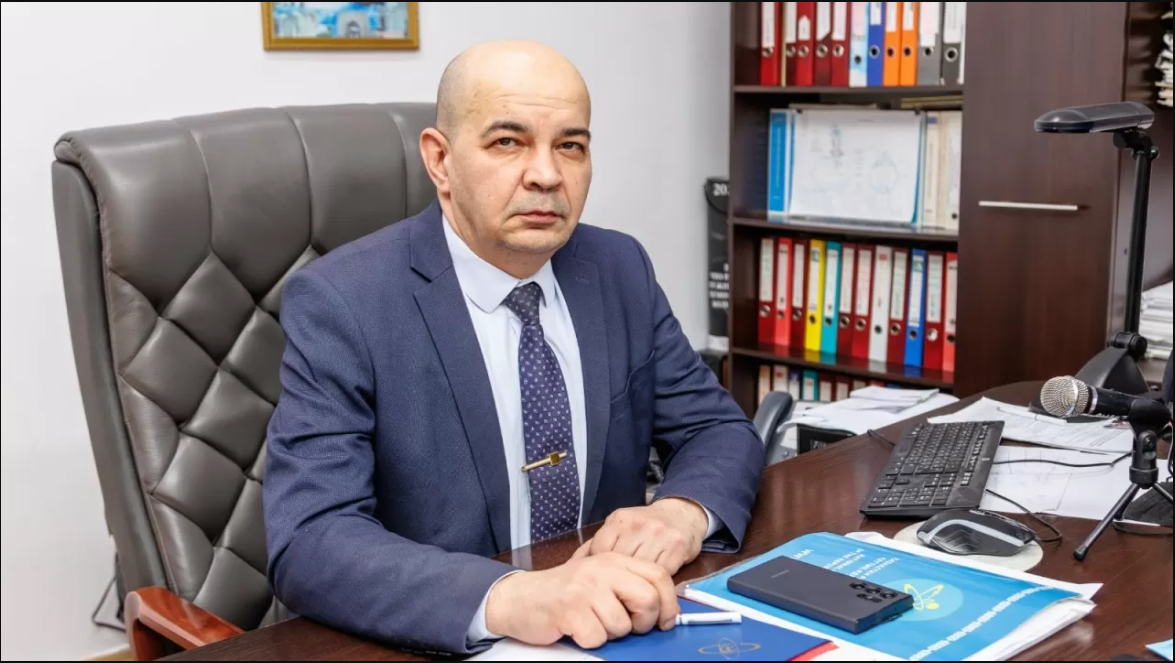
Kazakhstan's National Nuclear Center Experimental Base Supports Nuclear Power Safety and Advanced Energy Research
On July 30, Vyacheslav Gnyrya, Deputy Director of the Institute of Atomic Energy at the National Nuclear Center of the Republic of Kazakhstan (NNC RK), presented the development of the center's experimental research base. He stated that Kazakhstan is leveraging existing research facilities to establish a scientific foundation for next-generation reactor technologies and controlled thermonuclear fusion energy research. According to the presentation, the NNC RK experimental base is a strategic scientific research infrastructure developed over decades in Kazakhstan, featuring research reactors, specialized test facilities, and materials science equipment capable of simulating conditions difficult to replicate in operating nuclear reactors, including the behavior of nuclear fuel, structural materials, and safety system components under high temperatures, intense irradiation, and transient conditions.
2026-07-31
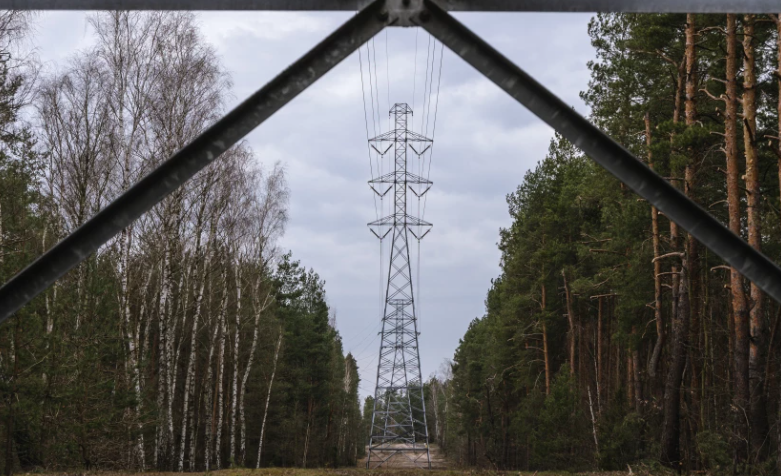
Polish cable manufacturer FPE secures PSE framework contract to support national grid infrastructure for nuclear power
Energy Cable Factory (FPE) in Będzin has signed a framework agreement with Polish Power Grid Company (PSE) for the supply of cables used in the construction and upgrade of high-voltage transmission lines. The contract is valued at PLN 362.1 million net, equivalent to PLN 445.4 million gross. Under the agreement, FPE plans to expand the production capacity of its Będzin plant. This cooperation is not merely a commercial contract but also a vote of confidence in and recognition of Poland's industrial capabilities, proving its ability to undertake the modernization of national strategic infrastructure. The company emphasizes that it can deliver not only cables but also ensure the secure transmission of tomorrow's energy. The agreement covers the supply of phase conductors from 2026 to 2031, with a total length of...
2026-07-31
German state of Lower Saxony approves production of Russian-designed VVER nuclear fuel at Lingen plant under additional strict conditions
The government of Lower Saxony in northwestern Germany has approved a nuclear project linked to Russia's state nuclear corporation Rosatom. The project, operated by French company Framatome, aims to produce Russian-designed nuclear fuel rods and fuel assemblies in the city of Lingen, with key components to be supplied by Rosatom's subsidiary TVEL. Nevertheless, to address potential security risks, particularly threats of espionage and sabotage from Russian participants, the approval was granted with strict conditions. Under the terms of the approval, employees of Rosatom and TVEL will be barred from entering the facility, except in exceptional circumstances and when accompanied by nuclear regulatory authorities. Additionally, all...
2026-07-31
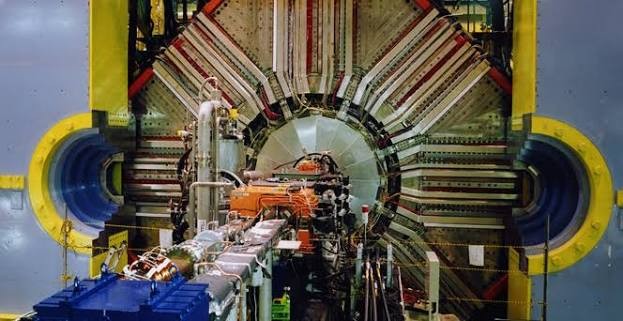
Russian researchers detect anomalous signs in bottomonium states using Belle II experiment data
The Budker Institute of Nuclear Physics of the Siberian Branch of the Russian Academy of Sciences recently announced that Russian researchers have detected anomalous phenomena in the analysis of data from the international Belle II experiment, indicating that the structure of certain excited states of bottomonium may be more complex than predicted by traditional models. Bottomonium is a class of unstable heavy particles composed of a bottom quark and an anti-bottom quark. Yevgeny Kovalenko, a young researcher at the Budker Institute of Nuclear Physics of the Siberian Branch of the Russian Academy of Sciences, stated that analysis of Belle II experiment data suggests that certain excited states of bottomonium may contain lighter quark components. In other words, these particles in specific states may not simply be plain bottom quark–anti-bottom quark combinations.
2026-07-31
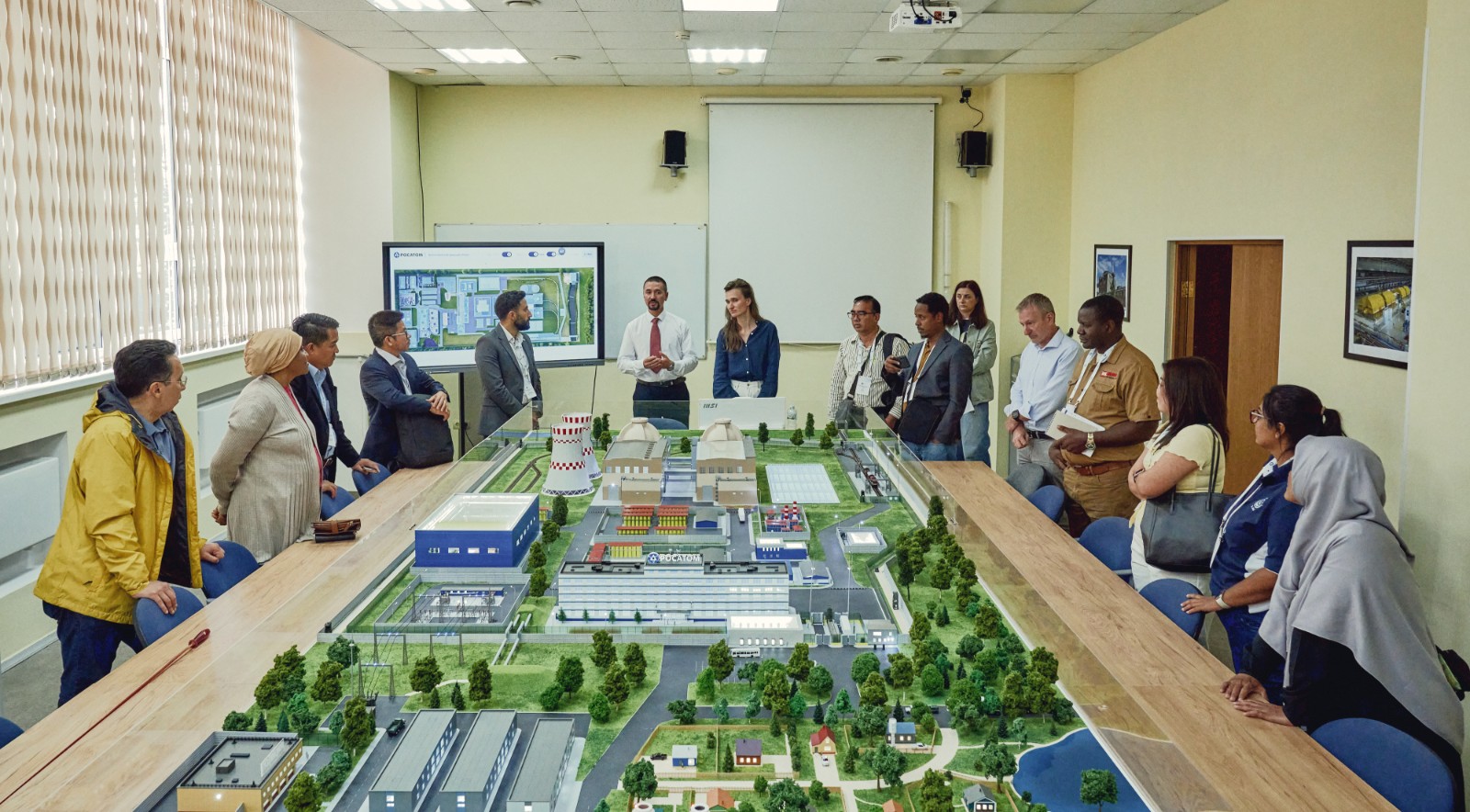
IAEA Training Course for Owner/Operator Organizations of New Nuclear Power Projects Concludes in Russia
On July 30, the Interregional Training Course on the Establishment of Owner/Operator Organizations for New Nuclear Power Projects, jointly organized by Rosatom and the International Atomic Energy Agency (IAEA), concluded at the Rosatom Technical Academy. Eighteen experts from 15 countries in Asia and Africa completed the five-day training. The participants were primarily from national nuclear energy institutions, regulatory bodies, and relevant competent authorities responsible for nuclear infrastructure development in their respective countries. The course focused on the establishment and capacity building of owner/operator organizations for new nuclear power projects, covering topics such as license applications, change management, feasibility study preparation, personnel competency development, organizational structure design, and contract management.
2026-07-31
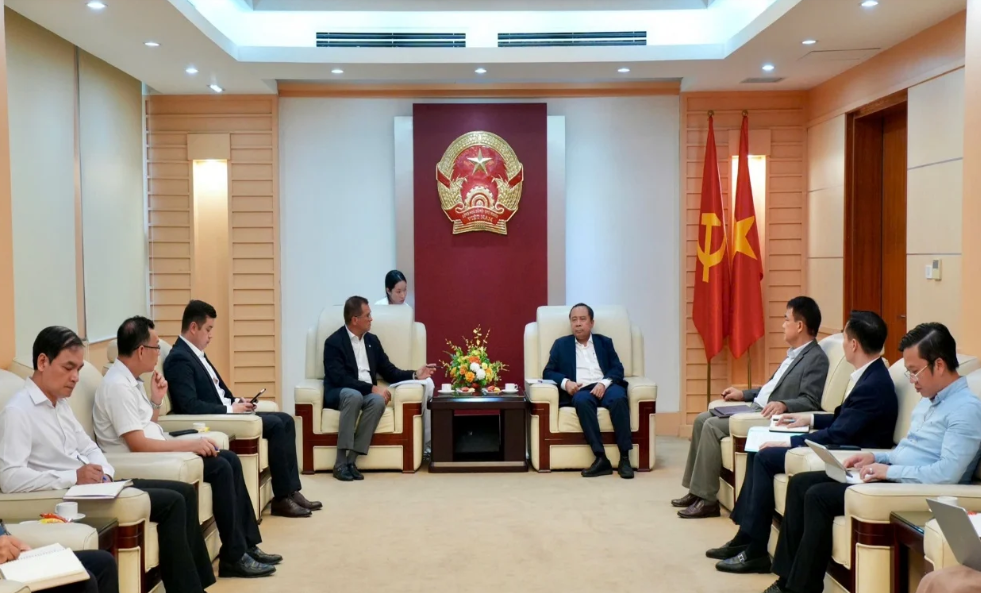
Vietnam and Russia Join Forces to Accelerate Nuclear Science and Technology Research Center Project
On the afternoon of July 30, Vietnamese Minister of Science and Technology Vu Hai Quan received a delegation led by Ilja Vergizajev, General Director of Rosatom Construction Technology Co., Ltd., a subsidiary of Russia's State Atomic Energy Corporation (Rosatom), in Hanoi. During the meeting, the Vietnamese side put forward three specific requests: accelerating the construction of the Vietnam Nuclear Science and Technology Research Center (CNST); supporting Vietnam in gradually mastering small modular reactor (SMR) technologies; and training human resources for Vietnam in the fields of atomic energy, radiation, and nuclear safety. Both sides confirmed that nuclear cooperation holds strategic significance and has long been a focus of high-level attention between the two countries. The CNST has been defined by the Vietnamese side as a...
2026-07-31

Crusoe and Aalo Atomics Forge Strategic Partnership: First Nuclear-Powered AI Facility Planned
U.S.-based Crusoe and Aalo Atomics have reached a strategic partnership aimed at deploying the first nuclear-powered artificial intelligence facility. This commercial collaboration builds on Aalo's recent criticality achievement, underscoring U.S. leadership in AI and energy. Crusoe's Spark modular AI data centers will be co-located with Aalo Atomics' nuclear reactor buildings at Idaho National Laboratory. The project aims to validate the effectiveness of nuclear energy for AI workloads. Cully Cavness, co-founder, president, and chief strategy officer of Crusoe, stated that next-generation AI infrastructure requires reliable, abundant, clean, and scalable power, and Aalo's reactors are designed precisely for that purpose. Crusoe's core value is "bending the energy arc toward sustainability," guided by the principle of leveraging its market position to support and accelerate energy innovation...
2026-07-31
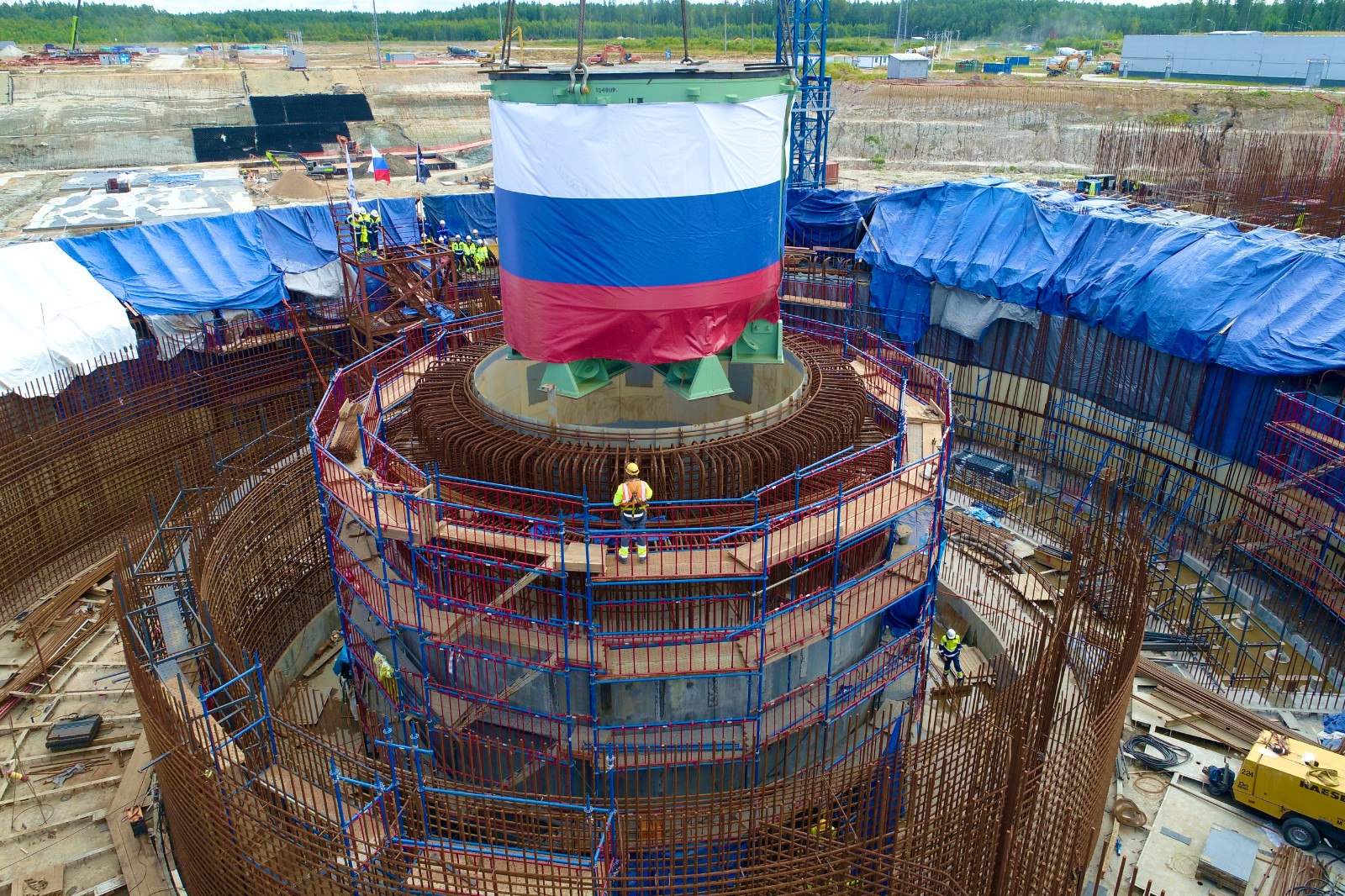
Unit 4 of Leningrad NPP Phase II completes installation of first major equipment
Unit 4 of Russia's Leningrad NPP Phase II recently completed the installation of the core melt catcher vessel. This is the first major equipment of the unit to enter the installation stage, and also the first passive safety system equipment to be installed. The steel structure weighs 157 tonnes, and the installation was carried out using a heavy crawler crane, taking about one work shift of approximately 8 hours, nearly 3 months ahead of the original schedule. Valery Zhemchugov, Acting Director of Leningrad NPP, stated that the installation of the core melt catcher vessel is a key milestone in the construction of Unit 4, a VVER-1200 pressurized water reactor unit, and that the relevant work was completed in accordance with quality requirements, providing more time for subsequent reactor building civil and installation works.
2026-07-31
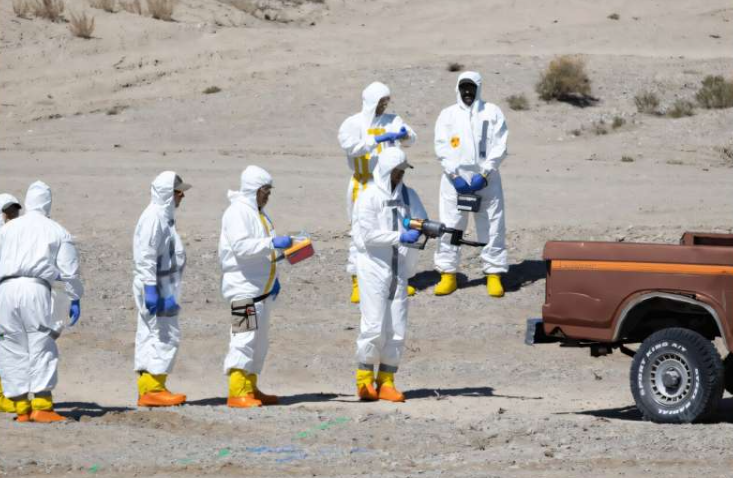
U.S. Idaho National Laboratory (INL) Develops New Vacuum Attachment for Nuclear Fallout Collection
Nuclear nonproliferation researchers at Idaho National Laboratory (INL) have invented a specialized attachment compatible with commercial handheld vacuum cleaners, designed to safely and efficiently collect radioactive fallout generated after a nuclear explosion. The intense heat from a nuclear blast lifts ground debris into the atmosphere, where it melts and cools into radioactive glass beads less than 1 millimeter in diameter that fall back to the ground. In the past, nuclear experts undergoing training could only collect samples using brooms, dustpans, and ordinary household battery-powered vacuum cleaners, making manual containment difficult and posing extremely high radiation exposure risks. The INL team began producing prototypes with a thermoplastic 3D printer in 2017, and after multiple rounds of iteration, has now commissioned a company in American Falls, Idaho, to mass-produce the attachment using industrial-grade 3D printing, significantly improving durability.
2026-07-31

NuAlaska Initiative Launched: Long-Life Nuclear Microreactors Target Remote Alaskan Regions
An initiative in Alaska called NuAlaska is working to bring long-life nuclear microreactors to remote areas. This collaboration, co-launched by NuCube Energy Inc. and the Alaska Fund, aims to develop, finance, own, and operate advanced nuclear energy projects in Alaska. The plan combines NuCube's NuSun-1 micro-modular reactor technology with the Alaska Fund's mission to support projects that meet Alaska's unique energy and infrastructure needs. The initiative targets remote communities, mines, military installations, and other isolated locations where harsh weather, long transportation routes, and reliance on imported diesel fuel...
2026-07-31