
Search Results
Keyword:ESS
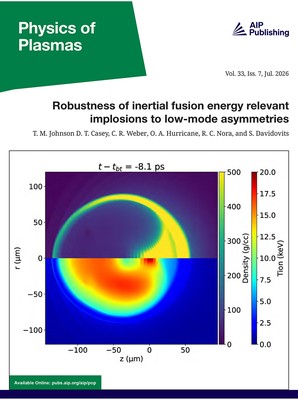
U.S. Research Reveals Diamond Melting Mechanism at High Pressure, Potentially Enhancing Inertial Confinement Fusion Performance
A research team at Lawrence Livermore National Laboratory (LLNL) in the U.S. recently published a study in Nature Physics reporting that the latest dynamic compression experiments have, for the first time, directly recorded atomic structural changes during diamond melting under extreme high pressure. The experiments showed that under high-pressure conditions, solid diamond can float in liquid metallic carbon, similar to ice floating on water. Diamond is not only a high-hardness carbon material but is also used as the fuel target capsule shell in inertial confinement fusion experiments. When intense lasers drive the capsule implosion, the compression and melting behavior of the diamond shell can affect whether the fusion fuel reaches the required high-temperature, high-pressure state. Meanwhile, the planetary science community has long focused on the high-pressure behavior of carbon in the deep interiors of ice giant planets...
2026-08-26

Why Swedish Nuclear Power Plants Are Less Affected by European Heatwaves
This summer, persistent high temperatures across much of Europe forced some nuclear power plants to reduce output or even temporarily shut down due to rising cooling water temperatures and falling river levels. In comparison, Sweden's Vattenfall-operated nuclear plants at Forsmark and Ringhals were less affected, mainly because both facilities are located in coastal areas and use seawater for cooling. Many nuclear plants in continental Europe rely on river water as their cooling source. During heatwaves, river levels and water temperatures can change rapidly, easily impacting cooling efficiency. Anna Collin, Communications Officer at Ringhals, stated that Swedish nuclear plants use seawater cooling, which differs in operating conditions from many...
2026-08-26
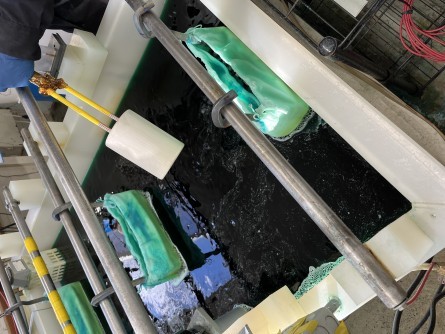
U.S. Develops Hybrid Process Combining Electroforming and 3D Printing for Critical Component Manufacturing in Advanced Nuclear Reactors
On August 24, local time, the U.S. Department of Energy's Oak Ridge National Laboratory (ORNL) announced that its scientists are collaborating with AJ Tuck Company (AJ Tuck) to develop a hybrid manufacturing process that combines 3D printing and electroforming to produce complex, leak-tight hot isostatic pressing canisters for powder metallurgy hot isostatic pressing processes. The process targets the manufacturing of critical metal components for advanced nuclear reactors and other energy and defense applications, with the goal of shortening production workflows and reducing reliance on traditional large-scale forging and casting supply chains. A hot isostatic pressing canister is a type of sealed container used to compact metal powders into high-performance metal components under high temperature and high pressure. Traditional hot...
2026-08-26

Electron Beam Processing Can Reduce Poultry Pathogens, Study Shows Turkey Meat Quality Remains Well Preserved
A study on electron beam treatment of poultry meat products shows that electron beam irradiation has the potential to reduce the risk of foodborne pathogens in poultry while preserving meat quality as much as possible. The paper, titled "Effects of Electron Beam (eBeam) Treatment on the Texture and Sensory Attributes of Chicken and Turkey Meat Batters," was published in the journal Poultry Science. Electron beam is a non-thermal processing technology that uses high-energy electrons to cause irreversible damage to pathogen DNA or RNA, making it difficult for bacteria to replicate. Like X-rays and gamma rays, electron beam has been approved by the U.S. Food and Drug Administration for cold pasteurization that does not rely on heating. The research team used the electron beam irradiation facility at Texas A&M University...
2026-08-26
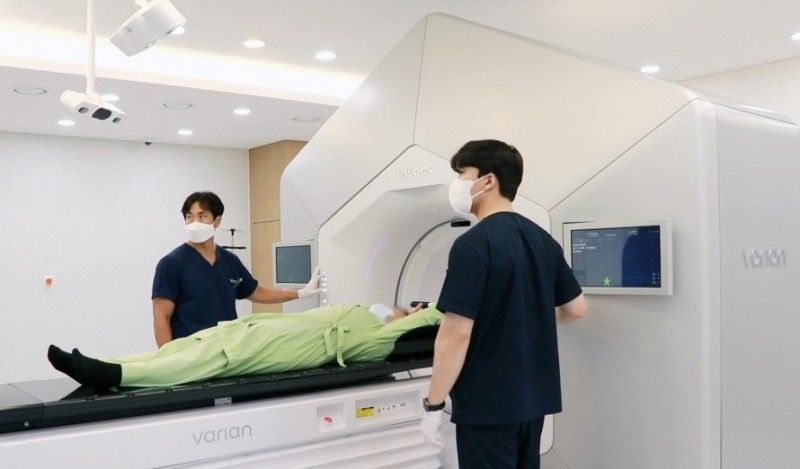
Korea's Gil Medical Center Expands Application of Markerless Surface-Guided Radiation Therapy
Gachon University Gil Medical Center in South Korea announced on August 26 that it is expanding the clinical application of markerless surface-guided radiation therapy (SGRT) to enhance the precision and comfort of radiation therapy for cancer patients. According to the hospital, the proportion of markerless SGRT in its radiation therapy procedures has increased from 28% in the first half of 2025 to 37% in the first half of 2026. This change indicates that this treatment-assistive technology, which reduces the burden of skin marking on patients, is gaining broader clinical adoption. Markerless SGRT is an advanced technique used for patient positioning and monitoring during radiation therapy. Unlike conventional methods, patients do not need to retain target line markings on their skin; the treatment system can assist in confirming patient positioning through surface guidance, enabling radiation to be delivered more accurately to the target area.
2026-08-26

Jamaica Launches Graduate Training Program in Radiation Protection and Safety, Poised to Become a Regional Center of Excellence in the Caribbean
Jamaica's newly established graduate training program in radiation protection and safety is being viewed as an important platform for enhancing nuclear technology safety capabilities in the Caribbean region. Chris Ardouin, an International Atomic Energy Agency expert and Senior Scientist and Technical Manager of Public Health and Forensic Science at the National Radiation Science Centre of New Zealand, stated that the program demonstrates Jamaica's potential to become a regional center of excellence for radiation protection and safety training. The six-month program, implemented as the first graduate education course in radiation protection and safety under the framework of the University of the West Indies' short-term academic resources, is currently training 12 professionals from seven CARICOM member states, with a focus on enhancing regional...
2026-08-26

IAEA Study: Five-Star Rating System Can Improve CT Imaging Safety and Reduce Unnecessary Radiation Exposure
A new study led by the International Atomic Energy Agency (IAEA) in collaboration with Massachusetts General Hospital and Harvard Medical School in Boston, USA, shows that a five-star rating system can help hospitals optimize image quality, reduce radiation dose, and decrease unnecessary patient radiation exposure in computed tomography (CT) examinations. The study has been published in the European Journal of Radiology. CT imaging uses X-rays to obtain detailed images of internal body structures and is an important tool in diagnosing a wide range of diseases. The study notes that CT image quality is closely related to radiation dose—higher doses typically reduce image noise and improve clarity, but do not always yield additional diagnostic value. How to minimize radiation exposure while ensuring diagnostic accuracy is key to optimizing CT examination protocols.
2026-08-26

U.S. Submits Civil Nuclear Agreement with Saudi Arabia to Congress for Review
U.S. government officials said on August 25 that President Donald Trump has submitted a proposed civil nuclear energy agreement with Saudi Arabia to Congress for review. The agreement, reached in July this year, includes provisions allowing U.S. companies to export civil nuclear technology to Saudi Arabia. Under the relevant procedures, Congress will have 90 session days to review the agreement. Two congressional sources said the agreement has been submitted to congressional leadership and is expected to be referred to relevant committees for consideration. If Congress raises no objections within the specified period, the agreement will enter into effect; if Congress rejects the agreement, Trump may still exercise his veto power, and Congress would need a two-thirds majority to override the presidential veto...
2026-08-26
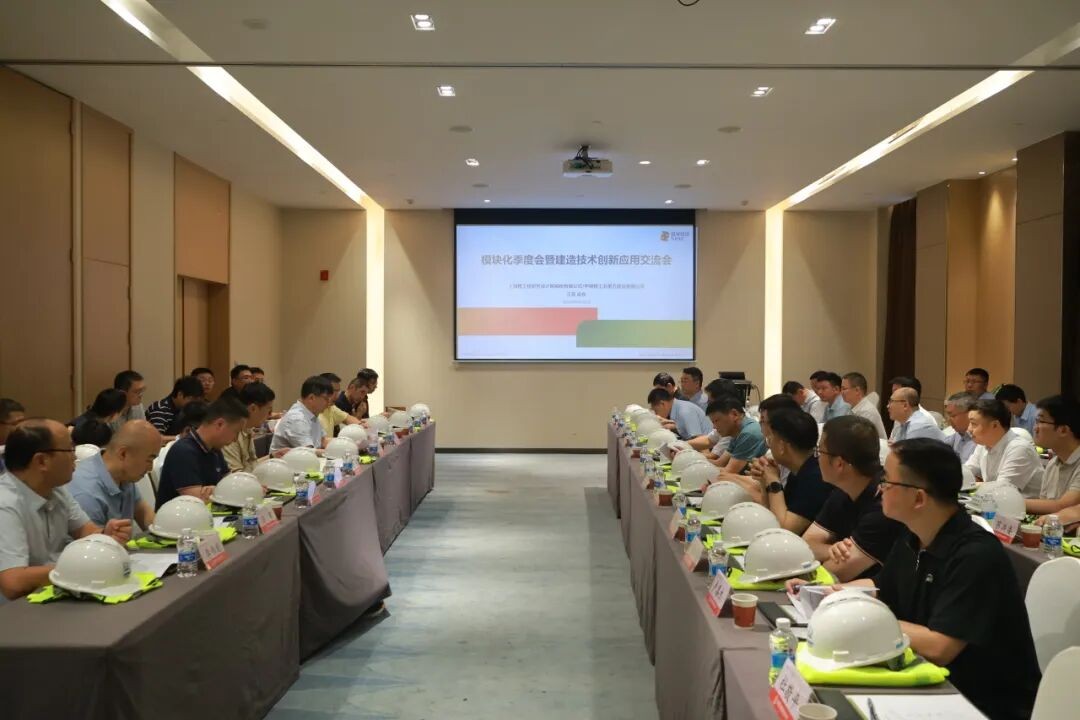
Guohe Series Nuclear Power Engineering Modular Quarterly Meeting and Construction Technology Innovation Application Exchange Conference Successfully Held in Qidong
On August 21, the Guohe Series Nuclear Power Engineering Modular Quarterly Meeting and Construction Technology Innovation Application Exchange Conference, hosted by Shanghai Nuclear Engineering Research and Design Institute (SNERDI) and organized by China Nuclear Industry Fifth Construction Co., Ltd. (CNF), was successfully held in Qidong, Jiangsu Province. Zhang Shoulong, Deputy General Manager and Safety Director of SNERDI, Li Jun, Deputy General Manager of China Nuclear Engineering Corporation (CNEC), and Liu Weihua, Chief Engineer of CNF, attended the meeting. More than 50 representatives from various nuclear power construction participating units gathered to discuss the innovation and practical application of nuclear power modular construction technology. At the meeting, the implementation of action items from the previous quarter was first reviewed, followed by progress reports on key work items including dry construction, plugging modularization, module design guidance manual, and multi-discipline shared rack design optimization. Each nuclear power project department then reported on quarterly work progress and subsequent work plans in turn; participating construction units including China Nuclear Industry 22nd Construction Co., Ltd., China Nuclear Industry 23rd Construction Co., Ltd., and CNF conducted thematic exchanges on modular construction, automatic welding technology, implementation of innovative technologies, and the "7050" plan (70% of all plant welding joints as prefabricated joints, and 50% of all plant prefabricated joints welded by automatic welding). Departments of SNERDI and participating partner units conducted in-depth discussions, exchanging views on key challenges in nuclear power modular construction and building consensus on technical breakthroughs. During the meeting, all attending representatives visited the Jiangsu Heneng Qidong Intelligent Manufacturing Base for on-site inspection, observing the intelligent manufacturing production line construction and gaining direct insight into the practical achievements of modular prefabrication and intelligent manufacturing processes. The meeting fully affirmed the phased achievements made by all participating units in the field of Guohe series nuclear power modular construction, pointed out that modular construction is a key driver for improving quality and efficiency in nuclear power engineering, and made arrangements for the next phase of work, emphasizing that all participating units should continue to deepen EC (Engineering-Construction) collaboration and integrated construction-installation development, and strengthen collaborative coordination to fully guarantee the high-quality construction of Guohe series nuclear power projects.
2026-08-26

US Advanced Light Source Upgrade Advances, Soft X-ray Brightness to Increase at Least 100-Fold
Lawrence Berkeley National Laboratory in the US is advancing the Advanced Light Source (ALS) synchrotron upgrade project, planning to enhance soft X-ray experimental capabilities through next-generation light source technology, providing higher-precision data support for quantum materials, microelectronics, energy technologies, biological structure research, and AI-assisted scientific research. The project team is working toward the 2029 target. Since the Advanced Light Source began operation in 1993, it has long served research across soft X-ray, ultraviolet, infrared, and hard X-ray wavelength ranges. Researchers worldwide have used the facility's focused beams to observe molecular and material structures at the atomic scale, with results cited in over 18,000 papers...
2026-08-25
Rock Fusion Completes Key Processes for Stellarator 3D Non-Planar Superconducting Prototype Coil
Recently, the stellarator high-strength stainless steel armored 3D non-planar superconducting prototype coil developed by Rock Fusion (Shanghai) Technology Co., Ltd. has completed two key processes: 3D precision winding and ground insulation wrapping. The overall 3D geometric error of the coil is consistently controlled at the millimeter level, indicating that the company has preliminarily established key manufacturing processes including material adaptation, 3D precision forming, and insulation wrapping for high-field steady-state stellarator superconducting magnets. The stellarator is an important device for steady-state controlled nuclear fusion research, and 3D superconducting coils are used to generate the complex magnetic fields required to confine plasma. Unlike conventional planar coils, stellarator coils typically feature non-planar spatial structures with continuously varying curvature...
2026-08-25

Russian team develops machine learning model to predict stability of rare earth and actinide complexes
Researchers from the Interdisciplinary Laboratory for Intelligent Chemical Design at the Department of Chemistry of Lomonosov Moscow State University, in collaboration with colleagues from the Department of Mechanics and Mathematics, have developed a new machine learning model for evaluating the stability of complexes of rare earth elements and trivalent actinides. The results have been published in the Journal of Chemical Physics. The research team stated that machine learning can reduce time and material costs in chemical research, which is particularly important for rare, expensive, or hazardous lanthanides and actinides. Lanthanides, along with scandium and yttrium, are commonly classified as rare earth elements and are widely used in permanent magnets, batteries, electronic components, lasers, and other applications. Since rare earth elements in nature...
2026-08-25
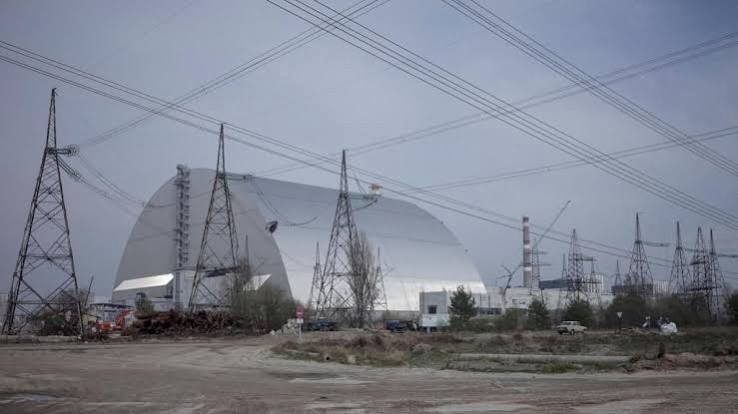
Belarus and Russia Approve Program to Address Chernobyl Accident Consequences
The Council of Ministers of the Union State of Belarus and Russia recently approved a new Union State program to jointly carry out work from 2026 to 2030 to address the long-term negative consequences of the Chernobyl Nuclear Power Plant accident. According to the resolution published on the website of the Permanent Committee of the Union State, the total funding for the program is set at 1,998.321 million Russian rubles, with funds sourced from the Union State budget. Of this amount, Russia's maximum contribution is 1,297.9904 million Russian rubles, while Belarus's maximum contribution is 700.3306 million Russian rubles. The program will support joint actions by the two countries in managing the consequences of the Chernobyl nuclear accident...
2026-08-25
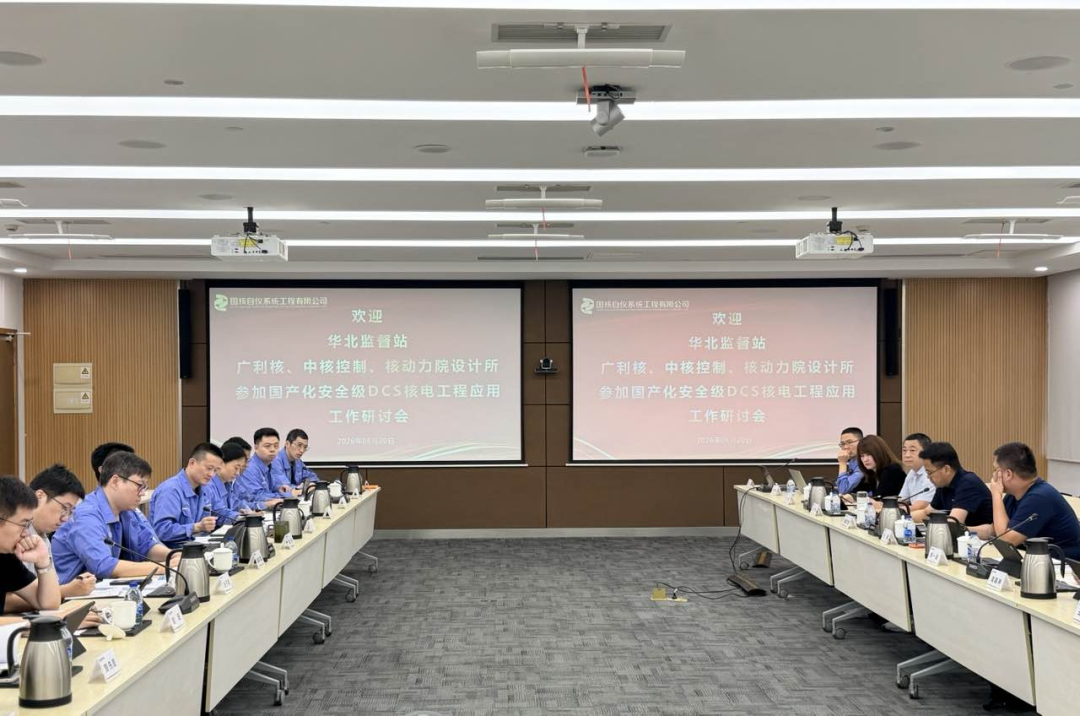
The Workshop on Engineering Application of Domesticated Safety-Class DCS in Nuclear Power Projects Successfully Held
From August 20 to 21, the Workshop on Engineering Application of Domesticated Safety-Class DCS in Nuclear Power Projects, led by SNPAS, was successfully held in Shanghai. Relevant leaders and experts from Beijing Guangli Nuclear System Engineering Co., Ltd., China Nuclear Control System Engineering Co., Ltd., and Nuclear Power Institute of China attended the meeting, with a representative from the Ministry of Ecology and Environment's North China Regional Office of Nuclear and Radiation Safety Supervision dispatched to provide guidance. The meeting focused on discussions regarding the engineering qualification of domesticated safety-class DCS and the verification of their application in nuclear power engineering. Based on their practical experience, each participating organization presented their current implementation status, challenges encountered, and proposed measures. During the discussions, all parties exchanged views on quality consistency assurance measures, engineering qualification prototype representativeness, equipment qualification test items, and platform application verification, reaching multiple consensuses.
2026-08-25
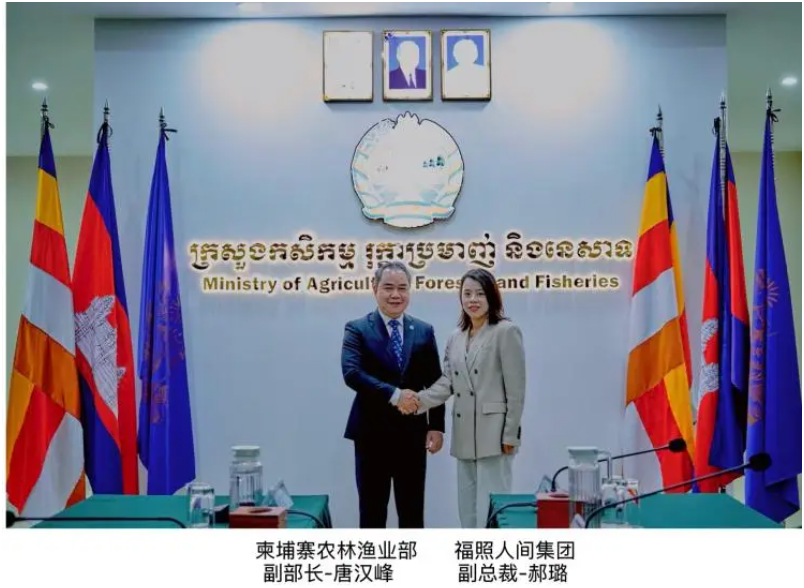
China and Cambodia Sign MOU on Agricultural Supply Chain Cooperation, with Irradiation Processing Technology Listed as a Key Focus
On August 10, Haikou Silk Road Social Science Research Institute and the Ministry of Agriculture, Forestry and Fisheries of the Kingdom of Cambodia signed the Memorandum of Understanding on Research Cooperation for the Stability and Development of the China-Cambodia Agricultural Supply Chain in Phnom Penh. According to the MOU, the industrial application of irradiation processing technology in the agricultural sector has been listed as one of the core cooperation directions for both sides. In this cooperation, the Joint Laboratory for R&D and Validation of Agricultural Product Irradiation Technology played a key supporting role. The joint laboratory was co-founded by Fuzhao Renjian Group and the Institute of Agro-Products Processing Science and Technology of the Chinese Academy of Agricultural Sciences, focusing on breeding, post-harvest loss reduction, agricultural product processing, and food safety, conducting irradiation technology R&D and validation, and promoting the application of relevant outcomes...
2026-08-24