
Search Results
Keyword:Plasma
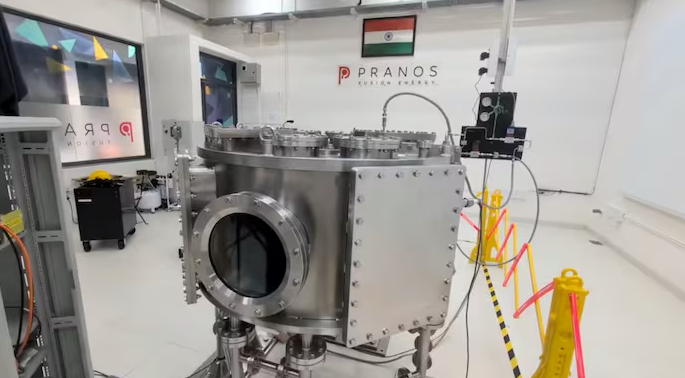
India's Private Fusion Tokamak PRAGYA Achieves Plasma Operation
Bengaluru-based deep-tech energy startup Pranos Fusion has produced plasma in its experimental device PRAGYA. The company states that PRAGYA is India's first compact tokamak developed by a private enterprise, marking a transition in India's private fusion research and development from the design and manufacturing phase to experimental operation. PRAGYA adopts a compact, low-aspect-ratio tokamak design, primarily used to generate, confine, and control plasma. Tokamaks use strong magnetic fields to confine high-temperature plasma within a toroidal vacuum vessel, creating conditions for future fusion of light atomic nuclei. The fundamental process of fusion reactions is the same mechanism by which the Sun releases energy, but engineering implementation still faces multiple challenges in plasma confinement, magnets, materials, and control systems.
2026-09-04

U.S. PACMAN AI Framework Achieves Millisecond-Level Control of Fusion Plasma
The PACMAN AI framework, developed by researchers at the U.S. Department of Energy's Princeton Plasma Physics Laboratory (PPPL) and Princeton University, has completed five experimental validations in real fusion experimental systems. The framework can complete data processing, state prediction, and control command output in approximately 20 milliseconds, addressing rapidly developing instabilities in fusion plasma. This is an artist's rendition of the PACMAN AI framework for fusion systems. (Illustration credit: Kyle Palmer / PPPL Communications Department) PACMAN stands for Prediction and Control via Machine Learning. Related design and preliminary experimental results have been published in...
2026-09-03

U.S. Marathon Fusion Demonstrates Hydrogen and Lithium Isotope Enrichment Technology
U.S.-based Marathon Fusion announced on August 27 that it has successfully demonstrated hydrogen and lithium isotope enrichment technology using its proprietary plasma centrifuge. The company stated that this advancement addresses the fuel cycle needs of fusion energy and related isotope supply requirements. In the deuterium-tritium fusion pathway, hydrogen isotope processing is critical to the continuous operation of fusion devices, while lithium isotope enrichment is closely tied to tritium production. The U.S. Department of Energy (DOE) released its "Fusion Science and Technology Roadmap" in June of this year, which identifies tritium processing as one of the core challenges, noting that related progress is essential for achieving sustained deuterium-tritium fusion operation and validating fusion as a large-scale energy form...
2026-08-28
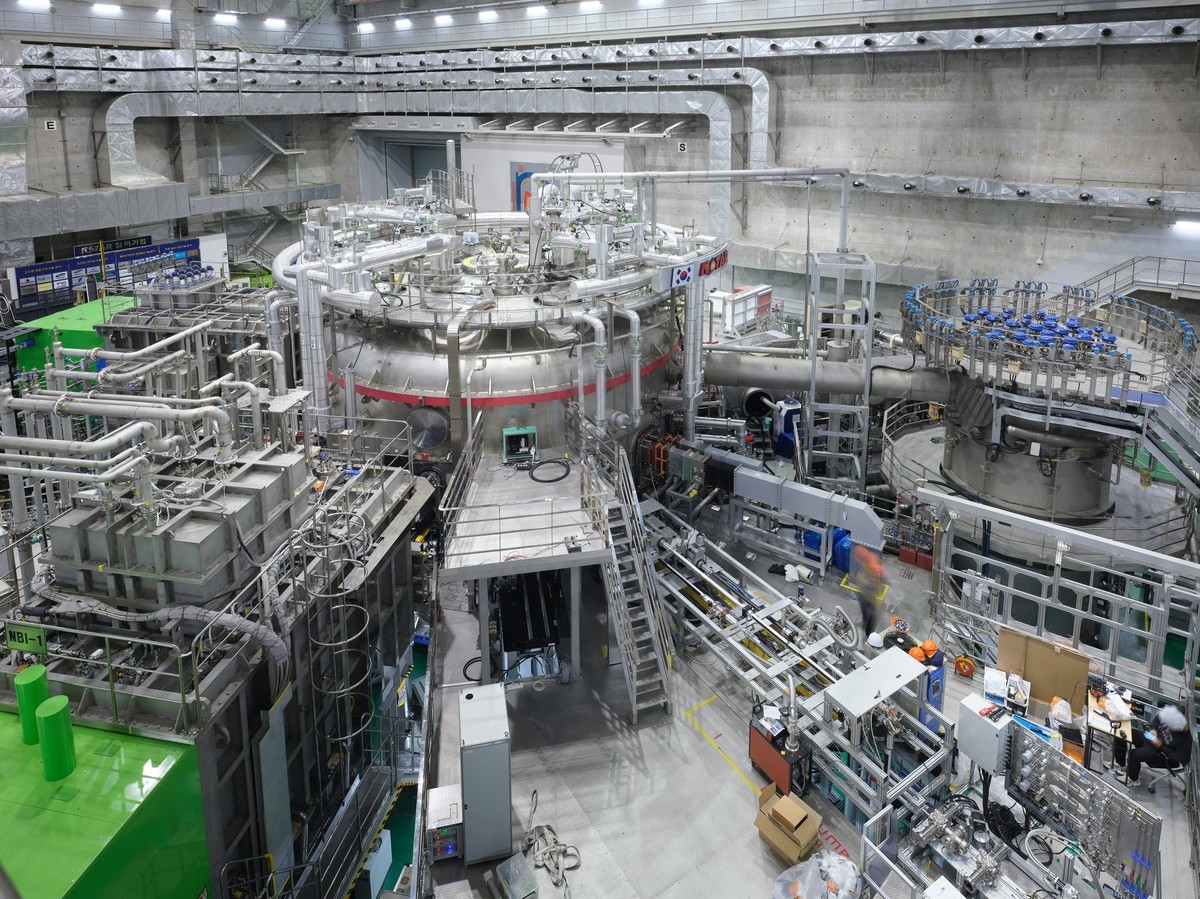
South Korea's KSTAR to Conduct Long-Pulse Fusion Research in Tungsten Environment with European Institutions
The Korea Institute of Fusion Energy (KFE) announced on August 27 that it has signed implementation agreements with multiple fusion research institutions in France, Italy, Germany, and Finland to conduct joint research on long-duration plasma operation in a tungsten environment using the Korea Superconducting Tokamak Advanced Research (KSTAR) device. Partner institutions include the French Alternative Energies and Atomic Energy Commission (CEA), the Italian National Agency for New Technologies, Energy and Sustainable Economic Development (ENEA), the Max Planck Institute for Plasma Physics (IPP) in Germany, and the VTT Technical Research Centre of Finland (VTT). The institutions will focus on key technologies required for long-pulse operation of future fusion reactors...
2026-08-27
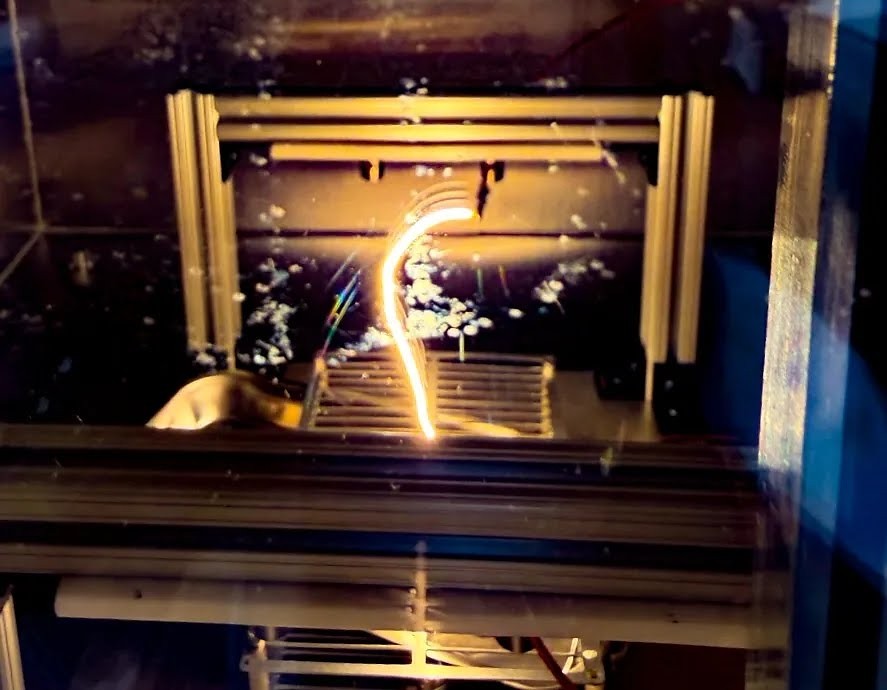
U.S. Interlune injects helium-4 into lunar soil simulant, simulating 15,000 years of solar wind exposure on the Moon in 4 hours
U.S. space infrastructure and resources company Interlune announced on August 26, 2026, that it has successfully injected helium-4 into and released it from simulated lunar soil material, with experimental results consistent with the behavior of real lunar samples collected by the Apollo program. The company stated that this capability can simulate nearly 15,000 years of solar wind exposure on the lunar surface in approximately 4 hours, providing a material basis closer to real conditions for testing lunar resource development equipment on Earth. The experiment focused primarily on ilmenite. According to studies of Apollo mission samples, ilmenite is the main helium-bearing mineral in lunar soil. Interlune formed a plasma by ionizing helium gas in a vacuum environment, then...
2026-08-27
U.S. Department of Energy Extends Princeton University Contract to Operate PPPL
The U.S. Department of Energy (DOE) and Princeton University have extended the contract under which Princeton University manages and operates the Princeton Plasma Physics Laboratory (PPPL). The laboratory is located on Princeton University's Forrestal Campus in Plainsboro, New Jersey. Under the new extension, the contract will be renewed for five years starting April 1, 2027. Princeton University expects to strengthen collaboration with faculty and research teams on campus during the contract period, explore next-generation fusion energy research facilities, and enhance laboratory infrastructure and safety to support ongoing operational needs. Princeton University's office for research affairs...
2026-08-25

Iran Says Its Atomic Energy Organization's Medical Products Serve Over 1.5 Million Patients Annually
Mohammad Eslami, head of the Atomic Energy Organization of Iran, recently stated that more than 1.5 million patients in Iran use diagnostic and therapeutic products developed by the organization each year, and related medical products have also been exported to multiple countries. Eslami made these remarks at a ceremony held by Iran's nuclear industry to celebrate Physicians' Day. He said that promoting the application of advanced treatment methods is one of the key directions of Iran's scientific and technological development. The progress made by Iranian researchers in cold plasma technology has opened up a "brand-new and promising path" for medical applications. He stated that plasma technology has not only achieved notable results in the research field but has also played a role in healthcare settings.
2026-08-24
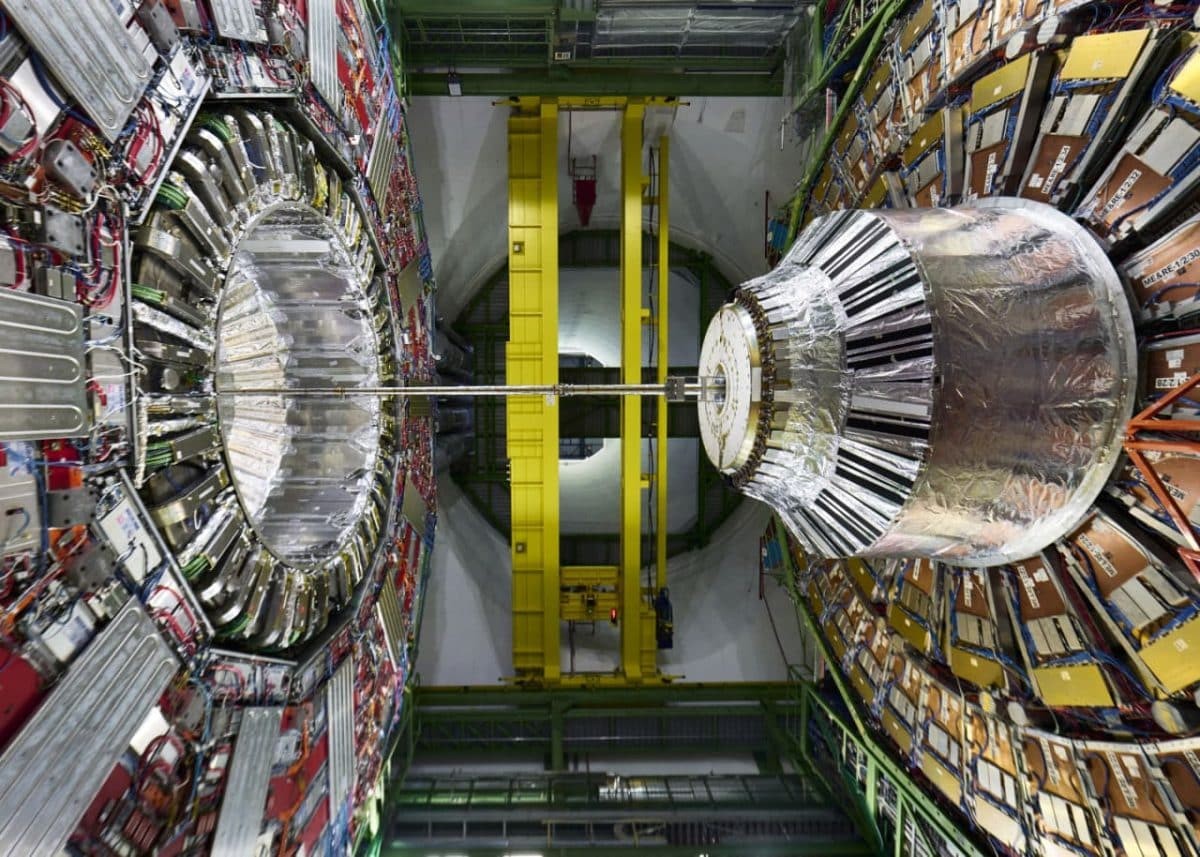
CERN Large Hadron Collider Data Challenge Models of Oxygen and Neon Nucleus Structure
Physicists at the European Organization for Nuclear Research (CERN), analyzing a new batch of collision data from the CMS detector at the Large Hadron Collider, have found that oxygen and neon nuclei do not behave entirely as predicted by existing models in high-energy collisions. This result indicates that the scientific community's understanding of the shapes and internal structures of certain light nuclei still requires further refinement. In high-energy nuclear collisions, a quark-gluon plasma is briefly formed in the collision region. This state of matter decays rapidly, but the collective flow characteristics of its particles can be used to infer the collision geometry and indirectly provide information about nuclear structure. Researchers believe that symmetric collisions of light ions help better control the initial collision conditions, making them suitable for studying collective responses in small systems.
2026-08-24
Progress in Tritium Containment and Radiation Protection Materials Research at the Institute of Plasma Physics, Chinese Academy of Sciences
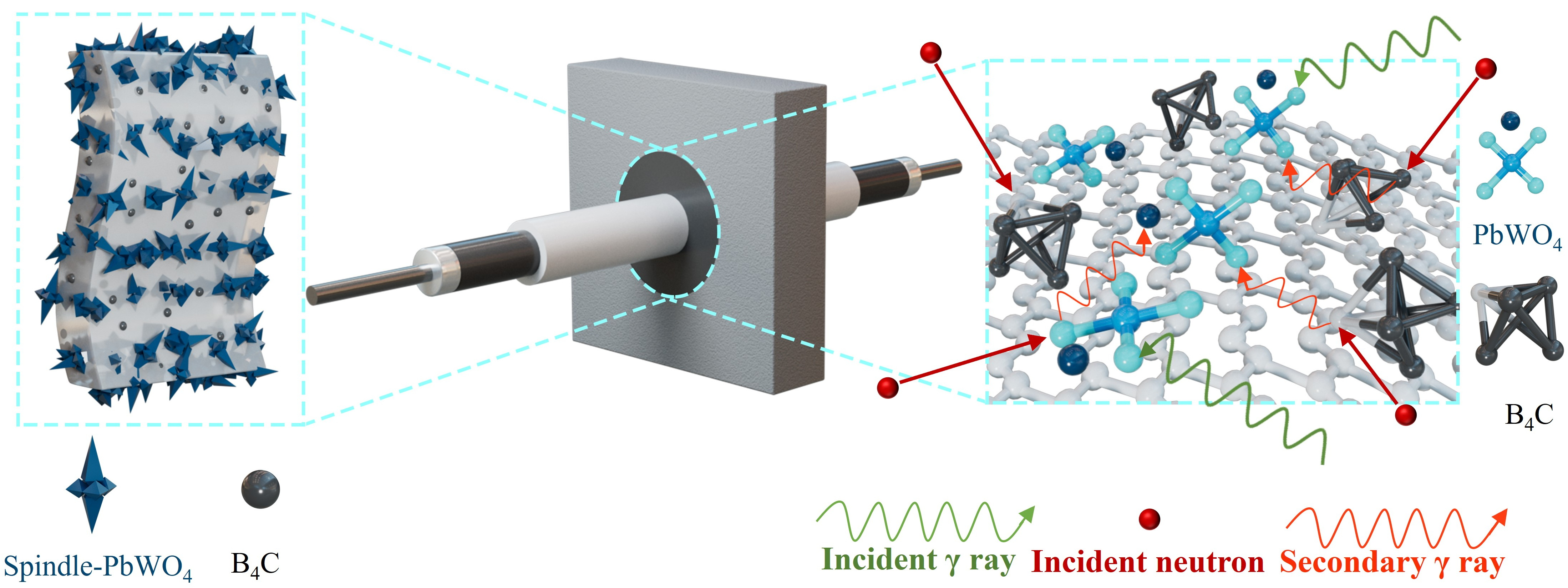
Recently, Associate Researcher Huo Zhipeng of the Fusion Reactor Blanket and Safety Research Center at the Institute of Plasma Physics, Chinese Academy of Sciences, together with his supervised master's students Zhang Jie and Chen Zuoyang, developed a class of flexible PbWO4-B4C reinforced silicone rubber composites with dual functions of tritium safety containment and nuclear radiation protection. The related research results were published in Journal of Materials Research and Technology. Future fusion facilities require comprehensive performance from radiation protection materials in tritium safety containment systems, including airtight sealing, flexibility for easy assembly and disassembly, and radiation shielding capability, for penetration hole sealing, post-maintenance, and high-flux neutron and γ-ray radiation protection. The research...
2026-08-21
Berkeley Lab Leads Development of Portable Active-Source Muon Imager
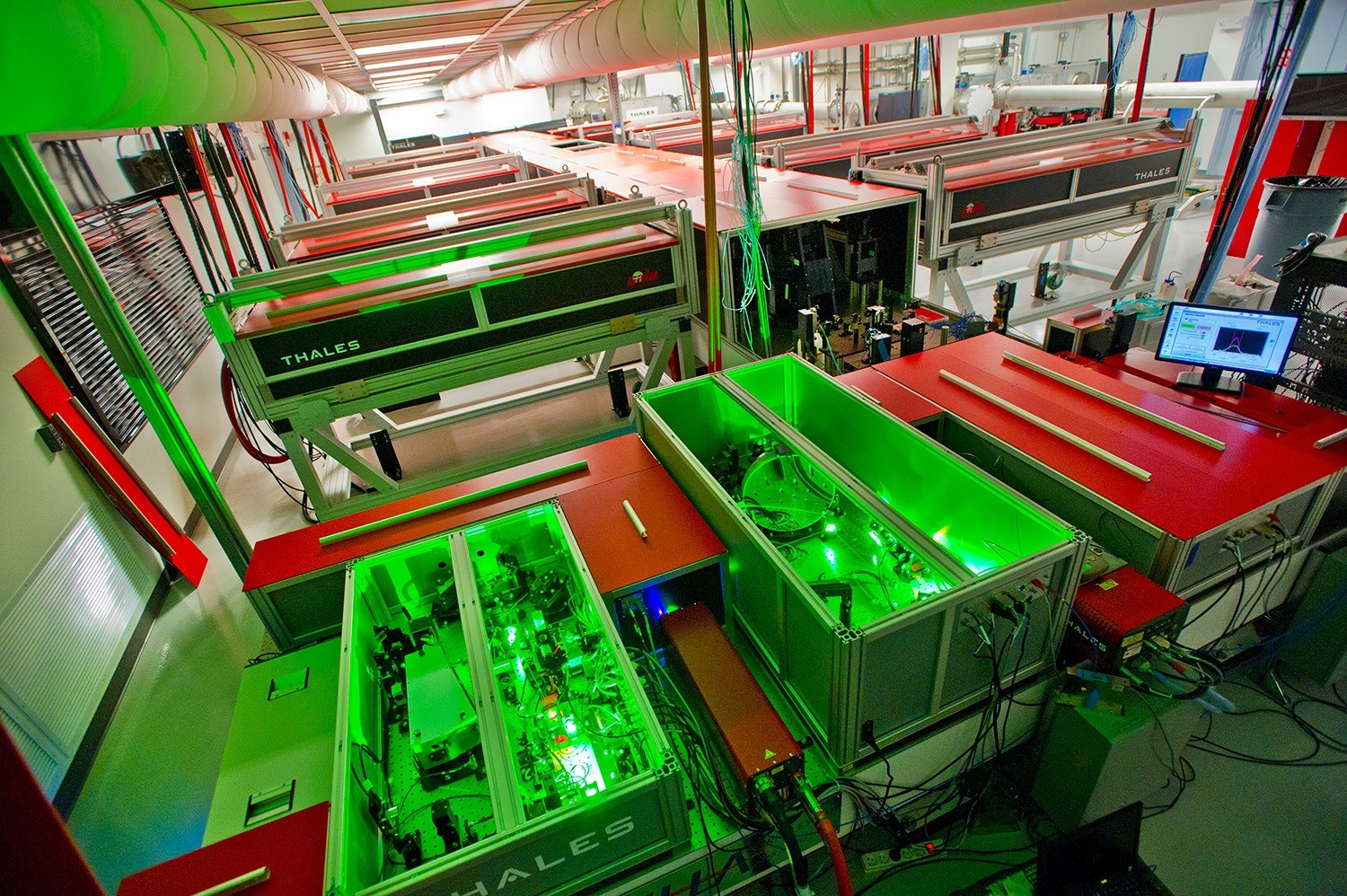
The U.S. Department of Energy's Lawrence Berkeley National Laboratory and Ideon Technologies have received funding from the DOE's Advanced Research Projects Agency-Energy (ARPA-E) to jointly develop a field-deployable active-source muon imaging technology through the Reliable Ore Characterization Using Cornerstone Sensing Technologies (ROCKS) program. The three-year project aims to enhance the detection and characterization of underground critical mineral resources. Image credit: Lawrence Berkeley National Laboratory. Muons are subatomic particles with strong penetrating capability. Previously, Ideon Technologies has used passive muons produced by cosmic rays in the atmosphere for ore body imaging in the mining sector, mapping mineral deposits and analyzing subsurface structures. However, passive muons primarily arrive from above, limiting detection angles; additionally, the natural flux is low—approximately one per square centimeter per minute—and imaging often requires days, weeks, or even months.
2026-08-20
Princeton Plasma Physics Laboratory to Validate Spherical Tokamak Fusion Path with NSTX-U
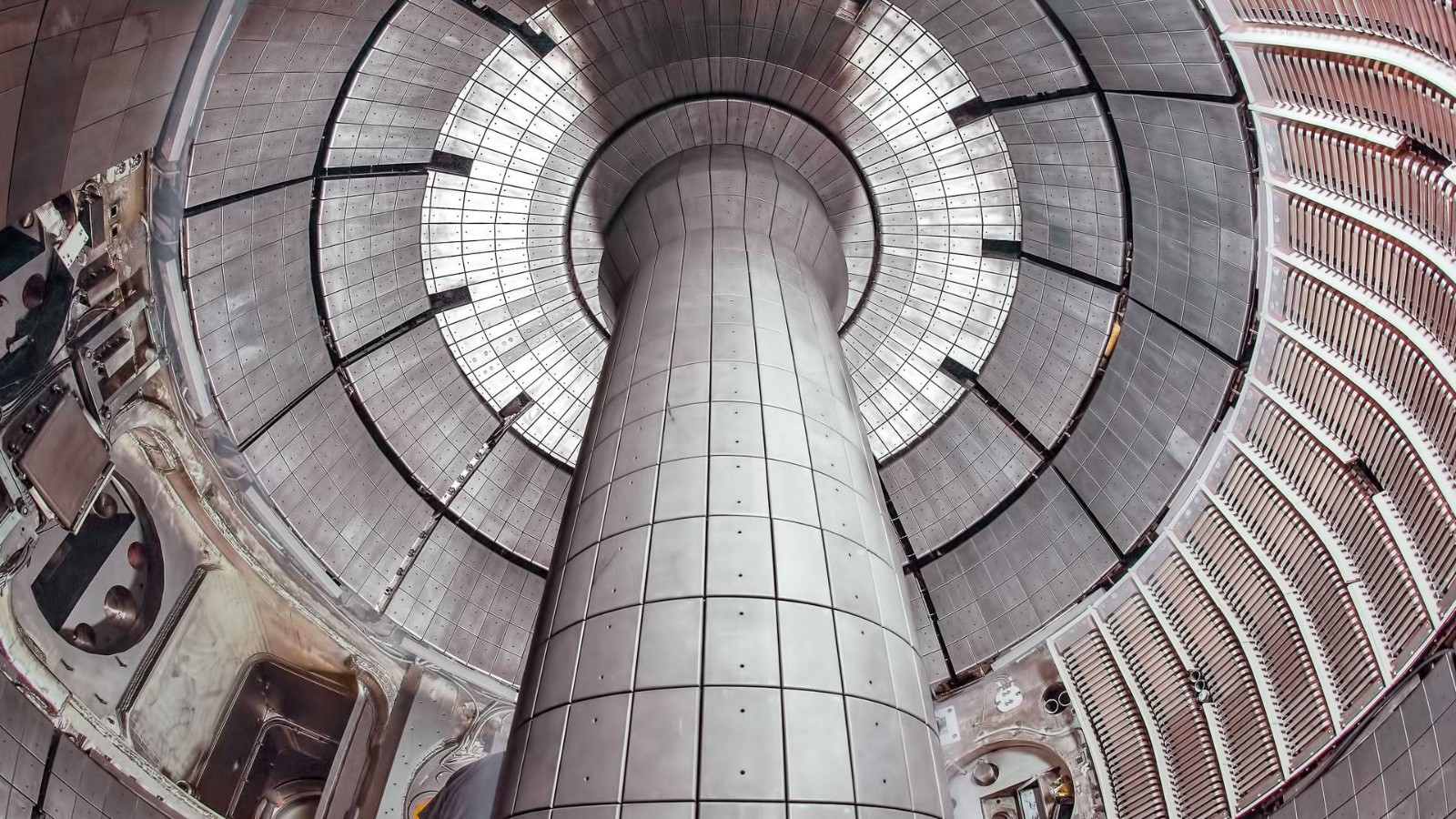
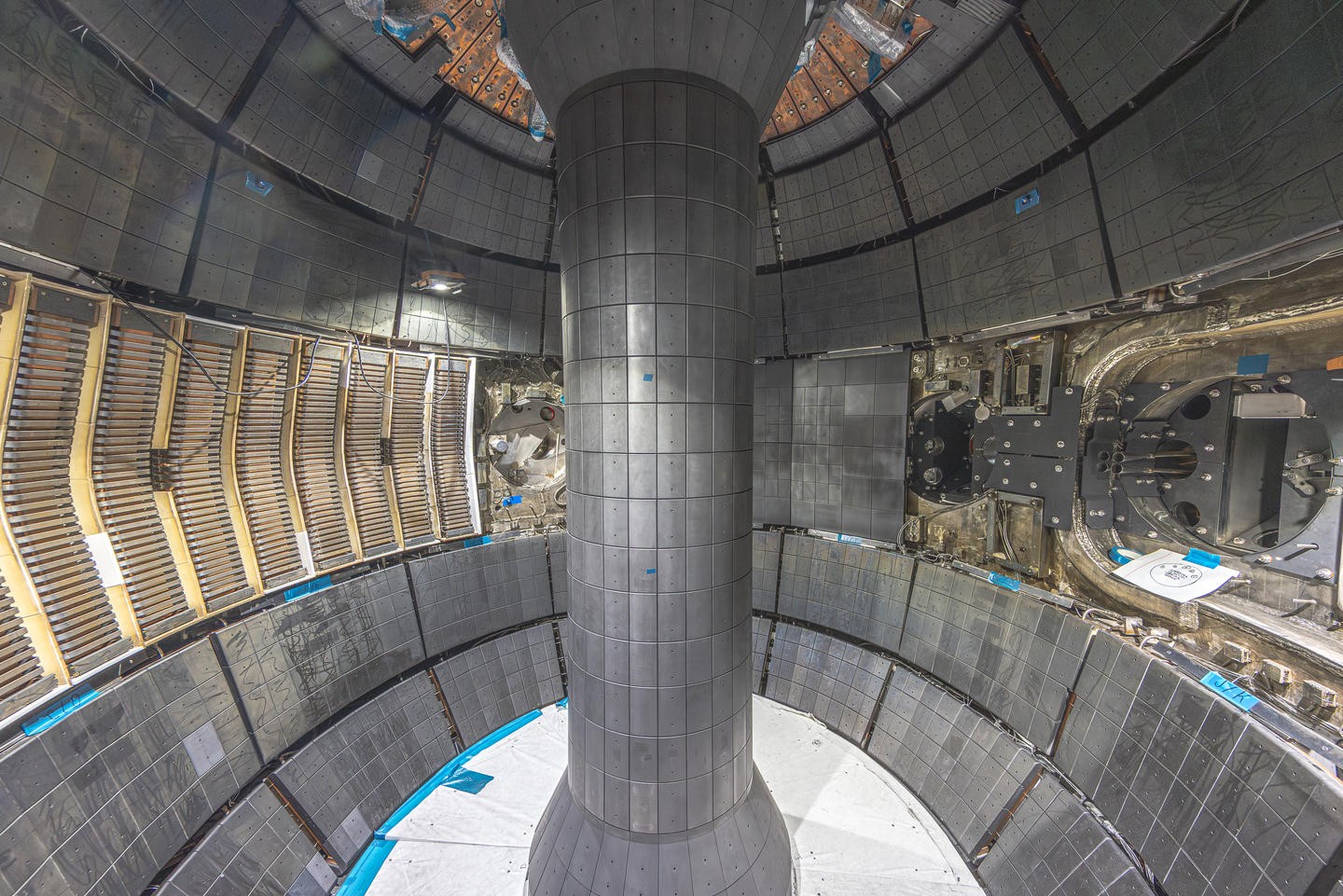
The Princeton Plasma Physics Laboratory (PPPL) is advancing research on the National Spherical Torus Experiment-Upgrade (NSTX-U), planning to use this largest spherical tokamak in the United States to assess the potential of compact tokamak configurations for future fusion power plants. The device is designed to become one of the most powerful spherical tokamaks in the world and will be used to study key issues such as high-temperature plasma confinement, heat transport, material performance, and real-time control. The image above shows the vacuum vessel and center column of the NSTX-U at the Princeton Plasma Physics Laboratory (PPPL). This device will help scientists determine the optimal shape for future fusion power plants...
2026-08-20

General Fusion Announces Business Update: LM26 Plasma Heated to Approximately 0.72 keV
General Fusion released a business update on August 18, disclosing its latest progress in fusion energy technology validation, commercial partnerships, and financing arrangements. The company went public on Nasdaq in July 2026 under the ticker symbol GFUZ. General Fusion stated that it entered the public market with approximately $150 million in cash following the completion of its business combination with Spring Valley Acquisition Corp. III. The funds include net transaction proceeds from private placement and trust capital, and are planned to support the Lawson Machine 26 (LM26) project and drive the completion of multiple...
2026-08-19

Indian research team uses supercomputer to track microscopic mechanisms of turbulence in dusty plasmas
Researchers at the Indian Institute of Technology Jammu (IIT Jammu), in collaboration with the Indian Institute of Technology Kanpur (IIT Kanpur), used supercomputer simulations to study the origin of chaos in dusty plasmas. By tracking the motion of millions of individual particles, the study revealed how turbulent energy is transferred from large-scale vortices to microscopic thermal motion of particles, providing a new computational perspective for nuclear fusion plasma research and astrophysical process analysis. Plasma is often referred to as the fourth state of matter. Unlike solids, liquids, and gases, atoms in plasma are ionized, forming a system composed of positively charged ions and negatively charged electrons. When tiny solid dust particles enter the plasma, these particles absorb electrons and become negatively charged, subsequently undergoing complex interactions with surrounding particles to form dusty plasma.
2026-08-19
German research team achieves ultra-compact plasma photocathode injection
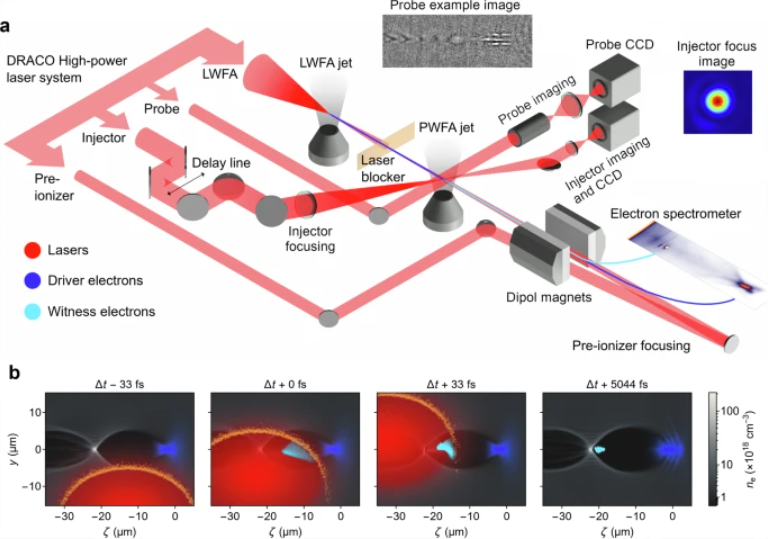
A research team from institutions including the Helmholtz-Zentrum Dresden-Rossendorf in Germany has demonstrated an ultra-compact plasma photocathode injection scheme integrated into a hybrid plasma wakefield accelerator on the DRACO laser facility. The study utilized a 150 TW-class laser system to drive a laser wakefield accelerator (LWFA), generating high-peak-current electron beams, which in turn drove a subsequent particle beam wakefield accelerator (PWFA), completing the generation and acceleration of witness electron beams within millimeter-scale plasma structures. Plasma wakefield accelerators can produce accelerating fields far exceeding those of conventional radiofrequency linear accelerators, but how to obtain high-quality, high-brightness electron beams in compact devices...
2026-08-18
World's first laser plasma accelerator-driven high-resolution muon imaging experiment to launch in Romania
Ideon Technologies, a global subsurface detection muon tomography company, is participating in an international research consortium to conduct the world's first high-resolution muon imaging experiment driven entirely by a laser plasma accelerator. The experiment aims to use a compact accelerator to produce muon beams on demand for non-destructive high-resolution imaging, with applications targeting mineral production, critical infrastructure, cargo inspection, medical imaging, semiconductors, nuclear security, and space radiation testing. Consortium members include the University of Texas at Austin, the Extreme Light Infrastructure - Nuclear Physics (ELI-NP) facility team, Heinrich Heine University Düsseldorf, Helmholtz-Zentrum Dresden-Rossendorf, ELI-Beamlines, and Tau Systems.
2026-08-18