
Search Results
Keyword:Plasma
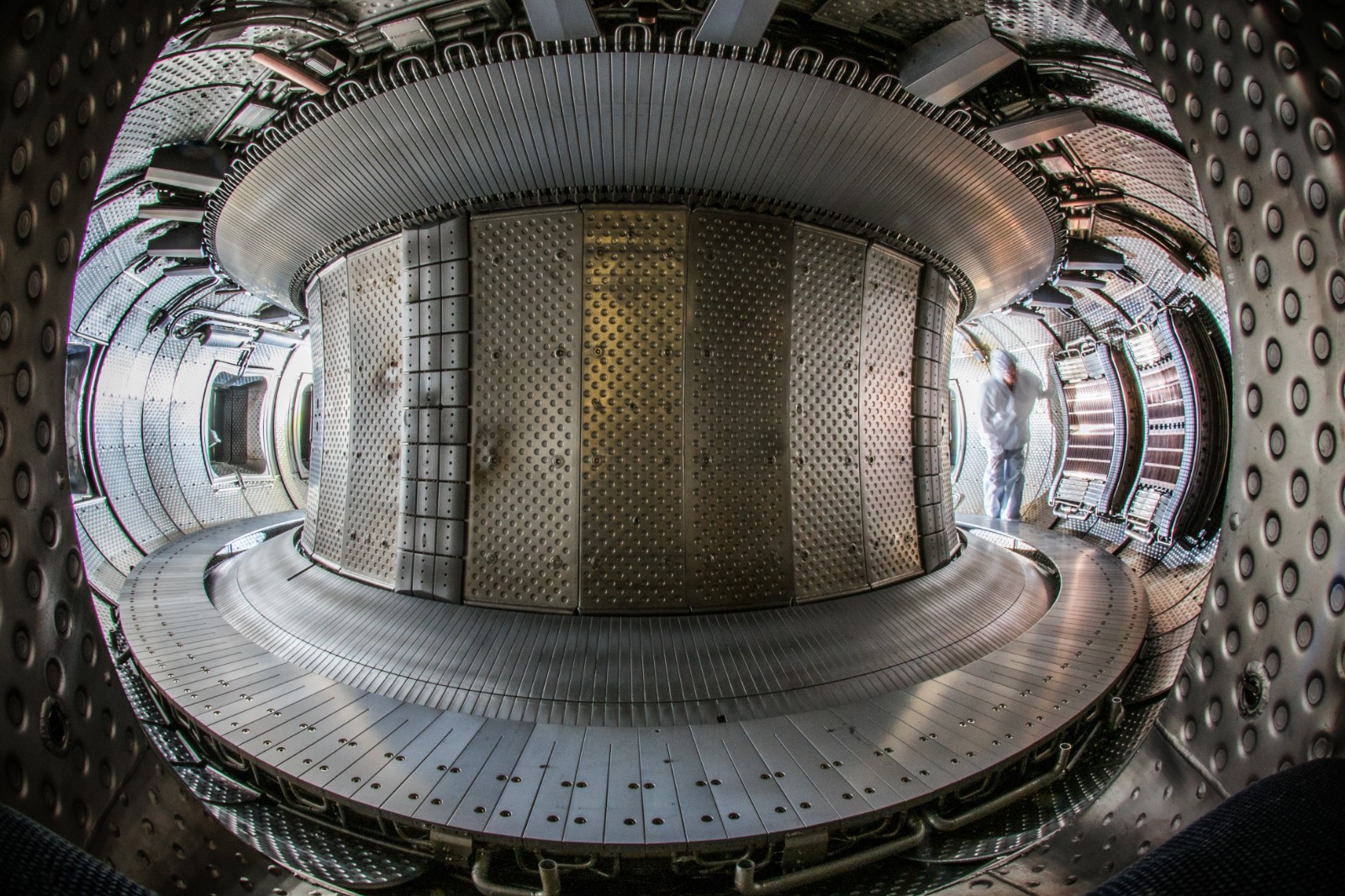
First H-mode plasma with ELMs achieved on WEST
Recently, the C13 experimental campaign on the French tungsten tokamak WEST achieved a major breakthrough, successfully producing H-mode plasmas with Edge Localized Modes (ELMs). This is a key step in preparing for plasma scenarios relevant to the International Thermonuclear Experimental Reactor (ITER) and future fusion power plants. Over the past nearly three months, scientists, engineers, and technicians from the French Alternative Energies and Atomic Energy Commission (CEA) at Cadarache, together with international collaborators, conducted the C13 experimental campaign. This campaign aimed to address a series of key scientific and technical challenges in magnetic confinement fusion, covering the behavior of plasma-facing components and advanced plasma scenarios. The experiments focused on...
2026-08-04
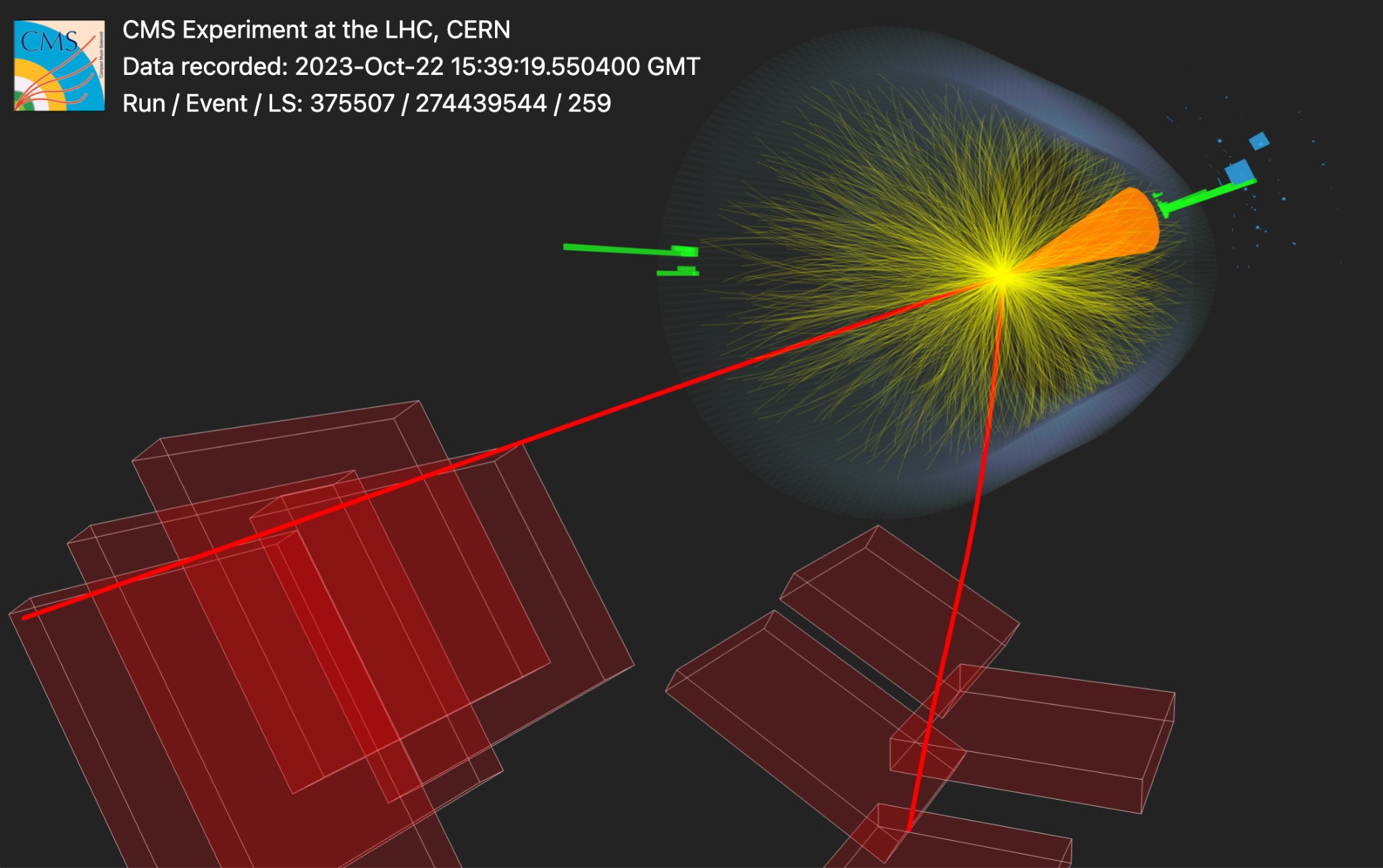
Unveiling Extreme Heat: Z Boson Probes New Mechanisms of the "Hottest Matter in the Universe"
Using Z boson probes at the Large Hadron Collider (LHC), scientists have revealed new details about how the hottest matter in the universe—the quark-gluon plasma (QGP)—absorbs energy, challenging existing theoretical models. This research provides important clues for understanding the state of the early universe shortly after the Big Bang. To gain deeper insights into the QGP, physicists cleverly employ Z bosons as messengers. Since Z bosons do not interact with the QGP, they can traverse the plasma almost unaffected, precisely recording information about the initial state. By analyzing the momentum differences between μons produced from Z boson decays and their recoiling jets, scientists were able to determine the energy lost by quarks as they traverse the QGP...
2026-08-04
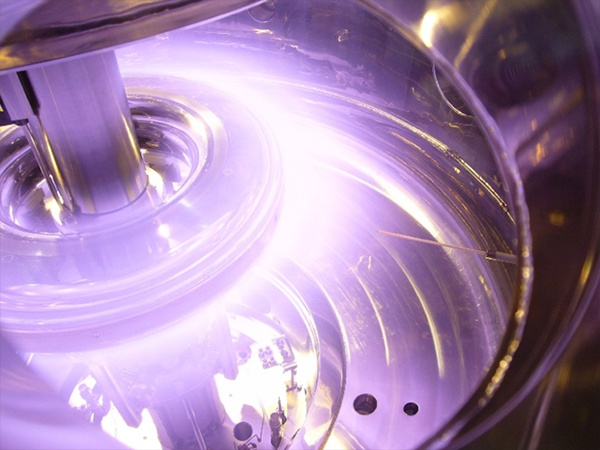
Japanese research team experimentally demonstrates that fusion plasma fluctuations can drive inward particle transport
August 3, 2026, a research team from The University of Tokyo and the National Institute for Fusion Science (NIFS) under the National Institutes of Natural Sciences announced that researchers have directly observed in experiments that low-frequency electric field fluctuations in high-temperature plasma confined by a dipole magnetic field can transport particles to the central region of the plasma. Plasma produced by the levitated dipole experiment device RT-1 (Ring Trap 1) Overall view of the RT-1 device (Kashiwa Campus, The University of Tokyo) The study was conducted using the levitated dipole experiment device Ring Trap 1 (RT-1) at The University of Tokyo. RT-...
2026-08-03
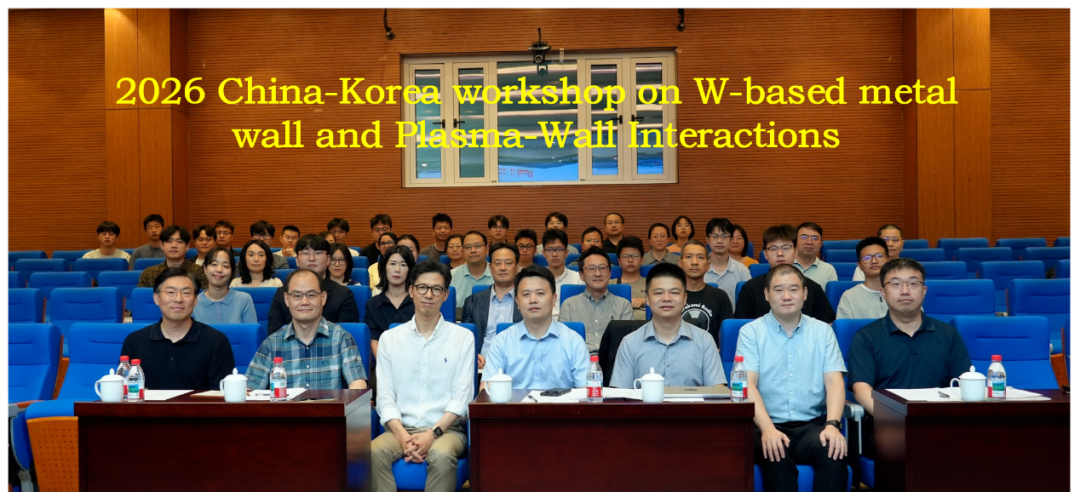
The Institute of Plasma Physics, Hefei Institutes of Physical Science, Chinese Academy of Sciences, hosted the 2026 China-Korea Bilateral Workshop on Tungsten Metal First Wall and Plasma-Wall Interactions
Recently, the 2026 China-Korea Bilateral Workshop on Tungsten Metal First Wall and Plasma-Wall Interactions (2026 CN-KO Workshop on W-based metal Wall and Plasma-Wall Interactions) was held. This meeting, hosted by the Institute of Plasma Physics, is a series of conferences under the framework of bilateral science and technology cooperation between the Chinese and Korean governments. More than 40 researchers from institutions including the Korea Institute of Fusion Energy, the Korea Atomic Energy Research Institute, the Korea Institute of Materials Science, Pohang University of Science and Technology, the Institute of Plasma Physics, the Institute of Solid State Physics, Hefei Institutes of Physical Science, Chinese Academy of Sciences, Hefei University of Technology, and Beihang University participated...
2026-07-30

Princeton University and PPPL Launch Collaborative Graduate Program in Plasma Science and Technology
The Princeton Plasma Physics Laboratory (PPPL), a U.S. Department of Energy (DOE) facility, and Princeton University recently launched the Collaborative Research Program in Plasma Science and Technology (CRPST). This two-year program, which began on July 1, 2026, aims to establish a more formal joint mentorship mechanism and expand opportunities for Princeton University graduate students in engineering, physics, and related disciplines to participate in research at PPPL. Under the program, selected students will be jointly mentored by a PPPL scientist and a Princeton University faculty member. Students will work at PPPL at least one day per week, participate in relevant research groups, and use laboratory facilities to advance their projects...
2026-07-30

"Magnetically Confined Fusion Burning Plasma" Selected as One of the Frontier Scientific Issues for 2026 by the China Association for Science and Technology
The main forum of the 28th Annual Meeting of the China Association for Science and Technology (CAST) was held in Beijing on July 15. During the forum, a list of major scientific questions, engineering and technical challenges, and industrial technology is
2026-07-27
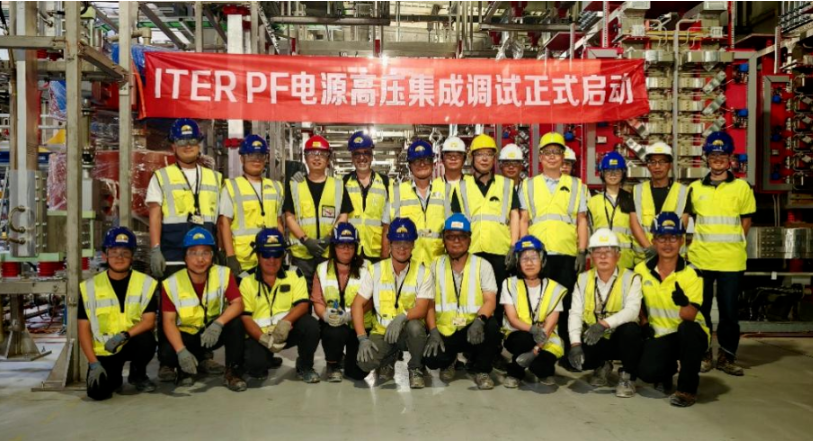
Institute of Plasma Physics Visits ITER Headquarters in France for Exchange Activities
From July 7 to 9, 2026, a delegation from the Institute of Plasma Physics (ASIPP) visited ITER headquarters in France to engage in in-depth discussions regarding the joint commissioning plan for the device and the on-site commissioning of key ITER systems
2026-07-27