Registration
REGISTER FOR THE CONFERENCE
Registration
REGISTER FOR THE CONFERENCE
 Apply to Exhibit
APPLICATION FOR EXHIBITION
Apply to Exhibit
APPLICATION FOR EXHIBITION
 Sponsorship
SPONSORSHIP APPLICATION
Sponsorship
SPONSORSHIP APPLICATION
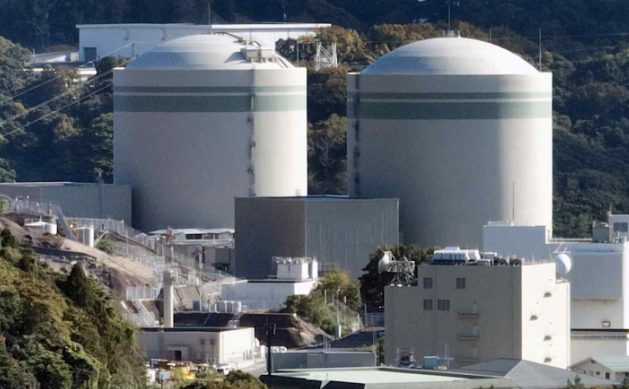
Japan's Nuclear Plant Renewal Faces Labor Shortage Challenges
Japan is planning to replace its aging nuclear reactors to enhance the nation's energy independence. However, the key issue is that labor shortages are threatening the progress of this effort. According to reports, up to 70% of related companies have reported difficulties in recruiting personnel, placing greater strain on an already tight schedule. The government has approved plans to build up to five new nuclear reactors by 2040, but the human resource bottleneck at the operational level is becoming an increasingly serious problem. The labor shortage not only affects the progress of new projects but also puts pressure on the safe operation and maintenance of existing nuclear power plants. As aging reactors are gradually...
2026-08-02
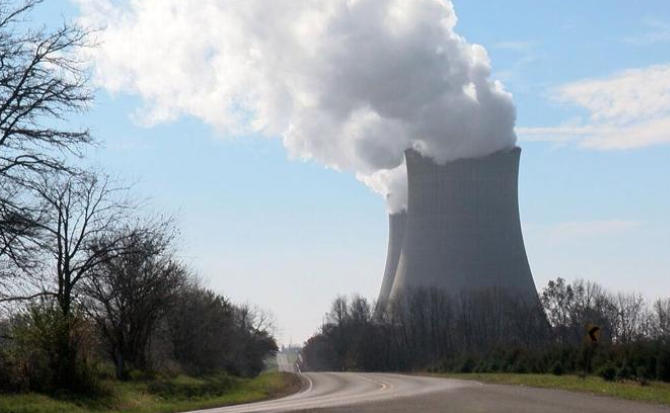
Illinois Restarts Nuclear Power in Bid to Address Energy Challenges
2026-08-02

Romania Stands by NuScale SMR Project Amid Growing Controversy
2026-08-02

Italy Moves to Approve Advanced Nuclear Legal Framework, Paving Way for Small Modular Reactors
2026-08-02
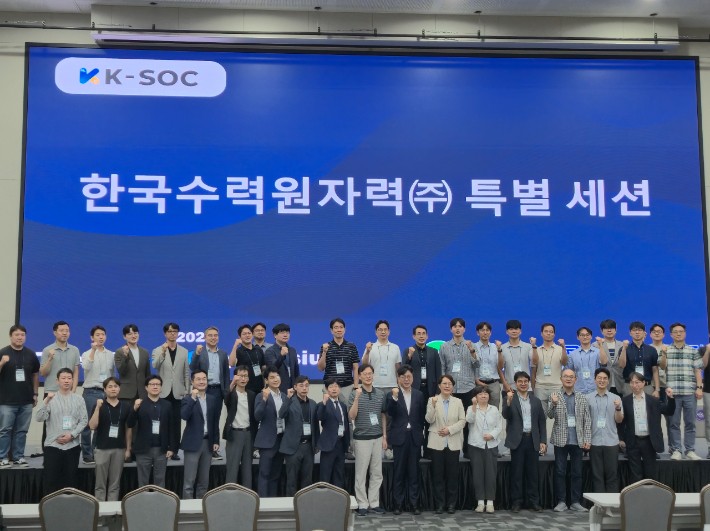
KHNP Unveils Research Findings on High-Temperature Steam Electrolysis Demonstration Planning Integrated with Nuclear Power Plants
2026-08-02
Japan's Chugoku Electric Power swings to loss in FY2026 Q1 as nuclear shutdown raises costs
2026-08-02
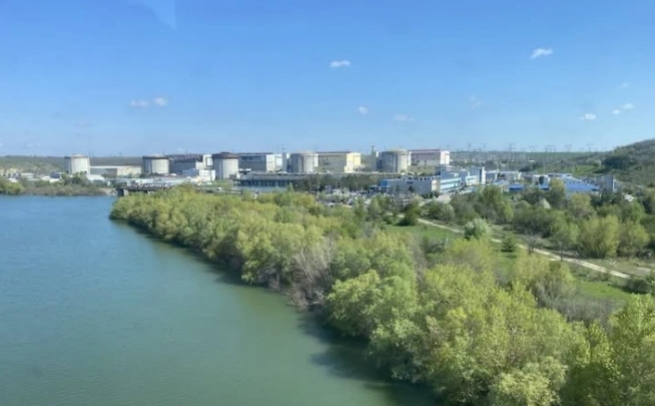
Wachtebeke Municipal Council Reintroduces Nuclear Power Plant Motion
2026-08-01
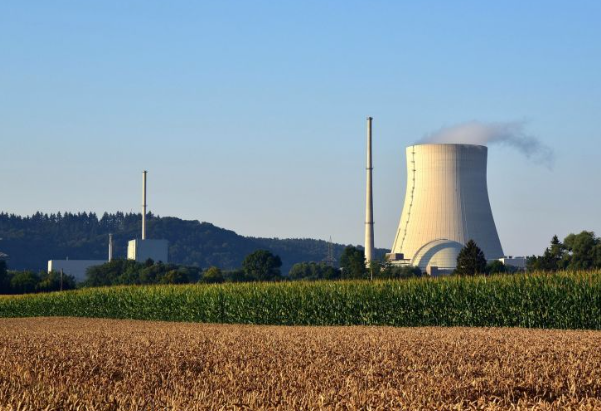
Six Polish companies enter final stage of supplier qualification for Westinghouse AP1000 first reactor
2026-08-01
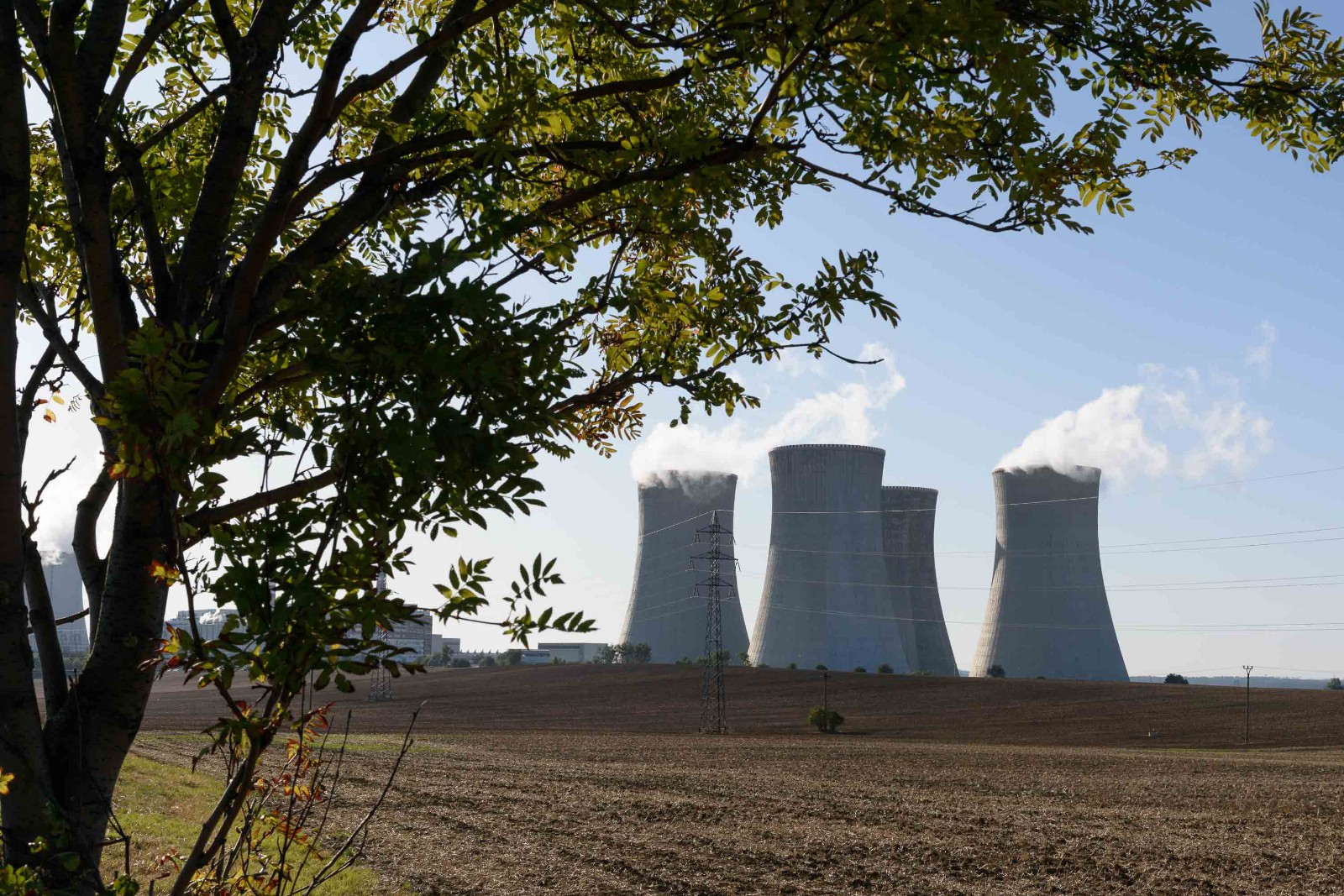
Units 3 and 4 of Dukovany Nuclear Power Plant to Undergo Joint Maintenance of Shared Systems
2026-08-01

Brazilian researchers are developing a timber traceability tool based on stable isotope analysis to help identify the origins of illegally logged wood in the Amazon region. Illegal logging is reported to be one of the major causes of deforestation in the Amazon. Local environmental and law enforcement agencies currently typically determine timber origins through plant anatomical characteristics, tree species distribution, and official records such as forest origin documents, but these methods are not always sufficient to prove that timber comes from legal areas. A research team at the Center for Nuclear Energy in Agriculture, University of São Paulo (CENA-USP) is mapping the isotopic distribution of Amazon trees. The method analyzes the ratios of different isotopes of elements such as oxygen, carbon, nitrogen, and strontium in wood cellulose to narrow down the potential harvesting areas of timber. Team leader Luiz Antonio Martinelli stated that stable isotopes are difficult to forge artificially, offering the potential to provide federal police with a more tamper-resistant technical tool.
2026-08-02
An international research team led by scientists from the Facility for Rare Isotope Beams (FRIB) at Michigan State University has recently identified the source of the large number of low-energy gamma rays emitted by zinc-70 nuclei. The study suggests that magnetic transitions occurring within the nucleus are the key reason for this anomalous signal enhancement. The findings were published in the journal Nature under the title "Magnetic character of the low-energy enhancement in 70Zn." Gamma rays are electromagnetic radiation released when excited atomic nuclei transition to lower, more stable energy levels. For a long time, scientists have observed an anomalous increase in the number of low-energy gamma rays in some atomic nuclei, known as the low-energy enhancement (LEE), but its physical mechanism had remained unclear...
2026-08-02
On July 31, the German eROSITA consortium, led by the Max Planck Institute for Extraterrestrial Physics with participation from the University of Bonn, released its second major public dataset, eROSITA Data Release 2 (DR2). Built from the first three all-sky survey observations conducted by the eROSITA telescope aboard the Spectrum-Roentgen-Gamma (SRG) mission, this dataset is considered one of the most sensitive and comprehensive X-ray catalogs currently available to the public. The DR2 main catalog covers the 0.2–2.3 kiloelectron-volt (keV) band in the western hemisphere, containing nearly two million X-ray sources. Among these, over 1.9 million are point-like sources, primarily consisting of stars and actively accreting supermassive black holes; approximately 64,000 are extended sources,...
2026-08-01
A materials study released on July 31 shows that a research team used laser powder directed energy deposition (LP-DED) technology to fabricate a novel Cr₁₀Mo₂₅Ta₂₅Ti₁₅V₂₅ refractory complex concentrated alloy and systematically evaluated its structural stability and mechanical properties under irradiation environments. The study targets the demand for high-temperature, high-irradiation structural materials in next-generation nuclear fission and fusion devices. In the study, samples were subjected to 3.5 MeV Fe²⁺ ion irradiation at the Ion Beam Materials Laboratory of Los Alamos National Laboratory in the United States, at irradiation temperatures of room temperature and 650°C, with local doses reaching approximately 1.8, 6, and 18 dpa. Microstructural analysis...
2026-08-01
On July 31, Egypt's Ministry of Health and Population stated that it reaffirmed its critical role in improving Egypt's national radiation safety system during a 12-day Integrated Regulatory Review Service (IRRS) mission conducted by the International Atomic Energy Agency (IAEA). The IRRS mission, involving a team of international experts and reviewers, was conducted at the invitation of the Egyptian Nuclear and Radiological Regulatory Authority (ENRRA). Egyptian authorities stated that this step is part of the country's ongoing efforts to strengthen its national radiation safety framework and enhance its regulatory infrastructure in line with the latest international standards. The Ministry of Health and Population submitted a topical report through the Radiation Protection Executive Office of the General Department of Radiology, detailing its role in regulating and supervising the use of medical radiation...
2026-08-01
Bengaluru, India – Manipal Hospital Yelahanka has become the first healthcare facility in India to install Elekta Evo, Elekta's AI-enhanced adaptive CT linac platform, which will support clinical teams in delivering online adaptive radiotherapy for more personalized and precise cancer treatment. The system was previously showcased at AROICON 2025, India's radiation oncology conference. According to data from the Indian Council of Medical Research, India records an estimated 1.46 million new cancer cases annually, with radiotherapy demand continuing to grow. For patients with complex conditions or those presenting at advanced stages...
2026-08-01
The Anambra State Government of Nigeria recently stated that it will strengthen cooperation with the Nigerian Nuclear Regulatory Authority (NNRA) to enhance radiation safety across the state and ensure the safe and compliant use of radioactive materials in medical institutions. At a meeting held in Awka, the capital of Anambra State, Dr. Afam Obidike, the State Commissioner for Health, exchanged views on relevant cooperation with a delegation from the NNRA. The delegation was led by Ekene Efenemoku, the NNRA's Southeast Zonal Coordinator. Efenemoku stated that the visit aimed to deepen bilateral cooperation and brief the state government on the NNRA's statutory responsibilities. According to his introduction, the...
2026-08-01