Registration
REGISTER FOR THE CONFERENCE
Registration
REGISTER FOR THE CONFERENCE
 Apply to Exhibit
APPLICATION FOR EXHIBITION
Apply to Exhibit
APPLICATION FOR EXHIBITION
 Sponsorship
SPONSORSHIP APPLICATION
Sponsorship
SPONSORSHIP APPLICATION

Polish Energy Ministry Moves PLN 3 Billion in First Nuclear Power Plant Construction Spending Out of 2026 Budget
The Polish Energy Ministry has deferred PLN 3 billion in spending earmarked for the construction of the country's first nuclear power plant. This change indicates that while the Polish nuclear power project remains a key component of the national energy strategy, it is facing adjustment pressures in budget execution, engineering preparation, and project milestone alignment during actual implementation. The core context behind Poland's construction of its first nuclear power plant is its long-standing reliance on coal-fired power generation, coupled with the dual constraints of EU emission reduction targets and energy security needs. Developing nuclear power is seen as an important pathway for Poland to reduce its share of fossil fuels, stabilize electricity supply, and decrease dependence on external energy sources. Therefore, changes to the relevant budget are not merely a fiscal arrangement...
2026-08-14

Indian Government Approves INR 133.55 Billion Equity Funding for 6 Nuclear Power Projects Under Construction
2026-08-14

Polish President Signs Key Nuclear Power Bill, Allowing Early Construction Works to Start Ahead of Schedule
2026-08-14

Finland's Olkiluoto 3 nuclear reactor reduces output by 450 MW due to fault
2026-08-14

Finnish family-owned company Halton Group secures major order for UK's Sizewell C nuclear power project
2026-08-14

Armenia Responds to Claims of Metsamor NPP Closure: Operating License Valid Until 2036
2026-08-14
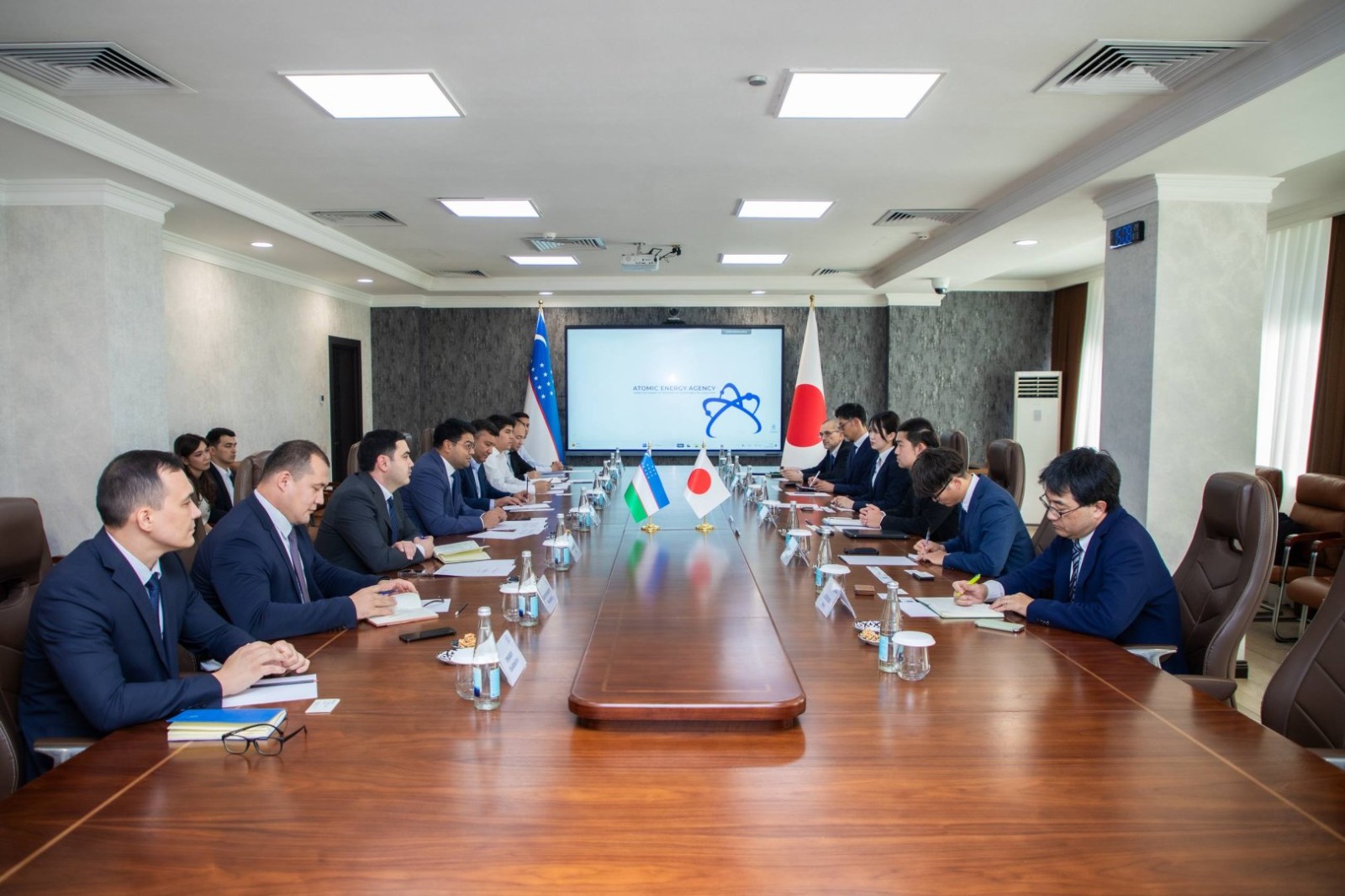
Uzbekistan and Japan Discuss Expanding Cooperation in Peaceful Uses of Nuclear Energy
2026-08-14
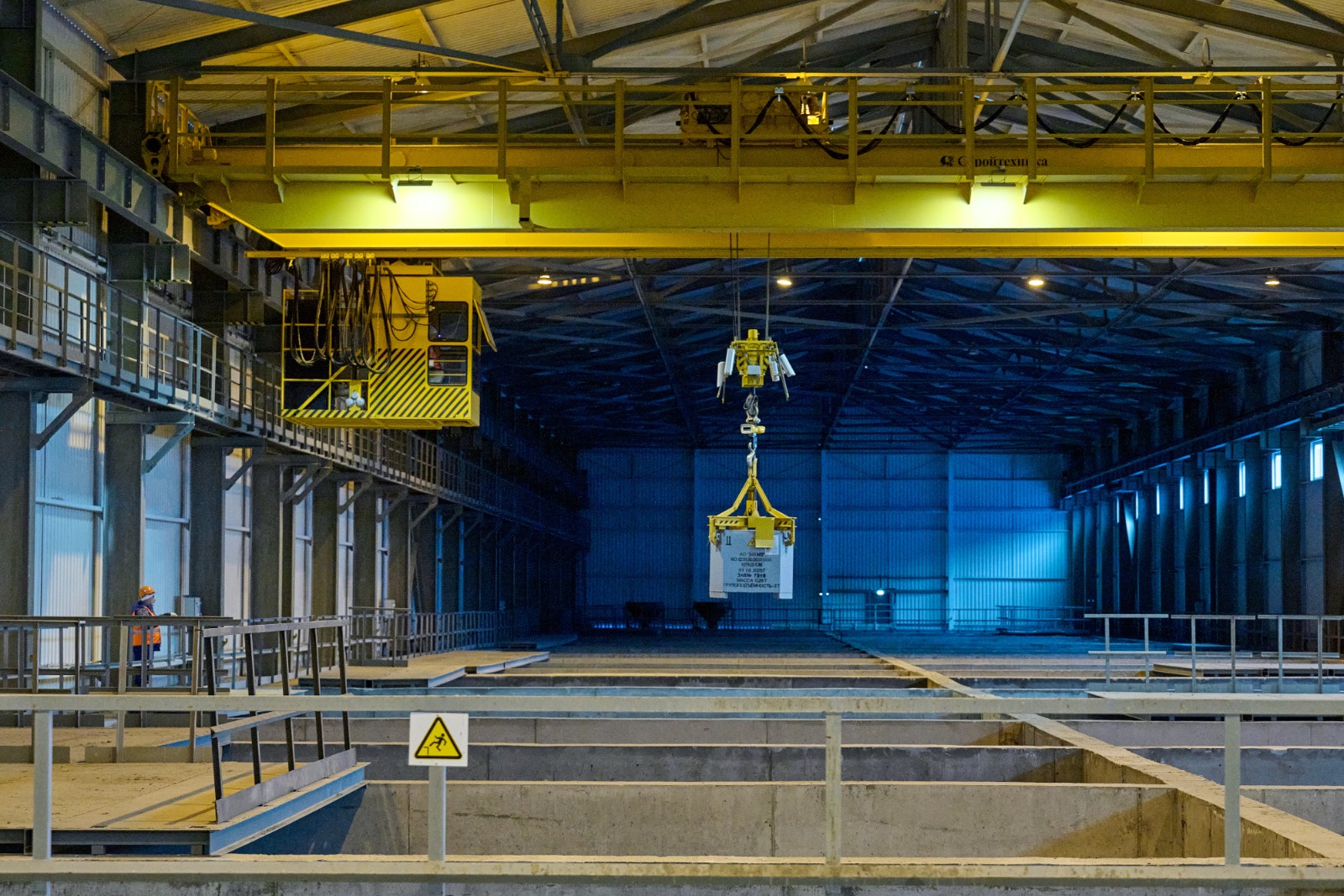
Rosatom and Lomonosov Moscow State University to Co-Host Seminar on Radioactive Waste Safety Barriers
2026-08-14

Module 5 of Containment Steel Liner Successfully Lifted at Unit 3 of Guangdong Taipingling Nuclear Power Plant
2026-08-14
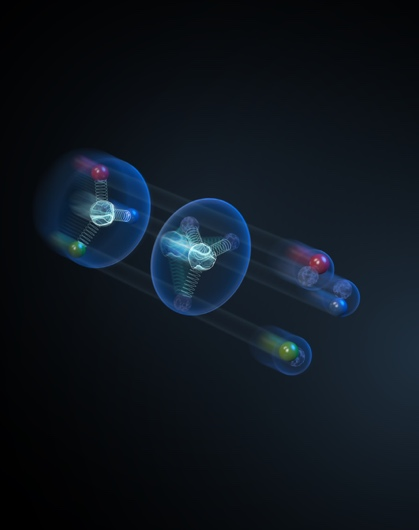
The University of Science and Technology of China, together with Kent State University and Brookhaven National Laboratory, played a leading role in the STAR international collaboration. Through precise measurements of net baryon number and net charge in high-energy nucleus-nucleus collision experiments, they discovered an exotic structure inside nucleons that may overturn fundamental understanding of nucleon internal structure. In the early morning of August 14, the results were published online in the journal Science under the title "Tracking the baryon number with nuclear collisions." Nucleons are the fundamental particles that make up the material world, carrying more than 99% of the mass of the visible matter in the universe. Understanding the internal structure of nucleons is of paramount importance for understanding the fundamental constituents and fundamental interactions of the material world.
2026-08-14
Russian researchers have developed a rapid bioassay method based on bioluminescent bacteria that can be used to assess safe dose ranges of ionizing radiation for animals, providing an early screening tool for low-dose radiation applications in livestock farming. The study involved researchers from the Institute of Biophysics of the Siberian Branch of the Russian Academy of Sciences, Siberian Federal University, and Krasnoyarsk State Agrarian University. The research team noted that low-dose ionizing radiation ranging from tens to hundreds of milligrays (mGy) may activate a series of physiological processes in animals, including metabolism, growth, and biomass accumulation; however, if the dose exceeds the safe range, it may cause physiological...
2026-08-14
Researchers from the D.V. Skobeltsyn Institute of Nuclear Physics at Lomonosov Moscow State University, in collaboration with the Faculty of Physics and the Faculty of Chemistry of Lomonosov Moscow State University, as well as the Siberian Federal Scientific Centre of Agro-BioTechnologies of the Russian Academy of Sciences, have found that pre-sowing treatment of wheat seeds with low-energy electron beams and X-rays can help increase crop yields and enhance plant resistance to diseases. The study focused on the wheat variety Novosibirskaya 29 and included laboratory experiments, two consecutive years of field trials, and computer modeling. The results showed that a dose range of 5 to 15 Gy is suitable as a pre-sowing irradiation treatment parameter for wheat seeds. According to Moscow State University...
2026-08-14
Russia plans to launch the new Bion-M 3 spacecraft in 2030 to study the effects of cosmic radiation on living organisms under conditions similar to deep space. Vladimir Sychev, a senior official at the Institute of Biomedical Problems of the Russian Academy of Sciences, presented the plan at a meeting of the Presidium of the Russian Academy of Sciences' Space Council on August 4. Sychev stated that cosmic rays, solar proton events, and their effects on the human body are critical issues that must be understood when planning long-term interplanetary crewed missions. Participants have endorsed the draft scientific research program for the spacecraft's flight testing. According to the plan, Bion-M 3 will be placed into a polar orbit at an altitude of approximately 800 kilometers...
2026-08-14
On August 13, Andrei Puchkov, senior researcher at the Environmental Radioactivity Laboratory of the N.P. Laverov Federal Arctic Integrated Research Center, Ural Branch of the Russian Academy of Sciences, stated that measurements taken during the 2026 Arctic Floating University expedition's landings on Novaya Zemlya and Franz Josef Land showed very low radioactivity levels, with no anomalies detected. Puchkov noted that the expedition measured radon concentrations at all landing sites, with radon flux densities ranging from below 1 millibecquerel per square meter per second to 200 millibecquerels per square meter per second, all recorded values remaining within background levels. He indicated that permafrost acts as a barrier and shield in the region, preventing radioactive gases from reaching the surface; relatively higher radon fluxes in some areas may be associated with geological features such as fault zones and fracture zones.
2026-08-14
On August 13, Russian President Vladimir Putin visited the Koltsovo Science City in Novosibirsk to learn about the operating principles of the Siberian Circular Photon Source (SKIF), a shared-use center. This center is the first facility in a network of modern synchrotron radiation sources being built in Russia, with construction efforts incorporated into the national development program for synchrotron and neutron research and related research infrastructure, covering the period through 2030 and beyond. It was reported that SKIF, with its high-brightness, high-intensity X-ray beams, can serve high-level research in fields such as chemistry, physics, materials science, biology, geology, archaeology, and paleontology. Officials also noted that...
2026-08-14
CGN Dasheng Accelerator Technology Co., Ltd. recently announced that its BV cable X-ray thickness gauge can be used for online inspection of insulation layers during cable production. The system employs X-ray technology to perform real-time measurement of key parameters such as cable outer diameter, inner diameter, wall thickness, eccentricity, and concentricity, replacing the potential detection blind spots inherent in traditional sampling inspection methods. In cable production, insulation layer thickness directly affects product safety and material utilization. Traditional inspection typically relies on sample cutting, manual measurement, and recording, with limited inspection frequency. If issues such as uneven wall thickness or eccentricity occur during production, they are often difficult to detect in a timely manner, which also hinders subsequent quality traceability and process adjustment. According to the company, the equipment...
2026-08-14