Registration
REGISTER FOR THE CONFERENCE
Registration
REGISTER FOR THE CONFERENCE
 Apply to Exhibit
APPLICATION FOR EXHIBITION
Apply to Exhibit
APPLICATION FOR EXHIBITION
 Sponsorship
SPONSORSHIP APPLICATION
Sponsorship
SPONSORSHIP APPLICATION
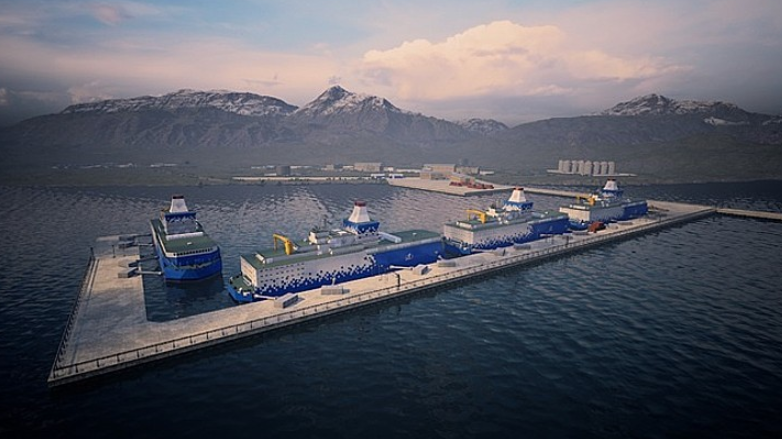
Rosatom Plans Four More Floating Nuclear Power Plants to Strengthen Energy Layout in the Arctic and Far East
Rosatom plans to build four additional floating nuclear power plants. This move indicates that Russia continues to regard small-scale nuclear energy and offshore floating nuclear power platforms as key solutions for energy supply in remote areas, particularly for the Arctic, the Far East, and resource development zones that are difficult to cover with traditional power grids. The core advantage of floating nuclear power plants lies in their deployment flexibility, providing relatively stable electricity and heat to coastal towns, port facilities, mining projects, and industrial bases. Compared with reliance on diesel, coal, or long-distance power transmission, floating nuclear power plants can reduce fuel transportation pressure and enhance energy security for large projects in remote areas. For...
2026-08-14

ITER Tokamak Advances Assembly in France, Fusion Experiment Targets 150 Million Degree Celsius Plasma
2026-08-14

Russia Plans to Build Small Nuclear Power Plant in Kyrgyzstan, Land-Based Icebreaker Reactor in Focus
2026-08-14

Polish Energy Ministry Moves PLN 3 Billion in First Nuclear Power Plant Construction Spending Out of 2026 Budget
2026-08-14
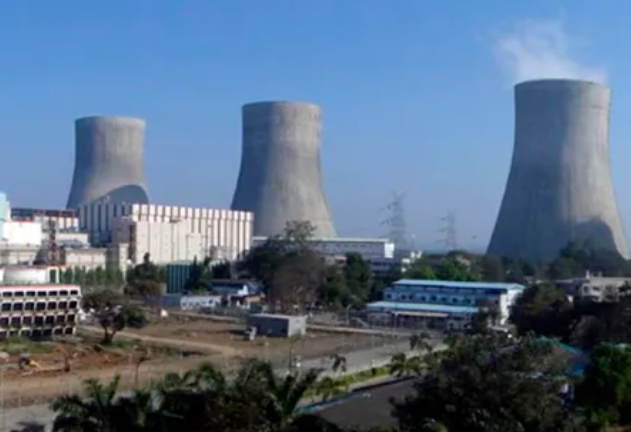
Indian Government Approves INR 133.55 Billion Equity Funding for 6 Nuclear Power Projects Under Construction
2026-08-14

Polish President Signs Key Nuclear Power Bill, Allowing Early Construction Works to Start Ahead of Schedule
2026-08-14

Finland's Olkiluoto 3 nuclear reactor reduces output by 450 MW due to fault
2026-08-14

Finnish family-owned company Halton Group secures major order for UK's Sizewell C nuclear power project
2026-08-14

Armenia Responds to Claims of Metsamor NPP Closure: Operating License Valid Until 2036
2026-08-14
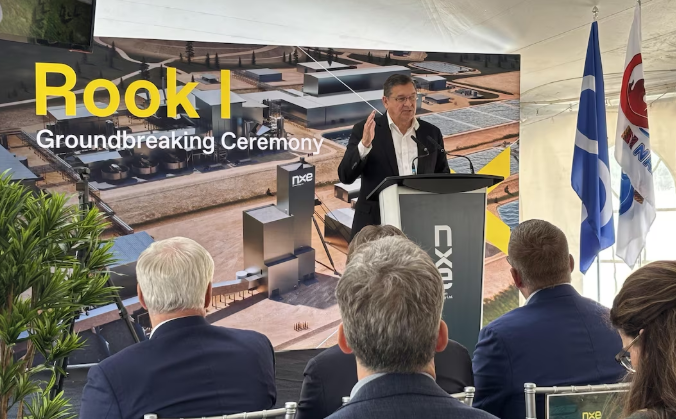
The Rook 1 uranium mine project in northern Saskatchewan, Canada, has officially commenced construction. The project, advanced by NexGen Energy, is located south of the Athabasca Basin, approximately 130 kilometers north of La Loche. Saskatchewan Premier Scott Moe, former Canadian Prime Minister Stephen Harper, Secretary of State for Rural Development Buckley Belanger, and local Indigenous representatives attended the groundbreaking ceremony. The total project investment is approximately CAD 2.2 billion, with an expected construction period of four years. External infrastructure work has already begun, shaft sinking is planned for 2027, and the on-site runway will be expanded to 1,780 meters. Rook 1 is regarded as one of the world's largest uranium mine projects. NexGen estimates...
2026-08-14
Long-term monitoring results from the external radiation monitoring group at Russia's Kola Nuclear Power Plant show that gamma radiation dose rates around the plant site have consistently remained within natural background radiation levels, with radionuclide concentrations matching background values, indicating a sound radiation environment with no differences from surrounding areas. The station's radiation safety department collects surface water samples from the discharge canal monthly, with monitoring coverage encompassing all elements including the atmosphere, snow cover, bottom sediments, food products, algae, berries, mushrooms, and caged fish. The monitoring architecture consists of two tiers: 15 permanent environmental observation stations have been in continuous operation since before the commissioning of the first reactor unit in 1972; 13 ASKRO automated radiation environment monitoring system stations provide real-time ground-level gamma dose rate data, which is transmitted directly to the Rosenergoatom crisis center and integrated into the national unified radiation monitoring network. Approximately 200,000 cubic meters of air are drawn weekly through air filtration units to capture radionuclides, with volumetric activity of radioactive iodine also measured. A mobile radiological laboratory performs on-site spectrometric analysis. Annually, about 1,200 environmental samples are collected from around the plant site and delivered to the Polyarnye Zori laboratory, where well water samples analyzed by Canberra spectrometers yield "zero nuclide" results, with samples retained for one year for potential re-analysis. Biological samples are processed using the ashing method, and instrument sensitivity is sometimes insufficient to even detect any signal from the plant's impact.
2026-08-14
On the morning of August 13, the Department of Science and Technology of Phu Tho Province, in coordination with the Vietnam Union of Science and Technology Associations and the Institute for Technology and Radiation Application, held a scientific seminar to solicit opinions on the draft of the "Radiation and Nuclear Accident Emergency Response Plan of Phu Tho Province." Experts, scientists, and representatives from relevant provincial and municipal departments were invited to attend, aiming to ensure the plan's feasibility, alignment with local conditions, and compliance with national requirements for atomic energy management and radiation safety. The core purpose of this seminar was to improve the emergency response plan through multi-party input, making it more suitable for local realities and meeting the requirements of atomic energy application, radiation safety, and nuclear safety management. From the local perspective, the application of radiation technology in Phu Tho Province has already reached a certain scale. Currently, the province has more than 270 institutions using radiation, equipped with over 417 X-ray machines, 2 linear accelerators, more than 500 radiation devices, and 45 radioactive sources, widely applied in fields such as medicine, industry, technical inspection, and scientific research. These technologies have played an active role in enhancing diagnostic and treatment capabilities, improving labor productivity, upgrading product quality, and serving economic and social development.
2026-08-14
Turkey's Nuclear Regulatory Authority (NDK) has recently adjusted testing requirements for equipment related to nuclear facilities, providing flexibility for equipment with a production cycle of less than 15 days. According to the decision published in the Official Gazette, under specific conditions, when such equipment undergoes certain tests, testing laboratories will no longer be required to hold specific accreditation for the corresponding test methods. This adjustment applies to the supply chain under the framework of the Regulation on Authorization of Nuclear Facilities. When the NDK, suppliers, or subcontractors are unable to provide a laboratory accredited for the relevant test methods, the original accreditation prerequisite may be waived for the testing of such equipment. This indicates that the regulatory authority, while ensuring quality control of nuclear facility equipment, has also left operational leeway for the testing process of short-cycle production equipment.
2026-08-14
Kazakhstan is entering a new stage of nuclear energy development. The construction of a nuclear power plant means not only the addition of a major energy project, but also the need for the country to simultaneously establish a complete nuclear industry system, including research support, personnel training, experimental infrastructure, nuclear and radiation safety systems, and indigenous technological capabilities. The article points out that a nuclear power plant can be built using foreign project designs, but true scientific and technological capability cannot be purchased along with the equipment; it is gradually formed through the long-term operation of nuclear facilities, conducting research, training engineering teams, and passing on experience. Against this backdrop, the Institute of Nuclear Physics of Kazakhstan is regarded as an important pillar of the future nuclear energy industry. The institution...
2026-08-14
The University of Science and Technology of China, together with Kent State University and Brookhaven National Laboratory, played a leading role in the STAR international collaboration. Through precise measurements of net baryon number and net charge in high-energy nucleus-nucleus collision experiments, they discovered an exotic structure inside nucleons that may overturn fundamental understanding of nucleon internal structure. In the early morning of August 14, the results were published online in the journal Science under the title "Tracking the baryon number with nuclear collisions." Nucleons are the fundamental particles that make up the material world, carrying more than 99% of the mass of the visible matter in the universe. Understanding the internal structure of nucleons is of paramount importance for understanding the fundamental constituents and fundamental interactions of the material world.
2026-08-14
Russian researchers have developed a rapid bioassay method based on bioluminescent bacteria that can be used to assess safe dose ranges of ionizing radiation for animals, providing an early screening tool for low-dose radiation applications in livestock farming. The study involved researchers from the Institute of Biophysics of the Siberian Branch of the Russian Academy of Sciences, Siberian Federal University, and Krasnoyarsk State Agrarian University. The research team noted that low-dose ionizing radiation ranging from tens to hundreds of milligrays (mGy) may activate a series of physiological processes in animals, including metabolism, growth, and biomass accumulation; however, if the dose exceeds the safe range, it may cause physiological...
2026-08-14