
Search Results
Keyword:materials
UK's Materials Detritiation Facility at Culham Resumes Operations to Support JET Fusion Decommissioning Materials Research
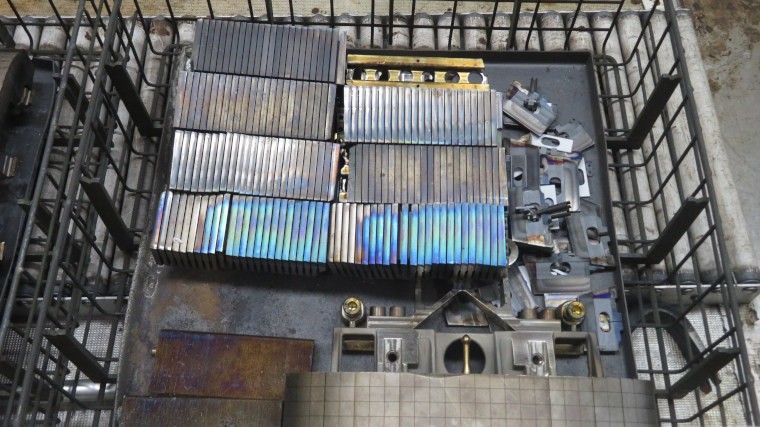
The UK Atomic Energy Authority recently announced that the Materials Detritiation Facility (MDF) at Culham has resumed operations following a 12-month engineering shutdown and upgrade. Experimental data produced by the facility has already been used to support research related to the removal of materials from the Joint European Torus (JET) device, providing a basis for waste management strategies under the JET Decommissioning and Repurposing (JDR) project. Over three years of plasma operations, deuterium-tritium (DT) experiments conducted at JET have left residual amounts of tritium in the tokamak's walls and internal components. This phenomenon is associated with tritium's tendency to enter materials under high-power fusion operating conditions. For JET decommissioning work, accurately determining the tritium...
2026-08-11

South Korea to Resume Actinium-225 Production Next Year to Ease Shortage of Raw Materials for Anti-Cancer Radiopharmaceuticals
South Korea's domestic production project for actinium-225 (Ac-225), a radioisotope used in next-generation cancer treatment, is expected to resume next year after being stalled for more than a year. Funding was secured in the first half of this year, and the Korea Institute of Radiological & Medical Sciences (KIRAMS) plans to complete facility construction and trial production before launching full-scale production in the second half of next year, aiming to alleviate the raw material shortage facing domestic clinical research and radiopharmaceutical development. KIRAMS is affiliated with the Ministry of Science and ICT. The institute received approval from the Nuclear Safety and Security Commission in May last year to produce Ac-225 using a cyclotron. The project first entered the review process in 2018 and took seven years to gain approval, with initial production originally planned by the end of last year. However, work on upgrading production facilities and procuring equipment was suspended after approximately 2 billion KRW in budget was not approved during parliamentary review.
2026-08-10
Honeycomb Materials Cross Over into Nuclear Energy: The Gill Corporation Enters the Radioactive Material Container Market
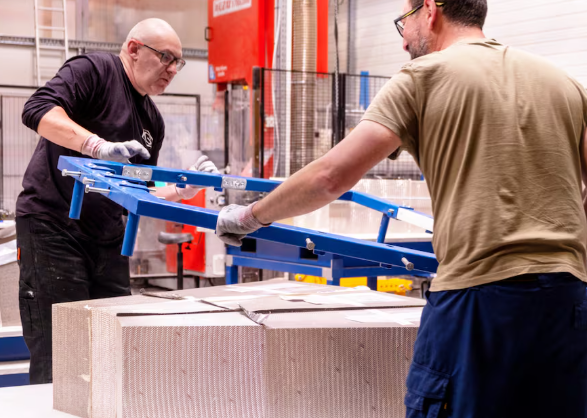
Basque Country-based company The Gill Corporation is applying its proven honeycomb structural material technology to the field of radioactive material containers, thereby entering the nuclear energy industry chain. The so-called honeycomb structure is typically known for its lightweight nature, high strength, impact resistance, and stable support, and has historically been used more in aerospace, transportation, or industrial composite applications; its current use in nuclear-related containers indicates that traditional high-performance materials companies are seeking new growth opportunities against the backdrop of the nuclear energy renaissance. The transport and storage of radioactive materials impose extremely high safety requirements on containers, which must not only account for mechanical strength, vibration resistance, and impact tolerance, but also meet long-term reliability, traceability, and stringent industry...
2026-08-10

Three U.S. Nuclear Energy Companies Explore Manufacturing Next-Generation Reactor Fuel from Recycled Nuclear Materials
U.S. nuclear energy companies Curio, NuScale Power, and Framatome have signed a memorandum of understanding to evaluate the feasibility of converting recycled nuclear materials into next-generation reactor fuel and related products. The tri-party collaboration is not focused on immediate commercial production, but rather on research into technical feasibility, fuel development, manufacturing capabilities, supply chain integration, and future commercial deployment, seeking to connect spent fuel recycling, fuel fabrication, and advanced reactor applications into a more complete industrial chain. Under this collaboration, Curio will provide its NuCycle nuclear fuel recycling technology, aiming to recover reusable strategic nuclear materials from spent fuel, with claims of reducing residual waste volume by up to 97%.
2026-08-07
Basic research cracks an application challenge that has persisted for nearly half a century: quantitative prediction of neutron irradiation swelling via ion irradiation
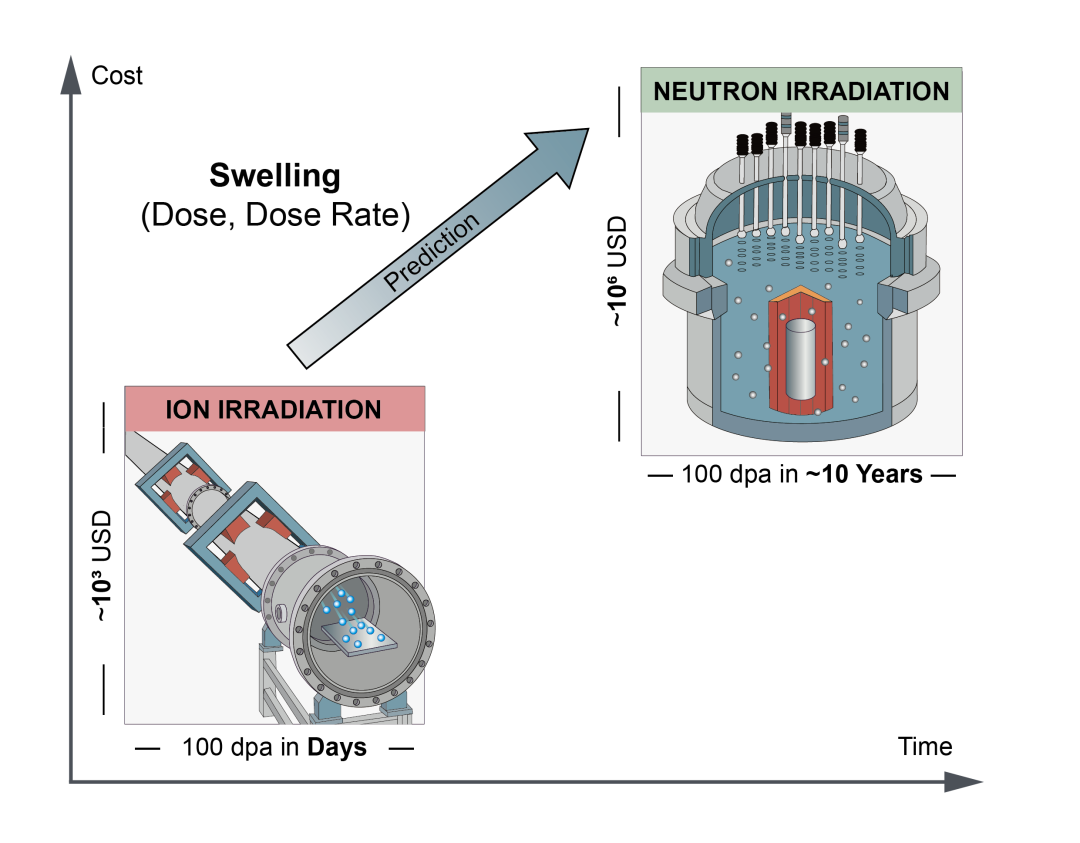
Whether advanced nuclear energy systems can operate safely over the long term depends on the ability of structural materials to resist neutron irradiation damage. Neutrons create numerous atomic-scale defects in materials, which gradually aggregate into nanoscale cavities, ultimately causing material swelling, dimensional instability, and performance degradation. However, obtaining high-dose neutron irradiation data often requires years or even more than a decade, with high costs and post-irradiation sample radioactivity; in contrast, ion irradiation can simulate years of accumulated damage within days and is therefore widely adopted (approximately 95% of irradiation experimental data in existing literature come from ion irradiation). But the dose rate of ion irradiation is typically 3—4 orders of magnitude higher than that of neutron irradiation, making direct conversion between the two results difficult. Recently, the research team of Wang Chenxu and Wang Yugang from the Institute of Heavy Ion Physics, School of Physics, and the State Key Laboratory of Nuclear Physics and Nuclear Technology at Peking University, in collaboration with researchers from the University of Tennessee and other institutions, established a quantitative relationship between material swelling and irradiation dose and dose rate at fixed temperatures based on cluster dynamics simulations, theoretical derivations, and ion irradiation experiments, achieving prediction of neutron irradiation swelling using rapid ion irradiation and providing a new tool for rapid screening and lifetime evaluation of nuclear materials.
2026-08-07

U.S. Laboratories Plan "Materials Discovery Cloud" to Use AI to Predict Impact of Defects in Microelectronic Devices
Researchers at the U.S. Department of Energy's Argonne National Laboratory, Lawrence Berkeley National Laboratory, Oak Ridge National Laboratory, and Northwestern University are planning to develop a Materials Discovery Cloud platform that leverages a physics-based artificial intelligence framework to predict how tiny defects affect the performance and lifespan of microelectronic devices. Visualization of the Materials Discovery Cloud, a physics-based AI framework that integrates experimental data, simulations, and high-performance computing to predict how tiny defects affect the performance and lifespan of microelectronic devices. (Image provided by ChatGPT.) Microelectronic devices are widely used in smartphones, laptops, secure communications, and artificial intelligence hardware. As device dimensions continue to shrink and operating speeds increase, tiny defects within materials and at interfaces have a more pronounced impact on device stability. These defects can cause overheating, leakage current, switching instability, and other issues, or in certain conditions, improve electrical or thermal performance. Identifying critical defects and understanding their evolution under real-world operating conditions has become a key challenge in the design of next-generation microelectronic materials.
2026-08-06

Two Advanced Materials Research Projects by 1st American Nuclear Co. Supported by U.S. Department of Energy Nuclear Science User Facilities Program
1st American Nuclear Co. (FANCO) announced on August 3 that two research proposals submitted by its scientists have been selected for support under the Nuclear Science User Facilities (NSUF) program of the U.S. Department of Energy Office of Nuclear Energy. Both selected projects come from the NSUF Fiscal Year 2026 Rapid Turnaround Experiment (RTE) review cycle, with research focused on next-generation reactor materials and fuel-related issues. The NSUF Rapid Turnaround Experiment program is open to nuclear energy researchers and primarily provides irradiation testing, post-irradiation examination capabilities, and related technical support...
2026-08-06
Russian Researchers Develop High-Wear-Resistant Steel Sample for Nuclear Waste Processing
Novosibirsk State Technical University (NSTU) recently announced that Russian researchers have developed a steel sample with reinforcing elements. Experimental results show that the durability of this material is approximately 4 times that of 5KhNM tool steel currently used in nuclear power plant waste processing equipment. The research focuses on improving precipitation hardening steel structures. Precipitation hardening steel is a special class of alloy material that, after quenching and holding at specific temperatures, precipitates fine, hard particles within the steel, thereby enhancing strength and wear resistance. The researchers aim to replace existing 5KhNM tool steel with new high-strength alloys...
2026-08-04

Philippine DOE launches nuclear power plant site screening with IAEA support
The Philippine Department of Energy (DOE) recently stated that it has begun preparing nuclear power plant site screening work in accordance with internationally recognized safety standards. Collaborating with experts from the International Atomic Energy Agency (IAEA), the DOE is wrapping up an intensive workshop on site and external event design this week to strengthen the country's nuclear power plant site screening process. Energy Secretary Sharon Garin stated that selecting the right site is one of the most critical decisions in developing a nuclear power program, and that close collaboration with the IAEA ensures every step is guided by the highest international standards of science, rigorous technical assessment, and resilient public safety protection. The workshop brought together technical experts from the DOE and partner agencies alongside specialists from the IAEA's External Events Safety Section to share recognized methodologies for assessing potential sites against earthquakes, floods, volcanic activity, extreme weather, and other natural and human-induced risks.
2026-08-03
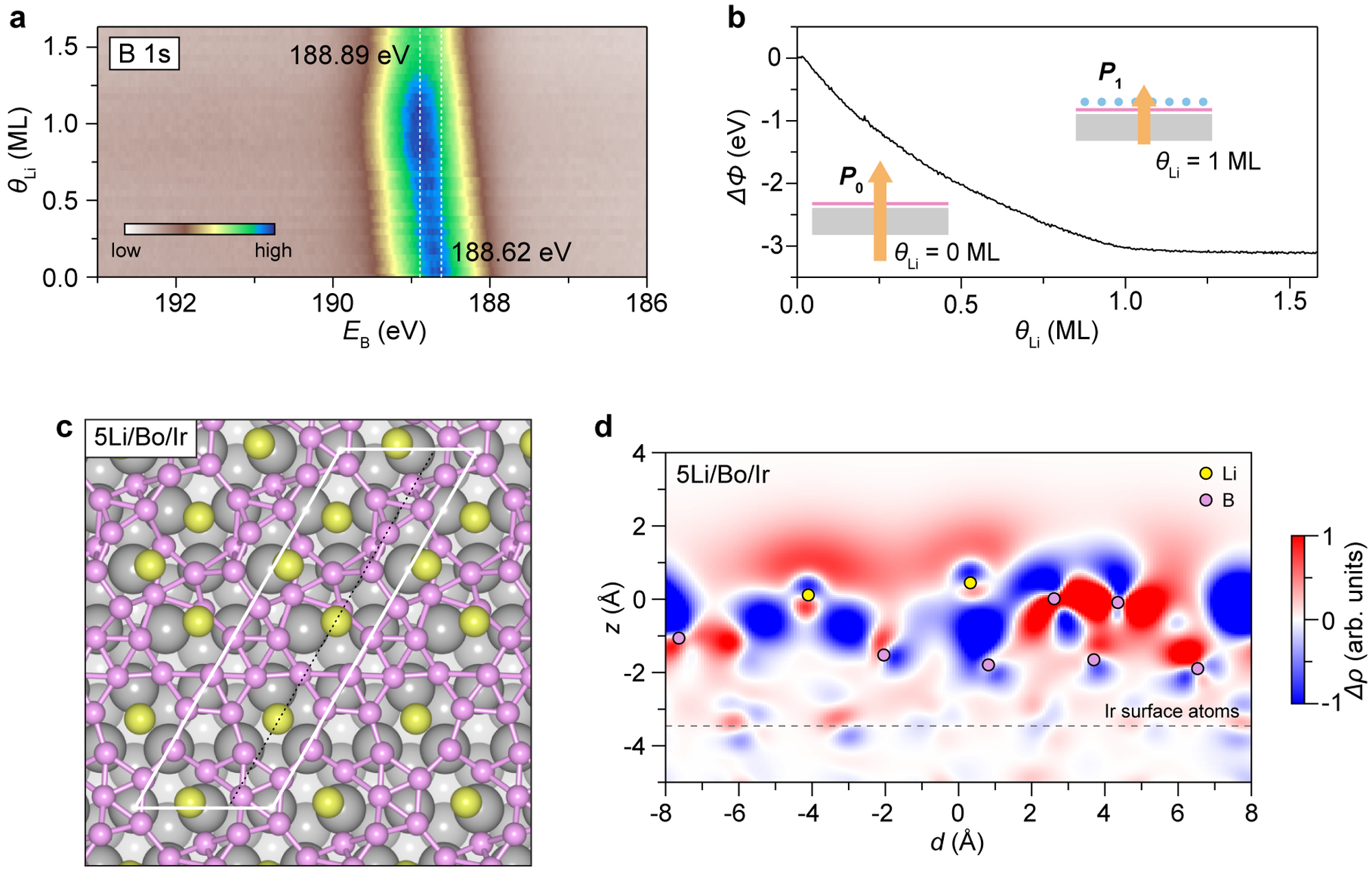
Multinational Team Reveals Mechanisms of Lithiation in Modulating the Structural and Electronic Properties of Borophene Using Synchrotron Techniques
A research team from the Institute of Physics in Zagreb, Croatia, Elettra Synchrotron in Trieste, Italy, Shimane University, and Tokyo University of Science recently conducted a study on the interaction between lithium atoms and borophene, revealing the mechanisms by which lithiation affects the atomic structure and electronic properties of borophene. The findings were published in *ACS Nano* and selected as the journal cover article. (a) Shift of the B 1s core level toward higher binding energy; (b) reduction of the sample work function due to charge transfer from Li atoms to B atoms; (c) lithium atoms (yellow) deposited on borophene (magenta) induce deformation of the borophene lattice, attributed to significant charge redistribution within the system...
2026-08-03

Anambra State, Nigeria Strengthens Cooperation with Nuclear Regulatory Authority to Enhance Safety Management of Medical Radioactive Materials
The Anambra State Government of Nigeria recently stated that it will strengthen cooperation with the Nigerian Nuclear Regulatory Authority (NNRA) to enhance radiation safety across the state and ensure the safe and compliant use of radioactive materials in medical institutions. At a meeting held in Awka, the capital of Anambra State, Dr. Afam Obidike, the State Commissioner for Health, exchanged views on relevant cooperation with a delegation from the NNRA. The delegation was led by Ekene Efenemoku, the NNRA's Southeast Zonal Coordinator. Efenemoku stated that the visit aimed to deepen bilateral cooperation and brief the state government on the NNRA's statutory responsibilities. According to his introduction, the...
2026-08-01
Kazakhstan's National Nuclear Center Experimental Base Supports Nuclear Power Safety and Advanced Energy Research
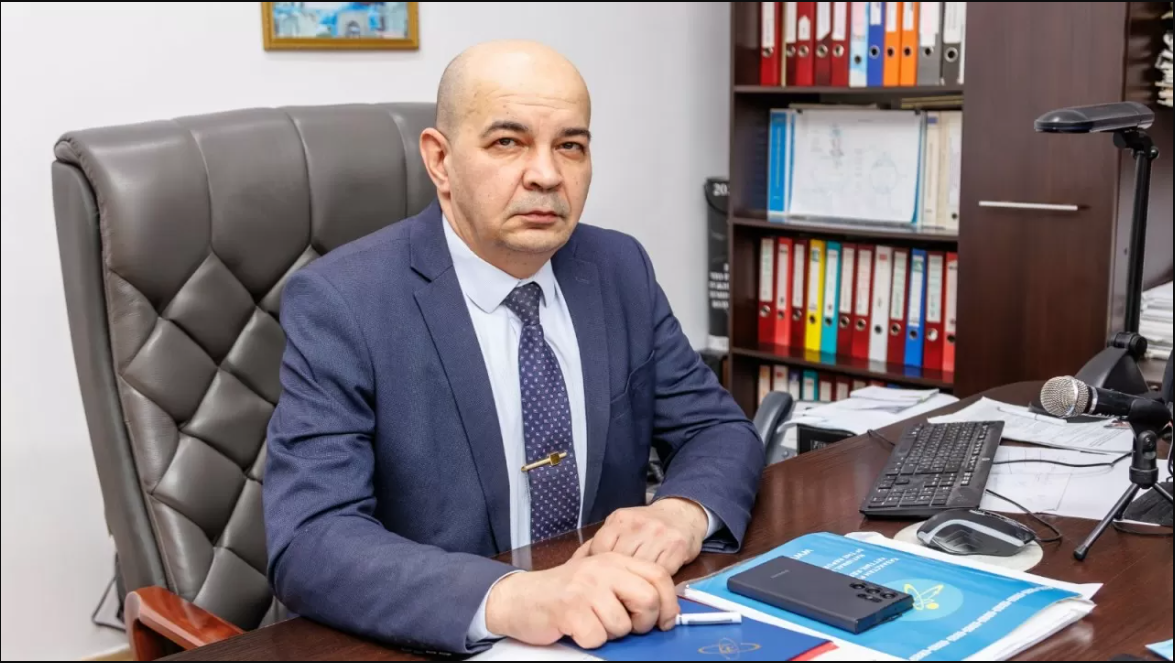
On July 30, Vyacheslav Gnyrya, Deputy Director of the Institute of Atomic Energy at the National Nuclear Center of the Republic of Kazakhstan (NNC RK), presented the development of the center's experimental research base. He stated that Kazakhstan is leveraging existing research facilities to establish a scientific foundation for next-generation reactor technologies and controlled thermonuclear fusion energy research. According to the presentation, the NNC RK experimental base is a strategic scientific research infrastructure developed over decades in Kazakhstan, featuring research reactors, specialized test facilities, and materials science equipment capable of simulating conditions difficult to replicate in operating nuclear reactors, including the behavior of nuclear fuel, structural materials, and safety system components under high temperatures, intense irradiation, and transient conditions.
2026-07-31
UK Interim Report on Fission Materials Roadmap Highlights New-Generation Nuclear R&D Priorities
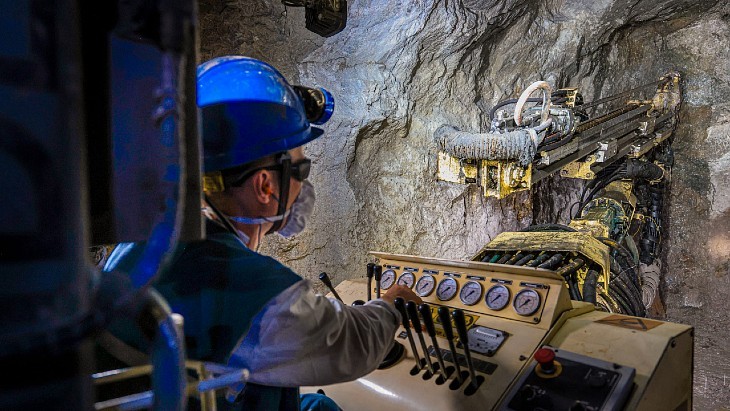
The UK National Nuclear Laboratory (UKNNL) and the Henry Royce Institute recently released the "UK Fission Materials Roadmap Interim Report." The report states that the UK needs to clarify as soon as possible the priority technology routes and operating environments for next-generation nuclear reactors, so as to concentrate materials research resources on key directions and support future nuclear power development. The report argues that the UK should decide within the next one to two years whether to build a domestic materials test reactor; within the next five years, the government should also establish a national materials archive to preserve irreplaceable irradiated material samples. The report also recommends making long-term funding commitments of at least five years for relevant research projects...
2026-07-31
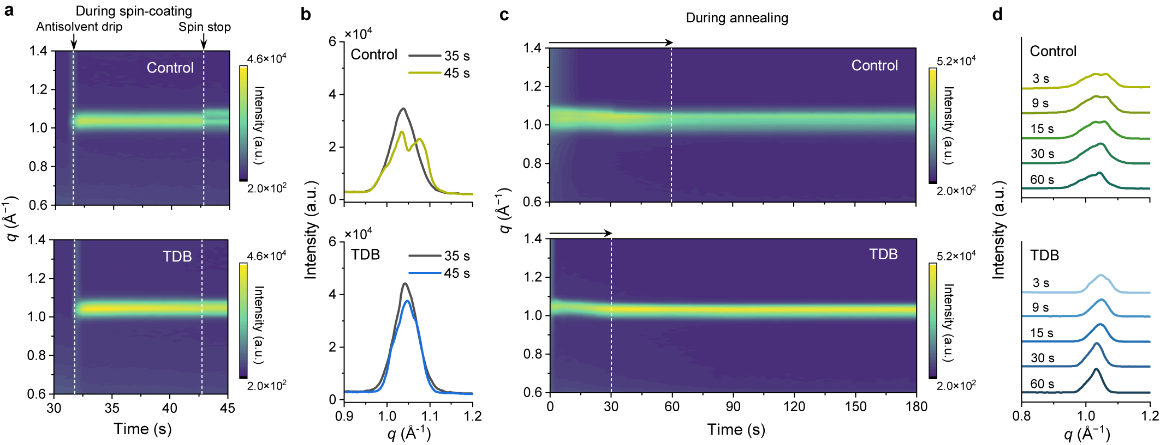
n situ GIWAXS characterization using synchrotron radiation helps overcome challenges in wide-bandgap perovskites
Wide bandgap perovskites are key light-absorbing materials for preparing high-efficiency perovskite/organic tandem solar cells. To achieve spectral matching with the narrow bandgap organic rear cell, a higher proportion of bromine is usually introduced into the perovskite composition. However, due to the different crystallization rates of iodine and bromine components during film formation, the ph...
2026-07-30
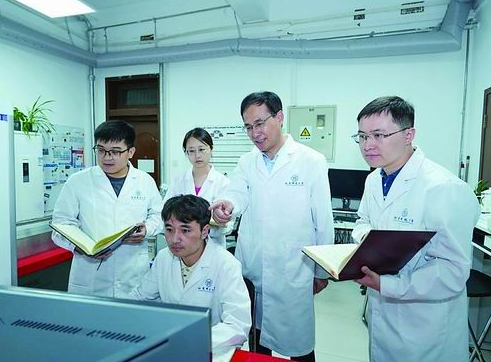
Lü Zhaoping's team advances research on radiation-resistant metallic materials to meet the needs of advanced nuclear energy systems.
Recently, the "High-Performance Metallic Materials" Innovative Research Group project—funded by the National Natural Science Foundation of China and led by Lv Zhaoping, an Academician of the Chinese Academy of Sciences and President of the Unive
2026-07-27