Registration
REGISTER FOR THE CONFERENCE
Registration
REGISTER FOR THE CONFERENCE
 Apply to Exhibit
APPLICATION FOR EXHIBITION
Apply to Exhibit
APPLICATION FOR EXHIBITION
 Sponsorship
SPONSORSHIP APPLICATION
Sponsorship
SPONSORSHIP APPLICATION
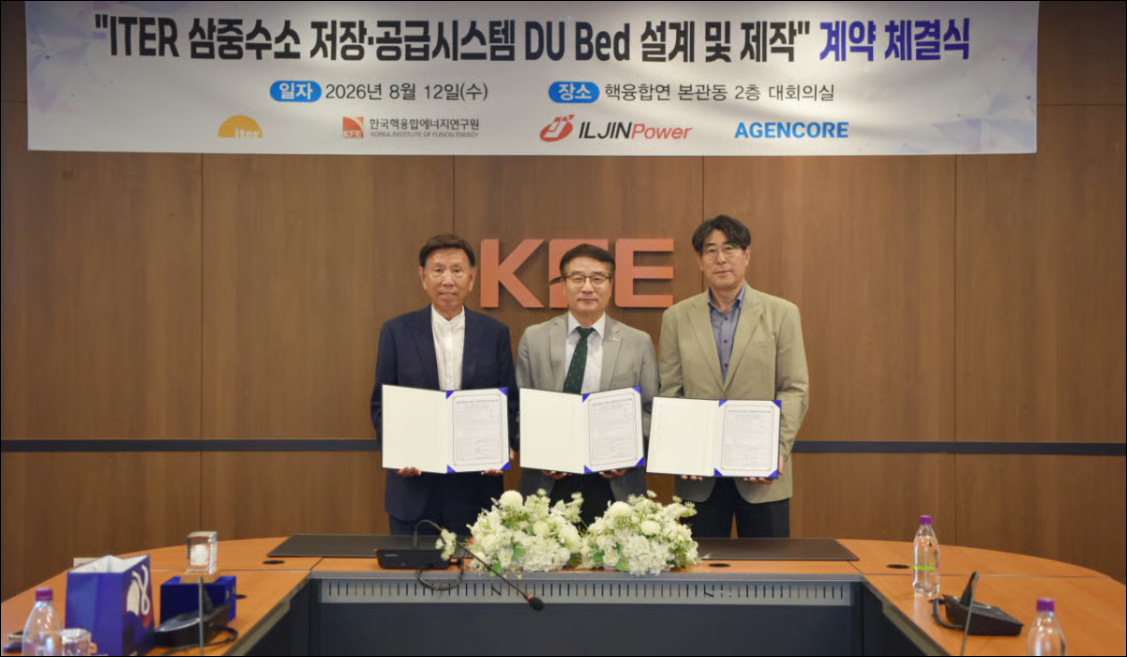
Korea Fusion Energy Institute Launches Design and Manufacturing of ITER Tritium Storage and Supply Vessels
The Korea Fusion Energy Institute (KFE) announced on August 12 at its headquarters in Daejeon that it has signed a contract with a consortium comprising Iljin Power and Aizen Core to undertake the design and manufacturing of the tritium storage and supply vessels for the International Thermonuclear Experimental Reactor (ITER). ITER is currently the world's largest fusion experimental device, being jointly constructed by seven parties—Korea, the United States, the European Union, Japan, China, Russia, and India—in Cadarache, southern France. Under the procurement agreement signed between KFE and the ITER Organization in March 2025, Korea...
2026-08-12
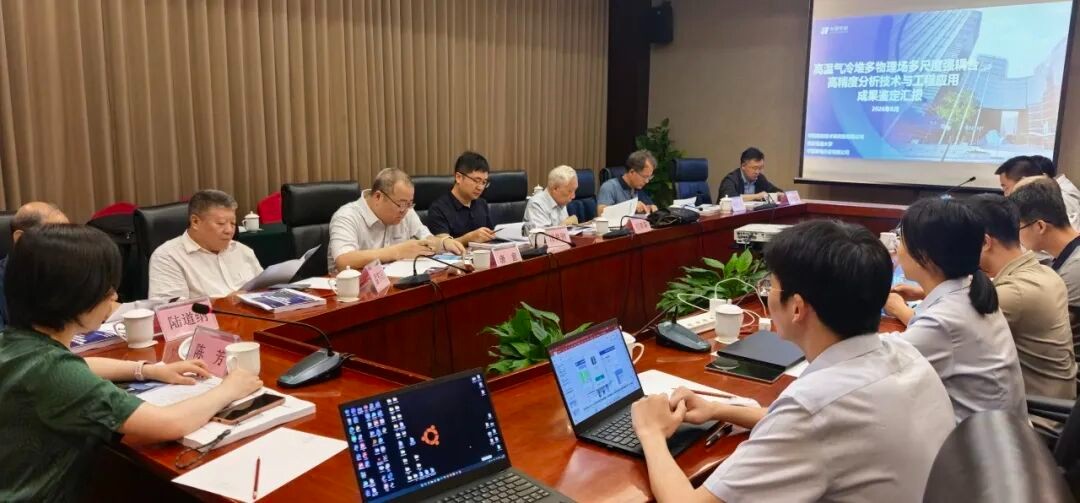
"High-Precision Analysis Technology and Engineering Application of Multi-Physics, Multi-Scale, Strongly Coupled High-Temperature Gas-Cooled Reactor" Passes Scientific and Technological Achievement Appraisal, Reaching Internationally Leading Level
2026-08-12

Budapest Launches Feasibility Study for Long-Distance Heat Supply from Paks Nuclear Power Plant
2026-08-12

Poland Plans State Capital Injection to Accelerate GE Vernova Hitachi SMR Deployment
2026-08-12

Akkuyu Nuclear Power Plant Launches Environmental Monitoring System, Recording Ecological Data to Build a "Digital Memory"
2026-08-12

Syria Confirms IAEA Delegation to Visit Damascus for Talks on Nuclear Material Handling and Peaceful Use Cooperation
2026-08-12

South China Regional Office of Nuclear and Radiation Safety Supervision of the Ministry of Ecology and Environment Conducts Special Typhoon and Flood Prevention Inspection at Changjiang Nuclear Power Plant
2026-08-12

Cooling seawater temperature at South Korean nuclear power plants approaches design limit
2026-08-12

Brazil's uranium imports from Russia hit highest since 1997 in July, reaching $84.5 million in a single month, a 168-fold surge month-on-month
2026-08-12

On August 11, at the Leshan special press conference of "Myriad Scenes in Sichuan · Embarking on the '15th Five-Year Plan'", Leshan Mayor Zhao Yingchun stated that Leshan is accelerating the construction of the largest and most comprehensive medical isotope production base in China. Upon completion, the project will help break the foreign monopoly and import dependence on related products, promote the domestic substitution of anti-cancer nuclear drugs, and enable more patients to access domestically produced drugs with lower prices and better efficacy. Zhao Yingchun noted that during the "14th Five-Year Plan" period, Leshan has focused on building the "China Green Silicon Valley", a world-class tourist destination, and a major regional transportation and logistics hub in the province, continuously promoting high-quality development, with its economic output surpassing 250 billion yuan...
2026-08-12
Chinese researchers have recently proposed a novel sex-sorting approach for the Sterile Insect Technique (SIT) in mosquitoes: adding a specific agent to the blood meal ingested by female mosquitoes, leveraging the biological difference that female mosquitoes feed on blood while males do not, to substantially reduce the number of females before release. The study was published in the June issue of the Journal of Medical Entomology. The Sterile Insect Technique is a pest population control method centered on radiation-induced sterility. Its basic process involves mass-rearing male target insects in the laboratory, sterilizing them through radiation exposure to render them reproductively incapable, and then releasing them into the field, where they mate with wild females to produce non-viable eggs, thereby suppressing target population growth. This technique has been incorporated into integrated pest management systems and is regarded as a relatively environmentally friendly pest control approach.
2026-08-12
The U.S. Department of Agriculture announced that, in response to the New World screwworm (NWS) outbreak already detected in Texas and New Mexico, the sterile fly facility at Moore Air Base in Edinburg, Texas, will open early next spring, approximately seven months ahead of the original schedule. Construction on the facility began in April of this year, and once completed, it will produce sterile flies to support outbreak control efforts using the Sterile Insect Technique (SIT). Under the plan, the facility will reach full operational capacity by the end of 2028, producing approximately 300 million sterile flies per week. The Sterile Insect Technique works by releasing sterilized flies into the environment to mate with wild screwworms, thereby interrupting the reproductive cycle and reducing the risk of continued parasite spread...
2026-08-12
Thibaud Philipps, Mayor of Illkirch-Graffenstaden in France's Bas-Rhin department, hopes to pilot the Sterile Insect Technique (SIT/TIS) locally, sterilizing male tiger mosquitoes through radiation and releasing them regularly to curb population growth. According to local authorities, tiger mosquitoes have been officially established in Illkirch-Graffenstaden since 2019. In recent years, the local tiger mosquito population has continued to increase, significantly impacting residents' daily lives. The municipal government has previously implemented multiple control measures, including launching the "Tiger Team" project in 2024 to educate the public on mosquito prevention and control methods, as well as providing subsidies of up to 50 euros per household for purchasing mosquito traps. To date, approximately 400 households have received relevant traps...
2026-08-12
A research team from the Graduate School of Engineering at the University of Tokyo and the University of York in the UK established a novel geometric imaging principle utilizing positron three-photon decay. Using a gamma-ray measurement system comprising scintillators and silicon photomultipliers (SiPMs), along with the existing PET radiopharmaceutical ^18F-FDG, they successfully visualized the positronium three-photon decay ratio for the first time, completing the proof-of-principle for Positronium Ratio Imaging (PRI). The findings were published in *Communications Physics*. Current clinical nuclear medicine PET examinations primarily utilize gamma rays generated from two-photon annihilation between positrons and electrons to visualize drug accumulation in the body. While this method provides quantitative information on metabolism or drug uptake, it offers limited insight into microenvironmental features such as tissue hypoxia, which are closely related to disease malignancy. In recent years, researchers have attempted to obtain additional tissue information through the average lifetime of positronium formed during positron annihilation, but this approach typically requires the introduction of special nuclides or agents, limiting its practical application.
2026-08-12
LG Electronics announced on August 12 that it has launched a new 40-inch diagnostic monitor, the 40HT513D, targeting the business-to-business (B2B) medical display market. The product has received approval from the U.S. Food and Drug Administration (FDA) and is primarily intended for medical image interpretation. According to the company, the 40HT513D features a curved IPS black panel with a 21:9 aspect ratio and a resolution of 5120×2160, delivering approximately 11 million pixels. LG Electronics stated that this design consolidates image reading tasks that previously required three 3-megapixel monitors into a single screen. Physicians can simultaneously view and compare current and historical images from X-ray, CT scans, and MRI scans on the same display...
2026-08-12
China Bio-Pharma Holdings Limited announced on August 12 that the company, Pengbo (Hainan) Boron Neutron Medical Technology Co., Ltd., and Japan's Stella Pharma Corporation signed a legally binding Master Cooperation Agreement on August 11, 2026, to jointly advance the development and commercialization of Steboronine in China. Steboronine is described in the announcement as the world's first approved boron neutron therapy drug, applied in Boron Neutron Capture Therapy (BNCT). Under the agreement, the cooperation between the two parties is divided into a development phase and a commercialization phase. During the development phase, the cooperation aims to leverage real-world data, real-world evidence, and real-world studies generated by the China Bio-Pharma Group to facilitate Stella Pharma in obtaining and maintaining, as soon as possible, marketing approval from China's National Medical Products Administration (NMPA) for Steboronine for the treatment of head and neck cancer; after Stella Pharma obtains marketing and manufacturing approval from the Japanese government for Steboronine for meningioma, the relevant China filings may also be extended to the meningioma indication.
2026-08-12