Registration
REGISTER FOR THE CONFERENCE
Registration
REGISTER FOR THE CONFERENCE
 Apply to Exhibit
APPLICATION FOR EXHIBITION
Apply to Exhibit
APPLICATION FOR EXHIBITION
 Sponsorship
SPONSORSHIP APPLICATION
Sponsorship
SPONSORSHIP APPLICATION
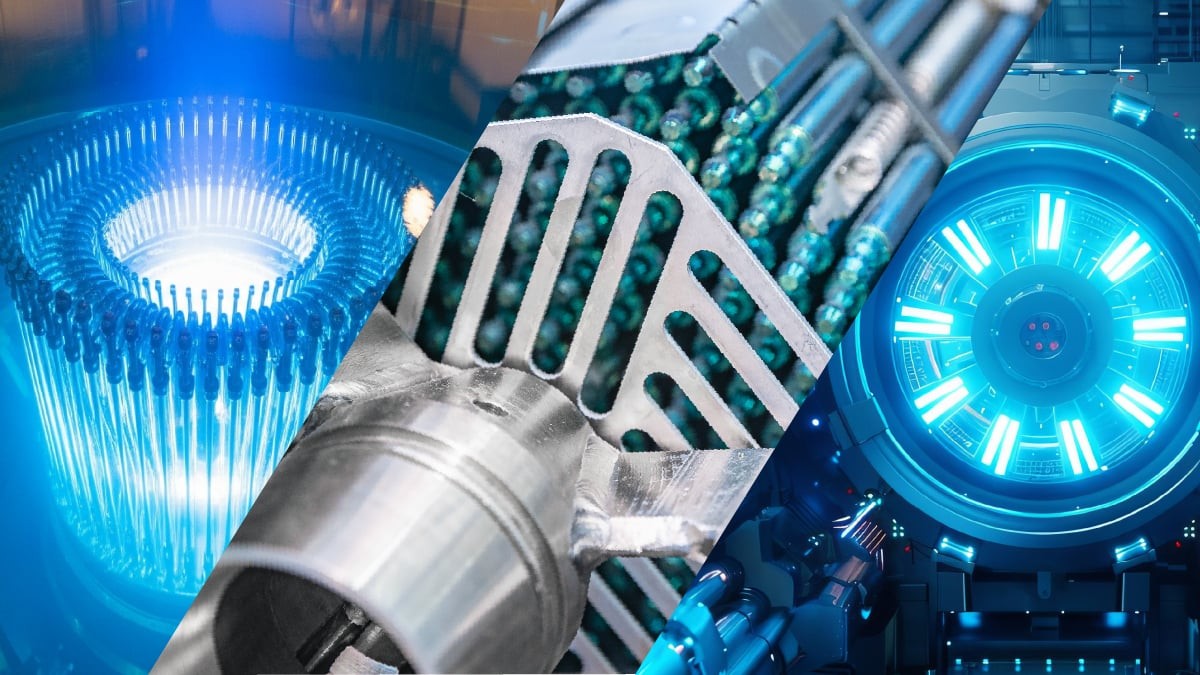
U.S. NRIC Selects 13 Nuclear Energy Launch Pad Projects
The U.S. Department of Energy (DOE)'s National Reactor Innovation Center (NRIC) announced on August 24 that 13 new projects have been selected for the Nuclear Energy Launch Pad program. NRIC is based at Idaho National Laboratory (INL). NRIC Director Brad Tomer stated that this round of selections reflects developers' growing commitment to advancing related technologies. The program will provide companies with a priority pathway to DOE authorization, as well as access to expert resources, facility conditions, and targeted regulatory support to adv...
2026-08-26

Russia's Rostov NPP Releases Chlorella into Cooling Pond to Strengthen Ecological Control
2026-08-26
IAEA 70th General Conference to Host Nuclear Energy Side Events
2026-08-26

South Korean Lawmaker Proposes Designating SMRs as National Strategic Technology
2026-08-26
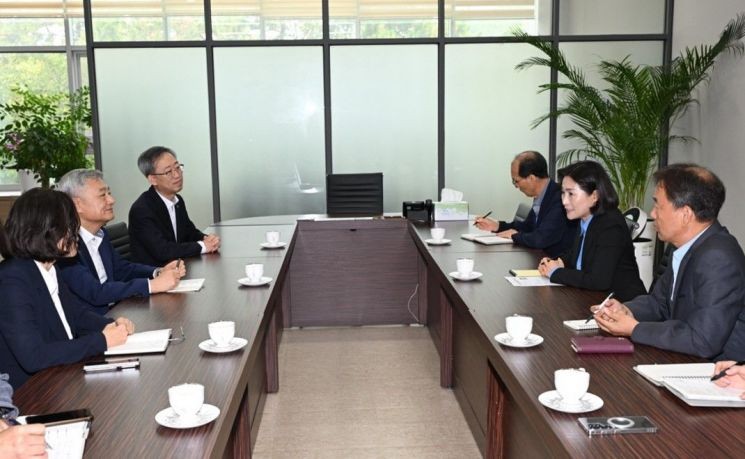
South Korea's Gijang County and KHNP Discuss Communication Issues with Residents near Kori Nuclear Power Plant
2026-08-26

Russian Kursk NPP VVER-TOI Unit Completes Annual Power Generation Plan Ahead of Schedule
2026-08-26

U.S. Submits Civil Nuclear Agreement with Saudi Arabia to Congress for Review
2026-08-26

Netherlands advances front-end engineering design for two new nuclear power plants
2026-08-26
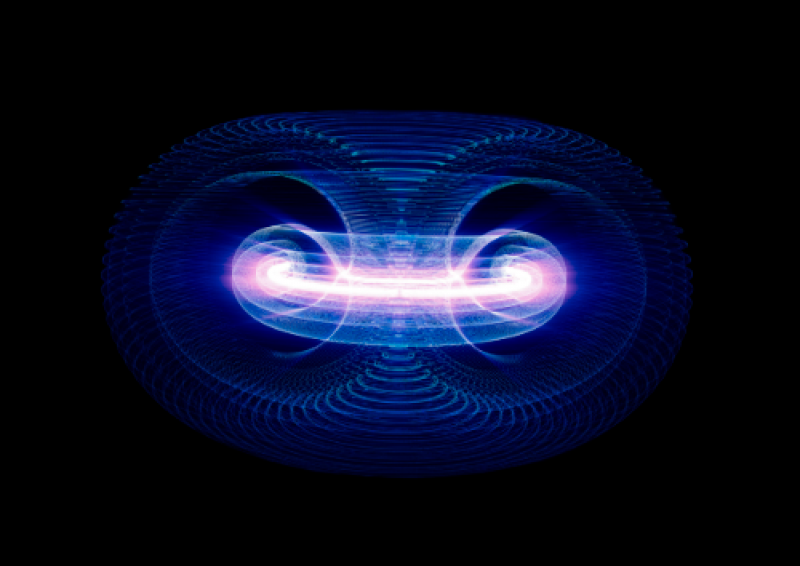
U.S. Fusion Roadmap Targets Early Power Plant Deployment by Mid-2030s
2026-08-26
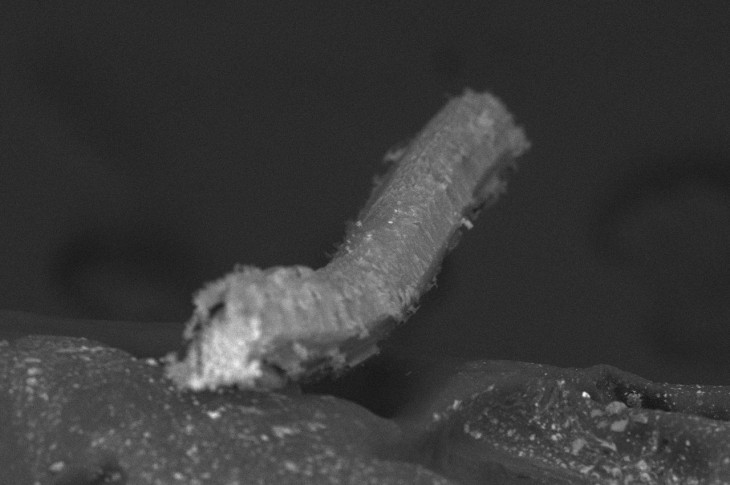
Experts from the Siberian Circular Photon Source Collaboration Center and the Institute of Solid State Chemistry and Mechanochemistry of the Siberian Branch of the Russian Academy of Sciences have proposed a comprehensive method for studying the morphology of flexible organic crystals. The method combines computational algorithms, laboratory microscopy techniques, and experimental diffraction studies, and can be used to more reliably determine crystal geometry and facet arrangement. The results have been published in the Journal of Applied Crystallography. Flexible crystals are a relatively rare class of organic crystals that can bend under very small mechanical stress while maintaining lattice integrity. Researchers indicate that among compounds with determined crystal structures, the proportion exhibiting such properties is less than...
2026-08-26
The press service of the Russian Ministry of Education and Science reported on August 25 that scientists from Tomsk Polytechnic University, in collaboration with an international research team, have for the first time conducted a detailed study of the infrared spectra of two rare germanium isotopes and identified characteristic spectral signatures that can be used to recognize the relevant isotopes in complex gas mixtures. The research team selected two highly enriched isotopes—germanium-72 and germanium-73—as the subjects of the study, recording their spectral information using a high-resolution Fourier transform spectrometer. This instrument is capable of resolving closely spaced spectral lines, providing the conditions for analyzing subtle spectral changes induced by isotopic substitution. The researchers stated that precise spectral data for different germanium isotopes remain relatively scarce in the scientific literature, and such data are of significant importance for identifying molecules in planetary atmospheres and for producing ultra-pure germanium isotopes for quantum technologies and modern electronics.
2026-08-26
Rosatom recently announced that two production lines at its modern radiopharmaceutical manufacturing facility in the Kaluga Region have entered trial production. The facility, built in accordance with the Eurasian Economic Union's international Good Manufacturing Practice (GMP) standards, is equipped with high-level production equipment and is designed to supply safe, quality-controlled radiopharmaceuticals to the market. According to reports, Rosatom's subsidiary enterprises currently produce more than ten registered diagnostic and therapeutic radiopharmaceuticals, involving isotopes such as iodine-123, iodine-131, technetium-99m, and samarium-153. The new plant's production plan is based on the demand for radioisotope products from Russian medical institutions through 2030. The company...
2026-08-26
A new study led by the International Atomic Energy Agency (IAEA) in collaboration with Massachusetts General Hospital and Harvard Medical School in Boston, USA, shows that a five-star rating system can help hospitals optimize image quality, reduce radiation dose, and decrease unnecessary patient radiation exposure in computed tomography (CT) examinations. The study has been published in the European Journal of Radiology. CT imaging uses X-rays to obtain detailed images of internal body structures and is an important tool in diagnosing a wide range of diseases. The study notes that CT image quality is closely related to radiation dose—higher doses typically reduce image noise and improve clarity, but do not always yield additional diagnostic value. How to minimize radiation exposure while ensuring diagnostic accuracy is key to optimizing CT examination protocols.
2026-08-26
A research team from the Singapore University of Technology and Design and the Institute of Microelectronics at the Agency for Science, Technology and Research (A*STAR) in Singapore has recently developed a low-loss deuterated silicon nitride waveguide capable of on-chip broadband light generation. By replacing hydrogen with its heavier isotope deuterium, the team fabricated silicon nitride waveguides at low temperatures, demonstrating potential for integration with CMOS-compatible semiconductor processes and wafer-scale mass production. The related paper, "Octave-spanning supercontinuum generation in wafer-scale low-loss deuterated silicon nitride waveguides," was published in *Optics Letters*. The study shows that this chip-scale waveguide can broaden infrared laser pulses to cover a spectral range from visible red light to deep infrared. Traditionally, silicon nitride thin films are grown from silane gas, and residual silicon-hydrogen bonds in the material absorb light in the telecommunications band, requiring high-temperature annealing that is incompatible with integrated electronic circuits.
2026-08-26
Thermo Fisher Scientific recently launched the Thermo Scientific Orbitrap Isora mass spectrometer and Orbitrap Isora Pro mass spectrometer in Waltham, Massachusetts, USA. The company stated that these are its first Orbitrap instruments equipped with a dedicated isotope ratio analysis mode. The two mass spectrometers launched this time will form an integrated workflow together with the Thermo Scientific Vanquish Duo ultra-high performance liquid chromatography system and the new Isotope Discoverer software, providing molecular-level isotope ratio analysis capabilities to laboratories and researchers worldwide. Isotope ratio analysis can help researchers determine the source of compounds and their formation processes by measuring natural variations in isotopes within samples, helping...
2026-08-26
Swiss clinical-stage biotechnology company Molecular Partners AG recently announced its business progress and financial results for the first half of 2026. The company stated that its DLL3-targeting radioactive DARPin therapy MP0712 has advanced to the second therapeutic dose level in a U.S. multicenter Phase 1/2a clinical study, and patient enrollment for the new dose cohort is currently underway. MP0712 is a radiopharmaceutical targeting the tumor-associated antigen DLL3, carrying a therapeutic alpha-emitting radionuclide lead-212 (Pb-212) payload, co-developed by Molecular Partners and Orano Med, primarily for small cell lung cancer and other neuroendocrine tumors. According to the company's disclosure, the first dose cohort of MP0712...
2026-08-26