Registration
REGISTER FOR THE CONFERENCE
Registration
REGISTER FOR THE CONFERENCE
 Apply to Exhibit
APPLICATION FOR EXHIBITION
Apply to Exhibit
APPLICATION FOR EXHIBITION
 Sponsorship
SPONSORSHIP APPLICATION
Sponsorship
SPONSORSHIP APPLICATION

Target Image of "Artificial Sun" China Huanliu-4 Released
The 2026 Fusion Energy Conference and Fusion Energy Week opened in Shanghai on the 25th. The target image of the "Artificial Sun" China Huanliu-4 was released at the opening ceremony. China Huanliu-4 is a fourth-generation magnetic confinement fusion large-scale scientific experimental device and the world's first high-temperature superconducting strong-field steady-state burning experimental platform. It will systematically verify the reliability of high-temperature superconducting strong-field magnets in complex fusion environments, demonstrate full-domain intelligent control of fusion reactors, and achieve long-duration steady-state operation of the device. Fusion energy is an important direction for the future development of human energy, and major countries around the world are competing to position themselves in the new track of fusion energy. Zhang Guangjun, Vice Minister of Science and Technology, pointed out on the same day that the 15th Five-Year Plan will incorporate controlled nuclear fusion as a future energy technology into key directions for energy innovation development, and list controlled nuclear fusion as a major national frontier science and technology project.
2026-08-26
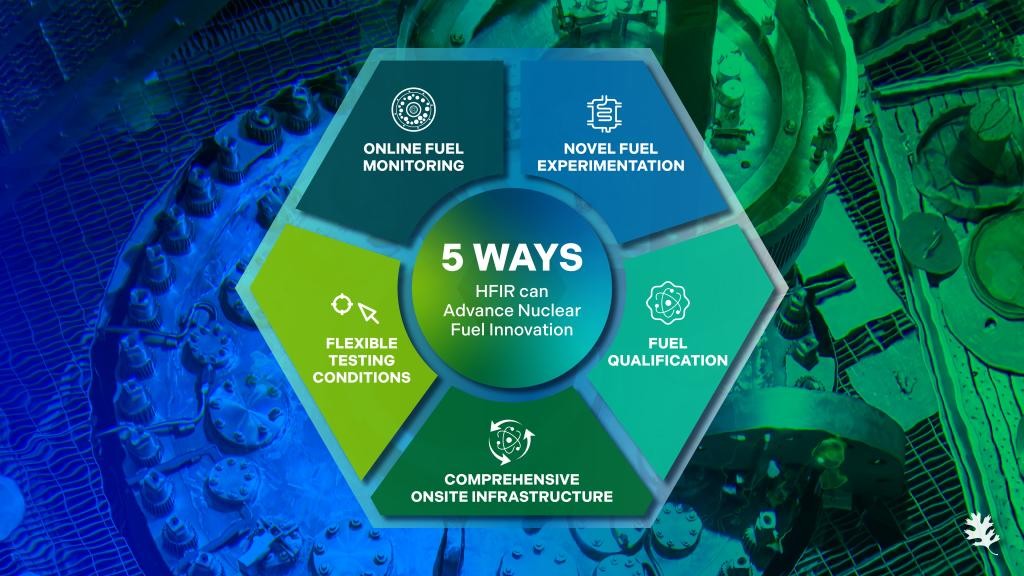
U.S. HFIR Research Reactor Boosts Validation of New Nuclear Fuels
2026-08-26
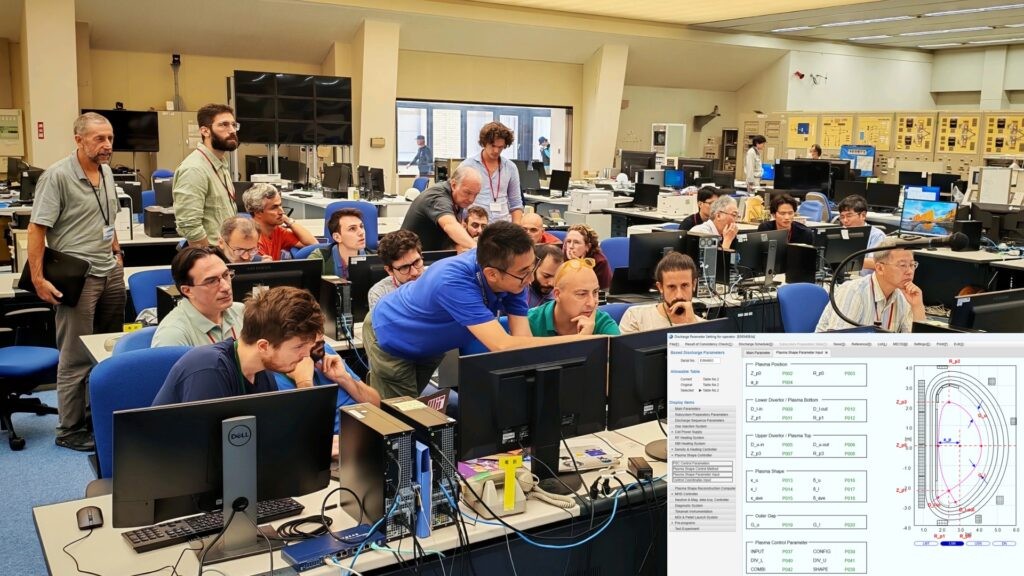
Japan's JT-60SA Experimental Team Advances Preparations for Next Operation Phase
2026-08-26
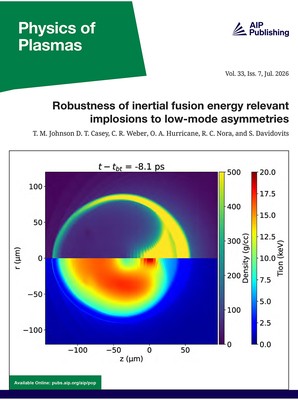
U.S. Research Reveals Diamond Melting Mechanism at High Pressure, Potentially Enhancing Inertial Confinement Fusion Performance
2026-08-26

Bitumen Solidification Facility at Unit 2 of Japan's Ikata Nuclear Power Plant Returns to Normal
2026-08-26

Four Units of Egypt's Dabaa Nuclear Power Plant Under Simultaneous Construction
2026-08-26

IAEA Director General Unveils Upcoming New Initiative on Maritime Nuclear Energy
2026-08-26
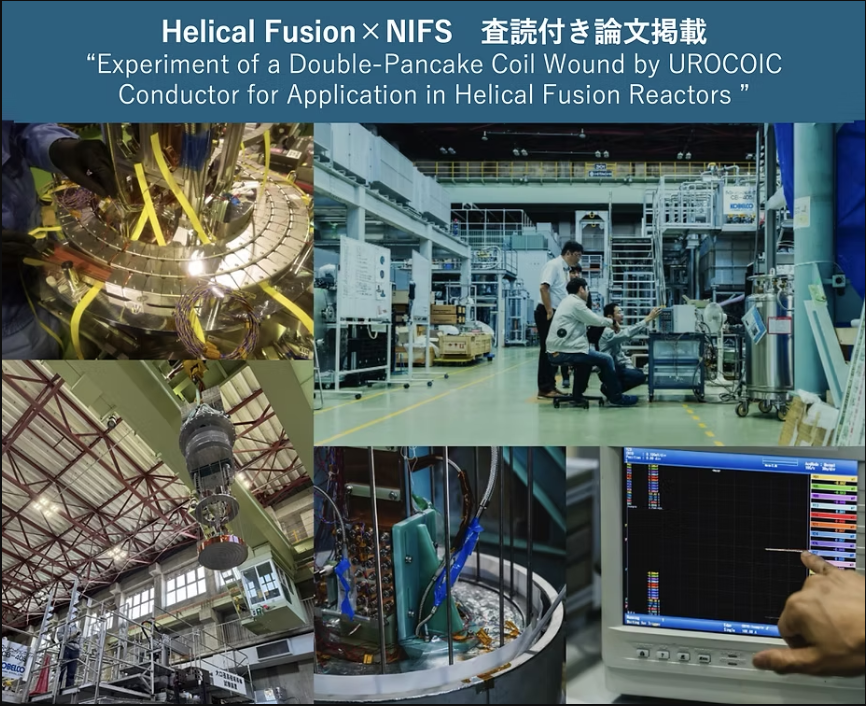
Japan's Helical Fusion Publishes Research Results on High-Temperature Superconducting Magnets
2026-08-26

South Korea launches next-generation nuclear energy research talent training program
2026-08-26

InHealth, a UK independent diagnostic service provider, has recently completed the first patient scan using Europe's first mobile Biograph Trinion PET/CT system. The system, supplied by Siemens Healthineers, is now in clinical use at Wrexham Maelor Hospital in northeast Wales to support cancer-related molecular imaging examinations. PET/CT is an important imaging technology in oncology diagnosis and treatment, applicable to the diagnosis, staging, treatment planning, and therapy response monitoring of various cancer types. Deploying the Biograph Trinion PET/CT system on a mobile platform means that advanced molecular imaging services can be delivered into clinical settings with greater flexibility, helping to improve patient access to...
2026-08-26
Tescan recently launched the MIRA XR ultra-high-resolution scanning electron microscope system, targeting materials characterization needs in fields such as battery technology, metallurgy, and advanced materials science. Positioned between the Tescan MIRA and Tescan CLARA, the system aims to deliver higher resolution, enhanced surface sensitivity, and a more streamlined workflow, serving applications including R&D laboratories, industrial quality control, and failure analysis. According to reports, the MIRA XR employs BrightBeam™ technology and a single high-efficiency axial detector to improve surface signal acquisition under field-free imaging conditions, making it suitable for beam-sensitive materials and magnetic samples while reducing the need for sample preparation steps such as surface coating. The system also features an aperture-free column design that minimizes manual aperture selection and adjustment steps, allowing operators to focus more on sample observation and data analysis.
2026-08-26
Christopher Arran, a lecturer at Lancaster University and the Cockcroft Institute in the UK, has recently been awarded a three-year New Investigator Award from the UK Engineering and Physical Sciences Research Council (EPSRC) to study electron-positron pair production in the extremely intense electromagnetic fields of high-power lasers. The research focuses on matter-antimatter production processes under intense laser pulse conditions. Similar interactions are believed to exist in extreme cosmic environments, such as near pulsars and black hole accretion disks. Previously, such interactions had only been measured at large particle accelerator facilities such as Stanford University and the European Organization for Nuclear Research (CERN), but the electric and magnetic field strengths used in those experiments were far weaker than the strong-field conditions achievable with current high-power lasers.
2026-08-26
On August 24, 2026, IsoEnergy Ltd. announced that it has signed an exploration agreement with Kineepik Métis Local Inc. to support its responsible uranium exploration activities in Saskatchewan, Canada. Under the agreement, the two parties will establish mechanisms for ongoing communication, information sharing, and collaboration around IsoEnergy's exploration activities in the relevant region. The agreement also provides that Kineepik community members and local businesses may participate in exploration-related work through business partnerships, employment opportunities, and training programs. Kineepik Métis Local Inc. represents Métis rights holders residing within the Kineepik use and occupancy area, including...
2026-08-26
On August 24, local time, the U.S. Department of Energy's Oak Ridge National Laboratory (ORNL) announced that its scientists are collaborating with AJ Tuck Company (AJ Tuck) to develop a hybrid manufacturing process that combines 3D printing and electroforming to produce complex, leak-tight hot isostatic pressing canisters for powder metallurgy hot isostatic pressing processes. The process targets the manufacturing of critical metal components for advanced nuclear reactors and other energy and defense applications, with the goal of shortening production workflows and reducing reliance on traditional large-scale forging and casting supply chains. A hot isostatic pressing canister is a type of sealed container used to compact metal powders into high-performance metal components under high temperature and high pressure. Traditional hot...
2026-08-26
A study on electron beam treatment of poultry meat products shows that electron beam irradiation has the potential to reduce the risk of foodborne pathogens in poultry while preserving meat quality as much as possible. The paper, titled "Effects of Electron Beam (eBeam) Treatment on the Texture and Sensory Attributes of Chicken and Turkey Meat Batters," was published in the journal Poultry Science. Electron beam is a non-thermal processing technology that uses high-energy electrons to cause irreversible damage to pathogen DNA or RNA, making it difficult for bacteria to replicate. Like X-rays and gamma rays, electron beam has been approved by the U.S. Food and Drug Administration for cold pasteurization that does not rely on heating. The research team used the electron beam irradiation facility at Texas A&M University...
2026-08-26
An insect irradiator used for the sterile insect technique program was recently transshipped to the United States via Panama, where it will support U.S. efforts to address the New World screwworm threat. The equipment was acquired by the U.S. Defense Advanced Research Projects Agency (DARPA) on July 8, 2026, and arrived in Panama, where it was subsequently transferred from the port to the airport with the assistance of Panamanian partners. The New World screwworm is a parasitic pest whose flies lay eggs in warm-blooded animals, with larvae burrowing into tissue and feeding, posing a threat to livestock production. Jon O’Rullian, president of the equipment manufacturer Foss Therapy Services, Incorporated, stated that threats of this kind are significant to all types of livestock producers.
2026-08-26