Registration
REGISTER FOR THE CONFERENCE
Registration
REGISTER FOR THE CONFERENCE
 Apply to Exhibit
APPLICATION FOR EXHIBITION
Apply to Exhibit
APPLICATION FOR EXHIBITION
 Sponsorship
SPONSORSHIP APPLICATION
Sponsorship
SPONSORSHIP APPLICATION

Budapest Launches Feasibility Study for Long-Distance Heat Supply from Paks Nuclear Power Plant
On August 11, 2026, Budapest Public Services Company (BKM), in partnership with the Budapest University of Technology and Economics, launched a feasibility study to explore the delivery of thermal energy from the Paks Nuclear Power Plant to the city's district heating system via a hot-water pipeline of approximately 125 kilometers. The study focuses on the technical, economic, and construction feasibility of the project. The Paks Nuclear Power Plant is located about 100 kilometers from the capital, and the current heat load of Budapest's district heating system is approximately 100 MWth in summer, peaking at 1,000 MWth in winter. The core significance of this concept lies not only in providing a low-carbon heat source for the city but also in improving the efficiency of waste heat utilization at the nuclear power plant. The Paks Nuclear Power Plant currently...
2026-08-12

Poland Plans State Capital Injection to Accelerate GE Vernova Hitachi SMR Deployment
2026-08-12

Akkuyu Nuclear Power Plant Launches Environmental Monitoring System, Recording Ecological Data to Build a "Digital Memory"
2026-08-12
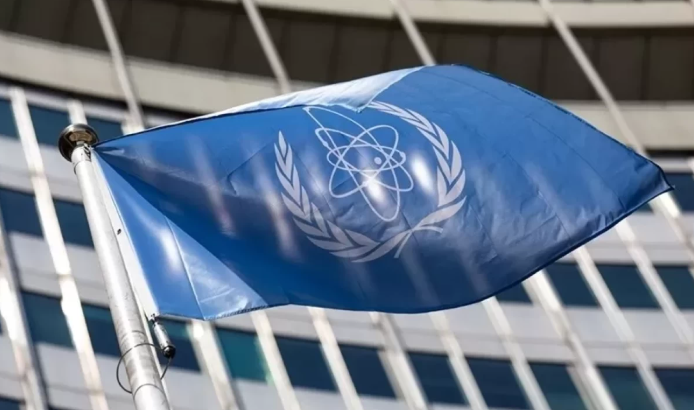
Syria Confirms IAEA Delegation to Visit Damascus for Talks on Nuclear Material Handling and Peaceful Use Cooperation
2026-08-12

South China Regional Office of Nuclear and Radiation Safety Supervision of the Ministry of Ecology and Environment Conducts Special Typhoon and Flood Prevention Inspection at Changjiang Nuclear Power Plant
2026-08-12

Cooling seawater temperature at South Korean nuclear power plants approaches design limit
2026-08-12
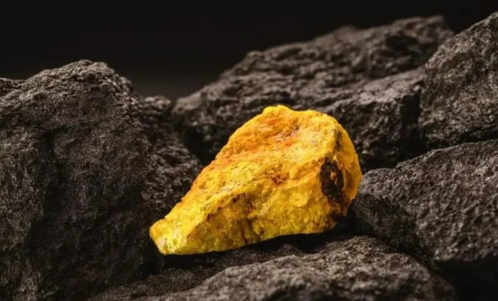
Brazil's uranium imports from Russia hit highest since 1997 in July, reaching $84.5 million in a single month, a 168-fold surge month-on-month
2026-08-12

India's Bihar signs memorandum of understanding for $2.3 billion small modular reactor project
2026-08-12
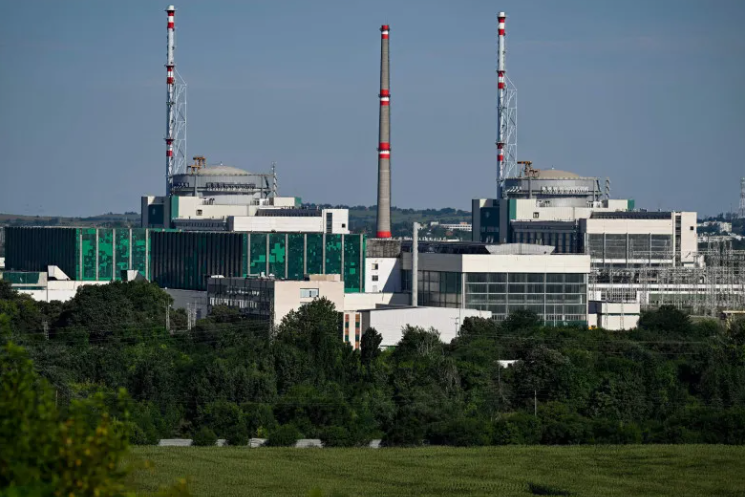
Bulgaria's Kozloduy Nuclear Power Plant Faces Shutdown Risk Due to Low Danube Water Levels
2026-08-12

Urenco in Almelo, the Netherlands, is continuing its large-scale expansion. Before a new large facility has even been completed, the company has already begun advancing its next expansion project, with a ninth production hall housing thousands of centrifuges now in the preparatory stage. This signals a clear acceleration in the pace of the company's uranium enrichment capacity expansion. Urenco's core business is supplying fuel for nuclear power plants, namely enriching uranium through centrifuges. In recent years, tight global energy supply, fluctuating natural gas prices, and heightened energy security concerns have brought nuclear energy back into focus for many countries. As demand for nuclear power rises, the importance of the nuclear fuel supply chain has also grown, and Urenco...
2026-08-12
The US Department of Energy's Oak Ridge National Laboratory (ORNL) recently restarted and upgraded its tungsten-188/rhenium-188 (W-188/Re-188) generator manufacturing operations to meet the demand for the rare medical isotope rhenium-188 in targeted cancer therapy research. The laboratory last manufactured such generators in 2011. Radiochemist Becca Hores demonstrated the assembly process of the W-188/Re-188 generator. Depending on radioactivity levels, these generators must be assembled in gloveboxes or hot cells. Image credit: Maggie Gregg/Oak Ridge National Laboratory, US Department of Energy. Rhenium-188 is produced by the radioactive decay of tungsten-188. ORNL irradiates tungsten-186 in the High Flux Isotope Reactor (HFIR) to produce tungsten-188...
2026-08-12
August 11 news, Hungarian ethologists from Eötvös Loránd University, in collaboration with researchers from the University of Vienna in Austria and the National Autonomous University of Mexico, used functional magnetic resonance imaging (fMRI) to study how canine brains process human facial emotions. The related paper was published in iScience. The research team designed two experiments. To avoid the influence of dogs' emotional responses to familiar people on the results, facial photos of strangers were used in the experiments. The first experiment included 8 dogs aged 18 to 53 months, including 6 Border Collies, 1 Labrador Retriever, and 1 Golden Retriever. The dogs remained in a stationary position in the scanner and could leave the device at any time. The experiment first compared happy and neutral human face images...
2026-08-12
The Radiometric Metrology Laboratory of Brazil's Institute of Radiation Protection and Dosimetry (IRD/ANSN) has recently received certification from the Comprehensive Nuclear-Test-Ban Treaty Organization (CTBTO), officially qualifying it to join the international verification system. The certification was granted following an on-site audit conducted by the CTBTO in Rio de Janeiro from June 16 to 25, marking the Brazilian laboratory as the 15th certified unit among the 16 treaty-designated radionuclide laboratories. The certification primarily confirmed that the laboratory meets CTBTO requirements in high-precision analysis, result reliability, data traceability, and standardization of technical procedures. The audit covered sample reception and preparation, equipment calibration, result interpretation,...
2026-08-12
A multinational study involving the International Atomic Energy Agency and Massachusetts General Hospital in the United States shows that a standardized 5-star scoring system that considers both radiation dose and CT image quality can produce relatively consistent evaluations across different radiologists and help identify opportunities to reduce patient radiation exposure. This retrospective study included 2,737 adult CT examinations performed at 6 hospitals across 5 European countries, including 1,247 chest CTs and 1,490 abdominal CTs, involving 13 CT scanners. At each hospital, 3 radiologists independently evaluated the examinations using the 5-star framework. Unlike traditional image quality assessments that may favor lower noise...
2026-08-12
August 7, 2026 - After more than four decades of collaboration with the International Atomic Energy Agency, Malaysia has progressively established a comprehensive non-destructive testing system, evolving from an early reliance on foreign testing services to becoming an influential provider of NDT services and training in the Asia-Pacific region. Trainees participate in a trainer training course in Malaysia to obtain certification in non-destructive testing radiography. (Photo: Nuklear Malaysia) Non-destructive testing is primarily used to assess the integrity of materials and components in industrial facilities and infrastructure, enabling the detection and characterization of defects without damaging the inspected object. This technology is widely applied in industrial quality control, playing a significant role in enhancing facility safety...
2026-08-12
The International Atomic Energy Agency (IAEA) recently conducted non-destructive testing (NDT) training for Ukrainian civil engineering experts through the International Atomic Energy Agency Support and Assistance Mission to Kherson State (ISAMKO), to support infrastructure safety assessment and recovery efforts following the destruction of the Kakhovka Dam. The training was held in July 2026 at the IAEA Non-Destructive Testing Service Center in Seibersdorf, Austria, over a five-day period, with nine Ukrainian experts participating. This was also the first training program held at the center since its inauguration in 2024. The course focused on the application of NDT techniques in civil engineering for infrastructure inspection, structural diagnostics, safety assessment, and asset integrity evaluation, helping participants...
2026-08-12